



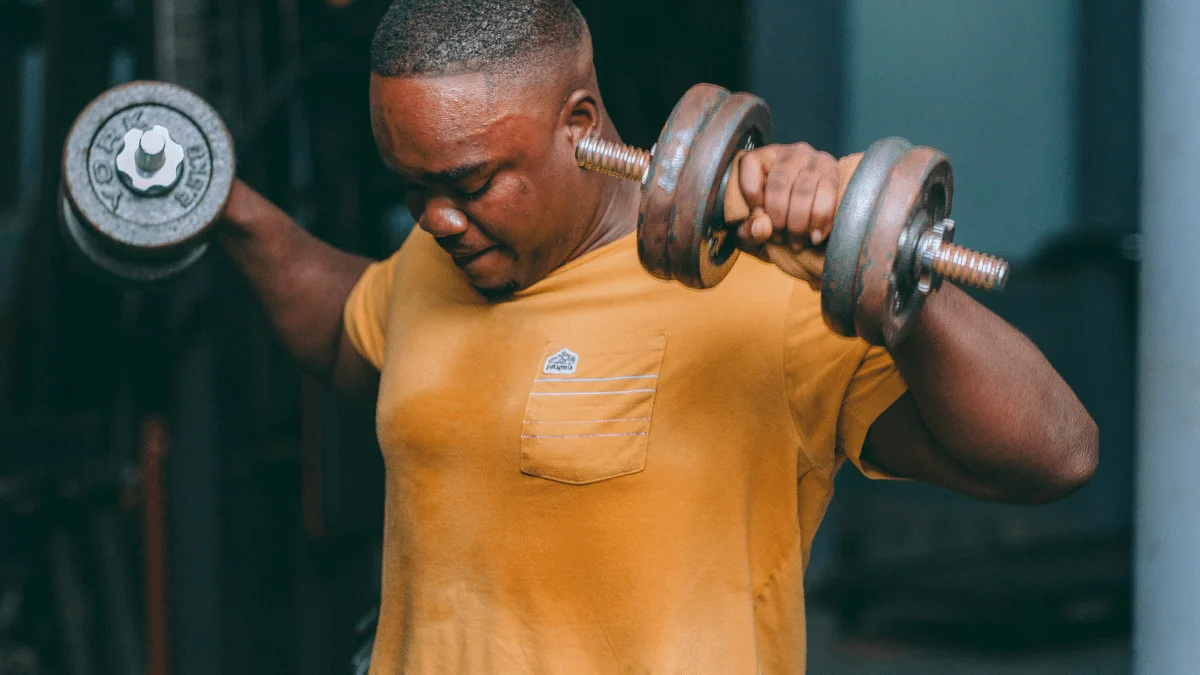
Few topics in the fitness and bodybuilding community divide practitioners quite like the debate over training volume versus training intensity. On one end of the spectrum, you have the higher-volume camp—the crowd operating under the guiding principle that "more sets equal more growth." In more recent years, this philosophy has often translated to keeping individual sets slightly more submaximal, utilizing the Reps in Reserve (RIR) scale to manage fatigue and pace progress across a sprawling workout routine.
On the opposite end, high-intensity lifters swear by a minimalist approach anchored in the concept of a single, all-out set pushed straight to absolute muscular failure. The core argument for this side often rests on the conviction that higher volumes cannot be adequately recovered from, and that piling on extra sets beyond a certain point provides no actual biological benefit for hypertrophy.
Faced with these deeply entrenched camps, lifters and coaches alike are left asking a fundamental question: what does the scientific research actually say is best for building muscle?
For years now, the overarching scientific consensus has leaned toward higher training volumes being superior for maximizing muscle growth. A succession of comprehensive meta-analyses—including the most recent one led by Pelland and colleagues—consistently show that performing more weekly sets per muscle group generally produces greater degrees of hypertrophy.
Zooming into the results of this latest meta-analysis by Pelland et al., this relationship has proven to be remarkably robust. The data indicates that the positive correlation between volume and growth holds true across different rest periods, varied study durations, differing proximities to failure, and even across subjects with varying levels of training experience, as detailed in their supplementary materials.
However, looking closer at the data reveals an important nuance: the benefit is not strictly linear. The returns on investment are subject to diminishing returns. While current evidence suggests that completing up to 30 to 40 weekly fractional sets can be optimal for driving hypertrophy, the best "bang for your buck" in terms of time and effort may be obtained at a somewhat lower threshold.
The limitations of a high-volume approach are ultimately practical rather than theoretical. It is undeniably time-consuming, highly fatiguing, and can be exceptionally difficult to sustain alongside life’s other demands, such as work, family, and stress management. Furthermore, most scientific studies focus narrowly on one or two muscle groups at a time. This means that what is locally "recoverable" in a controlled laboratory setting for a single muscle might not necessarily be globally sustainable when scaled up into a comprehensive, full-body training program.
Meanwhile, the low-volume, high-intensity philosophy has steadily gained traction, particularly across online fitness spaces and social media platforms.
The core claim driving this movement is straightforward: if you push a set to genuine, unyielding failure, you do not actually need to perform a high volume of work to stimulate maximum growth.
There is certainly empirical evidence to support this perspective. Most notably, the largest and most recent meta-analysis by Robinson et al. demonstrated that the closer a set is taken to muscular failure, all else being equal, the greater the resulting muscle growth.
Likewise, other contemporary research suggests that there is a tangible biological benefit to training directly to or even past failure. For example, a recent study by Hermann et al. showed that single-set training did indeed cause significant hypertrophy, but that taking those sets to failure was superior to training with two repetitions left in the tank. Similarly, a study by Larsen et al. compared ending a set at full range-of-motion failure versus performing partial repetitions past failure, observing greater hypertrophy in the group that pushed past failure. Clearly, training to failure—and potentially beyond it—provides an additional physiological stimulus that submaximal sets may lack.
So, which training philosophy is fundamentally better?
If you are hoping for a definitive, single-sentence answer, you will likely be disappointed. The real answer is that it entirely depends on how you define "better" in the context of your own goals, recovery capacity, and lifestyle.
In empirical science, researchers must isolate a single variable to study it effectively. For instance, a typical study will compare higher volume versus lower volume while keeping everything else constant, such as the rep ranges, proximity to failure, and exercise selection.
As a result, the real-world debate of "high volume submaximally" versus "low volume to failure" is, in many ways, largely speculative because most real lifters blend these variables in ways that laboratory settings cannot easily capture.
What is fairly clear from the broader body of literature is that both approaches can work effectively, and it is also highly likely that combining elements of both will lead to the most complete and robust muscle growth.
In practice, most people can likely recover from far more physical work than they intuitively think. Human training capacity can be pushed surprisingly far—encompassing both high volume and high intensity—before recovery truly caps long-term progress.
For instance, a classic study by Brigatto et al. had resistance-trained lifters perform nearly 200 total weekly sets without it proving detrimental to their muscle hypertrophy. Likewise, the widely discussed Enes quadriceps training study had subjects in the high-volume group perform an average of an astonishing 42 sets of quad training per week for 12 weeks, pushed close to failure, and those subjects still experienced greater growth than their lower-volume counterparts. In fact, nearly all of the rigorous scientific studies examining extremely high volumes of 20 or more sets per muscle group per week have required subjects to train to failure on every single working set.
From a purely physiological standpoint, more work is certainly more when it comes to stimulating muscle growth. True systemic or local recovery is rarely the actual bottleneck to making gains in practice. Rather, the challenge is typically about maximizing the stimulus while managing lifestyle constraints.
Ultimately, high intensity and high volume may simply serve different use cases depending on the individual lifter’s schedule, preferences, and recovery profile.