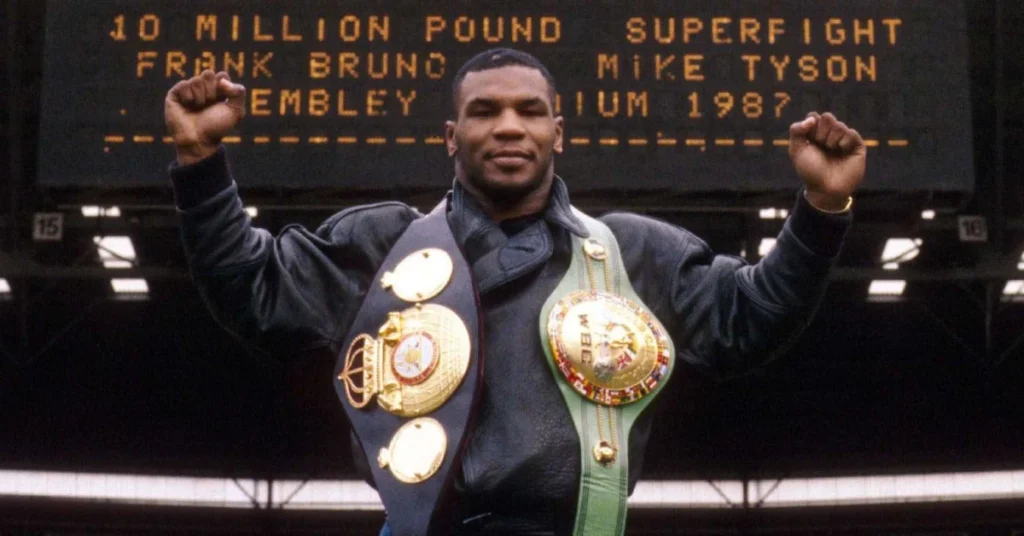
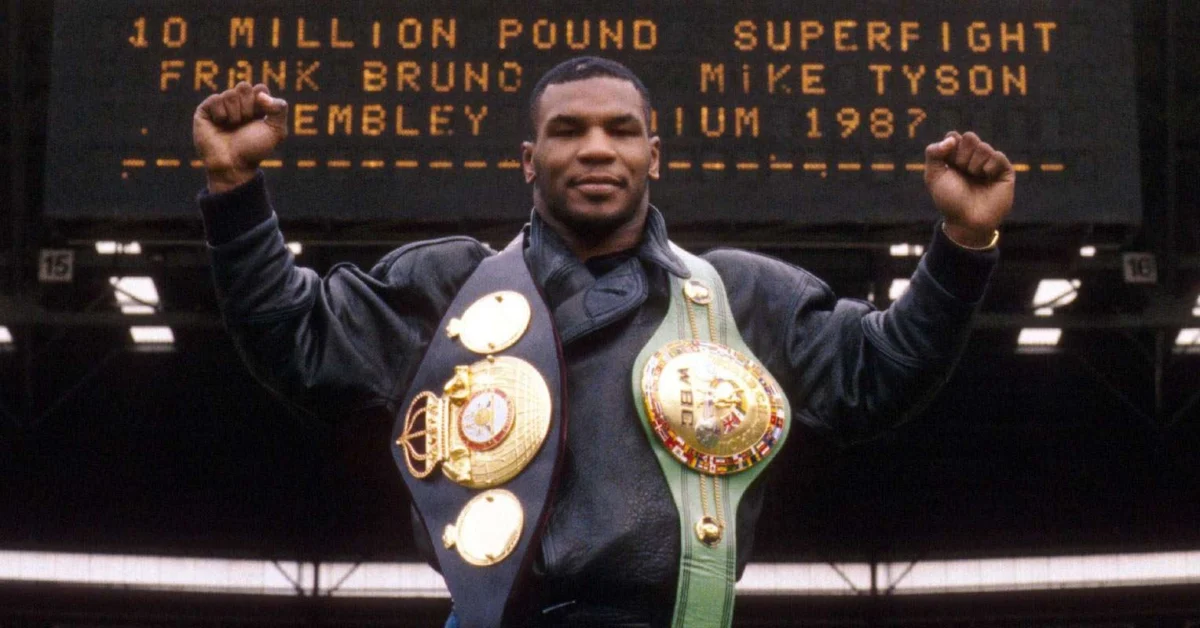
The sport of professional boxing has seen its fair share of iconic rivalries, devastating knockouts, and legendary champions who defined their respective eras. However, few figures in the history of the heavyweight division ever commanded the sheer aura of intimidation and raw stopping power that surrounded "Iron" Mike Tyson during the absolute zenith of his career. At the peak of his powers, Tyson was universally recognized as the most feared and formidable heavyweight on the planet, an explosive force of nature whose very presence inside the squared circle struck a deep sense of dread into opponents long before the opening bell even rang.
Tyson’s meteoric rise through the heavyweight ranks remains one of the most remarkable chapters in combat sports history. Armed with a ferocious peek-a-boo style taught to him by legendary trainer Cus D’Amato, Tyson dismantled opposition with breathtaking speed and devastating concussive power. This relentless offensive approach earned him 19 consecutive knockout victories in his first 19 professional fights, a blistering pace of destruction that immediately signaled a seismic shift in the heavyweight landscape. Demonstrating an unprecedented level of dominance, 12 of those victories came inside the very first round, leaving bewildered opponents flat on the canvas and media members scrambling for superlatives.
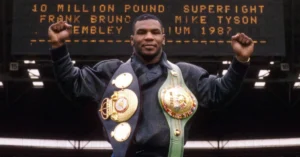
The defining crowning moment of Tyson’s early career unfolded in 1986 when he challenged Trevor Berbick for the WBC world heavyweight title. In a performance that cemented his status as a generational phenomenon, Tyson blasted Berbick out in the second round of their bout with a ferocious combination that left the champion sprawling and helpless on the canvas. With that emphatic victory, Tyson captured the coveted WBC green belt and etched his name into the record books as the youngest ever heavyweight champion in boxing history, a remarkable record that proudly stands to this very day, defying decades of challengers who have tried and failed to eclipse his youthful achievement.
Not content with merely capturing one belt, Tyson pressed forward to unify the division. Subsequent dominant victories over WBA champion James Smith and IBF champion Tony Tucker saw Tyson unify the division to become the undisputed heavyweight champion of the world. He went on to make six successful defenses of his crown, dispatching all comers and ruling over a division he completely dominated until he suffered his first professional defeat at the hands of James "Buster" Douglas in Tokyo in 1990—an upset that still echoes as one of the biggest shocks in sports history.
Among the formidable names that Tyson defeated during his dominant reign as undisputed champion was another legendary figure of the sport, Larry Holmes, who himself had forged a legendary legacy by holding the world heavyweight championship between 1978 and 1985. Holmes was a master of the jab and one of the most prolific and successful titleholders of his own era, making twenty consecutive defenses of his WBC title during a reign that brought him within touching distance of Rocky Marciano’s undefeated retirement record.
Years after hanging up his gloves for good, Holmes looked back on his storied career during an interview with The Telegraph, opening up about the profound regret he felt regarding his decision to step out of retirement to face the young, rampaging "Iron" Mike. While Holmes acknowledged the undeniable punching power that made Tyson such a uniquely terrifying opponent, he maintained a firm belief that the outcome would have been drastically different had the two men crossed paths when both were operating at the absolute peak of their physical powers.
Reflecting on that high-profile encounter, Holmes offered a candid assessment of his choice to return to the ring. "I shouldn’t have come out of retirement against him," Holmes admitted. "I fought Mike Tyson and I lost. He stopped me. Tyson could punch, you can’t take that away from him." Despite conceding defeat on that fateful night, the proud former champion did not shy away from expressing supreme confidence in his prime abilities, asserting that Tyson’s signature tactics would not have worked against him during his finest years. "He would stand in front of you, try and push you against the ropes, but he wouldn’t have been able to do that to me in my prime. I would have beaten him."
The bout between Holmes and Tyson took place in 1988, at a time when Tyson was utterly untouchable and Holmes had been away from active competition for nearly two years. The younger champion used his trademark aggression and relentless pressure to overwhelm the veteran, ultimately stopping Holmes in the fourth round. For Holmes, the defeat was a bitter pill to swallow, serving as a stark reminder of the perils of stepping into the ring with a generational powerhouse while past one’s physical prime.
Despite the setback against Tyson and the lingering regret over coming out of retirement for the fight, Larry Holmes did not let that defeat define the remainder of his legendary journey in boxing. He demonstrated remarkable longevity and an enduring passion for the sport, continuing his professional career for many more years. Holmes kept lacing up the gloves right up until July 2002, when he finally stepped away from the sport for good following his 75th and final career victory, securing a hard-fought decision win against Eric "Butterbean" Esch in what brought down the curtain on a truly historic boxing career.