
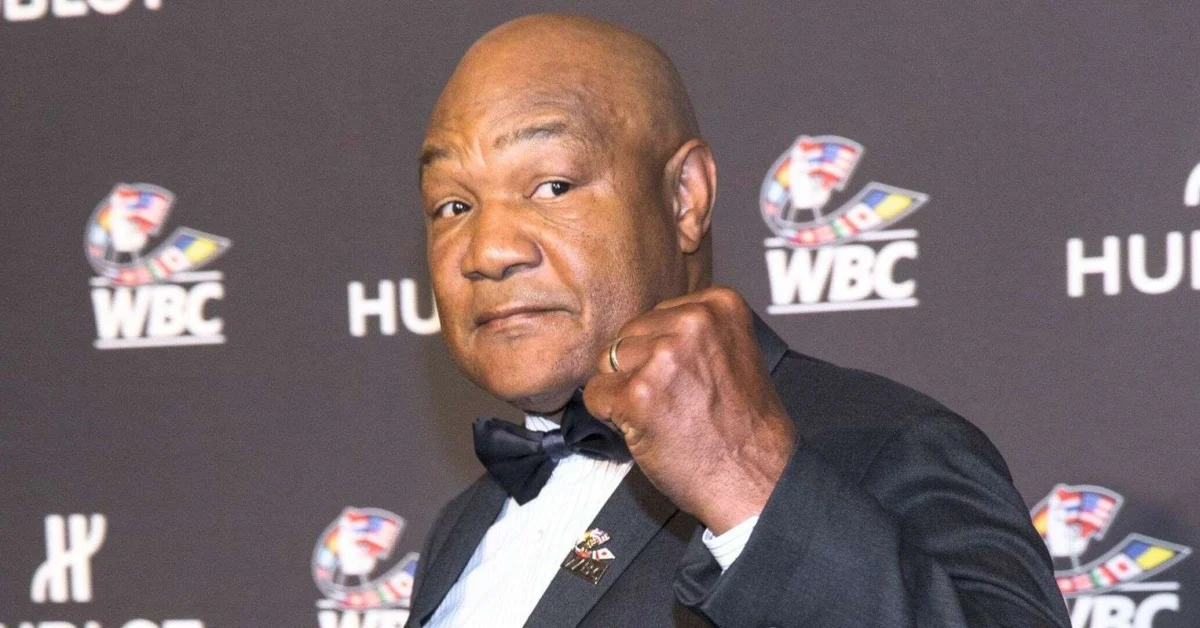
George Foreman stands as a singular figure in the history of professional boxing, remaining the only man to capture the heavyweight championship across two distinct eras separated by nearly two decades. During his initial reign in the 1970s, the late, great Foreman was widely recognized as an intimidating and overwhelming force of nature inside the squared circle. In his second chapter, however, he transformed into the ultimate sporting underdog—a middle-aged contender operating in a high-stakes, brutal sport typically dominated by youth, speed, and boundless athletic vigor. Yet, in 1994, he achieved what many observers, analysts, and fans considered completely unthinkable.
At the age of 45, Foreman stepped into the ring to challenge the undefeated WBA and IBF heavyweight champion, Michael Moorer, in Las Vegas. Moorer carried exceptional credentials into the championship bout. As the world’s first-ever southpaw heavyweight champion, the 26-year-old titleholder was remarkably fast, fiercely aggressive, and riding high off a hard-fought victory over Evander Holyfield. In stark contrast, Foreman stepped through the ropes looking significantly heavier and visibly slower than his younger opponent. Mainstream boxing critics widely dismissed his chances from the outset, with many openly describing the matchup as a definitive mismatch that heavily favored the younger, sharper champion.
For the vast majority of the championship fight, the bout unfolded precisely along the lines that the critics had predicted. Moorer completely controlled the early and middle rounds, utilizing his superior hand speed, precise combinations, and constant lateral movement to dance around the ring and pile up points on the judges’ scorecards. Meanwhile, Foreman plodded steadily forward, absorbing a barrage of punches while maintaining absolute composure under fire. In the corner between rounds, Foreman’s training staff urgently implored him to increase his output and throw more punches to counter the champion’s momentum. Instead, the veteran contender remained remarkably patient, absorbing the punishment and waiting for a specific opening.
Then, in the historic 10th round, the defining moment of the championship encounter materialized. Foreman successfully backed Moorer into the canvas ropes and unloaded a textbook, perfectly timed one-two combination. The impact was instantaneous and devastating; Moorer dropped straight to the canvas, completely dazed, and proved unable to beat the referee’s count to recover. With that single, monumental punch, George Foreman officially shattered the record to become the oldest heavyweight champion in boxing history, instantly silencing every lingering doubter and rewriting the combat sports history books.
This extraordinary victory transcended a simple display of raw power and calculated patience—it cemented itself as one of the most legendary comeback stories in the history of professional sports. George had experienced the crushing heartbreak of defeat 17 years earlier when he lost his crown to Muhammad Ali in the famous "Rumble in the Jungle," a setback that eventually led him to step away from the sport and spend years serving as a dedicated preacher. His eventual return to the professional boxing ring raised eyebrows and invited skepticism, but on that unforgettable night in Las Vegas, he completed a remarkable personal and athletic circle. Reflecting on the precise mechanics of the defining knockout punch that secured his legacy, Foreman offered a simple yet revealing perspective, noting that nobody in the arena had any idea he was setting it up all night long, adding that he had genuinely dreamed beforehand about knocking out Michael Moorer.