
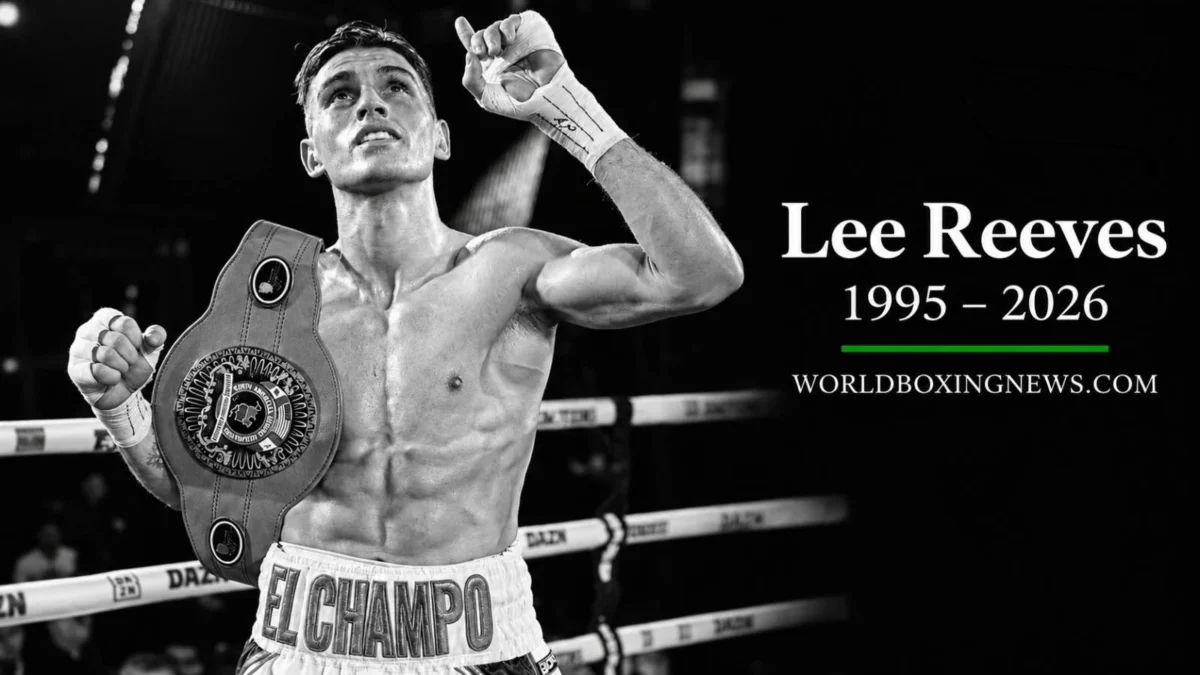
The international boxing community is once again in mourning following the tragic death of Irish professional boxer Lee Reeves. The 31-year-old Limerick native passed away on Monday, November 16, at University Hospital Limerick, surrounded by his family. His death comes three months after he suffered a devastating brain injury during a super lightweight contest at Dublin’s 3Arena, adding another painful chapter to boxing’s history of ring fatalities.
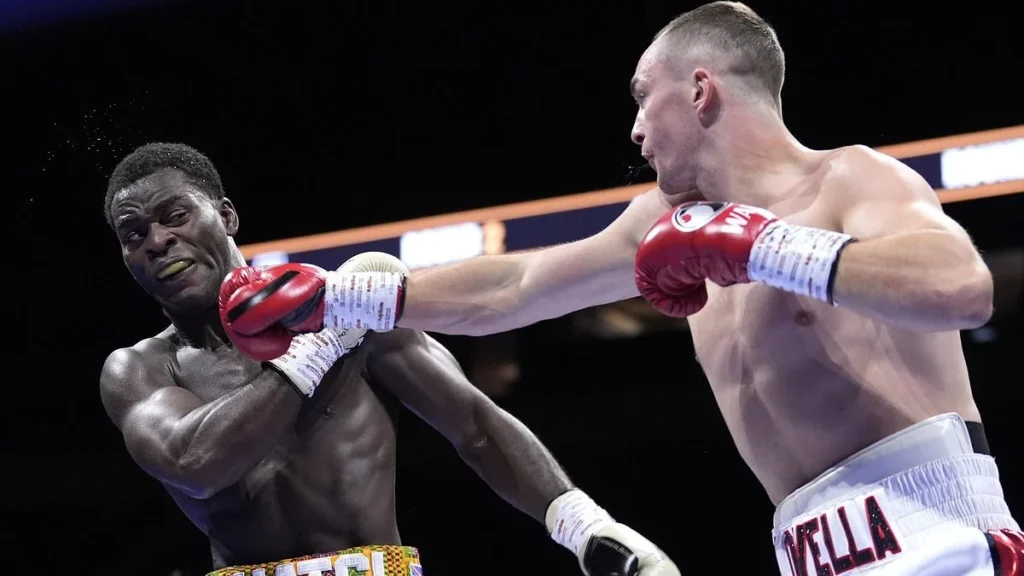
Reeves had been fighting for his life in hospital since August 1, when he was knocked out in the tenth and final round of a hard-fought bout against fellow countryman Gary Cully. What was meant to be a showcase event on a major fight night transformed into a medical emergency, leaving the fighter hospitalized and triggering an outpouring of grief and support across Ireland and the wider boxing world.
The Fight and the Battle for Survival
The tragic sequence of events began on the evening of August 1 at the 3Arena in Dublin, where Reeves squared off against Gary Cully in a high-stakes domestic clash. Known for his resilience and flashy ring style, Reeves competed fiercely throughout the contest before suffering a severe knockout in the tenth round.
Immediately following the stoppage, medical personnel inside the arena attended to Reeves as it became clear he had sustained a catastrophic injury. He was rushed from the venue to a hospital in Dublin, where surgeons performed emergency brain surgery to relieve pressure. Following the complex procedure, doctors placed the fighter into a medically induced coma to allow his body and brain a chance to stabilize.
As the weeks passed, Reeves was transferred from Dublin to University Hospital Limerick so that he could be closer to his home and immediate family. During his stay in Limerick, medical updates provided cautious glimmers of hope. His condition showed signs of minor improvement, raising hopes among his loved ones and supporters that he might eventually be able to wake up and begin a long road toward neurological rehabilitation.
However, the fragile nature of his recovery took a tragic turn over the weekend prior to his passing. Medical staff reported that Reeves developed a severe infection, which rapidly compromised his condition. Despite the continuous efforts of the intensive care team, the fighter’s body could no longer withstand the strain. He passed away peacefully on Monday evening with his family by his bedside.
Queensberry Promotions and Frank Warren Pay Tribute
Queensberry Promotions, the promotional banner that staged the August 1 event in Dublin, issued a statement expressing profound grief upon receiving confirmation of Reeves’ death.
“Everyone at Queensberry is devastated to learn of the passing of Lee Reeves,” the promotional company said in an official statement.
Queensberry remembered the Limerick fighter as an immensely gifted athlete who served as a beacon of determination within his community. The promoter extended its deepest sympathies to the grieving family while requesting that their privacy be respected during an extraordinarily painful time.
Promoter Frank Warren also shared his personal sorrow over the tragedy, paying tribute to the young fighter’s character both inside and outside the squared circle. Warren described Reeves as a fine young man and a true professional who would be sorely missed by everyone who had the privilege of knowing and working with him.
Gary Cully and Coach Jonathan O’Brien Pay Emotional Respects
The tragic outcome has heavily impacted Lee Reeves’ final opponent, Gary Cully. The two fighters shared a deep mutual respect that predated their professional contest in Dublin, having spent years crossing paths in the amateur ranks and national championships.
Following the announcement of Reeves’ passing, Cully took to Instagram to share an emotional tribute to his fallen rival and friend.
“We shared the ring back in August but we been going back for years,” Cully wrote. “I still remember the stadium days when I used to watch Lee in the nationals the weight above me and always be impressed by his fights and his flashy gear.”
Cully reflected on the personal bond they had formed over the years, recalling how they had frequently shared rounds during intense sparring sessions in Dublin training camps. Cully remembered Reeves not just as a formidable opponent in the ring, but as an endearing presence outside of it.
“What a character and a gent,” Cully added, expressing disbelief and profound sorrow at having to say a final goodbye to his longtime peer.

Reeves’ former coach, Jonathan O’Brien, who had been a constant source of updates for fans and friends during the fighter’s three-month hospital stay, also posted a poignant farewell to his former pupil.
“Goodbye son, sleep tight, you fought so hard til the end,” O’Brien wrote.
In his tribute, O’Brien drew comfort from the memory of Reeves’ deceased mother and brother, expressing his belief that they would be waiting to welcome the fighter home on the other side.
The Life and Career of ‘El Champo’
Lee Reeves leaves behind an impressive athletic legacy, built upon years of dedication to the sport of boxing. Known affectionately to fans, teammates, and rivals by his moniker ‘El Champo,’ Reeves established himself as a standout amateur before making the transition into the professional ranks.
Competing primarily in the super lightweight division, Reeves built a strong professional record, compiling 16 victories from 18 contests, with 11 of those wins coming by way of knockout. His explosive power, eye-catching gear, and charismatic ring demeanor made him a fan favorite whenever he stepped between the ropes.
Yet, those who knew Reeves best frequently emphasized that his life was defined by much more than his accomplishments inside the ring. Beyond his athletic career, Reeves served his country as a member of the Irish Defence Forces, bringing the same discipline and work ethic to his military service as he did to his athletic endeavors.
Reeves was also deeply committed to helping others in his hometown of Limerick. He was a dedicated mental health advocate who actively volunteered his time with Limerick Treaty Suicide Prevention, using his platform as a prominent local athlete to support individuals struggling through their darkest moments. Whether through community outreach, military service, or charitable work, Reeves devoted a significant portion of his life to uplifting those around him.
Boxing’s Growing Death Toll
The death of Lee Reeves once again underscores the stark and inherent dangers of professional combat sports, adding another name to a heartbreakingly long list of ring-related fatalities in recent years.
His passing comes just three months after former super welterweight contender Prichard Colón lost his nearly eleven-year battle for survival at the age of 33. Colón suffered catastrophic neurological injuries during an October 2015 contest against Terrel Williams in Virginia, requiring full-time specialized care until his death in August 2026. World Boxing News followed Colón’s journey extensively from the time before his 2013 professional debut through his long struggle, even obtaining the official state investigation into the bout that altered his life.
The tragedy surrounding Reeves also mirrors a series of devastating losses that have shaken the global boxing fraternity over the past two years:
- August 2025: Japanese boxers Shigetoshi Kotari and Hiromasa Urakawa both passed away after sustaining fatal brain injuries during separate bouts on the very same fight card in Tokyo.
- Early 2025: Irish boxer John Cooney died at the age of 28 following severe injuries sustained during a championship bout in Belfast.
- May 2024: British middleweight Sherif Lawal tragically lost his life after collapsing in the ring during his professional debut.
- 2019: A devastating year for the sport saw three high-profile fighters—Patrick Day, Maxim Dadashev, and Hugo Santillán—all pass away within months of each other due to injuries suffered in the ring.
- February 2018: British light heavyweight Scott Westgarth suffered fatal brain injuries shortly after winning a grueling contest in Doncaster.
Each passing serves as a grim reminder of the immense physical toll that combat sports can exact on its participants, leaving families, trainers, and fans to cope with irreversible loss.
Remembering Lee Reeves
The loss of Lee Reeves leaves a deep void within the Irish sporting landscape and the city of Limerick. To the wider public, he was an entertaining combat athlete and a proud representative of Irish boxing. To his community, he was a dedicated soldier, a compassionate volunteer, and a tireless advocate for mental health awareness.
Most importantly, to those within his immediate circle, Reeves was a cherished son, brother, and steadfast friend whose vibrant personality left an indelible mark on everyone he encountered.
As the boxing world reflects on another life cut short, World Boxing News extends its deepest condolences to the family, friends, team, and supporters of Lee Reeves during this period of grief.