
Athletic performance coaching has long wrestled with the tension between immediate gratification and long-term physiological adaptation. In the high-stakes world of sports training, the pressure to find quick fixes often overshadows the foundational patience required to build resilient, fast, and durable athletes. However, a significant shift in methodology implemented last summer by trainer Adrian Guyer highlights how minor adjustments to daily routines can yield profound improvements in sprinting mechanics, technique, synchronization, elasticity, and overall maximum velocity.
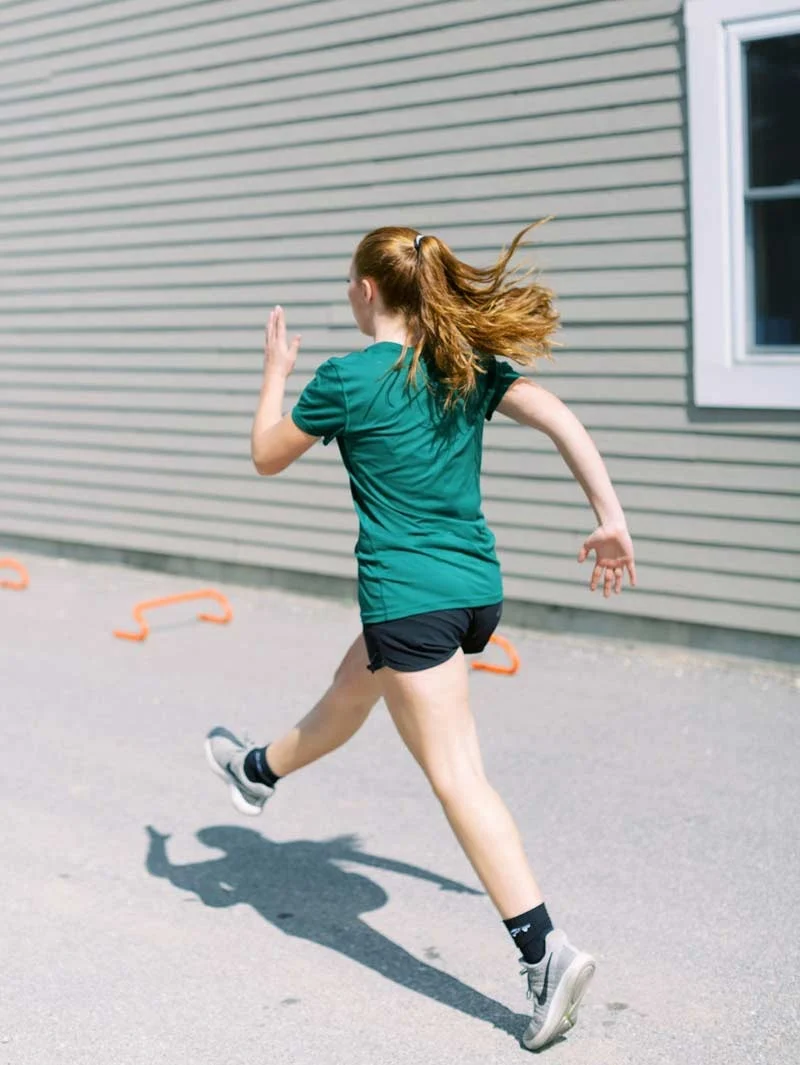
Faced with the physical limitations of an indoor facility that lacked the straight-line distance necessary for high-speed running, Guyer reimagined the traditional pre-training protocol. By stepping outside into an unconventional training space—a shared parking lot—his program successfully integrated maximum velocity training into the daily regimens of high school and collegiate athletes. The resulting changes transformed not only the physical capacities of the athletes but also their understanding of speed, movement fluidity, and biomechanical efficiency.
The Crock-Pot Approach to Athletic Development
The philosophy underpinning Guyer’s coaching strategy leans heavily on patience and physiological sustainability. Within the athletic community, a relentless pursuit of fast results often leads to what can be described as a "fryalator" approach—bombarding the central nervous system, muscles, tendons, and ligaments with excessive stress all at once. This method risks frying the athlete’s physical system and eroding their motivation over time.
Instead, Guyer advocates for a "Crock-Pot" methodology. Drawing an analogy to training as a potent substance, he notes that high doses administered haphazardly can be toxic and destructive. However, when repeated in small, manageable doses over extended periods, that same stress acts as a catalyst for positive tissue adaptation, growth, and resilience. Reaching athletic greatness is a slow-cooking process that requires time, careful volume management, and respect for the human body’s recovery timelines.

This philosophy is mirrored in the operational ethos of Guyer’s facility, where a simple phrase is painted directly on the entrance: "How you do anything is how you do everything." This mindset dictates that athletes must maintain absolute focus from the very first minute they step into the facility until the final moments of recovery. Because the warm-up is the one constant performed during every single training day, it presents a unique opportunity to instill intentional habits rather than treating preparation as a mere chore to check off before real work begins.
The Spatial Challenge and the Solution Outside
Like many private training centers and public fitness facilities, Guyer’s indoor space did not possess the necessary length for top-end sprinting. Lacking the room to stretch out a full sprint, indoor training capped maximum velocity efforts at roughly 20 to 25 yards—precisely the distance where athletes would safely need to decelerate before running into an artificial turf wall. Consequently, true maximum velocity work was largely absent from their speed mechanics development.
For athletes preparing for field and court sports where top-end speed is vital, neglecting maximum velocity limits tissue resilience and caps speed potential. Recognizing this missing link in the training paradigm, Guyer and his coaching staff looked past the physical boundaries of their building. They claimed a usable 75-yard strip in an adjacent parking lot, transforming an ordinary urban space into a high-performance speed laboratory.
The newly designed protocol integrated seamlessly into the existing schedule. Athletes completed the first half of their warm-up indoors, focusing on dynamic flexibility, range of motion, and tissue preparation. They then moved outdoors for targeted running sequences. To prevent overuse injuries on asphalt surfaces, the outdoor volume was kept brief, intentional, and concise, implemented three days a week for older athletes while closely monitoring physical feedback.

Technical Speed and the Power of Wickets
The outdoor sessions featured specialized movements designed to enhance elasticity and mechanics. One primary drill involved straight-leg runs paired with "technical speed" accelerations over the same distance. Technical speed is defined as the maximum velocity an athlete can achieve while maintaining flawless mechanics, absolute concentration, and clear intentionality. These runs emphasized elasticity within the posterior chain, allowing athletes to actively feel their feet striking the ground while providing crucial high-speed stress to the hamstrings and tendon junctions necessary for injury prevention.
In addition to straight-leg runs, the athletes utilized mini-hurdles, commonly known as wickets, set up in the parking lot. Spacing and hurdle heights were meticulously adjusted based on leg length, running experience, and real-time movement fluency. For instance, younger high school athletes began with tighter spacing, while older high school and collegiate athletes worked with slightly more expansive setups.
Coaches utilized video analysis to monitor posture, ground contact, and technique, ensuring athletes did not force their mechanics or artificially reach for the hurdles. By keeping the movements harmonious and fluid, the drills trained the athletes to utilize their tendons and elastic recoil rather than relying on a rigid, muscle-driven running style.
Over the course of the summer, the sensory feedback from the athletes shifted markedly. Many reported a sensation of "floating" and moving effortlessly at high speeds. This phenomenon corresponded with more efficient foot strikes occurring directly beneath the center of mass rather than out in front, coupled with increased stiffness and reactivity in the posterior chain. Parents and coaches alike noticed a visible improvement in fluidity and athletic expression when the fall sports seasons commenced.

Key Performance Indicators and Volume Accumulation
From a quantitative perspective, the implementation of this outdoor warm-up protocol dramatically altered the training volume of the athletes. Performing roughly 250 yards of high-speed upright running during each session meant that collegiate athletes accumulated approximately 9,000 yards of maximum-velocity exposure over the summer—volume that would have been entirely absent under the previous indoor-only regime. Younger high school athletes approached nearly 5,000 yards of high-speed running over the same timeframe.
This gradual, progressive accumulation of sprint volume significantly enhanced the athletes’ conditioning and energy system development while acting as a vital buffer against soft-tissue injuries entering the competitive season. The primary performance indicators observed were qualitative shifts in movement strategy: athletes learned to bounce through their tendons rather than pounding the ground with muscular rigidity.
While precise timing gates were impractical to set up in a shared, multi-business parking lot, broader physiological and performance markers signaled success. Post-summer follow-up testing revealed faster 10-yard acceleration times across the board. While 10-yard splits primarily reflect explosive acceleration rather than maximum velocity, the improvements were attributed to heightened running confidence, increased training volume, and notably reduced ankle and foot collapse upon ground impact during the initial drive phase.
Ultimately, integrating high-speed running into the daily warm-up proved to be an exceptionally efficient training method. Requiring little more than a handful of mini-hurdles, a few cones, and an open outdoor strip of asphalt, turf, or grass, the protocol effectively awakened the nervous system before heavy gym work. As Coach Guyer’s experience demonstrates, stepping beyond the four walls of a traditional facility can unlock profound athletic potential, proving that sometimes the most effective path to speed development is simply opening the door and taking training outside.