

Ask anyone who serves in the military or holds a civilian leadership role within the federal government why they do what they do, and you are almost guaranteed to hear a reference to the "mission."
While the specific nature of that mission varies widely depending on the role, a common thread unites them all: being part of something vastly bigger than oneself in service to the greater good of the United States. Feelings of patriotism, pride, and purpose serve as powerful, enduring motivators for those who wear the uniform or step into public service. Yet, on the absolute toughest days, many of these same leaders must carry themselves forward while burdened by a fourth "P": pressure.
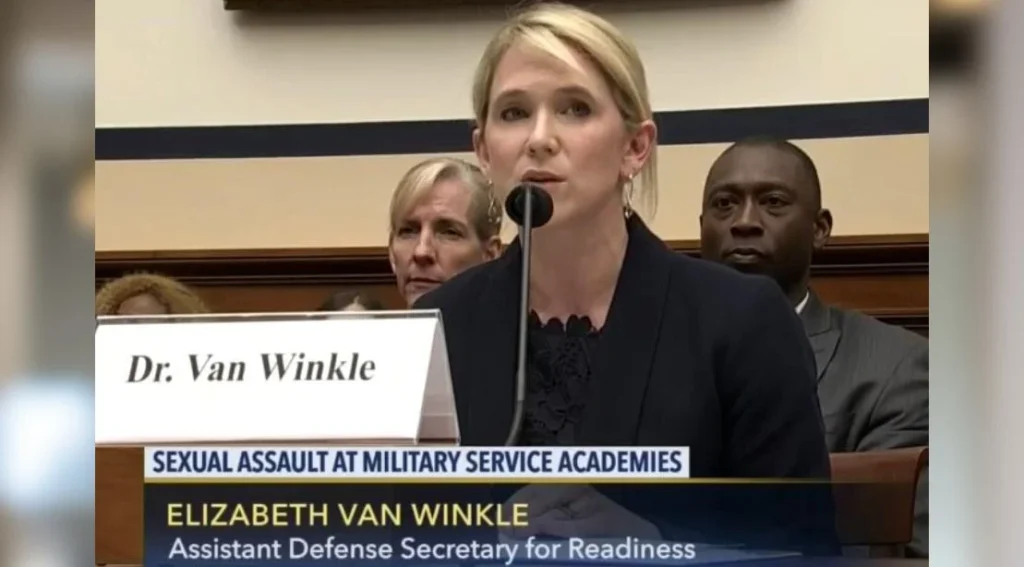
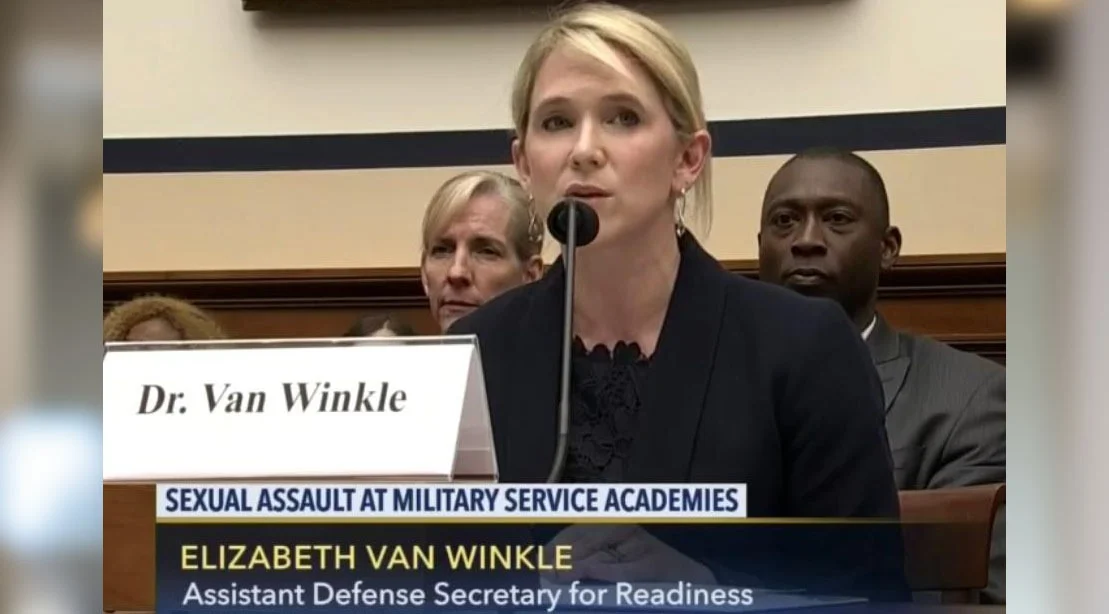
Dr. Elizabeth “Elise” Van Winkle understands each of those traditional motivators deeply, but she knows firsthand just how heavy and destructive that fourth one can become. During a pivotal and intensely demanding chapter of her government career, that crushing pressure took a severe, undeniable toll on her physical health. Now, when she speaks about her trajectory in public service and corporate leadership, she offers a vital piece of advice for anyone who may find themselves in a similar high-stakes position: regardless of the mission in question, your health will always matter.
A Passion for Psychology and Early Foundations
Van Winkle acknowledges that physical fitness was not a central priority during her younger years. That dynamic shifted dramatically when she entered college, choosing to major in psychology and English.
“That was probably my foray into fitness and health, the psychological side,” she reflected. “That is an important part of fitness to me.”
Her original professional focus was directed toward a career in criminology and trauma. She began pursuing this path within the Boston, Massachusetts public school system, working closely with children facing severe behavioral and psychiatric challenges. Observing young people grappling with adverse life experiences, trauma, and difficult environments proved to be a profoundly formative educational experience for her.
“The kids taught me a lot about resilience and heartache, perseverance, rage, and emotional darkness,” Van Winkle noted.
After becoming a mother, Van Winkle decided to return to academia to earn her Ph.D. in research psychology, specializing in neuropsychology. During that demanding period of advanced study, she welcomed her second child and successfully secured an internship position with the Department of Defense.
“My plan was to do research and data analytics on health and resilience, stay a year, and then move into work at NIH or do something in neuropsychology,” she recalled.
Plans Changed and Escalated Rapidly
Life rarely moves in a straight line, and the best-laid plans can often go awry. For Van Winkle, her career trajectory experienced a meteoric rise that she never anticipated. She remained within the Department of Defense, steadily working her way up to the Senior Executive Service (SES) level over the course of several years.
Then came the 2016 presidential election. Through a combination of being in the right place at the right time and the sweeping leadership transitions accompanying the incoming Trump administration, Van Winkle was elevated from a one-star SES equivalent to a three-star SES equivalent within the span of just a couple of weeks. Shortly after that massive promotion, she was named the Acting Assistant Secretary for Readiness.
“That propelled me into a level of political leadership that I had never really been in,” she said.
The promotion triggered an exponential increase in professional responsibility. The self-described “data geek” suddenly transitioned from leading a dedicated team of 25 people with an operating budget of $4 million to overseeing upwards of 900 civilian personnel, military members, and contractors, managing a sprawling $1 billion budget. Almost immediately, a high-level executive order handed her team a strict 45-day deadline to develop a comprehensive readiness recovery framework. This mandate required them to measure the operational readiness of the entire Joint Force, outline what would be necessary to restore that readiness, and map out the corresponding appropriation lines.
Highlight
ing the intense operational tempo inherent to the Pentagon, Van Winkle added, “Anybody in the Department knows that when someone says 45 days, they really mean 30 because it has to go through coordination.”
The Pressure of the Mission Takes Its Toll
Van Winkle’s rapid professional ascent felt like a relentless whirlwind, but she fully embraced what had instantly become her personal mission. She dedicated virtually every waking hour to fulfilling her new role and mounting responsibilities. Naturally, that level of commitment required putting other crucial aspects of her life on the backburner, including quality time with her children and tending to her own personal physical needs.
As a result, her body began to break down, and she fell ill. Yet, she remained completely undeterred by the physical warning signs. Knowing that her dedicated staff would refuse to leave the office until she did, Van Winkle would resort to physically locking up her office to force her team to go home, only to sneak back inside on her own to continue working into the night.
Eventually, her concerned team took matters into their own hands by placing a mandatory meeting on her calendar that redirected her to the Pentagon Health Clinic. Upon examination, the attending physician informed Van Winkle that she was suffering from three distinct infections and strongly urged her to check into a hospital immediately. However, knowing that a series of critical advisor meetings and a high-stakes commitment at the White House were looming on her calendar, Van Winkle resisted hospitalization. The physician relented, prescribing heavy antibiotics while delivering a sobering observation that has stayed with Van Winkle ever since.
“She said, ‘I’ve heard it before. I imagine it’s the mission,’” Van Winkle recalled.
Reflecting on that period, Van Winkle admits that she noticed every single red flag flashing along the way, but consciously chose to drive right past them for the sake of the mission. She eventually recovered from the illness, resumed her demanding duties, and continued in her role until a permanent assistant secretary was formally named. Today, she shares the lessons of that experience openly. Regardless of how noble the mission is or what overwhelming challenges stand in your way, you must make your personal health a priority to achieve sustainable success.
That intense personal ordeal, combined with the psychological foundation she built in college and throughout her professional life, has given her a much more holistic perspective on what optimal health and fitness truly entail.
“I now truly see fitness as crossing the elements of physical, psychological, and spiritual,” she said.
Why Resilience and Transparency Matter for Unit Readiness
Today, Van Winkle applies her extensive expertise in the private sector, serving as the Industry Executive for Federal Government at Oracle. In this capacity, she helps translate complex military requirements into cutting-edge technology solutions designed to support the Joint Force.
“My job is really to help Oracle understand that government perspective, the Department of War perspective, and really translate what can be some fairly complex elements within the federal government back to the technology venture at Oracle,” she explained.
Alongside her corporate responsibilities, she frequently addresses military audiences on the subjects of leadership and resilience—a message deeply rooted in the crucible of her Pentagon experience. Her core guiding principle is that individual health and well-being directly dictate collective unit readiness. As she learned firsthand through her own breakdown, each person’s health status matters profoundly because it directly impacts the operational readiness of the larger group.
“Every member of the unit must be performing at 100 percent for the unit as a whole to perform at 100 percent,” she emphasized.
Equally important to physical health, Van Winkle noted that open communication and radical transparency regarding problems are vital. If a service member or civilian team member is operating below 100 percent capacity and chooses to conceal that struggle from leadership, it can easily snowball into catastrophic issues for the entire unit down the line.
“I think leaders often presume that members understand this, but what I would hear from military members is a focus on mission above and beyond all else,” she said. “And that sometimes meant that they would step over those red flags in order to maintain this facade and that everything is okay.”
She added a stark warning: “Ignoring the problem is just setting a timer. They may be able to hold it together for a while but not forever.”
Many military personnel have shared that they hesitate to bring up personal problems out of fear that they might become the reason a unit’s readiness is compromised. In Van Winkle’s expert view, however, the exact moment a problem is ignored and hidden, readiness is already compromised.
“If a leader knows someone is struggling or someone is injured or someone is going through a crisis, they can do something about it before it becomes a full-blown issue that impacts the unit and the mission,” Van Winkle stated. “If the leader does not know about it, you are then creating a blind spot.”
For those in command and senior leadership positions, addressing those underlying problems and fostering resilience must be viewed as vital investments in overall operational readiness. Proactive resilience programs ultimately preserve valuable time and energy, protecting the mission in the long run.
“If you wait for it to become a readiness problem, you really lose before you even begin,” she noted. “So preventing these things is an incredible return on investment.”
Preparing the Next Generation of Service Members
Beyond technological advancements, the military’s increasing emphasis on holistic readiness and service member well-being in recent years will undoubtedly benefit future recruits entering the Joint Force. Van Winkle believes there are practical steps leaders can take to ensure that those who wear the nation’s uniform are better prepared both physically and psychologically, thereby maximizing overall operational capability.
“Look closely at yourself, and think of it like a maintenance check like you do for a weapons system,” she advised. “As humans, we tend to preserve stability over instability and we strive towards homeostasis, but this often means that we don’t see what’s in front of us, particularly if it doesn’t align with how we see ourselves.”
Van Winkle also emphasized that life inevitably brings unexpected turns, whether an individual feels prepared for them or not. True resilience means developing the capacity to adjust to those sudden changes as quickly and effectively as possible.
“Life is masterful at creating instability, and we are constantly adjusting to the experiences that we have,” she said. “If done right, it can make us stronger and more resilient.”
Ultimately, she suggests that leaders and service members alike must not shy away from the difficult conversations inherent to military service, readiness, and daily life. Cultivating the willingness to speak openly about these challenges does not just help the individual service member; it protects the leader and strengthens the entire organization, allowing personnel to remain anchored in patriotism, pride, and purpose while standing fully prepared to shoulder the pressure.
“It does an incredible amount to maintain morale and cohesion in the unit,” Van Winkle concluded, “and it really does prevent those bigger problems.”