When boxer Ramla Ali steps into the green room of a West End cinema in London, her presence commands the space. She wears a striking gown featuring a delicate bodice paired with a massive, cascading skirt of black feathers—a visual statement that feels every bit as theatrical as it is elegant. Moments earlier, she stood before an excited audience to introduce the premiere of a new feature film detailing the remarkable journey of her life. As she settles down, her mobile phone flashes with incoming messages of congratulations from high-profile figures in attendance, including survivalist Bear Grylls and Nobel Peace Prize laureate Malala Yousafzai.
Yet amidst the glamorous surroundings and celebrity well-wishes, the person whose reaction matters most to Ali sits quietly nearby: her mother, who is watching the film for the fourth time. When asked how her mother feels about seeing her life portrayed on screen, Ali speaks softly, noting that she loves it. The film, titled In the Shadows, is directed by acclaimed filmmaker Anthony Wonke and stars Top Boy actor Jasmine Jobson as Ali. It chronicles the boxer’s arduous, triumphs-over-adversity path leading up to her historic appearance at the 2021 Olympic Games in Tokyo.
That path was forged through extraordinary hardship. Ali was born in Somalia during a period of intense civil strife. When she was still a baby, tragedy struck her home when her elder brother, Abdulkadir, was killed by an explosion while playing outside. Devastated and seeking safety, the family fled the war-torn country, undertaking a perilous voyage by boat to Kenya before eventually securing sanctuary in the United Kingdom as refugees.
Settling in East London, young Ali faced a different set of challenges. At school, she endured persistent bullying because of her weight. In an effort to build confidence and get fit, she joined a boxercise class at a local gym. What began as a simple fitness routine quickly evolved into a passion for competitive boxing. However, Ali felt compelled to hide her athletic pursuits from her family. As a young Muslim woman, participating in a combat sport was outside traditional cultural expectations. Moreover, she knew her mother—having moved heaven and earth to escape violence in Somalia—would be utterly heartbroken to see her daughter voluntarily entering harm’s way inside a boxing ring. Over time, that dynamic transformed; today, her mother is the very first person Ali telephones after every fight.

The journey to adapt her life into a cinematic narrative began roughly eight years ago. Ali’s husband, Richard Moore—who previously served as her boxing coach and acts as an executive producer on the film—explains that when they first pitched the project in 2018, their motivations were rooted as much in survival as in storytelling. At the time, the couple faced severe financial distress, finding themselves down to their final hundred pounds. They were relying heavily on the kindness of friends who took them in and offered them shelter. For a period, they resided in a house owned by actor Idris Elba and his wife, Sabrina. Ali recalls warmly how the couple served as their saviours, adding with a giggle that after catching COVID-19 while staying there, they ended up staying for much longer than originally anticipated.
Despite the prospect of a film deal, Ali admits she initially harboured deep doubts about opening her past to the world. The process required a level of vulnerability she had never previously exposed, forcing her to sit down with a screenwriter to detail private memories and painful experiences she had kept hidden for years. Beyond her own hesitation was the delicate question of family trauma. Ali worried about how revisiting those painful memories would affect her mother, recognizing that while it was her personal story, it was fundamentally her mother’s story as well. When she first floated the idea of a biopic to her family, none of them were initially supportive.
Unexpectedly, it was her mother who came around first, eventually becoming one of the project’s most resolute advocates. She offered firm feedback on the narrative, insisting that the tragic loss of her son could not be glossed over or omitted. Her mother was adamant that the scene depicting Abdulkadir’s death be fully included in the film. Reflecting on that decision, Moore notes that insisting on the scene was her mother’s way of keeping his memory alive—ensuring that his premature death carried a larger, lasting meaning.
Ali pauses thoughtfully when reflecting on her brother’s passing. She observes that Abdulkadir’s death set off a chain reaction that fundamentally reshaped the trajectory of her entire family. She notes that his loss created a profound ripple effect: without his death, they would never have fled Somalia for the UK, she would never have picked up boxing, she would never have met her husband, and her life would have been entirely unrecognizable.
While the film addresses her background as a refugee, Ali stresses that In the Shadows is not intended to serve as a explicit political statement on immigration policy. Instead, she sees it as a vital opportunity to present a deeply human perspective that counters contemporary rhetoric surrounding migrants arriving on British shores. She points out that immigration is frequently weaponized politically to foster social division. Because uplifting migrant narratives rarely generate the same sensational headlines as negative stories, positive experiences are seldom highlighted. Yet, she argues, those constructive stories are far more representative of the millions of people who arrive, build stable lives, raise families, and contribute meaningfully to society. For Ali, if audience members leave the theater seeing a real human being rather than a soundbite or a headline, the film has achieved its purpose.
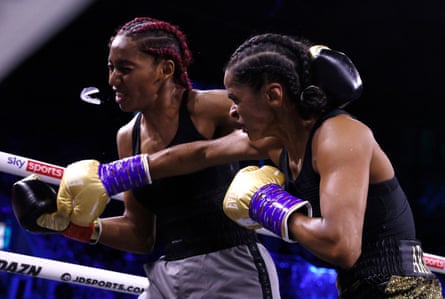
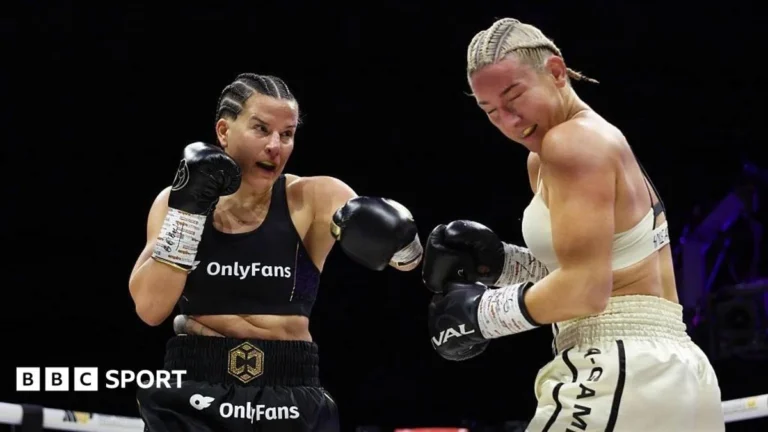
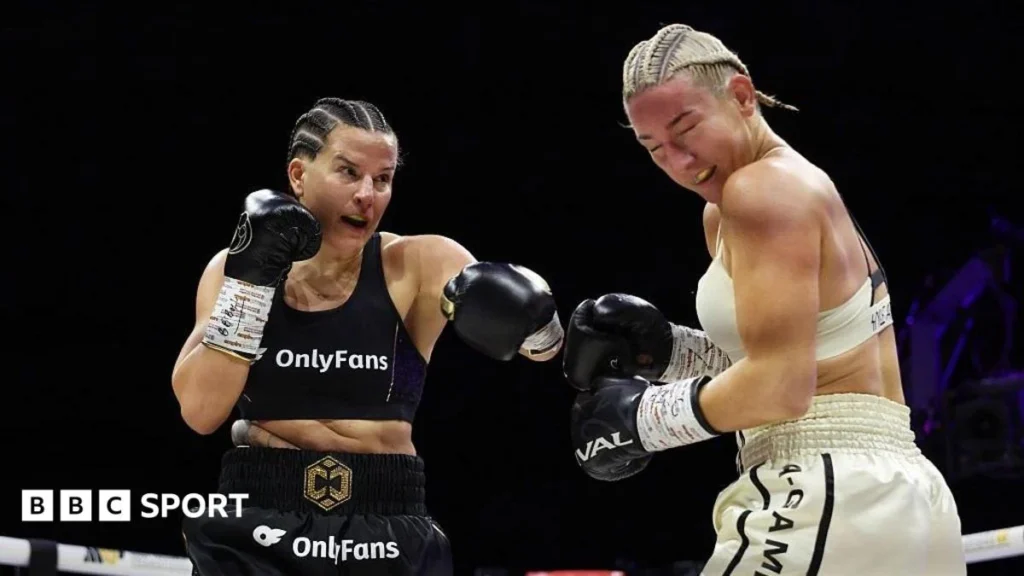
Ali herself stands as living proof of what refugee families can accomplish. In 2015, she made sports history by becoming the first Muslim woman to win an English amateur boxing title. Six years later, she made history again at the Tokyo 2020 Olympics by becoming the first boxer ever to represent Somalia on the Olympic stage. Outside the ring, her profile grew rapidly; she entered high-fashion modeling, appearing on the cover of British Vogue for an issue guest-edited by the Duchess of Sussex. Driven by a desire to give back, Ali founded the Sisters Club in 2018, an initiative providing free boxing classes to vulnerable women and survivors of domestic abuse, and she actively serves as a UNICEF ambassador.
Her dedication to In the Shadows went far beyond licensing her life story. Ali took a hands-on approach throughout production, meticulously reading every draft of the script and maintaining a constant presence on set throughout the shoot. Unlike executive producers who simply attach their names for prestige, Ali emphasizes that she worked tirelessly for the title and earned every bit of her credit. Her involvement was so immersive that she even performed as the body double during the intricate boxing fight sequences filmed for the movie.
Looking ahead, Ali has begun contemplating her eventual transition out of professional athletics. Acknowledging that an athletic career has a natural shelf life, she recognizes that there inevitably comes a moment when a fighter knows it is time to hang up the gloves. In preparation for her next chapter, she and Moore have already co-written and directed a comedy feature titled Not Like Us. She has also begun exploring acting. Drawling parallels between her original sport and her new creative pursuits, she points out that both disciplines require absolute dedication: just as hours in the gym determine performance under the bright lights of the ring, the work invested behind the scenes of a film dictates what appears on screen. Looking to the future of her cinematic career, Ali expresses a strong desire to elevate Black British stories, noting that while American cinema offers extensive representation for Black narratives, there remains a vital need for broader representation focused on the Black British experience.
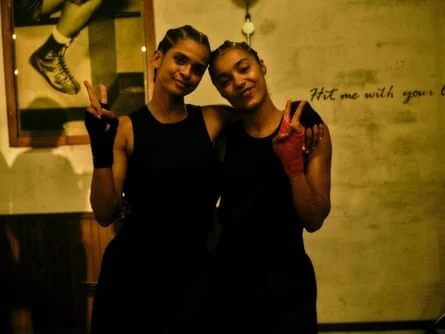
Matching Ali’s passion is actor Jasmine Jobson, who took over the lead role of Ali after actor Letitia Wright was initially attached to the project. Meeting at the BFI Southbank on a bright afternoon, Jobson arrives accompanied by her professional team—including her publicist, makeup artist, and hairstylist—emphasizing that every member of her support structure plays an essential role in her career. Walking confidently in high heels, Jobson looks in peak physical condition, though she notes with a laugh that she has not maintained a regular boxing routine since filming wrapped, focusing instead on physical therapy for an old shoulder injury sustained years ago while studying to be a personal trainer in college.
When tasked with embodying an elite athlete on screen, Jobson embraced the physical demands immediately. Drawing on her childhood background in martial arts and kickboxing, she plunged into an intense preparation period. Because she was cast on short notice, she had a mere two weeks to transform herself physically and mentally into a championship-level boxer. Her regimen required eight hours of rigorous training daily. While she thoroughly enjoyed learning the mechanics of boxing, she jokes that she drew a firm line at taking hits to the face during sparring, protecting what she lightheartedly calls her primary asset.
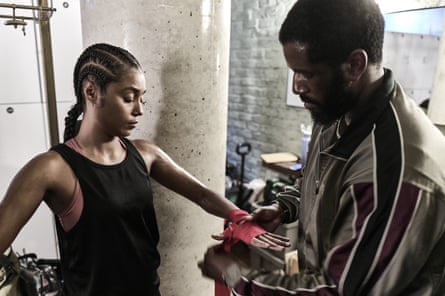
Prior to filming, Jobson met Ali over coffee to build a personal connection. She describes falling in love with Ali’s spirit as they spoke deeply about their respective backgrounds. Jobson expresses immense admiration for how much Ali has overcome, transitioning from early trauma to international success while reshaping cultural perceptions. For Jobson, Ali’s life demonstrates that regardless of how distant a goal may seem or how unconventional a passion might appear to others, relentless drive and talent can turn any dream into a success story.
Taking on the responsibility of portraying a living person did not intimidate Jobson. She approaches her craft by weaving aspects of her own identity into every character she plays. Like Ali, Jobson’s journey to success was paved through overcoming significant childhood adversity. During her secondary school years, complex family dynamics led to social services becoming involved in her home life. Jobson initially moved in with her grandmother before making the mature, difficult decision at age 14 to enter the foster care system voluntarily. She recalls needing to conduct a deep internal assessment to remove herself from negative influences, refocus her ambitions, and rediscover her sense of self.
Her turnaround began when a family friend suggested she audition for The Big House, a renowned London theatre company dedicated to working with care leavers and at-risk youth. The platform provided her with the training and visibility that ultimately led to securing professional talent representation. Demonstrating the same work ethic that defines Ali, Jobson fully committed to the role in In the Shadows, even memorizing and delivering dialogue in Somali.
She recalls a poignant line from the script in Somali, explaining that its translation means: "I just want you to be proud of me." Jobson notes that the sentiment mirrors the driving force behind her own life and career—a fundamental desire to make her family and loved ones proud. While their individual life experiences differ, Jobson sees a powerful thematic connection between herself and the boxer she portrays: both women navigated hardship, refused to be defined by early struggles, and relentlessly pursued their dreams against the odds.