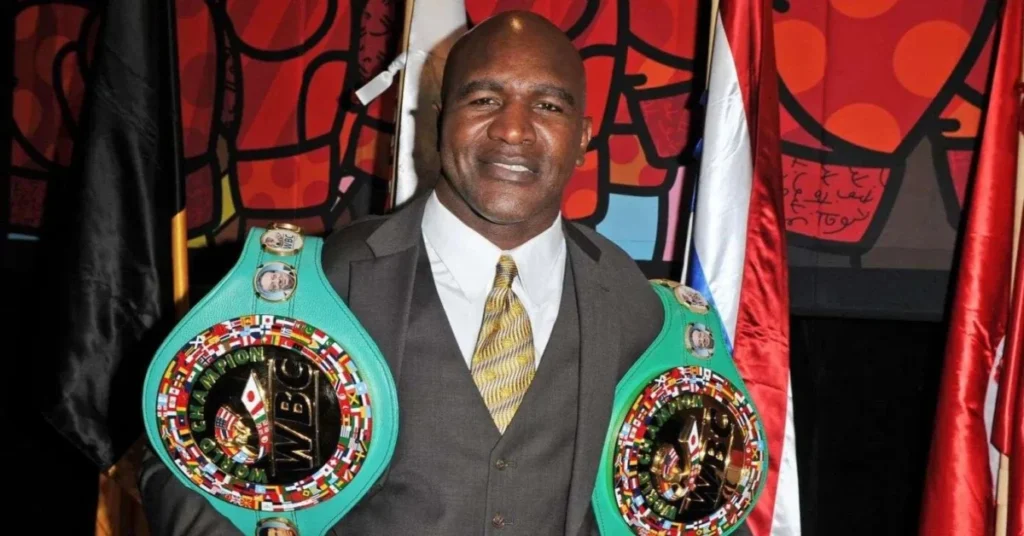

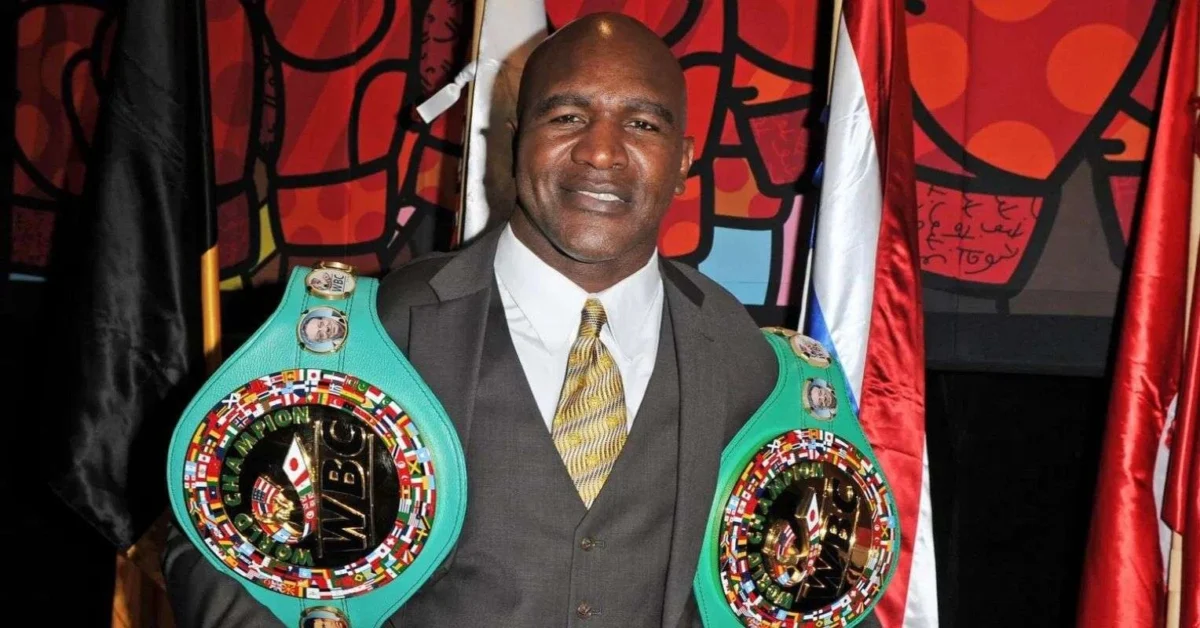
Evander Holyfield stands firmly as one of the most accomplished and decorated heavyweight fighters of the last four decades, etching his name permanently into the annals of boxing
history through a career defined by resilience, skill, and historic achievements.
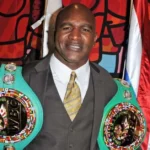
Widely known by his famous moniker “The Real Deal,” Holyfield achieved a monumental milestone in 1990 when he became the first fighter in the modern history of the sport to capture the undisputed championship across two distinct weight classes, conquering both the cruiserweight and heavyweight divisions. To this day, he remains the only boxer in history to secure the world heavyweight championship on four separate occasions, a testament to his incredible longevity, discipline, and competitive drive at the absolute elite level of the sport.
Throughout a career that spanned across multiple golden eras of heavyweight boxing, Holyfield crossed paths with an extraordinary roster of legendary contemporaries. His resume boasts defining victories over an abundance of iconic fighters, including master boxers, fearsome punchers, and hall-of-fame champions like Larry Holmes, Riddick Bowe, and George Foreman. Each of these bouts tested different facets of Holyfield’s immense skill set, cementing his reputation as a warrior who never backed down from a challenge and routinely thrived against the very best the sport had to offer.
Among the most storied chapters of his illustrious tenure is his legendary rivalry with the once-ferocious “Iron” Mike Tyson. The pair squared off in two unforgettable encounters during the late 1990s, matches that captured the global imagination and delivered some of the most dramatic moments in combat sports history. Their first meeting in November 1996 saw Holyfield pull off a stunning upset, wearing down the fearsome champion before stopping him in the eleventh round. Their rematch the following year proved even more infamous, cementing their places in pop culture lore alongside their sporting achievements.
Despite holding victories over his fierce rival, Holyfield recently offered a remarkably candid assessment of their matchups. In a widely discussed YouTube clip, “The Real Deal” paid tribute to his former opponent while offering a deeply honest reflection on the timing of their bouts. Holyfield admitted that he considers himself “lucky” to have crossed paths with Tyson when the fearsome puncher was already past his formidable athletic prime.
Reflecting on the psychological and tactical challenges of facing the heavyweight terror, Holyfield explained how Tyson’s aura of invincibility shifted over time. He noted how unpredictable the champion was during the peak of his powers, a period when opponents simply did not know what to expect inside the squared circle.
“Unpredictable. When you didn’t know what Tyson was gonna do, everybody was in trouble,” Holyfield shared in the clip, describing the immense dread that the mere mention of Tyson’s name once struck into the hearts of fellow heavyweights. However, Holyfield pointed out that the dynamics of Tyson’s style evolved as his career progressed. “He changed up and got into a rhythm that everybody knew and became beatable. I was fortunate enough to fight him when he was beatable.”
The candid admission shines a fascinating light on the nuances of boxing greatness, where timing, circumstance, and the inevitable passage of time often play as significant a role in the outcome of historical rivalries as raw talent and preparation.
To fully understand Holyfield’s perspective, it is necessary to look back at the meteoric rise of “Iron” Mike Tyson, who burst onto the professional boxing scene in 1985 when he was barely an adult. Coached by the legendary Cus D’Amato, Tyson swept through the heavyweight division with terrifying speed and destructive punching power, obliterating opponents with combinations that left spectators and experts alike in awe.
In November 1986, just months after turning 20 years old, Tyson cemented his status as a generational phenomenon by defeating WBC heavyweight champion Trevor Berbick via a second-round technical knockout. That victory made him the youngest heavyweight champion in boxing history, a record that still stands today and continues to symbolize one of the most explosive arrivals the sport has ever witnessed. During his absolute peak in the mid-to-late 1980s, Tyson unified the major sanctioning bodies, instilling a level of fear in opponents that had rarely been seen since the days of a young Sonny Liston or George Foreman.
Although the later stages of Tyson’s career were accompanied by significant controversy, personal trials, and promotional battles, his legacy as one of the greatest heavyweights of all time remains entirely secure. Beyond his championship reigns, Tyson stands as one of the most influential and recognizable figures in the history of sports, inspiring generations of fighters across multiple combat disciplines.
Demonstrating his enduring global appeal and competitive spirit, Tyson made a sensational return to the professional ring last November. In a highly anticipated spectacle, the former heavyweight king faced internet personality-turned-boxer Jake Paul in an eight-round heavyweight bout held at the massive AT&T Stadium in Arlington, Texas. Although the aging legend showed flashes of his trademark movement and power, he was ultimately defeated via unanimous decision by the former YouTuber, adding another unique chapter to a life and career that continues to captivate sports fans around the world.