


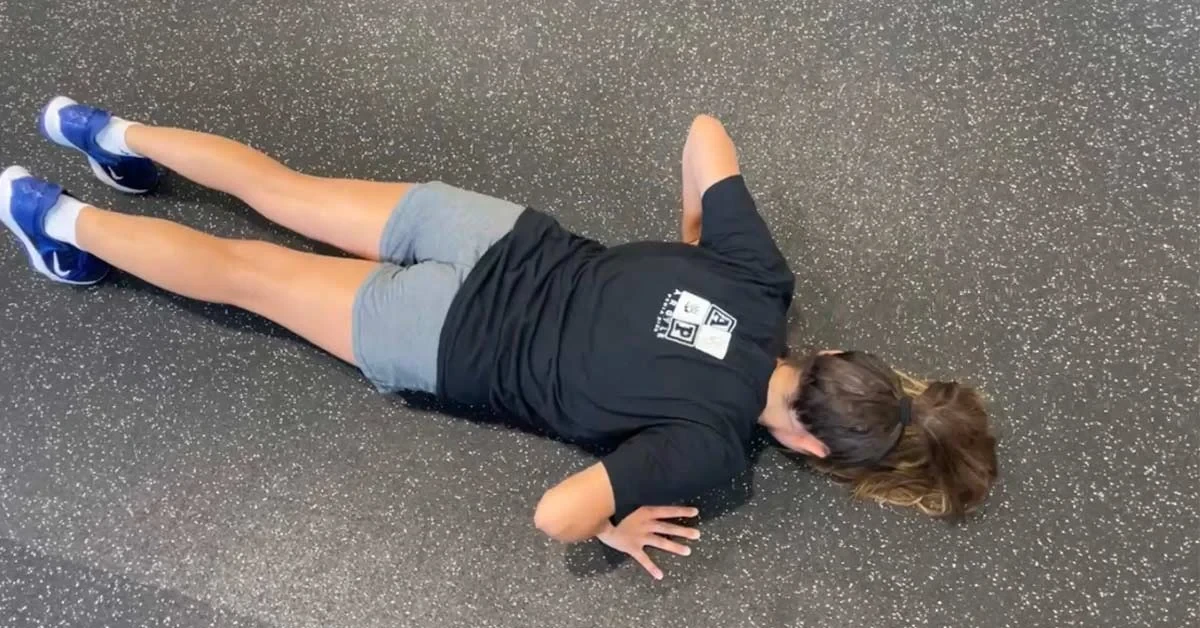
For decades, the push-up has occupied a rare and respected place in the athletic conditioning landscape. Often viewed as a classic, no-nonsense movement, it is one of the few foundational exercises largely spared from passing fitness trends or over-complicated labeling. It is challenging, technical, and demands total-body coordination from head to toe, relying on a relatively small joint—the elbow—to lower and elevate the body against gravity. Yet, despite its reputation as a simple bodyweight standard, strength coach Rachel Hayes argues that treating the push-up as a mere beginner checklist item, particularly when coaching female athletes, fundamentally misunderstands both human development and true functional strength.
In a detailed examination of athletic movement and adolescent development, Hayes highlights the pitfalls of applying uniform, one-size-fits-all training programs to male and female athletes. While male and female athletes alike benefit from meticulous, attentive coaching, assuming that training regimens should be entirely interchangeable overlooks critical physiological and neuromuscular milestones. Rather than viewing the push-up as a basic warm-up movement, Hayes suggests that for female athletes, mastering a strict push-up serves less as a prerequisite for strength and more as a powerful barometer of overall upper-body capacity.

To build long-term strength and competence, coaches must step back and adopt a progressive, methodical approach that accounts for biological maturation, posture, and biomechanical control.
Developmental Considerations and Growth Realities
Puberty is an intensely dynamic period characterized by complex hormonal, anthropometric, and neuromuscular changes that directly influence physical performance. For youth coaches and physical educators, understanding these comprehensive shifts is essential. While girls typically begin puberty earlier than boys—often between the ages of 9 and 11—the exact timing and tempo vary widely among individuals.
Two major milestones during this developmental window directly impact relative upper-body strength and movement control. The first is peak height velocity, commonly known as the adolescent growth spurt. During this phase, the body’s long bones, including the femur and tibia, undergo rapid vertical growth. As overall height increases, the body’s center of mass shifts upward, making core stability and spatial control significantly more difficult to maintain. Because a proper push-up requires a coordinated effort across nearly every joint from the hips upward—with the pelvis and spine acting as the primary structural anchors for the torso—navigating these skeletal shifts requires intentional movement education.

The second critical factor involves strength and neuromuscular control following peak height velocity. While male adolescents typically experience a pronounced neuromuscular growth spurt, adapting to their expanding bodies with a disproportionate surge in muscular power and upper-extremity force, female adolescents do not undergo a directly equivalent neuromuscular adaptation. Although strength increases linearly in girls, it does not match the dramatic, localized upper-body power surge often observed in maturing boys.
Hayes stresses that these physiological differences do not imply that female athletes are incapable of mastering complex calisthenics. Instead, they highlight why upper-body training programs must be tailored thoughtfully rather than forcing young athletes into rigid, standardized expectations that fail to serve their individual developmental needs.
Establishing Positional Awareness and Postural Control
Before introducing multi-joint movements like push-ups, trainers must establish a strong foundation of positional awareness, focusing specifically on the pelvis, cervical spine, and shoulder blades. Skipping this preliminary phase often leaves athletes struggling in compromised positions, hanging passively off their skeletal structures rather than actively engaging supporting musculature.

Positional control begins with addressing three key structural areas. The first is posterior pelvic tilt and anti-extension. Many athletes attempting a plank or push-up allow their lower backs to hyperextend, causing their midsection to sag toward the floor. This places undue stress on the lumbar facet joints and can destabilize the shoulders as the scapulae drift forward. Correcting this requires teaching core anti-extension through foundational exercises like dead bugs, practiced first in a supine position before transitioning to the prone position required for push-ups and abdominal rollouts.
The second area of focus is cervical retraction. A common postural fault during upper-body movements is hyperextension of the neck, where the head juts forward and the gaze lifts upward. Mitigating this tendency requires teaching athletes how to properly align and retract the cervical spine, moving progressively from seated positions to prone holds where gravity provides natural resistance.
Finally, proper scapular movement—encompassing both protraction and retraction—is vital for successful pushing and pulling mechanics. Teaching athletes how to move their shoulder blades smoothly around the ribcage prevents unwanted elevation or winging during pressing exercises, laying the groundwork for robust horizontal and vertical upper-body mechanics.

Progressive Pathways to Strength Development
Mastering the push-up is rarely a quick process; it demands a structured, patient progression. Hayes advocates for an approach that builds a strong isometric foundation before introducing eccentric and concentric phases in a balanced manner.
Observations in the training environment reveal distinct differences in how male and female athletes adapt during these developmental stages. Girls often require more time to build sufficient concentric pressing power before executing a full push-up, whereas boys frequently need immediate intervention regarding postural alignment and core stability. Rather than rushing athletes toward a premature goal, coaches are encouraged to meet athletes where they are, utilizing creative regressions to foster long-term success.
Equipment commonly found in weight rooms can be repurposed creatively to support this progression. For example, utilizing bumper plates for floor-based pressing variations can serve as an accessible entry point for building pressing mechanics, particularly in settings with limited barbell availability or large training groups. Furthermore, emphasizing the eccentric, or lowering, phase of a movement can help bridge the gap between maximal eccentric capacity and concentric strength, theoretically boosting overall performance over time.

Progression charts developed across years of practical coaching highlight the importance of moving deliberately through distinct phases. The journey begins with isometric work, using standard forearm planks not merely as a basic core exercise, but as a dynamic training ground for mastering posterior pelvic tilt, cervical retraction, and scapular protraction. Once static control is secured in 20-second intervals, coaches can introduce eccentric variations—such as elevated or band-assisted push-ups—to allow for a full range of motion without sacrificing structural integrity.
Ultimately, progression serves as a quality-control mechanism for competence, safety, and confidence. While supplementary exercises like dumbbell bench presses or plate presses can build auxiliary strength within a training session, forcing a novice athlete into a full push-up before they possess the necessary movement patterns is counterproductive. Once an athlete achieves the capacity for a technically sound push-up, keeping volume manageable ensures high-quality repetitions and continued strength gains.
By stepping back and adopting a meticulous, parts-before-the-whole approach, coaches can help female athletes navigate the journey toward upper-body mastery. Recognizing and respecting physiological differences allows trainers to design individualized pathways that build both physical capability and lasting athletic confidence.