


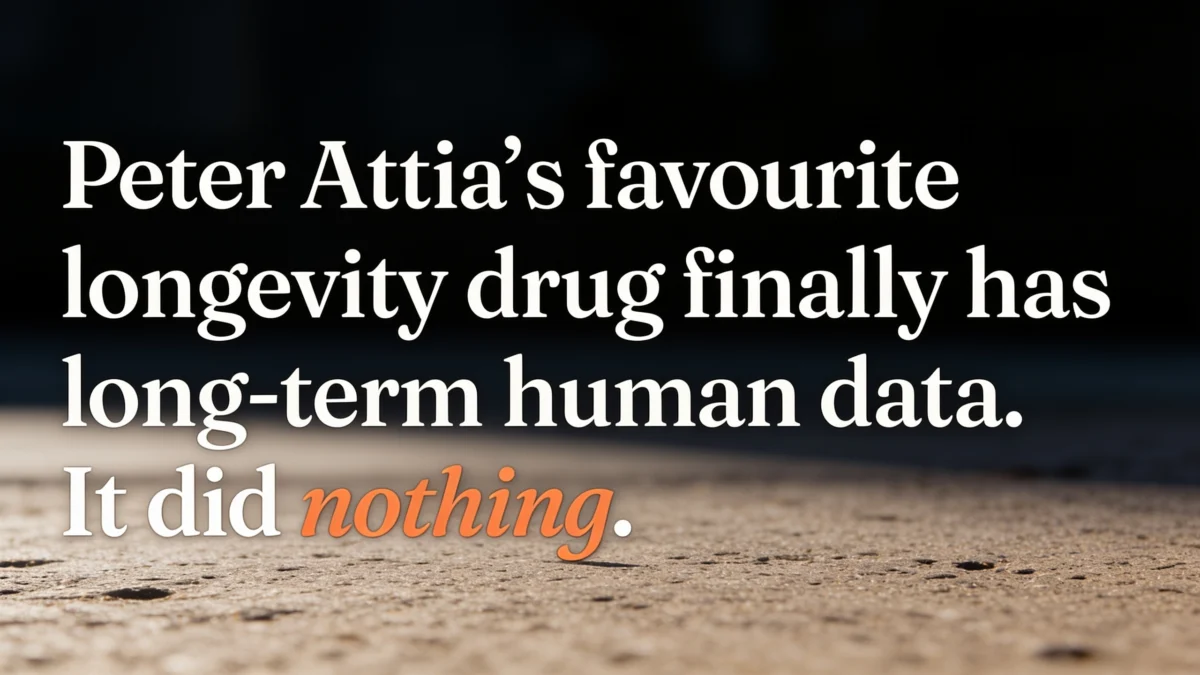
Rapamycin, the prescription pharmaceutical long championed by longevity enthusiasts and biohackers hoping to dramatically stretch human healthspan and lifespan, has encountered a significant empirical hurdle. New real-world human data circulating within anti-aging and longevity communities sheds light on a decade-long observational study of kidney transplant patients, offering a sobering counterweight to years of optimistic extrapolation from animal trials.
According to the recent data analysis, patients maintained on rapamycin lived virtually no longer than matched control patients who did not receive the drug. While the findings have sent ripples through online longevity forums and wellness circles, researchers and medical professionals emphasize that the results complicate, rather than definitively close, the ongoing debate over the drug’s potential anti-aging properties in humans. As the medical and biohacking communities grapple with the implications of these numbers, the gap between laboratory promise and clinical reality in humans is coming under unprecedented scrutiny.
The Numbers Behind the Headline
The retrospective data analysis that captured the attention of longevity researchers compared 4,885 kidney transplant patients prescribed rapamycin against a control group of 6,589 transplant recipients who were not taking the medication. The study followed both cohorts for a median duration of 11 years, applying statistical adjustments to account for 18 distinct confounding factors that might otherwise skew the outcomes of a transplant population.
When researchers calculated median survival across the cohorts, the results yielded a statistical tie: 64.6 years for patients on rapamycin compared to 64.3 years for those who skipped the drug.
However, medical professionals and data analysts have urged caution regarding how these figures are interpreted. The full publication details and underlying methodology of this specific retrospective analysis have not yet been independently confirmed through peer-reviewed channels. Consequently, researchers recommend treating these figures as promising yet preliminary until the primary source data can undergo rigorous academic scrutiny.
Why Transplant Data Can’t Settle the Debate
Interpreting data from organ transplant recipients presents profound methodological challenges for scientists studying aging. Transplant patients differ in fundamental, systemic ways from the healthy, middle-aged adults who typically seek out rapamycin as an off-label preventative therapy to forestall age-related decline.
Recipients of organ transplants manage chronic immunosuppression, face elevated risks of opportunistic infections and malignancies, and endure the underlying physiological stress of organ failure and major surgery. Researchers note that extrapolating survival outcomes from a heavily medicated, chronically ill transplant cohort to healthy individuals taking low weekly doses for longevity is a deeply confounded comparison.
Nevertheless, because large-scale, long-term randomized controlled trials examining lifespan extension in healthy humans do not currently exist, this dataset remains one of the longest human follow-up records available for chronic rapamycin exposure. While the absence of a survival signal in this population does not definitively settle the question for healthy biohackers, it introduces a necessary note of caution into an otherwise speculative field.
How a Mouse Study Launched a Movement
The modern fascination with rapamycin traces its origins to a landmark 2009 study published in the journal Nature by David Harrison and his colleagues across multiple research institutions. In that pivotal experiment, mice treated with rapamycin starting at 600 days of age—roughly equivalent to late middle age in human terms—experienced significant lifespan extensions. Male mice lived 9 percent longer, while female mice saw their lifespans increase by 14 percent.
The scientific community took immediate notice because the longevity benefits manifested even when drug administration began relatively late in the animals’ lives. This marked rapamycin as the first pharmacological agent to robustly and reproducibly extend lifespan in a mammalian model.
The theoretical mechanism driving this effect centers on mTOR, an evolutionarily conserved protein kinase pathway that acts as a master regulator of cell growth, proliferation, and metabolism. By inhibiting mTORC1, rapamycin theoretically upregulates autophagy—the cellular housekeeping process responsible for clearing out damaged organelles and misfolded proteins—thereby prompting cells toward maintenance and repair rather than aggressive growth.
While the underlying biology proved compelling, the fundamental adage that mice are not people has guided clinical skepticism, leaving a wide evidentiary chasm that researchers are only now beginning to bridge.
From Lab Bench to Biohacker Stack
The striking results from murine trials quickly catalyzed a wave of off-label human experimentation among prominent figures in the longevity and technology sectors. Physician and podcast host Peter Attia famously adopted a regimen involving weekly cycles of rapamycin, while tech entrepreneur Bryan Johnson implemented what is widely considered one of the most aggressive anti-aging protocols in the industry.
Johnson’s regimen reportedly involved stacking rapamycin with other compounds such as metformin alongside more than 100 daily supplements, all housed within an anti-aging program estimated to cost approximately $2 million per year.
At the same time, academic researchers like University of Washington gerontologist Matt Kaeberlein became prominent public champions of the drug, disclosing that they incorporated it into their own personal routines. Kaeberlein’s involvement with the Dog Aging Project also produced preliminary findings indicating improved cardiac function in middle-aged companion dogs treated with the drug, offering a hint of translational benefit in a large mammal closer to human physiology than mice.
When the Poster Children Walk Away
Despite the early enthusiasm that characterized the movement, the real-world adoption of rapamycin among high-profile biohackers has recently faced a series of high-profile retreats.
In 2024, Bryan Johnson publicly announced that he had discontinued his rapamycin protocol. He cited persistent chronic infections and metabolic disturbances as the primary reasons for stopping, noting that he observed no measurable health benefits despite rigorous, continuous biomarker tracking.
Similar sentiment has rippled through online communities. Discussions on forums dedicated to longevity protocols noted that prominent figures appeared to step back from regular use after experiencing manageable but persistent adverse effects, such as characteristic mouth sores, which are a well-documented side effect of mTOR inhibition. Commentary from prominent figures in the health media space has increasingly reflected a cautious or skeptical stance on off-label use in the absence of robust human data.
Furthermore, exploratory preprints examining epigenetic clocks—an emerging and still-uncertain biological marker of aging—have yielded mixed results when paired with varying rapamycin dosing schedules, leaving researchers hesitant to draw definitive conclusions from molecular surrogate endpoints.
Side Effects Worth Knowing
Clinical literature concerning rapamycin documents a consistent and well-understood spectrum of adverse effects that accompany systemic mTOR inhibition. Because the pathway plays a critical role in immune function, metabolism, and cellular proliferation, blocking it carries inherent physiological tolls.
Documented side effects in clinical settings include immunosuppression leading to increased susceptibility to infections, impaired wound healing, hyperlipidemia characterized by elevated cholesterol and triglycerides, new-onset diabetes or worsening glucose tolerance, gastrointestinal disturbances, and painful mucosal ulcerations such as mouth sores.
Medical ethicists and clinical pharmacologists emphasize that the risk-benefit calculus of any potent pharmaceutical intervention only justifies its use when a therapeutic benefit has been clearly demonstrated in the target population. In the context of primary aging prevention in healthy adults, clinical proof remains unestablished.
What Human Evidence Actually Exists
A peer-reviewed review published in PubMed Central highlights a striking reality regarding clinical data on rapamycin: aside from an early, documented signal showing a stronger immune response to influenza vaccinations in elderly individuals, direct evidence of human lifespan or healthspan extension is largely absent.
Other short-term clinical trials evaluating various health metrics in healthy adults have occasionally missed their primary endpoints, with critics noting potential conflicts of interest when studies are connected to commercial interests. Meanwhile, the proliferation of telehealth platforms prescribing rapamycin following minimal online screening has drawn sharp criticism from clinical researchers, who have raised significant regulatory and patient safety concerns regarding the unchecked distribution of potent immunosuppressive drugs.
Within clinical medicine, rapamycin retains formal regulatory approval from the United States Food and Drug Administration exclusively as an immunosuppressant for organ transplant recipients. Any utilization outside of this specific indication remains strictly off-label.
Smart Moves While Science Catches Up
As the scientific community continues to evaluate the true potential and limitations of pharmacological longevity interventions, researchers emphasize that foundational lifestyle practices remain the only evidence-based methods for preserving healthspan.
The bottom line emerging from recent data is that rapamycin is not definitively debunked, but it remains decidedly unproven in humans. The newest real-world observations add substantial weight to that uncertainty, demonstrating that the initial wave of public hype ran far ahead of rigorous clinical validation. As is frequently the case in medical science, empirical research continues to move at a deliberate pace, leaving individuals to weigh preliminary animal data and anecdotal reports against known clinical risks.