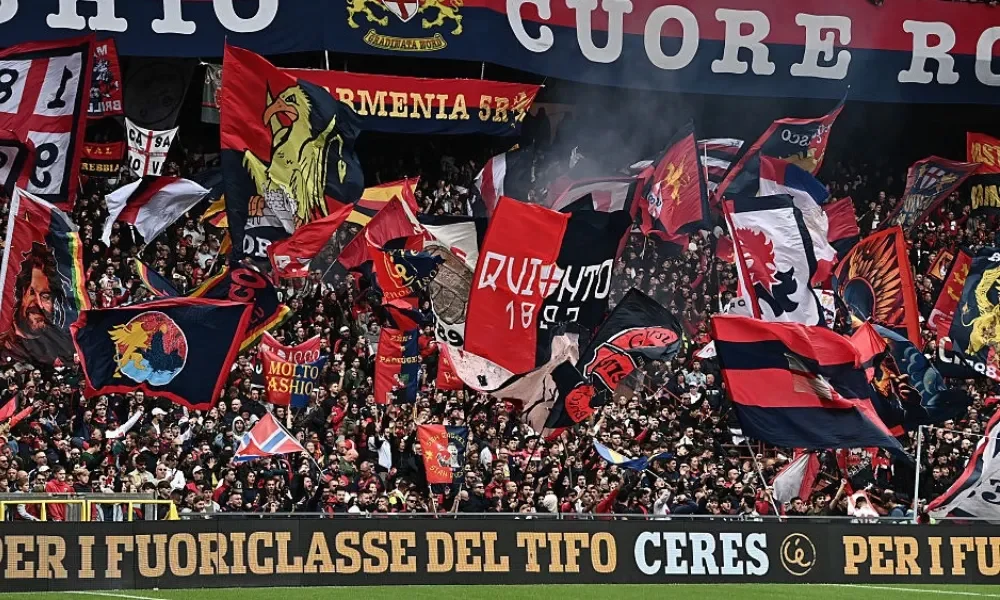
Genoa CFC is entering a defining new chapter in its storied history, buoyed by deep optimism under the leadership of majority owner Dan Șucu. The historic Serie A club has finally broken free from what executives describe as a turbulent and counterproductive relationship with A-Cap, resolving a bitter ownership dispute that had cast a long shadow over the Stadio Luigi Ferraris. A decisive legal victory has not only brought much-needed clarity to the club’s corporate structure but has also cleared the path for ambitious financial partnerships and a return to a purely football-focused strategic vision.
The turning point in this protracted saga arrived on June 23, when a Genoa court rejected A-Cap’s legal challenge against the club’s recapitalization for the third consecutive time. This verdict effectively brought an end to 18 grueling months of relentless litigation that had drained the club’s resources and distracted its leadership. Although A-Cap continues to retain a minority equity stake of approximately 22 percent in the organization, Genoa CEO Andrés Blázquez has offered absolute reassurance to supporters, stakeholders, and commercial partners, guaranteeing that the minority shareholder maintains "zero involvement" in the club’s governance, operational management, or strategic decision-making moving forward.
Reflecting on the monumental court ruling, Blázquez did not mince words regarding the validation it brought to the current executive team. He emphasized that the decision confirmed what the club’s leadership had known all along: that the actions taken were strictly for the betterment and
long-term survival of Genoa. The club has decisively turned the page on a difficult association with a former owner who is currently navigating several widely publicized legal investigations in the United States. Cutting ties with this unstable chapter marks a psychological and operational liberation for the oldest football club in Italy.
The cost of this prolonged dispute, however, was far from negligible. According to the club’s chief executive officer, the endless legal battles drained millions of euros from Genoa’s coffers—funds that could have otherwise been directly reinvested into the squad or infrastructural improvements. Furthermore, the corporate uncertainty created significant friction in day-to-day dealings with financial institutions, corporate sponsors, and various vital stakeholders. With Dan Șucu firmly established as the majority owner since December 2024, the immediate mandate is clear: stabilize the balance sheet, optimize the club’s financial health, and attract fresh, forward-thinking partners unburdened by the ghosts of the past.
Blázquez noted that from the very moment Șucu stepped into the organization, the legal and operational implications were never in genuine doubt because the new majority owner brought an exceptionally clear vision and a well-defined purpose to his investment. Șucu’s commitment to Genoa has been unwavering from the outset, characterized by a timely intervention when the historic business was teetering dangerously close to bankruptcy. With the existential threat of insolvency firmly in the rearview mirror, the current priority is to fortify the balance sheet while ensuring that competitive investment in the playing squad remains robust and uninterrupted.
Yet, the friction caused by A-Cap’s previous involvement extended far beyond the boardroom and courtrooms, inflicting a tangible and heavy sporting cost on the pitch. Blázquez revealed that the club was forced to miss out on several high-profile transfer opportunities that could have transformed the team’s competitive fortunes and asset value. Among these missed targets were a potential deal for defender Djed Spence, which fell through over a fee of roughly 7 million euros, and an opportunity to secure veteran goalkeeper David de Gea on a coveted free transfer. Both proposals were explicitly rejected under the weight of the previous ownership’s restrictive directives.
Elaborating on the rejection of the Spanish goalkeeper, Blázquez shared a revealing internal anecdote, noting that representatives associated with the former ownership dismissed the move outright, arguing that De Gea was an "old-style goalkeeper" and that the club "shouldn’t get him." Such conservative and uninspired decision-making severely hamstrung the sporting department’s ability to capitalize on market opportunities.
The financial and sporting repercussions did not stop there. The CEO further disclosed that dynamic forward Mason Greenwood had also been offered to Genoa at a juncture when his market valuation still possessed the potential for exponential growth. Blázquez estimates that due to the persistent influence of individuals lacking a genuine football-focused mindset, Genoa may have missed out on an astounding 70 million to 80 million euros in cumulative player value. The overarching frustration within the executive ranks stems from the reality that sporting decisions were consistently dictated by non-football considerations, a scenario that Blázquez insists would have unfolded entirely differently had Dan Șucu been at the helm during those critical transfer windows.
For everyone associated with Genoa CFC, the definitive end of A-Cap’s operational influence represents much more than the mere conclusion of a lengthy legal battle. It serves as a golden opportunity to rebuild fractured relationships with international financial partners, restore institutional credibility, and seamlessly align sporting decisions with a modern, ambitious business strategy. As the club looks ahead to the future, the foundation is finally set for a sustainable, competitive, and football-driven era under the stewardship of Dan Șucu.