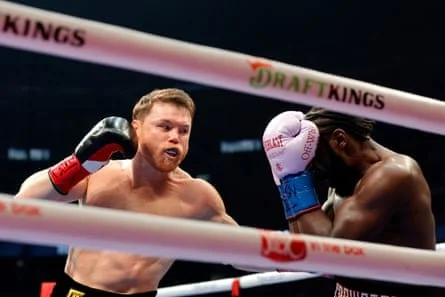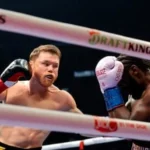

In a high-stakes showdown staged in the Saudi capital, Mexican boxing icon Canelo Alvarez successfully reclaimed the WBC super middleweight championship with a decisive unanimous decision victory over Christian Mbilli. The victory added another historic chapter to Alvarez’s illustrious career and fulfilled a major milestone in his lucrative partnership with Riyadh Season. However, the multi-million-dollar spectacle was overshadowed not only by acute security concerns following a missile incident in the city just forty-eight hours prior, but also by the extraordinary ringside behavior of Saudi Arabia’s General Entertainment Authority Chairman, Turki Alalshikh, whose apparent disinterest in the live action ignited widespread debate across the boxing world.
Alvarez’s victory came at the end of a grueling twelve-round contest in which the Mexican superstar demonstrated his characteristic ring generalship, defensive mastery, and power striking to turn back the challenge of the resolute Mbilli. At the conclusion of thirty-six minutes of championship action, the ringside judges submitted official scorecards of 117-110, 116-111, and 115-112, all in favor of Alvarez. World Boxing News (WBN) scored the bout even more decisively for the champion, submitting an unofficial ringside card of 118-110.
The victory delivered Alvarez the WBC super middleweight crown once again, solidifying his standing at the pinnacle of the division. For his efforts, Alvarez secured a reported $47 million purse guarantee, a massive payday that represents a single component of his broader, highly lucrative four-fight agreement with Riyadh Season. The venture underscored the immense financial capital currently backing major international boxing events in the Middle East.
Yet, the lead-up to the event was fraught with tension. The fight took place against a backdrop of severe security apprehensions after local authorities confirmed a dangerous military incident in the host city just two days before the fighters stepped into the ring. On Thursday, October 29, Saudi Civil Defense reported that debris from two intercepted Houthi ballistic missiles had fallen directly within the city limits of Riyadh.
According to official reports from Saudi emergency services, the falling shrapnel caused damage to at least one residential house and a civilian vehicle. Furthermore, one civilian suffered minor injuries as a result of the falling debris. Despite the close proximity of the missile interception to the event venue and the obvious safety risks posed to international teams, officials proceeded with the scheduled card without interruption, ensuring that Canelo and Mbilli fought as planned on Saturday evening.
While the action inside the ring proceeded without physical disruption, the scene at ringside generated its own storm of media attention and fan criticism, centered entirely on the host and financier of the event.
Turki’s Ringside Behavior
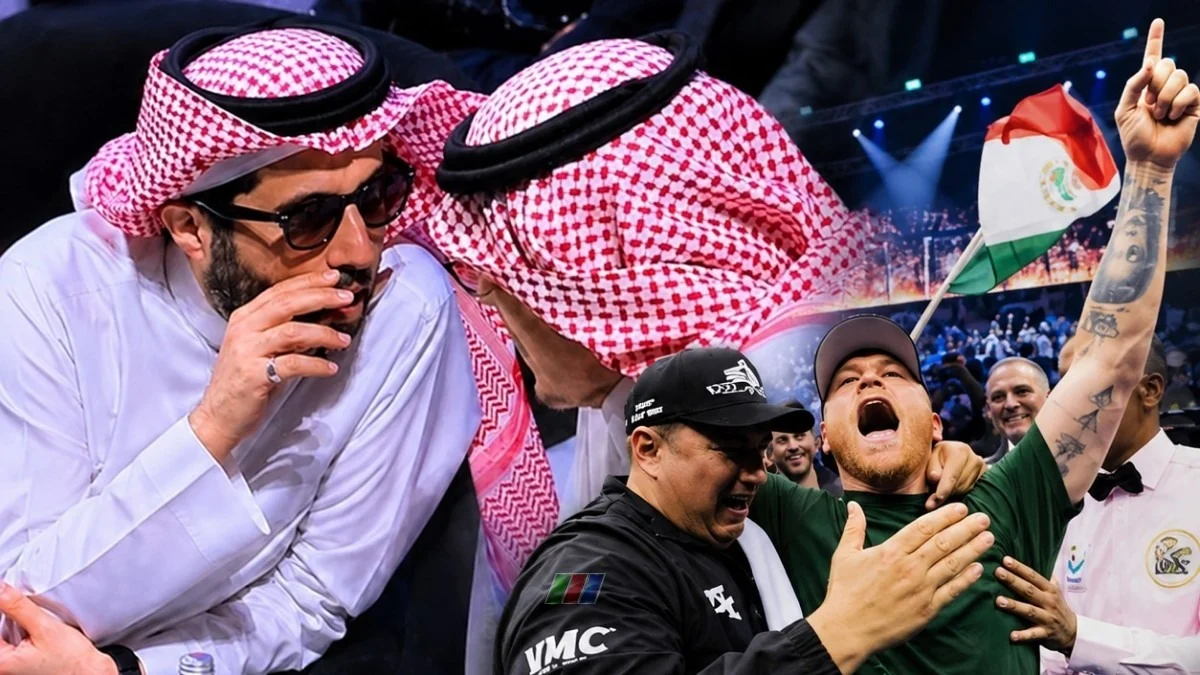
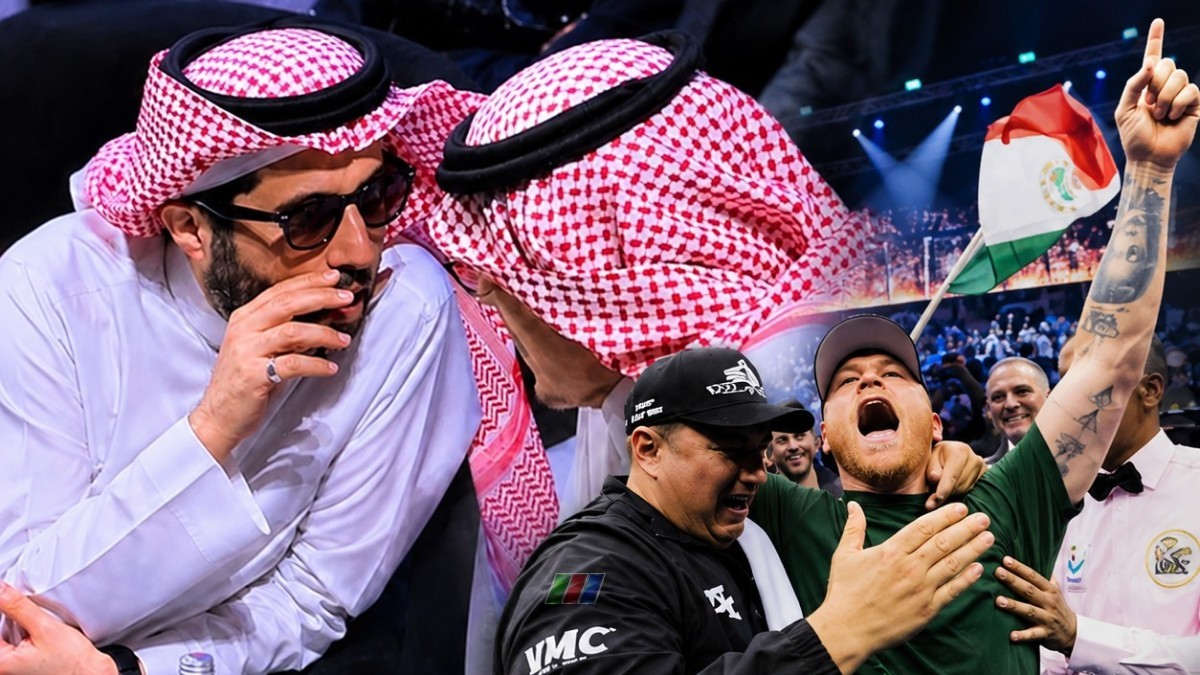
Despite bankrolling the blockbuster event and orchestrating Alvarez’s return under the Riyadh Season banner, Turki Alalshikh displayed a level of distraction that drew immediate bewilderment from observers inside the arena and millions watching on broadcasts globally. Rather than focusing on the high-level championship bout unfolding mere feet from his seat, Alalshikh spent the vast majority of the contest turned away from the ring, engaged in deep, persistent conversation with his ringside companion.
World Boxing News reporters present at the venue witnessed Alalshikh talking continuously throughout almost every single round. Even during critical exchanges—moments when Alvarez and Mbilli were trading heavy punches directly in front of his ringside location—Alalshikh repeatedly turned his back to the ring to converse. For a fighter of Alvarez’s global magnitude, competing in a contest that yielded him a personal guarantee of nearly $50 million, the host’s continuous distraction was widely interpreted as a blatant ringside snub.
The chairman’s conduct did not go unnoticed by fight fans watching the broadcast worldwide. Social media platforms, particularly X (formerly Twitter), quickly filled with commentary from spectators expressing astonishment at Alalshikh’s apparent indifference to the main event.
“Nice to see the massive fight fan Turki Al-Sheikh having a conversation throughout the entire fight,” one viewer posted sarcastically on X during the broadcast.
Another fight fan offered a stark assessment of the chairman’s engagement with the sport, declaring: “Turki has completely checked out of boxing.”
A third observer echoed the growing frustration of the viewing public, posting: “Bro Turki Alalshikh hasn’t watched a moment of this fight…”
The widespread public reaction underscored a growing divide between the massive financial investments being funneled into international boxing events and the perceived authenticity of the figures leading the charge.
WBN’s Take
Turki Alalshikh has consistently presented himself to the international media and boxing community as an ardent, passionate fan of the sport. However, arriving at ringside for a fight of this magnitude and appearing so blatantly uninterested in the live action hardly supports that public narrative.
The optical impact of his behavior was striking. At times, it almost appeared as though the matchmaker was deliberately attempting to make a point or send a message through his body language. Whether that was his underlying intention, or simply a byproduct of total distraction, remains a question that only Alalshikh himself can answer.
The timing of the distraction rendered the situation even more perplexing. Questions inevitably arise as to why anyone responsible for bringing Canelo Alvarez to Saudi Arabia for a fight worth almost $50 million—especially an event staged just forty-eight hours after ballistic missile debris injured a civilian and damaged property in the capital—would appear so entirely disengaged from the contest itself.
From the perspective of World Boxing News, such conduct is unfathomable. It serves as a clear indication that despite the unprecedented influx of capital, professional boxing still has a long way to go in establishing a meaningful and grounded operational culture within the region.
There is no questioning the reality that Alalshikh has brought colossal financial resources into the sport of boxing, facilitating historic matchups and bankrolling cards that might otherwise have succumbed to promotional gridlock. However, spending millions of dollars does not automatically grant event organizers a free pass regarding professional etiquette or respect for the athletes competing inside the ring.
The sport of boxing inevitably suffers when the individuals managing and financing its highest-profile events project an impression that they care little for the athletic drama transpiring directly in front of them. For Alalshikh, his behavior throughout Alvarez’s championship victory provides immediate ammunition to critics who have long questioned the long-term motivations behind Saudi Arabia’s massive sports investments.
While it is entirely plausible that Alalshikh was conducting urgent business during those moments, critics naturally question why he chose those specific thirty-six minutes to do so. Alvarez was actively engaged in a grueling world title contest just yards away, offering a spectacle that demanded undivided attention.
The figure responsible for guiding the current era of Alvarez’s career appeared to have entirely different priorities on his mind. Whatever the underlying rationale, repeatedly turning away from one of professional boxing’s biggest superstars during a world title victory represents a poor look for all parties involved.
Adding to the mystery of the evening was Alalshikh’s sudden shift in demeanor immediately following the final bell. After spending the vast majority of the twelve rounds looking away from the action, the chairman promptly entered the ring after the decision was announced to celebrate wildly alongside Alvarez and his team. The stark contrast between his total indifference during the active rounds and his enthusiastic participation in the post-fight celebration only deepened the confusion surrounding his ringside conduct.
About the Author
Phil Jay is the Editor-in-Chief of World Boxing News (WBN), a Boxing Writers Association of America (BWAA)-acknowledged boxing news website founded in 2010. A veteran boxing reporter with 16 years of industry experience, he has interviewed numerous world champions, broken international exclusives, and reported ringside from major championship events across the globe. His investigative work and reporting are published worldwide through WBN and distributed across major digital media platforms, including Apple News.