


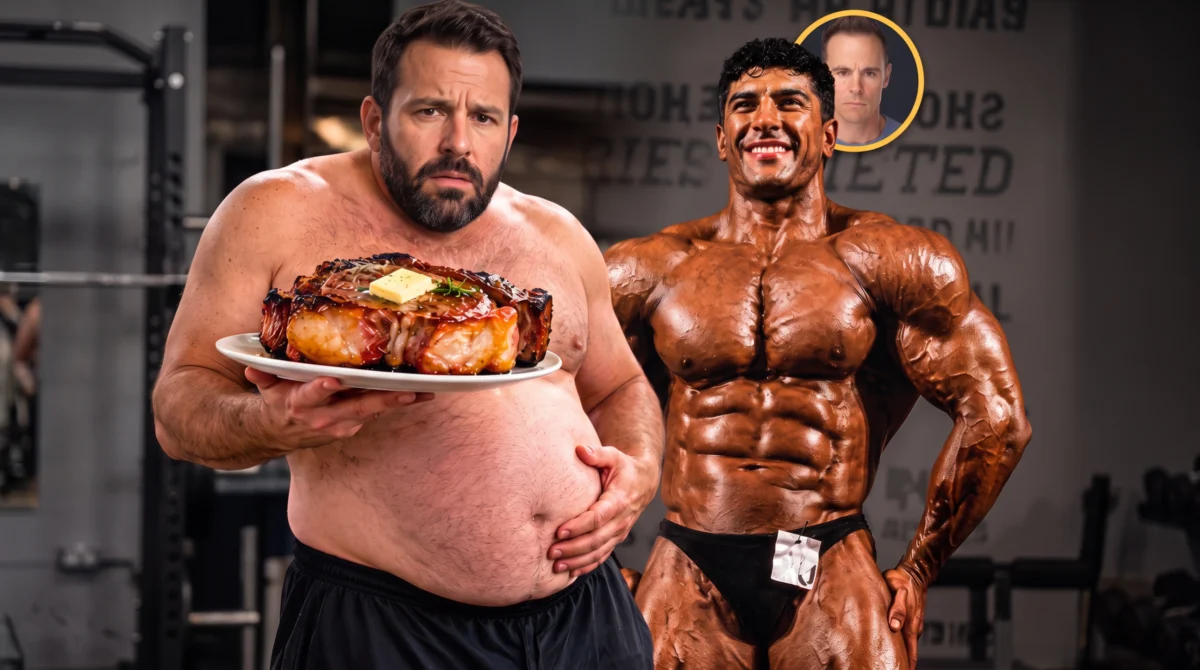
Zero carbohydrates, rock-bottom insulin levels, and potentially even entering a state of ketosis might sound like the ultimate biological green light for melting away unwanted body fat. Yet, countless individuals following strict low-carb and animal-based regimens find themselves facing a frustrating reality: despite doing everything right on paper, the scale simply refuses to budge.
In a recent video presentation, a seasoned bodybuilding coach with more than four decades of professional experience tackled this common and perplexing fitness puzzle head-on. Drawing on decades of hands-on work with thousands of clients, his central verdict cuts right through internet dogma: burning fat and losing body fat are two entirely different physiological processes.
According to the coach, understanding the subtle yet massive difference between oxidizing 180 grams of dietary fat versus 70 grams daily explains why so many dieters hit a permanent plateau. While the carnivore diet has gained immense popularity for its simplicity and reported benefits regarding systemic inflammation and autoimmune concerns, it is not immune to the fundamental laws of energy balance and fat metabolism.
The coach is quick to clarify that he is no critic of the carnivore movement. On the contrary, he acknowledges that eliminating processed foods, sugars, and potential plant-based irritants like lectins has done wonders for a vast number of people. However, having trained more than 3,500 clients over his long career—including working with more than 100 individuals over a single six-month period who arrived significantly overweight despite strictly following a carnivore lifestyle—he has witnessed firsthand how easily well-intentioned dieters can stall.
Why Ketosis Doesn’t Guarantee Fat Loss
The core misconception in modern low-carbohydrate dieting lies in the interpretation of ketosis and fat burning. When an individual consumes enough dietary fat while keeping carbohydrate intake at absolute zero, insulin levels remain subdued, and the liver begins producing ketones. For many, a dark purple reading on a ketone strip serves as definitive proof that the body is successfully melting away stored adipose tissue.
However, the coach challenges this assumption directly, noting that producing ketones only confirms that fat is being oxidized—it does not specify which fat source is fueling the metabolic furnace.
If a dieter consumes massive quantities of dietary fat from sources like butter, heavy cream, lard, and fatty cuts of meat, the body readily utilizes those incoming lipids to completely fill its daily energy requirements. Consequently, stored body fat remains untouched, given a free pass because dietary intake is already fully satisfying the body’s energy demands.
The 180-Gram vs. 70-Gram Showdown
To illustrate this dynamic, the coach contrasts two hypothetical individuals eating identical amounts of protein. The first person consumes 180 grams of fat daily, while the second consumes 70 grams.
Both individuals might experience measurable fat oxidation, but their sources of fuel differ drastically. Person one oxidizes predominantly food-derived fat, maintaining their existing body fat stores. Person two, facing a lower intake of dietary fat, is forced by physiological necessity to draw significantly more energy from their own internal fat reserves.
As the coach points out, it is entirely possible to burn an enormous amount of fat every day without losing a single ounce of actual body fat, provided that every calorie burned is immediately replaced by an equally large amount of dietary fat.
This mechanism also explains why the initial weeks of a carnivore diet can be deeply misleading. Newcomers frequently watch the scale drop by ten pounds or more within a remarkably short timeframe. While this rapid shift often brings immense encouragement, the coach attributes it primarily to the rapid depletion of retained water weight and full intestinal contents. While some genuine fat loss certainly occurs during this initial transition, the dramatic drop on the scale is largely non-fat tissue.
The true test of any dietary approach typically arrives after four weeks, ten weeks, or even six months, when the initial water-loss honeymoon period concludes and stubborn plateaus inevitably set in.
Low Insulin Doesn’t Switch Off Fat Storage
Another persistent myth dismantled by the coach’s decades of experience is the idea that low insulin acts as an absolute barrier against fat storage. Dietary fat enters the human digestive system and bloodstream as triglycerides, which are chemically identical to the molecules stored within human fat cells. When these circulating lipids go unburned, fat cells can simply reassemble them in a straightforward and energetically inexpensive process.
Insulin certainly plays a vital role in metabolic regulation, but the coach insists it should not be viewed as a simple on-and-off switch for fat accumulation. Even the strictest adherents to a zero-carbohydrate carnivore diet maintain a baseline level of circulating insulin, which is biologically necessary to shuttle amino acids into muscle tissue for repair and growth. Furthermore, released fatty acids that escape oxidation can easily be recycled right back into fat cells, highlighting that human fat metabolism is a dynamic, continuous two-way street rather than a one-way exit door.
Personal Metrics and the Power of Protein
Reflecting on his personal physique management, the coach shares the specific numbers he uses when seeking enhanced muscular definition. Weighing approximately 95 kilograms, he reduces his daily dietary fat intake to a modest 50 to 70 grams while keeping his protein consumption elevated between 250 and 300 grams, divided across three daily meals.
By dropping his dietary fat intake to this range while maintaining high protein, he observes dramatic physical changes within two to three weeks. He occasionally incorporates carbohydrates—never exceeding 50 to 70 grams and consumed roughly once a week—alongside a rigorous training regimen near muscular failure four to five times weekly, supplemented by three to four outdoor walks.
However, the coach is quick to emphasize that these exact metrics are tailored to his individual physiology rather than serving as a universal prescription. Hormonal profiles, baseline insulin sensitivity, chronic cortisol levels, recovery capacity, and training styles all heavily influence what constitutes an ideal nutritional ratio for any given person. Carbohydrates and fats are neither inherently evil nor miraculous; rather, the primary driver in successful body composition management remains protein.
The Carnivore Trap Nobody Mentions
While the carnivore diet offers undeniable strengths—such as the complete elimination of highly processed foods, added sugars, and inflammatory ingredients—it harbors a hidden trap regarding portion control and caloric density.
The diet fundamentally encourages eating animal foods, which inherently contain combinations of protein and fat. While protein is famously difficult to overconsume due to its high satiety-inducing properties, dietary fat is deceptively easy to ingest in massive quantities, particularly when enhanced with heavy additions of cheese, butter, and rich sauces.
Many individuals mistakenly believe that carnivore protocols grant a license to eat unlimited quantities of fat until physical discomfort sets in. Even historical figures who advocated meat-heavy regimens, such as classic bodybuilding icon Vince Gironda with his famous meat-and-eggs routine, assumed practitioners would eat only as much as needed before stopping. Modern adaptations, by contrast, frequently lead to excessive fat intake disguised as health optimization.
Ultimately, resolving a carnivore diet plateau requires looking past dogmatic assumptions about ketosis and insulin, recognizing the subtle surplus created by excessive dietary fats, and aligning intake with individual metabolic realities to finally encourage the body to burn its own stored energy.