

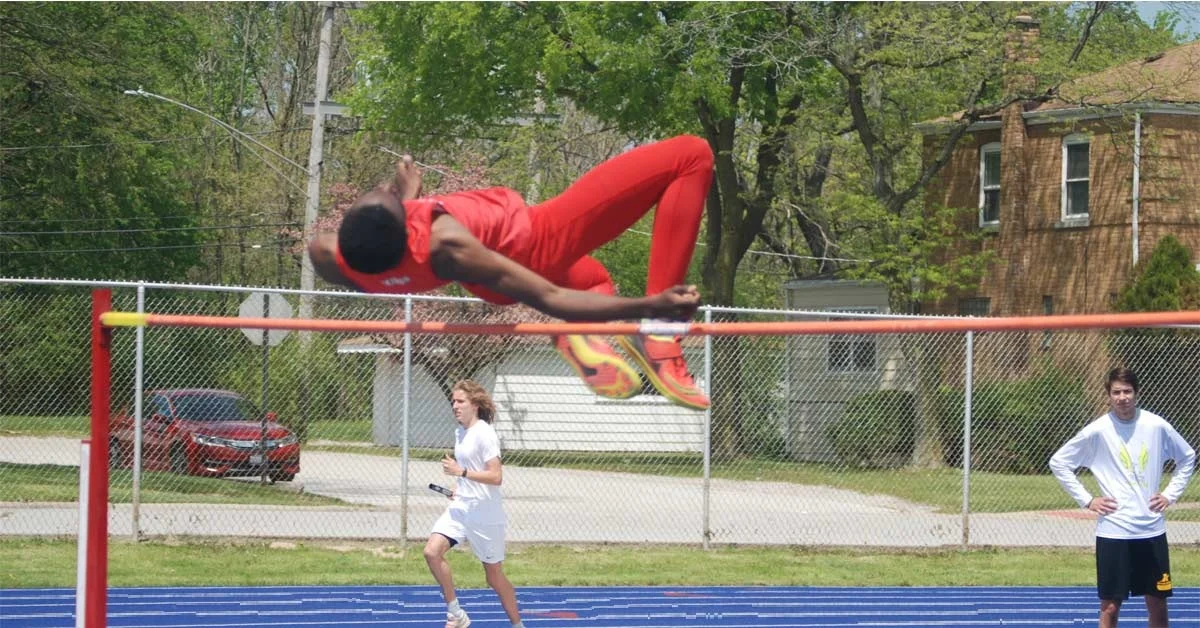
CHICAGO — Track and field coaches have long debated which jumping discipline poses the greatest technical hurdle. While long jumpers must master takeoff velocity, takeoff angle, and center of gravity height—making it the least technically demanding of the vertical and horizontal jumps—and triple jumpers can progress steadily with patience, the high jump remains an entirely different beast. According to veteran coach Rob Assise, the true complexity of the high jump lies not just in the clearance of the bar, but in the curved nature of the approach and the complex rotations it forces upon the athlete.
Drawing heavily from the foundational teachings of renowned track and field expert Boo Schexnayder—specifically his seminal work, The High Jump: Technique and Teaching, which Assise reviews annually alongside a comprehensive seven-page personal summary—Assise has spent his career refining how athletes approach this demanding discipline. Alongside insights from other elite mentors like Gary Winckler, Assise has identified the critical components required to develop consistent, high-performing high jumpers, starting from the very first step on the runway.
The Start
Consistency is the cornerstone of any successful high jump approach, and it begins in the blocks or at the starting mark. Assise advocates for either a crouched or a rolling start for high school athletes, theorizing that "elastic" athletes gravitate naturally toward the rolling start. This preliminary movement before the first step allows them to utilize energy efficiently through the stretch-shortening cycle. High jumpers, he notes, overwhelmingly fall into this elastic category rather than relying purely on raw force.
When teaching and rehearsing the start, Assise adopts an uncompromising stance. Novice athletes frequently grow complacent during the initial phase of their approach, yet consistency at both the beginning and the end of the run is vital. While the final steps tend to resolve themselves organically as the athlete seeks a comfortable takeoff position, the middle of the approach is prone to variance. By utilizing a crouched or rolling start instead of a running start, coaches can minimize steps and drastically reduce the probability of execution errors. Acceleration mechanics govern the first three strides of a ten-step approach, gradually transitioning the body into an upright posture, though coaches can challenge athletes’ coordination by practicing varied step counts during auxiliary drills.

Initiating the Curve
Running the curve and creating the necessary inward lean for quality rotation over the bar is a make-or-break element that often trips up developing athletes. A prevalent mistake among high jumpers is abandoning their lean as they draw closer to the crossbar. Early in his coaching tenure, Assise attempted to correct this by instructing athletes to "hold the lean" during the final stages of the approach, an approach that yielded limited success. Adopting Gary Winckler’s advice to look at the bigger picture changed his methodology, emphasizing that a meticulous, heavily rehearsed curve initiation is the true key to maintaining the lean.
Citing Schexnayder’s framework, the transition into the curve must commence with a subtle hip rotation during the drive phase on step four. Step five officially launches the curve outside the line of displacement to establish the lean, while step six solidifies it by landing back on the line. Coaches can effectively combat the tendency to cut the curve short by visually demonstrating fluid pathways rather than allowing athletes to run rigid, post-like trajectories. Training can be adapted to any open space—from a school hallway during brutal winter months to a soccer field’s center circle—allowing athletes to practice the crucial transition from the straightaway into the curve using cones or chalk marks.
Arm Mechanics on the Curve
Another frequent pitfall among novice high jumpers is a restricted range of motion in the upper extremities. During the curve, the inside arm should naturally exhibit a smaller range of motion than the outside arm, perfectly mirroring the contralateral leg to preserve rhythmic synchronization. Yet, many athletes severely dampen this movement between steps six and nine, sometimes locking their elbows at a ninety-degree angle against their sides for the duration of the turn.
Emphasizing a philosophy of minimal necessary intervention, Assise relies on targeted verbal cues and visual feedback, paired with continuous practice across circular, semicircular, and serpentine running drills. More recently, coaches have integrated mini-hurdles and cones into these curved pathways to challenge arm mechanics, though such setups require careful video analysis and chalk references to prevent foot hazards and maintain smooth execution.

Leaning Into the Plant Foot
The failure to maintain an inward lean through the final steps stems from a handful of distinct root causes. Whether it is an issue of spatial awareness, premature deceleration, or improper posture entering the plant, failing to sustain the lean until the moment of foot contact compromises the entire trajectory of the jump. Addressing this requires continuous reinforcement during short and full-approach repetitions, ensuring that athletes commit fully to the physical demands of the curve rather than bailing out prematurely.
Steering Capability and Direction
While high-level coaching strives for identical, repeatable approaches, reality dictates that high jump runs will always feature minor variations. Jumpers possess an innate survival instinct that drives them toward a safe takeoff spot; if their approach goes awry, they will often run past the plant mark and circle back rather than aborting. Rather than treating this adaptability as a flaw, coaches should harness it.
Practicing directional control through creative, highly variable drills provides a safety net that helps athletes sharpen their focus on the ideal competitive takeoff mark. These variability exercises—ranging from dynamic boundary challenges to clapping-rhythm drills—should be used sparingly, accounting for roughly ten percent of total jumping volume. They serve primarily to break monotony and test coordination while reinforcing the athlete’s precision under pressure.
Approach Rhythm
A high-quality high jump approach demands a progressive, controlled acceleration. The tempo of ground contacts should never feature abrupt shifts, and forward velocity must build steadily toward the bar. The most common error among scholastic athletes is charging out of the start with excessive speed, only to decelerate as they approach the takeoff. Because an athlete’s mass remains constant during the run, any loss of forward velocity directly translates to a loss of momentum.

Cultivating proper rhythm requires absolute engagement during approach rehearsals. Assise routinely pairs high jump training sessions with horizontal jump groups to maintain high standards of focus, emphasizing that rhythm is not merely an isolated drill component but a fundamental pillar woven into every aspect of athletic preparation.
Curvilinear Trajectory and Coordination Considerations
Absorbing and redirecting force along a curved pathway is a foundational skill for high jumpers. To prepare the complex foot-ankle structures for these unique mechanical stresses, coaches can integrate varied curvilinear activities—such as bounding, skipping, and cyclic running patterns—into training sessions, scaling the intensity to match the day’s primary objective. These curved drills benefit not only high jumpers but also sprinters, hurdlers, and horizontal jumpers who must contend with similar dynamic forces on the track.
Furthermore, testing overall athletic coordination by having athletes execute approaches and scissor kicks from their non-dominant side helps build balanced physical health and may uncover hidden potential for disciplines like the triple jump.
Balanced Tendon Training
While modern athletic training places immense emphasis on developing tendon stiffness to minimize ground contact time and maximize explosive rebound, coaches must balance this pursuit with tendon health. Overemphasizing rigid, high-impact plyometrics and heavy lifting without adequate recovery can leave high jumpers vulnerable to tendinopathies, particularly given the severe rotational forces inherent to the event. Drawing on insights from sports science discussions with experts like Dr. Keith Baar, Assise stresses that cultivating durable, healthy tendons is essential for keeping athletes feeling fresh and competitive throughout a grueling season.
The Necessity of Triangulation
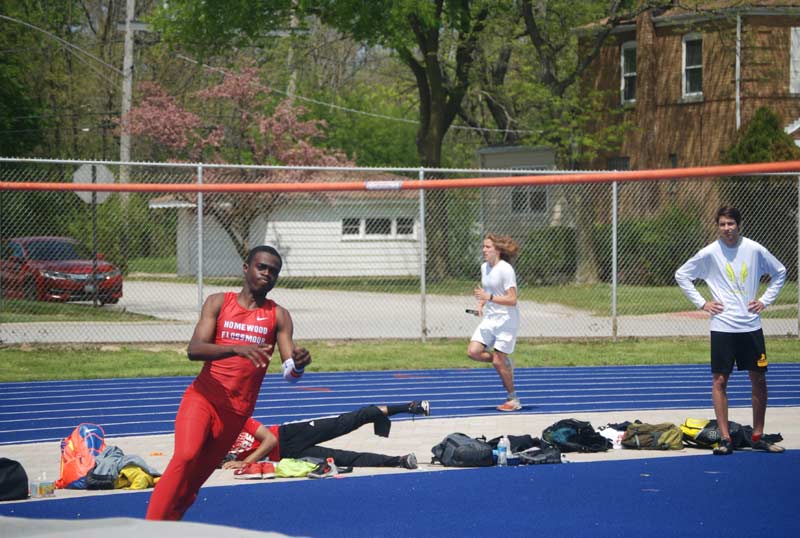
High school facilities rarely offer uniform conditions, placing a premium on controlling variables like runway accuracy. Without precise triangulation, athletes invite unnecessary variance into their performances. Utilizing Pythagorean triples—such as a 12-foot, 16-foot, and 20-foot triangle—coaches and athletes can establish exact geometric baselines before a competition. By securing a tape measure across the crossbar supports and pulling specific perpendicular intervals, teams can mark exact reference points on the runway. This ensures that every athlete measures their starting mark with absolute precision, reinforcing consistency before they ever take their first competitive jump.
Ultimately, while mastering the high jump approach requires patience and rigorous attention to detail, maintaining structured baselines and keeping athletes healthy and engaged remain the ultimate keys to long-term success on the runway.