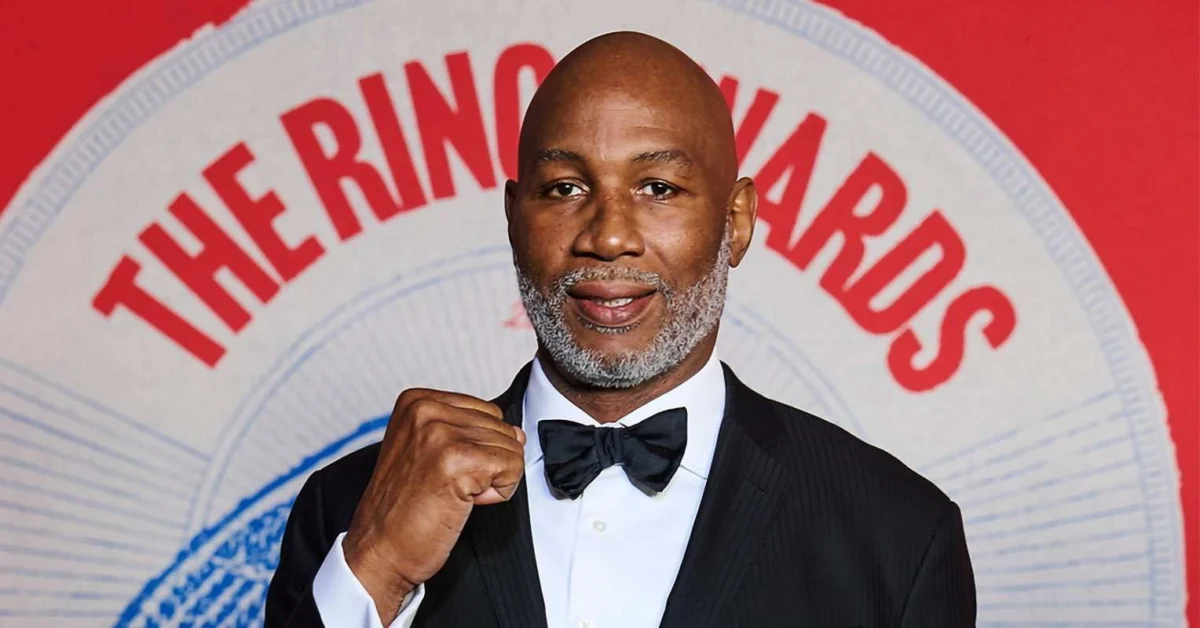
Heavyweight boxing legend Lennox Lewis has issued a public plea to former long-reigning WBC world champion Deontay Wilder, strongly advising the hard-hitting American to walk away from the sport permanently before he sustains any further physical harm inside the ring.
Lewis, a British-Canadian icon widely regarded as one of the greatest heavyweights in boxing history, took to social media to share his perspective on Wilder’s career trajectory. The warning comes as the 39-year-old from Alabama contemplates his next steps in the sport following a difficult run of results that has seen him suffer consecutive losses at the highest level of professional competition.
Reflecting on Wilder’s own prior statements regarding his career longevity, Lewis pointed out that retirement was something the former champion had previously considered under similar circumstances. In a post shared on his official X profile, the former undisputed heavyweight king articulated his concerns with the clarity and caution of a veteran who walked away from the sport completely on his own terms.
"Deontay Wilder told us before the fight that he would retire if he didn’t win. I think that’s a wise decision," Lewis wrote on social media. "He’s more than carved out a life in which he can take care of his daughter, so before he suffers any more damage, it’s best to leave the game with your faculties intact because there’s a LOT more life to live after boxing."
Lewis understands the physical toll of championship boxing better than most. Enjoying an illustrious professional career that spanned nearly a decade and a half, Lewis established a legacy built on technical brilliance, devastating power, and immense ring intelligence. His journey to the pinnacle of the sport began shortly after he captured an iconic Olympic Gold Medal representing Canada at the 1988 Olympic Games in Seoul, South Korea, dominating the super-heavyweight division on the amateur international stage.
Entering the professional ranks in the summer of 1989, Lewis made a rapid and definitive name for himself in the brutal landscape of the heavyweight division. His ascent was both swift and calculated. By 1992, he was officially declared the world heavyweight champion by the World Boxing Council (WBC) after Riddick Bowe famously discarded the governing body’s belt in a trash can during a press conference. Lewis made several successful defenses of his crown, establishing himself as a dominant force before suffering a shock upset defeat to Oliver McCall in London in 1994.
True to the character of a true champion, Lewis did not let adversity define his career. He methodically worked his way back to title contention and avenged his loss to McCall in February 1997 in Las Vegas, picking up the vacant WBC title in the process through a bizarre technical knockout when referee Arturo Padilla stopped the bout as McCall wept in the corner. A couple of years later, in March 1999, Lewis faced off against American legend Evander Holyfield in a high-stakes unification bout. Although their first meeting controversially ended in a draw, Lewis decisively defeated Holyfield in their later rematch to capture the undisputed world heavyweight championship, securing what is widely regarded as the finest and most defining victory of his professional tenure.
Lewis eventually retired from the sport in 2004 as champion, walking away immediately following a hard-fought technical knockout victory over Vitali Klitschko. By hanging up his gloves while still at the top of the sport, Lewis preserved his health, his legacy, and his cognitive well-being—a luxury that many legendary fighters unfortunately miss out on due to staying in the game long past their prime years.
It is precisely this hard-earned wisdom that informs Lewis’s recent advice to Deontay Wilder. Known during his prime as "The Bronze Bomber," Wilder captured the imagination of the global boxing public with his historic right hand, which rendered him one of the most feared knockout artists in heavyweight history. Wilder held the WBC heavyweight title from 2015 until 2020, making ten successful defenses of his crown and engaging in a legendary, fiercely contested trilogy with British rival Tyson Fury that defined an entire era of the division.
However, the latter stages of Wilder’s career have proven significantly more challenging. After suffering his first career defeat in his historic second fight against Fury in February 2020, followed by an even more definitive knockout loss in their trilogy bout in October 2021, Wilder has struggled to recapture his championship form. Compounding these setbacks, Wilder experienced another crushing defeat last June, getting stopped by towering Chinese contender Zhilei "Big Bang" Zhang. The manner of that defeat raised immediate alarms throughout the boxing community, prompting widespread discussions about whether the longtime knockout artist should consider hanging up his gloves for good.
Despite the mounting physical evidence and the concerned voices of legends like Lennox Lewis, Wilder has continued to express a fierce competitive desire to press forward. The 39-year-old fighter intends to return to the professional ring in June when he faces Tyrrell Herndon in Wichita, Kansas. For Wilder, stepping back between the ropes represents more than just a return to competition; it serves as a crucial step toward potentially mounting one final, desperate campaign to challenge for the world heavyweight championship before he ultimately closes the book on his career.
While the boxing world watches closely to see how Wilder performs in his upcoming comeback, the cautionary words of Lennox Lewis serve as a stark reminder of the realities facing aging fighters in one of the world’s most unforgiving sports. Whether Wilder chooses to heed the advice of a former undisputed champion or decides to forge ahead with his fighting ambitions remains to be seen, but the debate over his future highlights the eternal delicate balance between competitive ambition and long-term personal health in professional boxing.