

For generations, the push-up has stood as a timeless fitness staple. It remains one of the few foundational movements to survive the modern tendency to rigidly categorize exercises as strictly "right" or "wrong," good or bad. It is old-school, demanding, and inherently technical—far more so than many casual gym-goers realize. Requiring dynamic stability and global coordination from head to toe, the standard push-up relies on a relatively small joint, the elbow, to lower the entire body to the floor and press it back up. Yet, simply because it utilizes bodyweight does not relegate it to a foolproof category or serve as a basic indicator of upper-body strength if athletes cannot perform the movement with proper mechanics.
According to strength and conditioning coach Rachel Hayes, push-ups for female athletes serve more as a reflection of established strength rather than a fundamental exercise meant to build it from scratch. In a recent professional analysis, Hayes argues that coaches must carefully guide developing athletes to master this full-body movement progressively rather than forcing a generic standard onto every body in the weight room. While her core focus centers on developing push-ups specifically for women, Hayes notes that the underlying principles apply broadly across sports performance. Being male does not guarantee automatic push-up mastery, nor does being female justify dismissive or antiquated modifications. Every athlete deserves meticulous and thoughtful coaching, yet programming the exact same generic template for both males and females overlooks critical developmental differences and ultimately disservices everyone involved.
To deliver optimal training, coaches must understand and respect long-term variations in physical capacity and progression. Rather than relying on simplistic comparisons of relative strength, Hayes emphasizes the necessity of analyzing why training methodologies should vary between sexes and how coaches can thoughtfully address those differences. Programmatic equity does not mean treating every athlete identically; true equity requires recognizing distinct developmental trajectories to ensure all athletes receive the targeted physical stimuli they require.

Developmental Considerations Through Puberty
Puberty is an exceptionally complex and dynamic biological process. It triggers significant hormonal, anthropometric, and neuromuscular changes that directly influence physical performance. For professionals supervising youth athletic programs or prescribing training regimens to adolescents, comprehending these synchronized shifts is paramount. Generally speaking, girls enter puberty and undergo physical transitions earlier than boys—typically between the ages of 9 and 11—though the exact timing and pacing vary widely from person to person.
Among the numerous transformations occurring throughout adolescence, two stand out as particularly influential regarding the development of upper-body relative strength in young athletes. The first is Peak Height Velocity, commonly referred to as the adolescent growth spurt. During this window, long bones in both males and females, including the femur and tibia, experience rapid vertical growth. This significant increase in stature is accompanied by a rising center of mass, which inherently challenges trunk control and core stability. Because push-ups require a synchronized effort across nearly every joint from the hips upward—with the pelvis and spine playing critical roles in supporting and structuring the torso—this skeletal shift demands careful coaching attention for reasons that extend far beyond a single exercise.
The second critical factor involves strength and neuromuscular control. Research indicates that following peak height velocity, young females do not experience an equivalent "neuromuscular spurt." While growth yields larger bodies across both sexes, adolescent males typically adapt with a disproportionately massive increase in muscular power to meet the demands of controlling a larger frame, a physiological adaptation that females do not show to the same degree. This divergence is most evident in the upper body, where disproportionate strength gains during adolescence are heavily skewed toward males, particularly in the upper extremities and trunk.

While female strength does increase linearly over time, it lacks the sharp acceleration phase observed in males. Hayes stresses that acknowledging these biological realities does not mean girls cannot perform push-ups; rather, it highlights why upper-body strength training must be uniquely tailored and why grouping male and female athletes into identical conditioning programs fails to meet their distinct developmental needs.
Establishing Foundational Postures
Before coaches can teach athletes to execute a global pattern like the push-up, they must first address specific positional awareness within the pelvis, head, and scapulae. Often overlooked in early athletic development, this foundational stage focuses on skeletal structures and teaching young athletes how to consciously control the axial and appendicular skeleton. Without this crucial groundwork, training sessions frequently feature athletes trapped in habitual spinal extension, hanging passively on their passive joint structures rather than utilizing active muscular support.
Positional control begins with three key areas: posterior pelvic tilt, cervical retraction, and scapular movement. Many athletes attempting a plank or push-up inadvertently let their midsection sag toward the floor due to lumbar hyperextension. This posture places undue stress on the lumbar facet joints and compromises shoulder mechanics by driving the shoulder blades forward. Correcting this requires teaching posterior pelvic tilt or lumbar antiextension through foundational movements like dead bugs, ideally introduced first in a supine position before transitioning to prone variations.

Similarly, pronounced cervical extension—where the head juts forward or the eyes gaze upward during a movement—frequently disrupts upper-body mechanics. Coaches can address this through deliberate cervical retraction exercises, starting from a seated position and progressing to a prone posture against gravity. Finally, mastering scapular protraction and retraction ensures that athletes know how to properly mobilize their shoulder blades around the ribcage. Teaching these postural components early lays the groundwork for safe and effective pressing, pulling, and rowing mechanics across all lifts.
Progresiones y el Desarrollo Metódico de la Fuerza
Mastering the push-up is a protracted process requiring diligent, methodical training. Hayes notes that the most effective strategy involves building a solid isometric foundation before simultaneously developing eccentric and concentric capacities through varied progressions. This is where the most significant training differences between sexes emerge: young female athletes typically require significantly more time to build concentric pushing strength before they can successfully execute a full push-up, whereas boys often require a primary focus on positional mechanics and core control.
Weight rooms are naturally filled with heavy equipment that can be utilized creatively beyond its traditional design. For instance, before progressing to traditional bench press variations, coaches can utilize rubber bumper plates for floor-based pressing drills to safely build pushing strength, an approach that also helps navigate equipment limitations in crowded high school settings.

By emphasizing the eccentric phase—the lowering portion of a lift—coaches can further widen the natural gap between maximum eccentric and concentric strength, theoretically boosting concentric capabilities over time. Once static postures are established, athletes progress to the eccentric lowering phase of the push-up while maintaining strict skeletal alignment. Although concentric strength may initially lag, combining isometric and eccentric stimuli provides a potent pathway for developing the specific neuromuscular coordination required for the movement.
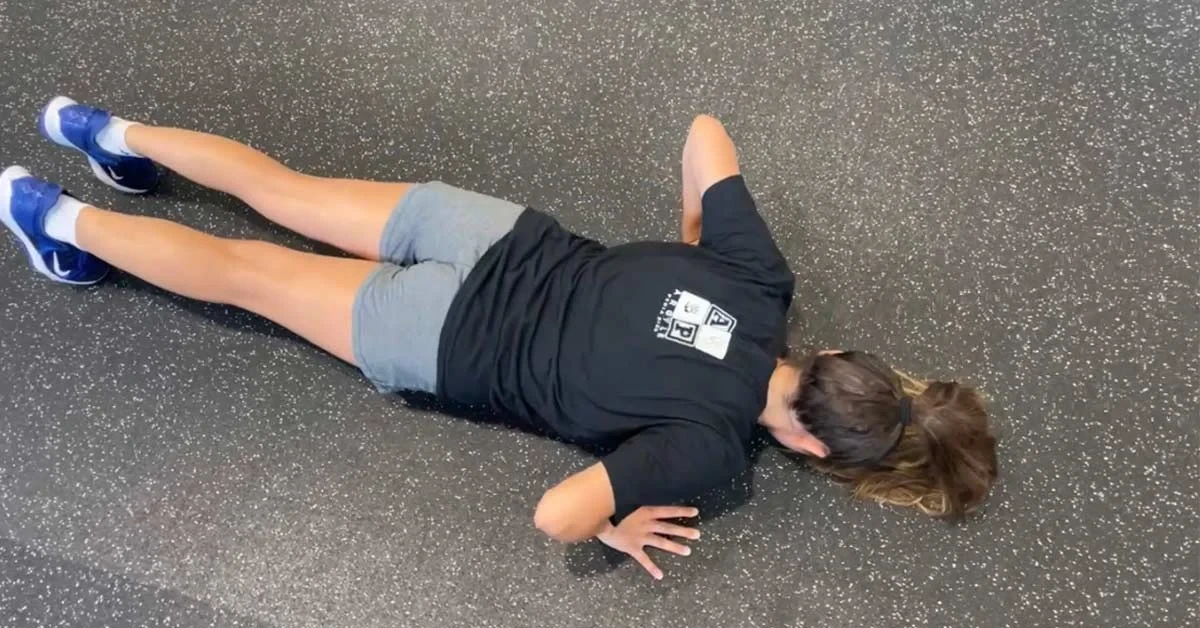
Isometric training serves as the initial classroom. Middle school and early high school athletes spend considerable time developing positional strength through standard planks. While often viewed as basic, planks act as a powerful prerequisite for push-ups, teaching the precise control needed for posterior pelvic tilt, cervical retraction, and shoulder protraction. If an athlete struggles to maintain a solid plank, they will inevitably fail during a more dynamic pushing progression.
Once athletes can maintain an extended, neutral spine in a plank position for sustained intervals, coaches can introduce the eccentric phase. To prevent young athletes from defaulting back into poor extension patterns, elevated hand placements or band-assisted lowerings are preferred, as they allow for a full range of motion while maintaining structural integrity. Temporary eccentric bench press variations can also be integrated to further emphasize the strength deficit.

Ultimately, progressions serve to evaluate dexterity, safety, and confidence, acting as a reliable bridge between foundational movements and advanced lifts. Once an athlete achieves the physical capacity to perform a full push-up, volume should be carefully managed to prioritize quality repetitions over sheer fatigue, protecting both form and athletic confidence.
Conclusion
Developing long-term strength and movement proficiency requires coaches to embrace a foundational, component-based approach, even with simple bodyweight exercises. For female athletes, the push-up functions more as an ultimate test of integrated strength rather than a basic tool to build it. For beginners of any background, prescribing full push-ups prematurely is rarely realistic or effective until core aspects of relative strength and positional control are thoroughly established.
By respecting individual physical differences and meeting athletes at their current developmental stage, coaches can design challenging, empowering training environments. Understanding these nuances ensures that physical preparation remains both safe and effective, setting young athletes up for long-term success in the weight room and beyond.