
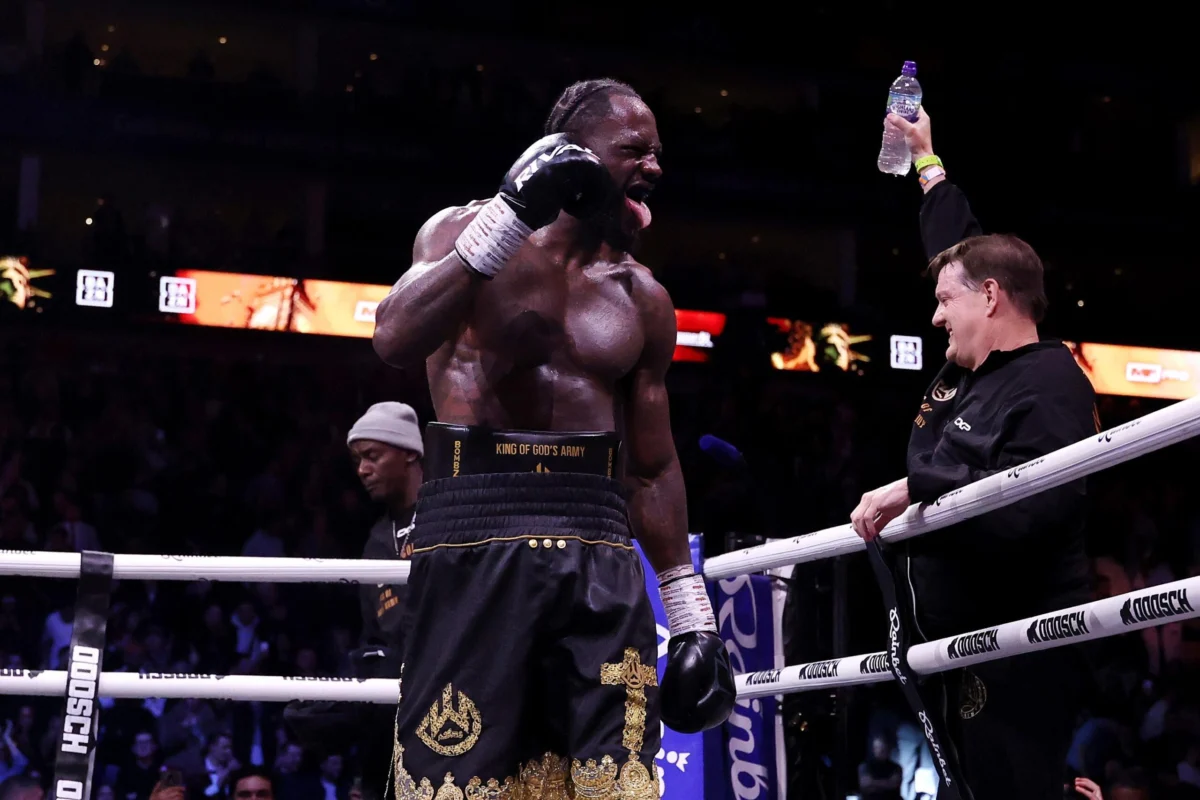
Heavyweight star Tyson Fury has expressed deep concern and dismay over his former rival Deontay Wilder’s continued career in professional boxing, specifically criticizing the American’s upcoming bout against cruiserweight standout Jai Opetaia on his undercard. According to Fury, Wilder is a "shell of himself" and is placing himself in unnecessary peril simply out of financial necessity.
Wilder, once one of the most feared and destructive knockout artists in the history of the heavyweight division, has seen his career take a severe downward spiral in recent years. The brutal trilogy against Fury—which culminated in an 11th-round knockout defeat for Wilder in October 2021—took a massive physical toll, and his subsequent performances inside the ring have done little to dispel concerns about his longevity and competitive viability.
Most recently, Wilder squared off against British veteran Dereck Chisora. While the matchup generated significant nostalgia and fan interest, the actual contest left much to be desired. Observers, including Fury, noted that both men looked sluggish and diminished compared to their respective athletic primes.
Reflecting on that bout and Wilder’s general trajectory, Fury did not mince words when discussing the alarming reality facing modern combat sports athletes who struggle to walk away from the sport. Speaking candidly about the situation, the "Gypsy King" explained that Wilder has lost the defining attribute that once made him a global superstar: his legendary, one-punch right-hand power.
"Yeah, I’ve heard that too, which is silly really for Deontay’s part," Fury said regarding the rumored or confirmed matchup between Wilder and Opetaia. "He shouldn’t be in the ring. He shouldn’t be nowhere near a ring. He should not be. It’s a dying shame that this man has to continue to fight when he’s shot to bits. He never should’ve fought again after I beat him the last time. That should’ve been the end of it. But, needs must."
The physical decline of the former WBC heavyweight champion has become a prominent talking point among fighters, analysts, and fans alike. In his prime, Wilder compiled a terrifying record defined by devastating knockouts, sweeping through the division before running into Fury. However, the accumulation of punishment absorbed during those grueling wars, combined with subsequent losses, appears to have robbed him of his historic speed and concussive power.
Fury highlighted the Chisora fight as clear evidence of this alarming regression. Despite Chisora’s legendary toughness, the Briton has absorbed a tremendous amount of damage over a long, punishing career. Yet, in their recent clash, Chisora was able to walk directly through Wilder’s offensive output without showing any signs of being phased or seriously hurt.
"Him and Chisora looked shockingly terrible the other day when they fought," Fury continued. "Chisora is like 145 years old and he was taking Wilder’s knockout power shots that are not there anymore, flush in the face, not even budging him. So, it’s a shame because if you would’ve matched them two five years ago it wouldn’t have lasted one round. So it is what it is."
The brutal nature of boxing has historically made retirement a deeply difficult transition for legendary athletes. Financial obligations, lifestyle maintenance, and the psychological challenge of walking away from the roaring crowds and massive paydays often drive fighters back into a ring long past their athletic expiration dates. Fury acknowledged this broader trend, noting that boxing history is littered with great champions who returned to the sport out of economic desperation rather than competitive hunger.
For Wilder, the path forward now involves a dangerous collision course with Jai Opetaia, an elite, highly skilled operator who represents a completely different kind of challenge compared to the aging heavyweights Wilder has recently navigated. Pitting a diminished Wilder against a sharp, prime-condition elite fighter like Opetaia has heightened safety concerns across the boxing community.
"It’s a hard thing to walk away from, and we’ve seen so many of the greats come back for whatever reason over the years, usually financial reasons," Fury said. "And it’s a hard one to see, it’s a sad state of an affair, to be fair."