

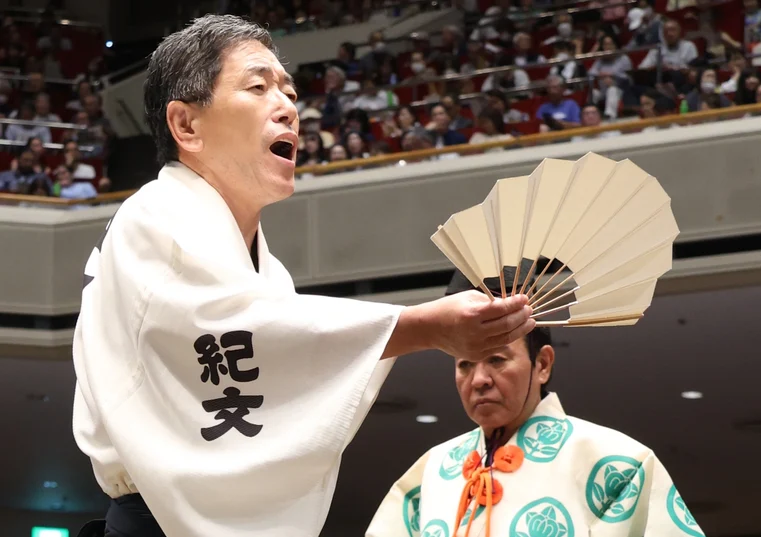
Grand Sumo is set to make its triumphant return this month for the final grand tournament of the calendar year, bringing two weeks of high-stakes competition to the island of Kyushu. The 2026 Kyushu basho officially kicks off on Sunday, Nov. 8, and will run through Sunday, Nov. 22. The prestigious tournament takes place at the Fukuoka Kokusai Center, a venue renowned for hosting passionate crowds and serving as the battleground where annual rivalries and championship races reach their dramatic conclusions.
Each day of the tournament will feature hundreds of intense bouts spanning across Grand Sumo’s six distinct divisions. While the lower ranks set the stage early in the day, the spotlight will inevitably shine brightest on the makuuchi, or top division, and the juryo, the second-highest division. Wrestlers competing in these elite tiers are expected to step into the ring every single day of the fifteen-day meet. Those who manage to compile the best records by the final bell on Nov. 22 will be crowned divisional champions, etching their names into the storied history of Japan’s national sport.
Preview and Rankings
As the 2026 Kyushu basho approaches, all eyes are fixed on the budding rivalry between Onosato and Aonishiki, who look primed to continue their fierce battle for supremacy at this tournament. Their last meeting at the Aki basho in September delivered a thrilling climax, coming down to a dramatic final-day showdown between the two powerhouse athletes. Onosato ultimately earned the vital win on that night, securing his sixth career yusho, or championship title. That victory was particularly significant for Onosato, coming on the heels of a grueling, injury-plagued year that tested his resilience and threatened to derail his career trajectory.
With yokozuna Hoshoryu expected to sit out this tournament as he continues to recover from knee surgery, Onosato and Aonishiki enter the fray as the highest-ranked active wrestlers on the banzuke. However, they will face stiff competition from a deep field of hungry contenders eager to seize the Emperor’s Cup for themselves.
Among those challenging for the title is Kirishima, whose high-stakes aspirations for a coveted promotion to yokozuna went up in flames during a disappointing campaign in September. Kirishima will be looking to redeem himself and reassert his dominance on the dohyo. Another major focal point of the tournament is Fujinokawa, who has completely stunned the sumo world in recent months with a hyperaggressive yet remarkably effective style of wrestling that leaves opponents little room to breathe. Meanwhile, Yoshinofuji enters the tournament riding a wave of momentum following a significant ranking promotion, a timely boost as he prepares to compete in front of his home crowd on his native island of Kyushu.
The battle for positioning extends far down the prestigious makuuchi rankings, which feature a dynamic mix of seasoned veterans and rising stars. At the very top of the November banzuke, Onosato occupies the East yokozuna slot, while the recovering Hoshoryu holds the West yokozuna position. The ozeki rank is similarly star-studded, featuring Aonishiki on the East side alongside Kotozakura on the West, with Kirishima also holding a prominent East ozeki position. Further down, the sekiwake rank boasts the surging Fujinokawa on the East and Atamifuji on the West, while Churanoumi and Yoshinofuji hold down the komusubi ranks on the East and West sides, respectively.
The remainder of the top division reads like a who’s who of professional sumo, featuring competitive maegashira ranks filled with familiar and dangerous faces. Veterans and rising talents such as Asanoyama, Ura, Takayasu, Takerufuji, Hiradoumi, Kotoshoho, Wakamotoharu, Roga, Oshoma, Shishi, Takanosho, Ichiyamamoto, Toshinofuji, Tokihayate, Tamawashi, and Arashifuji anchor the East side of the maegashira ladder. Meanwhile, the West side counters with an equally formidable lineup comprising Fujiryoga, Fujiseiun, Hakunofuji, Daieisho, Gonoyama, Kotoeiho, Kinbozan, Nishikifuji, Asakoryu, Oho, Asahakuryu, Abi, Asasuiryu, Dewanoryu, Kitanowaka, Kyokukaiyu, and Daiseizan rounding out the lower reaches of the division.
Broadcast Details
For fans tuning in from around the globe, Grand Sumo tournaments offer an extensive viewing schedule, with bouts stretching from the early morning hours until late evening in Japan. Each tournament day begins with matches in the jonokuchi, the sixth and lowest division, steadily progressing upward in rank until culminating in the makuuchi division action. Makuuchi matches traditionally begin during the late afternoon in Japan, which translates to approximately 3 a.m. ET for viewers tuning in from the United States.
International fans looking for official coverage with English commentary can turn to NHK World, Japan’s public broadcaster. NHK World programming is widely available through numerous cable television packages across the U.S. In addition to traditional television broadcasts, NHK provides convenient access through its official website and official YouTube channel, which regularly broadcast highlight programs. These dedicated highlight shows air on a 24-hour delay and run for approximately 30 minutes, offering a concise and polished summary of the day’s top action.
Viewers seeking live coverage of the entire day’s events can utilize the Abema TV app. The service is available for a subscription cost of around $8 per month, though users should note that the platform is entirely in Japanese, featuring no English translations or commentary. Additionally, Abema does not offer video-on-demand access, meaning fans must catch the action live as it happens.
Another option for following the matches is the official Grand Sumo app, which does include limited English translations. However, users of the app frequently encounter unavoidable spoilers regarding match outcomes. Furthermore, the free version of the application features advertisements that can often run twice as long as the actual sumo bouts, making the viewing experience challenging for some users.
For those simply wanting to catch the best moments without delay, the Japan Sumo Association’s official YouTube channel uploads the top matches from each day almost immediately after they conclude. These clips are presented in a straightforward format, capturing the action from a single camera angle without commentary or instant replays.
More Sumo Coverage
Combat Press will continue to provide comprehensive coverage of the 2026 November tournament, delivering updates at the midway point of the basho as well as full analysis and results after the conclusion of the competition. Fans seeking even more in-depth sumo news, daily results, and detailed recaps complete with full-bout videos can also subscribe to the Sumo Stomp! newsletter on Substack.