


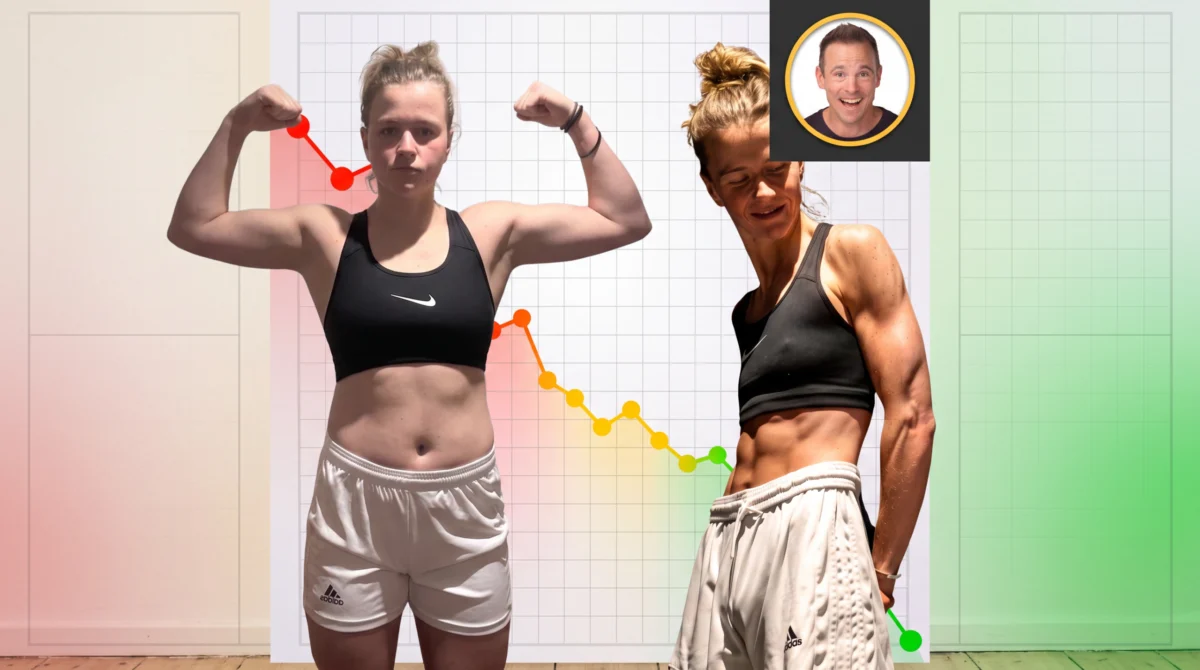
Weight loss advice floods every corner of modern social media, creating an endless loop of contradictory messaging that leaves millions of people confused. One week, online influencers preach the virtues of intuitive eating, self-love, and total dietary balance. The next week, the exact same accounts pivot to promoting aggressive calorie restriction, low-calorie meal replacement shakes, and punishing workout regimens. For women carrying extra weight, this constant whiplash creates profound confusion and traps them in a frustrating, recurring cycle of enthusiastic starts followed by demoralizing failures.
A fitness coach who successfully lost 40 pounds and has maintained that weight loss long-term recently shared a critical perspective on why mainstream weight loss advice fails so many women. Her analysis challenges some of the most deeply held, widely accepted beliefs about what it actually takes to achieve lasting physical transformation in an environment heavily engineered for overconsumption. Her experience offers a sharp critique of current wellness culture and points toward a starkly different framework for understanding how fat loss genuinely occurs.
The Pendulum Problem: From Extreme Restriction to ‘Just Be Balanced’
During her early attempts to lose weight, the coach followed the familiar playbook that most dieters know by heart. She relied on ultra-low-calorie diets, heavily restricted her food intake, and depended on meal replacement shakes to force the scale downward. While the weight did drop quickly at first, it ultimately came roaring back with a vengeance. The aggressive restriction brought intense psychological obsession, severe rebound weight gain, and a deeply fractured, painful relationship with food.
Reflecting on that period, she described how consuming her thoughts were with every calorie and scale reading, noting that it was a horrible environment to inhabit mentally.
Eventually, the modern wellness revolution arrived on the cultural scene. Online influencers began preaching self-love, intuitive eating, and the total abandonment of dietary restriction. The mantra became simple: just eat what you fancy, stop tracking your food, and embrace natural balance. She tried that approach as well, stepping away from all tracking and refusing to restrict any food groups. The result was that she remained exactly 40 pounds heavier than her target weight.
Her core realization from these contrasting experiences is that balanced eating works beautifully for weight maintenance, but it fails entirely when an individual is already overweight due to a history of excessive culinary flexibility. Telling someone who has spent years saying yes to every food impulse to simply eat intuitively is, in her view, comparable to handing car keys to someone who has never learned how to use the brakes.
Why ‘Balanced’ Advice Isn’t One-Size-Fits-All
Context matters enormously when it comes to changing body composition, yet generic social media advice consistently ignores this fundamental truth. A woman who is currently maintaining her healthy goal weight can easily afford spontaneity, casual indulgence, and purely intuitive food choices because her baseline daily habits are already tightly established and disciplined.
Conversely, a woman carrying significant excess weight typically arrived at that physical state precisely because her default dietary patterns leaned far too permissive. Borrowing maintenance behaviors and applying them during an active fat-loss phase creates a severe mismatch. It is the lifestyle equivalent of wearing flip-flops into a severe snowstorm simply because someone living in a warm climate claimed they were comfortable footwear.
Modern wellness culture has simultaneously popularized the notion that discomfort is inherently dangerous—a flashing red warning sign signaling that a person should stop striving immediately. However, the coach argues that true fat loss, when executed properly, is inherently uncomfortable, and that friction is not a flaw in the system but an essential feature of it.
Discomfort Isn’t a Warning Sign—It’s the Admission Price
In contemporary wellness spaces, feeling distressed or unsatisfied while changing one’s diet is frequently treated as a sign to halt the process. For this coach, however, discomfort is precisely the opposite. It is a reliable indicator that an individual is actually traveling along the correct path.
A genuine calorie deficit requires consuming less energy than the physical body expends to function. Naturally, this biological state creates genuine hunger, recurring cravings, and the psychological urge to consume food even when physical nourishment is not required. Experiencing these physical sensations does not mean that something is fundamentally broken or that the body is being damaged. Rather, it is empirical proof that the physiological process of reducing stored fat is working. Despite this reality, most people bail out at the very first flicker of difficulty because they have been conditioned to believe that discomfort equals harm.
Learning to sit patiently with hunger between meals, declining mid-afternoon office snacks, and actively resisting emotional eating urges are acquired skills rather than signs of ongoing emotional deprivation. Even after losing 40 pounds and keeping it off, the coach notes that moments still arise where she finds herself wandering to the kitchen to scan the refrigerator despite having recently eaten a full meal. These psychological urges do not magically vanish once a target weight is achieved; instead, what truly changes is an individual’s internal capacity to manage and tolerate those urges without giving in.
Another vital mental shift involves reframing how people view dietary restraint. Rather than fixating constantly on what they are refusing to eat, individuals need to learn to recognize what they are choosing instead. Every single moment of restraint acts as a deliberate vote for the healthier, more capable person they are actively striving to become.
The Calorie Tracking Debate: Restrictive or Realistic?
For a long time, the coach resisted the practice of calorie tracking, viewing the daily logging of food as inherently obsessive, clinical, and unnatural. That perspective shifted permanently when a mentor reframed the concept in a way that fundamentally altered her outlook.
Tracking calories may not feel natural, but living in modern society is hardly natural either. Humanity is currently surrounded by hyper-processed food marketing flashing from every digital device screen and street sign. Most people sit stationary at desks for ten hours a day to earn a living. Furthermore, the modern food supply is saturated with ultra-processed products engineered specifically by food scientists to hit precise bliss points that override natural satiety signals and trigger intense, compulsive cravings.
Viewed through this lens, tracking is not an act of psychological restriction. It is simply a tool for maintaining basic awareness while navigating an external environment intentionally engineered to encourage constant overconsumption. Tracking provides individuals with a fighting chance to understand their actual energy intake, particularly during the critical early stages of a fat-loss journey.
Kind Coaching Versus Nice Coaching
During the early phases of her professional career as a fitness coach, she attempted to be strictly nice to her clients. This meant lowering their nutritional targets whenever they struggled, letting them off the hook when workouts were missed, and encouraging them to simply try again tomorrow with a smile. The practical results of this approach were painfully slow or nonexistent.
Over time, she came to understand a vital distinction: being nice is entirely different from being kind.
Being nice is letting someone off the hook when things get difficult. It involves telling them to forget their commitments and try a bit harder on another day. True kindness, by contrast, involves holding up an honest mirror. It means looking a client in the eye and acknowledging that while the process feels difficult in the moment, that temporary struggle is nothing compared to the ongoing pain of hating the physical body one is trapped inside.
The clients who ultimately achieved genuine, lasting results were the ones whose coaches refused to let them wiggle out of their commitments, even when those conversations caused temporary conversational friction.
Two Phases: Intensity for Fat Loss, Consistency for Maintenance
Weight loss and weight maintenance require entirely distinct strategic approaches, yet people constantly confuse the two, attempting to apply maintenance rules to fat-loss scenarios. Active fat loss demands high levels of intensity, which includes tight structure, disciplined food tracking, and saying no to dietary impulses far more often than feels naturally comfortable. Maintenance, on the other hand, thrives on overall consistency. It involves holding onto hard-won results by keeping foundational habits intact while allowing for significantly more flexibility, spontaneity, and occasional treats.
Earlier in her journey, the coach used to watch naturally slim women enjoy burgers, french fries, and desserts, wondering privately how they managed to get away with it. Now, she fully understands the reality behind those observations: those women were operating comfortably within their consistency phase, whereas she was still supposed to be executing her intensity phase.
This dynamic was clearly demonstrated during a recent trip to New York City, where she indulged freely in famous local treats like Magnolia Bakery banana pudding, classic New York pizza, bagels, and assorted candy bars. Despite the heavy indulgence, she returned home weighing only about two pounds above her established maintenance weight.
That outcome was possible not through sheer luck or a magically fast metabolism, but because her everyday baseline habits are exceptionally solid. Even during indulgent meals, she maintained reasonable portion sizes, kept her daily step counts high, and engaged in physical exercise every single day. That level of rigorous baseline discipline is precisely what makes dietary flexibility possible in the long run.
If an individual is currently carrying 30 pounds or more of excess body fat, they are unequivocally in a different seasonal phase of health. They cannot successfully borrow the relaxed behaviors of someone in weight maintenance while they are still actively trying to lose significant amounts of fat. Accepting that reality requires acknowledging that this specific season of life demands more nos, greater structure, and a willingness to tolerate higher levels of discomfort.
Executed properly, this intense phase does not last forever, but attempting to skip it entirely guarantees that an individual will remain stuck in the exact same place indefinitely.
You’ve Already Proven You Can Tolerate More Than You Think
The discomfort associated with changing dietary habits—ranging from physical hunger and intense cravings to the psychological urge to binge—often feels completely overwhelming simply because it is unfamiliar territory. Yet every adult has already trained themselves to tolerate high levels of discomfort in entirely different areas of their lives on a recurring basis.
Consider the realities of starting a new professional career. The first day on the job invariably feels impossibly difficult, and tasks that once seemed insurmountable eventually become automatic routines through sheer repetition. Similarly, consider the process of training for a long-distance endurance event like a 10K run. The very first training run is almost always brutal and exhausting, but the final preparation sessions feel manageable because the body and mind have adapted.
Tolerance for discomfort is essentially a muscle that strengthens progressively with dedicated practice. Hunger tolerance, urge management, and the ability to say no to immediate gratification all improve steadily through regular repetition, just like running, learning complex software, or mastering any other life skill. Ultimately, sustainable weight loss is not about discovering some magical, effortless balance from day one. It requires recognizing which specific phase of health an individual currently occupies and matching their daily behavior honestly to that reality.