
As he approaches the final stretch of an arduous, high-intensity training camp in Los Angeles under the watchful eye of trainer Malik Scott, Ezra Taylor can feel a familiar trickle of excitement beginning to take hold. Not only is the physical finish line of a gruelling camp finally in sight, but the 32-year-old light-heavyweight is eagerly looking forward to finalising his preparations on home soil in Nottingham. The impending return offers him a welcome trip down memory lane, providing a chance to reunite with loved ones and reconnect with the foundational roots that shaped his journey into professional boxing.
Training in the United States under Scott is notoriously demanding, pushing athletes to their absolute physical and mental limits. For Taylor, the contrast between the intensity of Los Angeles and the warmth of Nottingham provides a vital psychological reset. Returning home allows him to step back from the relentless rhythm of the gym and appreciate the trajectory of his career from a grounded perspective.
The trip home will inevitably include stops at places that forged his character long before he shared a marquee with top contenders. He plans to visit the Bilborough Boxing Club, where he can spend time with local children who look up to him as a role model and living proof of what hard work can achieve. He also intends to drive past his old primary school and the very first place he ever worked—landmarks that serve as quiet reminders of how far he has travelled from his modest beginnings.
While many people can readily relate to the universal feeling of returning home after a prolonged absence away, fewer share Taylor’s specific early work experiences. Starting his boxing journey at a relatively late stage—stepping into a gym for the first time at age 19—Taylor never abandoned his overarching dream of making it to the top of the sport, even while juggling the mundane realities of a standard retail job.
Long before he was known inside boxing rings as "The Cannon," Taylor was a familiar face down the local supermarket aisle. He spent his formative years working on the checkouts at Tesco, packing customer shopping bags and making a point of being extra polite to elderly shoppers. Far from viewing those days as a distraction from his athletic ambitions, Taylor credits that chapter with building his resilience and grounding his character. It was, in his own estimation, the making of him as a man.
During that period, the duality of his life required immense discipline. Taylor would complete a shift at Tesco and head straight out to fight later that night, living a double life of retail service and combat sports. Even today, the memories of those days remain deeply vivid. On occasion, he still visits that same Tesco store simply to walk around the aisles, quietly absorbing the memories and marvelling at the distance he has covered since packing groceries to fund his early boxing pursuits.
Just over a decade removed from those humble, formative times, Taylor secured a major career breakthrough—an opportunity that promised to dramatically accelerate his pursuit of a world title shot. Stepping up to the plate on a big stage, he found himself in a high-profile matchup designed to launch the winner into elite world-class contention.
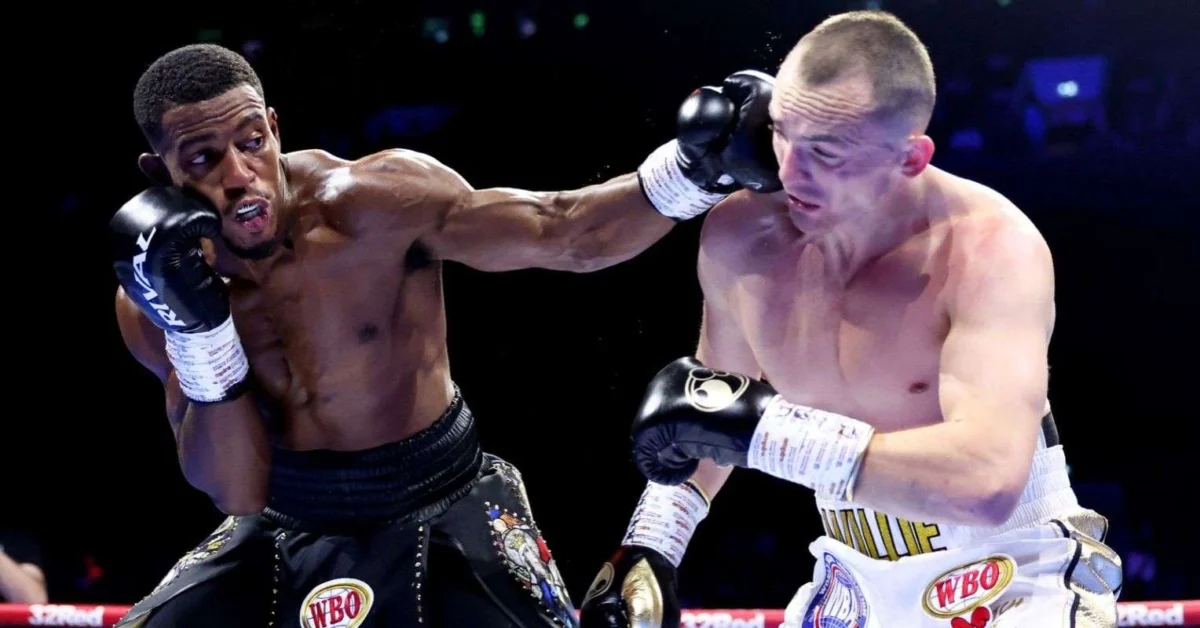
Instead of emerging victorious and maintaining his undefeated momentum, however, "The Cannon" suffered a rather humbling defeat at the hands of Willy Hutchinson. The loss dealt a stinging blow to his immediate championship aspirations and forced him into a period of deep introspection, left to connect the difficult dots as to why things did not go the way he had envisioned on fight night.
Yet, in the months that have followed, Taylor’s perspective on that setback has undergone a radical transformation. As counterintuitive as it might sound to traditional boxing mentalities, the Nottingham fighter now views his loss to Hutchinson as one of the best things to happen to his career.
In the lead-up to the Hutchinson fight, Taylor admits he had begun placing an overwhelming amount of pressure on his own shoulders. He found himself trapped in a rigid internal dialogue, constantly telling himself that he simply had to get everything right, that there was no room for error. Reflecting on that mindset now, he realises that perfectionism and suffocating pressure are not the optimal drivers for athletic success. Instead, he believes that a fighter’s journey should be entirely fuelled by genuine passion and love for the craft.
That epiphany has become the central pillar of his current training camp with Malik Scott. By shifting his focus away from the crushing weight of expectation and back toward the pure enjoyment of the sport, Taylor has discovered a different, more liberated side to himself. The subtle technical and psychological adjustments he and his team have implemented are already yielding positive results, generating an internal sense of momentum that he describes as an amazing feeling.
Taylor confesses that he wanted to win his previous fight so desperately that, when the defeat finally materialised, it felt as though his entire world was ending. But time and reflection have brought clarity. He now sees the inherent beauty in failure, acknowledging that without the painful lessons of that night, he would not have gained the wisdom or evolved into the mature boxer he is today.
Those adjustments have extended far beyond the four corners of the boxing ring. In his personal life outside the gym, Taylor has also sought professional guidance, working closely with a sports psychologist to help navigate the psychological demands of being a professional athlete. Much of their work has centred on a fundamental psychological challenge: separating Ezra "The Cannon" Taylor the fighter from Ezra Taylor the human being.
For a professional boxer, identity and profession are often inextricably linked. Taylor admits that he had begun looking at himself almost like a robot, subscribing to the unwritten combat sports rule that a fighter inside the ring must be entirely devoid of emotion. The traditional expectation is to be cold—essentially, a trained killer—and Taylor initially struggled to switch off that mindset when he stepped outside the gym and returned to his normal, everyday life.
The psychological toll of maintaining that persona began to weigh heavily. As a father, a partner, and a family member, Taylor could not realistically maintain a cold, emotionless demeanor with the people he loved most. The inability to psychologically switch off meant he could never truly relax, a constant tension that directly contributed to the heavy burden of pressure he carried into his fights.
Through his work with the psychologist, Taylor has learned that finding a sustainable balance is essential for survival in elite sports. If an athlete cannot compartmentalize and switch off, the relentless pressure will eventually eat them alive. The humbling loss to Hutchinson provided the catalyst needed to view his life and career from an entirely different perspective, reinforcing the central lesson that longevity and success in boxing require rediscovering the joy in the daily work.
While he can now look back on the loss to Hutchinson with philosophical gratitude and constructive insight, Taylor acknowledges that his immediate emotional reaction in March was vastly different. In the aftermath of the defeat, he experienced raw, unfiltered devastation, crying like a young boy—an emotional echo of how he reacted to defeats during his amateur days.
Because it had been such a long time since he last tasted defeat, the loss triggered a wave of self-doubt. Standing in the immediate shadow of failure, the psychological demons crept in, prompting painful internal questions about whether he was genuinely a good boxer or whether he even belonged at the elite level of the sport.
Taylor recognizes that experiencing such thoughts is entirely natural for any competitive athlete hitting rock bottom, but he remains deeply grateful for the unwavering support system that caught him when he fell. Notably, his coaching team remained entirely unchanged throughout the ordeal. For Taylor, there is no greater bond than winning alongside your team, enduring the collective pain of losing together, and then putting in the hard work required to return to the winner’s circle.
He now has the opportunity to put those words into action this Saturday in Manchester, where he is scheduled to face Brad Rea. As he steps through the ropes once more, Taylor does so carrying the lessons of Los Angeles, the guidance of Malik Scott, and an entirely transformed mindset—one stripped of suffocating self-imposed pressure and reignited by a renewed, passionate love for the sport that made him.