

When it comes to lower-body development, the quadriceps routinely capture the spotlight, both in commercial gyms and scientific literature. Lifters naturally accumulate massive volume for their quads through foundational compound movements like squats, leg presses, and lunges—exercises that hammer the front of the thighs regardless of individual programming preferences. The hamstrings, conversely, rarely receive that same automatic workload. Unless an athlete makes a deliberate effort to incorporate targeted leg curls and hip hinges into their routine, the posterior thigh muscles easily end up as an afterthought.
In the realm of exercise science, the quads have historically been far easier to study. Most individuals store less subcutaneous fat on top of their quadriceps, and the individual heads of the quads are much simpler to image using ultrasound because they consistently lie closer to the skin than the deeply layered hamstrings. However, a growing body of research dedicated to hamstring training has emerged, driven largely by strength and conditioning professionals. Given the high prevalence and debilitating nature of hamstring strains, particularly in sprinting and athletic contexts, targeted hamstring training—with a heavy emphasis on movements like the Nordic curl—has received increased attention as a critical intervention to reduce injury risk.
To understand how to train these muscles effectively, it helps to examine their basic functional anatomy. The hamstrings are comprised of four distinct muscle heads: the long and short heads of the biceps femoris, the semitendinosus, and the semimembranosus. Across the board, every head of the hamstrings crosses the knee joint to flex the knee, an action mirrored by a traditional leg curl. Furthermore, with the sole exception of the short head of the biceps femoris, the remaining three heads also cross the hip joint, meaning they actively assist in extending the hips during movements like deadlifts and good mornings.
Because of this complex architecture, optimal hamstring exercise selection intuitively requires two distinct categories of movements: leg curls to address knee flexion, and hip hinges to address hip extension under load. Crucially, however, staple lower-body movements like squats and leg presses are fundamentally inefficient for building significant hamstring hypertrophy.
This mechanical limitation has been illustrated clearly in recent scientific literature. One notable study compared the glute-focused hip thrust against the barbell squat, discovering that neither movement produced substantial growth in the hamstrings. A subsequent study compared a conventional squat taken to 90 degrees of knee flexion against a deeper squat taken to 140 degrees of knee flexion; once again, neither variation yielded meaningful hamstring growth.

The root cause of this lack of development lies in the biarticular nature of the hamstrings. In any exercise that requires an athlete to extend the knees and hips simultaneously—such as the ascending phase of a squat—the hamstrings act as a mechanical paradox. While they assist in extending the hip, they simultaneously generate internal torque that attempts to flex the knee, directly opposing the immense work being done by the quadriceps. To bypass this inherent conflict, the central nervous system typically recruits muscles that do not present this mechanical contradiction, specifically prioritizing the gluteus maximus and the adductor magnus. As a result, compound movements demanding high levels of simultaneous knee and hip extension torque are inherently suboptimal for driving hamstring hypertrophy.
Consequently, for hip hinges to effectively stimulate the hamstrings, the mechanics must change: the knee joint must remain relatively fixed throughout the movement, and the active demands for knee extension must be kept to a minimum. Interestingly, recent investigations suggest that the specific patterns of hypertrophy may vary considerably between traditional leg curls and hip hinges.
For instance, a study led by Kawama and colleagues investigated the effects of varying frequencies of eccentric-only resistance training using lengthened partial stiff-legged deadlifts. The results demonstrated that the long head of the biceps femoris, the semimembranosus, and the semitendinosus grew remarkably well, whereas the short head of the biceps femoris experienced comparatively modest growth.
Other investigations have directly compared hip hinge variants to leg curl variants. A study by Bourne and colleagues compared the 45-degree back extension against the Nordic hamstring curl. The findings revealed that the long head of the biceps femoris and the semimembranosus achieved greater hypertrophy from the 45-degree back extension, whereas the short head of the biceps femoris and the semitendinosus favored the Nordic hamstring curl.
Similarly, a recent study by Morin and researchers compared the Nordic hamstring curl directly to the stiff-legged deadlift. The data indicated that the Nordic hamstring curl resulted in superior growth of the semitendinosus, while the stiff-legged deadlift produced greater development in the semimembranosus. Both exercises stimulated similar levels of growth in the long head of the biceps femoris, though the researchers did not measure changes in the short head.

Taken together, these three studies suggest that hip hinges generally excel at targeting the long head of the biceps femoris and the semimembranosus, while leg curls prove superior for building the short head and the semitendinosus. Beyond basic functional anatomy, this divergence provides a compelling, evidence-based rationale for including both movement categories in a comprehensive training program.
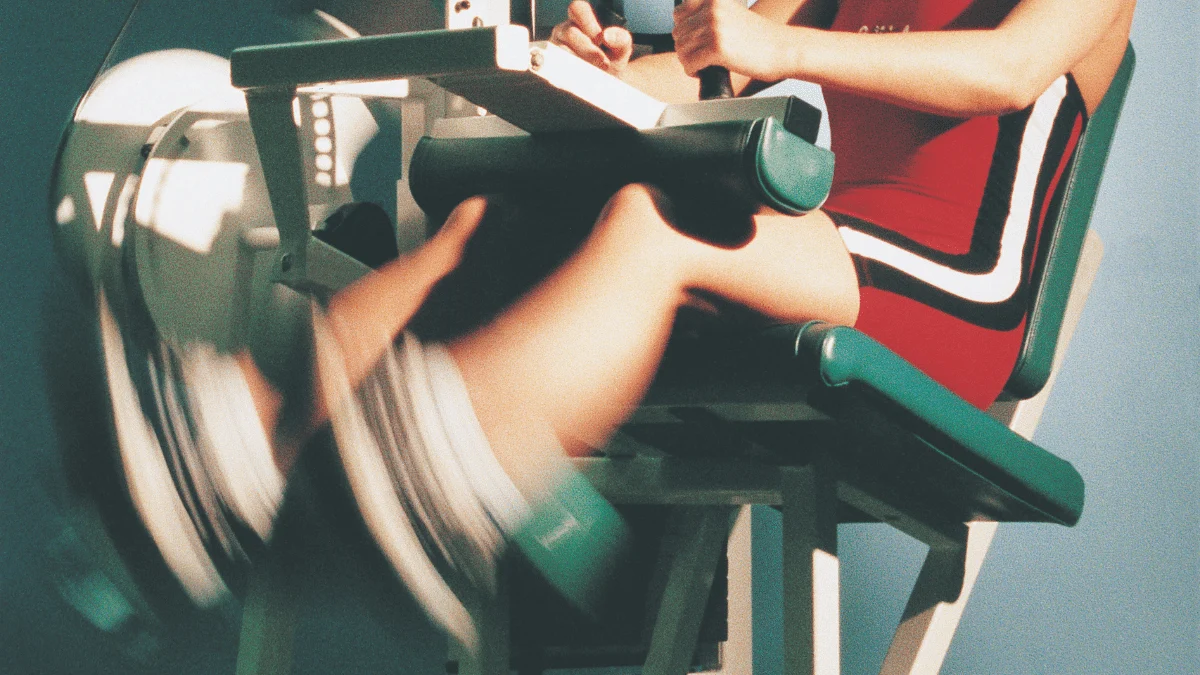
When narrowing down the optimal choice of leg curl, two distinct studies conducted by Maeo and colleagues offer valuable guidance. The first study compared the seated leg curl to the lying leg curl. Performing a leg curl from a seated position places the hips into a state of flexion, thereby increasing the passive stretch on the biarticular hamstrings compared to lying flat. Conversely, the sartorius—a superficial muscle that flexes the knee while simultaneously flexing the hip—experiences a greater stretch during the lying leg curl. The findings showed that the seated leg curl drove superior growth in the biarticular hamstrings, while the lying leg curl yielded greater hypertrophy for the sartorius.
A subsequent study by Maeo et al. compared the seated leg curl—modified with a forward torso lean to maximize the stretch on the muscle—against the Nordic hamstring curl. While the seated leg curl emphasizes the lengthened position for the biarticular hamstrings, the Nordic curl places peak resistance in the stretched position as the movement grows progressively more difficult during the descent. The results indicated that the Nordic curl produced greater growth in the short head of the biceps femoris and the sartorius, whereas the seated leg curl led to superior development in the long head and the semimembranosus. Growth rates for the semitendinosus, gracilis, and popliteus remained similar between the two groups.
Synthesizing these findings suggests that the seated leg curl stands out as the most effective single choice for maximizing overall hamstring growth. However, the traditional lying leg curl retains value for targeting the sartorius, and the Nordic curl provides unique mechanical benefits for the short head of the hamstrings. Researchers note that these comparisons evaluated curl variations in isolation, and results might shift when performed alongside dedicated hip hinges.
Additional research, while not strictly focused on exercise selection, offers further insights into optimizing posterior chain training. A conference abstract by Maeo and colleagues compared the execution of half-reps in the stretched position against a full range of motion on a multi-hip machine. The data indicated that hypertrophy for both the hamstrings and the glutes was generally greater when utilizing the lengthened partial technique, suggesting that incorporating partial repetitions in the stretched position could be a viable strategy for lifters.

In a separate investigation, Cadeo and colleagues examined whether manipulating ankle position during lying leg curls—specifically comparing fully plantarflexed ankles to fully dorsiflexed ankles—altered the growth of the long head of the biceps femoris. This methodological adjustment aimed to alter the length of the gastrocnemius, a calf muscle that also crosses the knee joint, to shift the mechanical burden toward or away from the hamstrings. Ultimately, ankle position had no measurable impact on the resulting muscle growth, indicating that foot placement during leg curls is largely a matter of personal comfort and preference.
Ultimately, achieving balanced hamstring development requires a thoughtful combination of both hip hinges and leg curls. While hip hinges bias the long head of the biceps femoris and the semimembranosus, leg curls target the semitendinosus and the short head. Among the available curl variations, the seated leg curl appears most effective for comprehensive growth, supplemented by the unique advantages of lying curls and Nordic variations.
The Stronger By Science weekly newsletter features practical training tips and summaries of the latest research. Readers can sign up for free on their official website.