

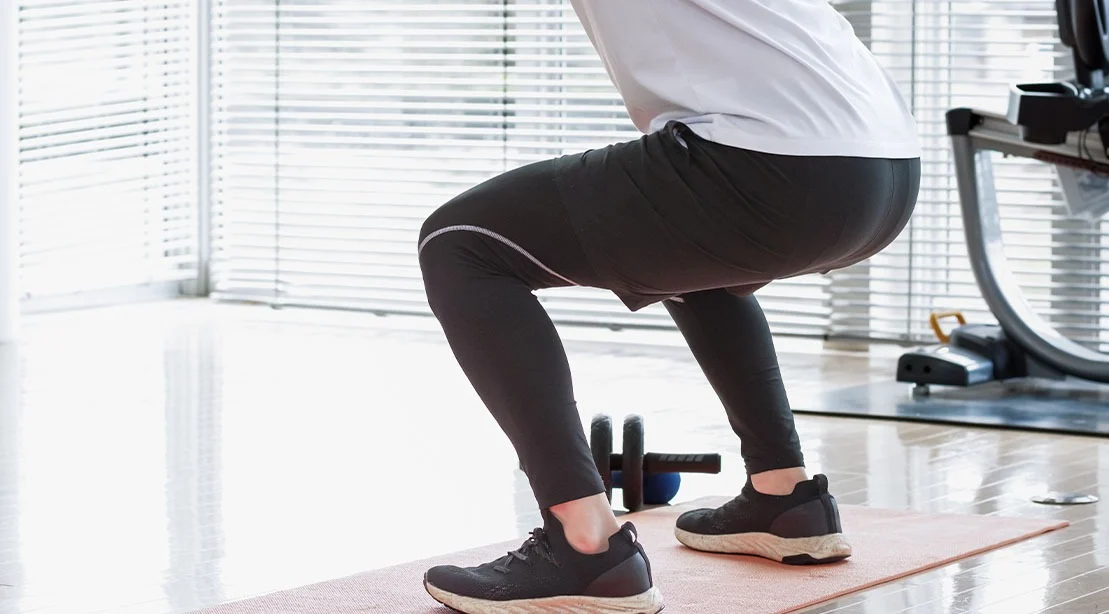
Not every muscle in the human body gets immortalized in a rap song, but the glutes certainly do more than just look good in a pair of pants. Beyond the obvious vanity benefits, a well-developed backside helps individuals perform a wide variety of functional movements both inside and outside the gymnasium. While the gluteus maximus often captures the lion’s share of public attention, the gluteus medius and minimus provide the vital pelvic stability that allows the larger glute max to function at its highest capacity. Consequently, sports scientists and fitness experts emphasize the importance of targeting all three muscles rather than focusing exclusively on the most visible one.
How athletes and everyday gym-goers train these muscles matters immensely. Heavy compound lifts hit the lower body hard and heavy, but isolation exercises remain necessary to train the full array of glute functions. Furthermore, experts note that loading these muscles in different ways—ranging from a lengthened position, such as in a Romanian deadlift, to a shortened position, like a barbell hip thrust—creates a more balanced and robust development. Understanding these biomechanical differences, rather than blindly choosing sides in the perennial debate between squats and hip thrusts, serves as the key to effective lower-body programming.
Anatomy and Function of the Three Glute Muscles
Each of the three distinct gluteal muscles serves a specific physiological role, and understanding these individual functions helps practitioners design more effective routines.
The gluteus maximus is the largest and most superficial of the trio, responsible for the vast majority of the backside’s overall size and shape. While primarily recognized for driving hip extension and external rotation, the lower fibers can also assist with hip adduction depending on the specific position of the hip joint, while the upper fibers assist with hip abduction.
Positioned on the lateral side of the pelvis, partly beneath the gluteus maximus, sits the gluteus medius. Its primary responsibility is hip abduction, though it also plays a critical role in stabilizing the pelvis during movement. The medius features distinct muscle bundles that perform varying tasks; the anterior fibers assist with hip internal rotation, while the posterior fibers contribute to external rotation.
Finally, the gluteus minimus represents the smallest and deepest of the three muscles, resting directly underneath the gluteus medius. It assists with both hip abduction and internal rotation while actively helping control the position of the femur within the hip socket. Alongside the gluteus medius, the minimus works tirelessly to stabilize the pelvis during single-leg movements when one foot leaves the ground.
The Role of Individual Hip Anatomy
The hip functions as a versatile ball-and-socket joint, permitting flexion, extension, abduction, adduction, and rotation. However, human skeletal anatomy is not universally uniform. The depth and orientation of the hip socket, the specific angle of the femoral neck, and the natural degree of forward or backward rotation in the femur vary significantly from person to person. These underlying structural differences directly influence exercise selection and optimal body positioning.
For instance, some individuals naturally squat comfortably with a narrow stance and toes pointed straight ahead, while others require a wider stance with their toes pointed outward. Individual hip anatomy, joint mobility, relative strength, and limb lengths all dictate which positions work best for a given body. Adjusting stance width, foot placement, and range of motion allows lifters to effectively load the glutes while respecting their unique anatomical framework.
Beyond Aesthetics: Strength, Stability, and Joint Health
Because the glutes rank among the most powerful muscles in the human body, paying attention to the posterior chain yields benefits that extend far beyond physical appearance.
From a strength and power perspective, the glutes supply the horsepower required for demanding athletic movements, ranging from heavy squatting and sprinting to routine daily activities. The greater the strength of these muscles, the more force they can produce, particularly when combined with targeted power training.
In terms of stability, smaller glute muscles govern lower-body alignment during unilateral movements like walking, running, climbing stairs, and performing single-leg Romanian deadlifts. Weakness in these areas frequently manifests as a loss of balance, excessive wobbling during single-leg stances, or the knees caving inward—a phenomenon known as knee valgus—during heavy squats and deadlifts.
Joint health also benefits heavily from proper glute function. The hips, knees, and lower back operate as a closely linked kinematic chain, meaning that when one area struggles, another compensates. Weakness in the gluteus medius and minimus can induce knee valgus, placing undue stress on vulnerable knee ligaments. Similarly, inadequate hip extension strength or restricted hip mobility forces the lower back to handle loads and ranges of motion it was never designed to endure. Training the glutes for both strength and mobility actively prevents these compensatory dysfunctions.
Furthermore, athletic performance relies heavily on the glutes. During sprinting, the gluteus maximus drives explosive hip extension, while rapid directional changes, deceleration, and cutting maneuvers require all three glute muscles to control the hip and pelvis as the body absorbs and redirects force. The glutes also contribute significantly to rotational power, supporting activities like swinging a bat, throwing a punch, or driving a golf ball by linking lower-body force production to upper-body power.
Mechanics of Lengthened Versus Shortened Loading
Achieving optimal muscle growth and strength gains requires a nuanced approach to training mechanics. Heavy compound exercises such as barbell back squats, Romanian deadlifts, and barbell hip thrusts allow the glutes to generate immense force alongside the quadriceps, hamstrings, and adductors, forming a solid foundation for overall development.
Training in lengthened positions—utilized through deep squats, front-foot-elevated split squats, and deficit reverse lunges—places a loaded stretch on the muscle tissue precisely where it is most vulnerable. Because the hips are deeply flexed and the glutes are stretched under load, this stimulus promotes substantial muscle hypertrophy, particularly when paired with a controlled lowering phase.
Conversely, shortened position training emphasizes hip extension as the glutes approach peak contraction near the end of their smaller active range of motion. Exercises like barbell hip thrusts, glute bridges, and various cable kickbacks target this phase of the movement. Fitness experts stress that neither approach is inherently superior on its own; rather, combining both methods ensures comprehensive muscular development.
Additional stimulus comes from targeted hip abduction exercises, such as machine abductions, lateral band walks, and side-lying hip raises, which directly train the gluteus medius, minimus, and upper glute max fibers to enhance pelvic stability. Meanwhile, rotational work like seated band internal rotations and cable external rotations supports overall joint health. Unilateral movements, including Bulgarian split squats and single-leg Romanian deadlifts, challenge individual limbs to produce force and stabilize the pelvis simultaneously, correcting bilateral strength imbalances.
Core Rules for Programming Glute Workouts
Designing an effective routine does not require an endless variety of disparate exercises. Instead, successful programming relies on a strategic combination of movements that address every function of the glutes without turning routine training sessions into marathons.
Workouts should generally begin with compound bilateral and unilateral lifts. These foundational movements allow lifters to handle challenging weights while engaging multiple muscle groups. However, trainers must recognize that heavy compound lifts do not automatically isolate the glutes; factors such as squat depth, torso angle, and exercise technique dictate how much actual work the glutes perform relative to neighboring muscle groups.
A well-rounded program must incorporate exercises that challenge the glutes at both lengthened and shortened positions. While Romanian deadlifts and deep squats load the muscle in a stretched state, hip thrusts and bridges emphasize tension near full hip extension. Lifters are encouraged to move past online debates regarding squats versus hip thrusts, utilizing movements that cover both ends of the muscle’s active range while maintaining a controlled, full range of motion.
Smaller stabilizing muscles should receive direct attention through targeted hip abduction work to ensure the larger glute maximus can operate unhindered. Incorporating power development exercises—such as broad jumps, sled pushes, and lateral bounds—fires up fast-twitch muscle fibers and translates directly to athletic performance. Finally, prioritizing mobility work, such as half-kneeling hip flexor stretches and 90/90 hip rotations, ensures that the hips can access the necessary ranges of motion required for safe and effective training.
When structuring sets, reps, and frequency, lifters must balance heavy loading, hypertrophy work, and stability training while allowing adequate recovery time. Strength work typically utilizes lower rep ranges with challenging weights and extended rest periods, while muscle-building routines generally favor moderate rep ranges close to technical failure. Power movements are best performed early in a session when the nervous system is completely fresh, and isolation work for the smaller glute muscles benefits from slightly higher rep ranges with strict control over momentum. For most individuals, spreading this total weekly volume across two to three dedicated sessions yields optimal results and maintains high training quality.
Common Mistakes and Persistent Myths
Despite the straightforward nature of lower-body training, practitioners frequently fall into predictable traps. One common error involves relying exclusively on hip thrusts and bridges, which neglects lengthened-position training and direct hip abduction. Conversely, ignoring exercises that load the glutes in a stretched position limits overall growth potential. Another frequent mistake involves hyperextending the lower back at the lockout phase of a movement—such as a deadlift or hip thrust—to create the illusion of a greater range of motion, which shifts the work away from the glutes and onto the lumbar spine. Finally, completely overlooking the gluteus medius and minimus leaves key pelvic stabilizers undertrained and vulnerable.
Several persistent myths continue to circulate within the fitness community. Some practitioners argue that heavy squats are the only exercise necessary for complete glute development, while others insist that hip thrusts completely supersede squats due to localized muscle activation. Scientific literature comparing the two movements indicates that both approaches build the glutes effectively through distinct mechanical pathways.
Another widespread misconception suggests that individuals can easily isolate specific regions of the glute maximus, such as carving out an upper-glute shelf or a separate lower-glute tie-in. While varying hip positions can subtly shift regional emphasis within the muscle, complete isolation of individual muscle fibers remains anatomically impossible. Finally, extreme post-workout muscle soreness is frequently misinterpreted as the sole indicator of a successful workout, whereas sports scientists note that severe soreness typically signals unfamiliar eccentric loading rather than guaranteed muscle growth.
Ultimately, the glutes serve as the primary engine driving lower-body power both inside and outside the gym. Building a stronger, more muscular backside requires looking past single-exercise dogma, training the glute complex through its full range of functions, and committing to progressive overload, proper recovery, and sound mechanics.