The harsh realities of boxing have caught up with Ike “The President” Ibeabuchi. Once one of the most terrifying and avoided punchers in the heavyweight division, the Nigerian contender has discovered that turning back the clock is far more difficult than he ever imagined. Following a staggering 26-year absence from the sport—largely spent behind bars and navigating protracted legal and immigration battles—Ibeabuchi’s ambitious comeback has hit a pair of severe roadblocks. First came a stunning upset loss to a seasoned cruiserweight, and now, a heavily anticipated pay-per-view clash with former WBC champion Oliver McCall has completely collapsed due to a lack of fan interest and low subscription sales.
The developments mark a tragic and sobering chapter for a fighter whose immense potential was famously derailed at the height of his powers. In the late 1990s, Ibeabuchi stood at 20-0, holding victories over elite contenders like David Tua in a legendary, all-action war and scoring a devastating knockout over Chris Byrd. He was right on the doorstep of a world heavyweight championship opportunity, widely regarded as a legitimate threat to anyone holding a belt in the division. However, a prison sentence stemming from legal troubles in 1999 abruptly halted his career, plunging him into a quarter-century exile that effectively erased his prime years from the sport.
26 Years Away From Boxing
For decades, the boxing world could only speculate about what might have been had Ibeabuchi’s career not been interrupted. Even after his release from prison, his return to freedom was delayed by further complications involving immigration authorities. Throughout those difficult years, his supporters, including his brother Stan, maintained that the former contender had been treated unjustly by the system, while Ibeabuchi himself stubbornly held onto the dream of lacing up the gloves again.
That dream finally materialized in August 2025, when Ibeabuchi officially stepped back into the squared circle in Nigeria. In his long-awaited return, he looked to pick up right where he left off, forcing opponent Idris Afinni to retire after three rounds. The victory improved his unblemished professional record to 21-0 and instantly reignited his grand heavyweight ambitions. In a display of his characteristic confidence, Ibeabuchi even went as far as calling out unified heavyweight champion Oleksandr Usyk, challenging him to a fight in Kyiv as he openly targeted George Foreman’s historic record as the oldest heavyweight champion in boxing history.
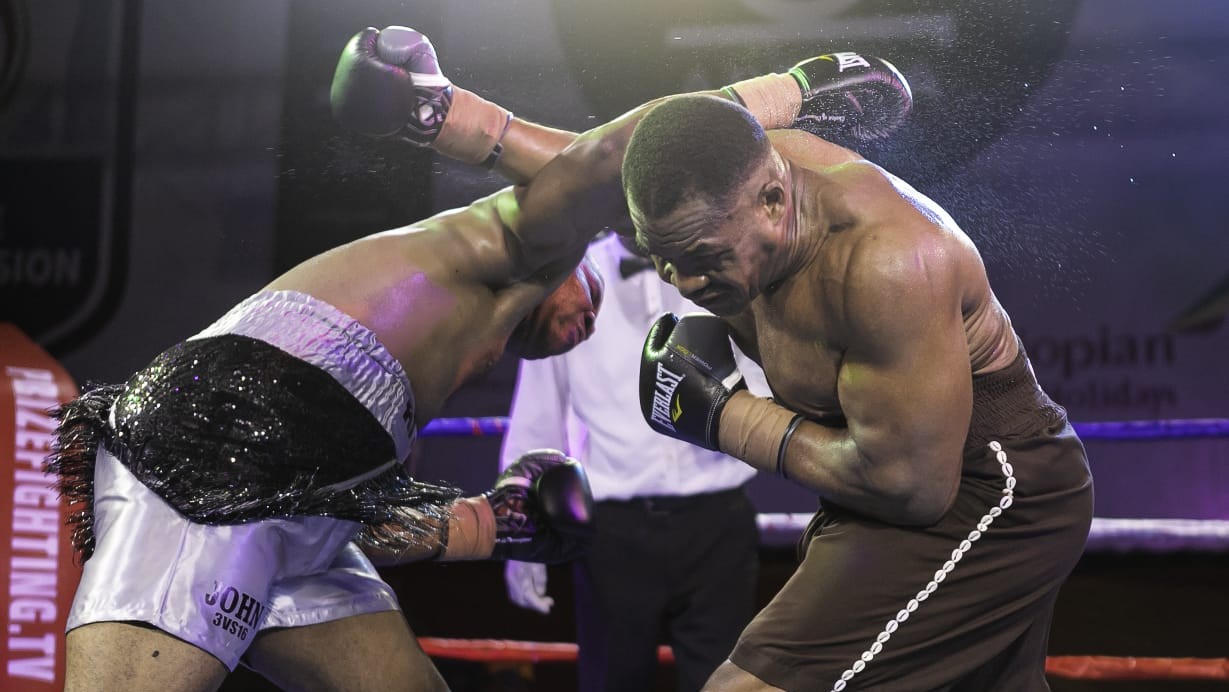
Yet, the momentum from his successful return proved fleeting. On Christmas Eve 2025, just months after his triumphant homecoming, Ibeabuchi’s comeback suffered a devastating and unexpected blow when he faced Kabiru Towolawi in Lagos. Towolawi, a 45-year-old cruiserweight who entered the ring with 16 professional defeats on his ledger, pulled off the upset of the local boxing calendar by handing Ibeabuchi the first loss of his professional career. Twenty-six years after disappearing from the sport as an undefeated powerhouse, Ibeabuchi finally tasted defeat against an opponent who would never have been mentioned in the same breath as him during his dominant 1990s heyday.
The loss exposed the undeniable toll that age and a quarter-century of inactivity had taken on his once-fearsome physical attributes. Rather than soaring straight back into world title contention, Ibeabuchi found himself forced to rebuild from a painful reality check on the African continent.
McCall PPV Falls Apart
Undeterred by the setback against Towolawi, Ibeabuchi sought another high-profile opportunity to rescue his comeback and secure his financial future. Promoters began putting together a bizarre and nostalgic matchup against former WBC heavyweight champion Oliver McCall, the hard-hitting veteran who famously knocked out Lennox Lewis in 1994.
The proposed bout carried a combined age of 114, with McCall at 61 and Ibeabuchi at 53, and was scheduled to take place on November 26, 2026. It was framed as a dramatic clash of 1990s heavyweights looking to turn back the hands of time. However, the modern combat sports landscape proved unforgiving to legacy nostalgia without mainstream backing. Promoters at Prizefighting.tv established a strict financial threshold for the event to move forward, requiring 12,500 advance pay-per-view purchases at a price of $9.95 each to make the production financially viable for all parties involved.
Unfortunately, the boxing public did not respond with the necessary wallets. On October 5, the proposed pay-per-view event was officially canceled after advance sales fell woefully short of the required figures.
“The fans were given the chance to decide whether this fight would happen, and not enough of them bought it. We respect that answer,” Prizefighting.tv explained in a statement regarding the cancellation.
The promotion confirmed that full refunds would be issued to those who had purchased subscriptions. Furthermore, the cancellation brought to light the harsh financial vulnerabilities of both fighters, as the event had been designed specifically to provide meaningful purses and financial relief to two aging veterans experiencing serious financial hardship. For Ibeabuchi, the collapse of the card meant the sudden loss of another vital payday and another missed chance to re-establish his relevance on the global stage.
The trajectory stands in stark contrast to the paths trodden by his former peers. There was a time in the late 20th century when Ibeabuchi possessed the talent, power, and fearlessness to share the ring with Mike Tyson or Lennox Lewis at the absolute pinnacle of the heavyweight division. More than twenty-five years later, the once-destined world title challenger is discovering that the boxing world has moved on, leaving him struggling to attract enough paying fans to keep his improbable comeback alive.