


As the winter freeze tightens its grip on Europe, the intersection of elite sport and wartime survival has rarely been starkly illustrated than through the parallel journeys of Ukrainian football club FC Shakhtar Donetsk and energy giant DTEK. While Europe’s premier football clubs compete in glittering stadiums across the continent, Shakhtar is navigating a Champions League campaign under conditions entirely unprecedented in the modern history of professional sports. At the same time, their compatriots in the energy sector are waging a daily, life-or-death battle to keep the lights, heat, and hospitals running amid relentless infrastructural attacks.
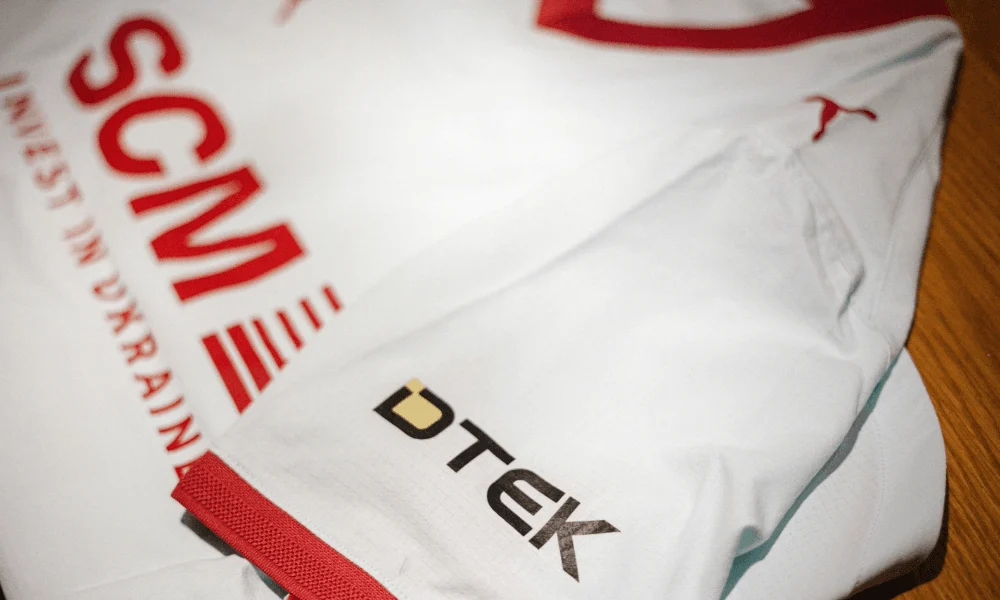
The two organizations, both tied to the industrial heritage of the Donbas region and the SCM family founded by Rinat Akhmetov, share a singular purpose: keeping the spirit and infrastructure of Ukraine alive against staggering odds. Through a unique partnership highlighted by the DTEK logo proudly displayed on the club’s sleeves during European nights, football and utility workers have become joint symbols of Ukrainian resilience on the global stage.
Serhii Palkin: Playing for Pride Amid Air Raid Sirens
For FC Shakhtar Donetsk, the journey through the current UEFA Champions League season has been nothing short of a surreal test of endurance. According to club CEO Serhii Palkin, the team is facing some of the biggest names in European football while carrying a psychological and physical burden that no other club in the competition has to bear.
The contrast between the pristine pitches of Western Europe and the grim reality of domestic competition in Ukraine is jarring. Palkin recalls a stark illustration of this reality just days before a major European fixture. The night before the squad was scheduled to depart for London, an air raid siren abruptly halted a domestic league match in the city of Rivne. Players, coaches, and staff were forced to abandon the pitch and seek shelter in the stadium bunker, waiting out the threat of incoming aerial assaults. Just days later, those same players walked out of the tunnel at Stamford Bridge to face AEK Athens, securing a historic 3-1 victory—marking the first-ever win by a Ukrainian club on English soil.
Shakhtar’s European campaign has seen the club take on heavyweights with the youngest squad in the entire Champions League tournament. Fixtures against Sporting and Fenerbahçe in London, alongside a high-profile matchup against Spanish powerhouse Real Madrid in January, highlight a grueling schedule. Yet, for the players and the management, the stakes extend far beyond group standings, goal differentials, or qualification mathematics.
Palkin emphasizes that the squad is deeply conscious of who they are representing every time they cross the white lines. In Ukraine, millions of citizens finish grueling workdays, switch on their televisions, and tune into the match. For a couple of hours, football provides a vital psychological refuge, allowing families to think about something other than the ongoing conflict.
However, this therapeutic escape is increasingly fragile. This winter marks the fifth consecutive season in which Russian forces have deliberately and systematically targeted Ukraine’s critical energy infrastructure. Power stations, electrical substations, and regional grids are struck repeatedly, plunging homes, hospitals, and schools into darkness and freezing temperatures. For many Ukrainian families, whether they can even watch Shakhtar play depends entirely on whether the local electricity and heating hold out against the latest barrage of missiles and drones.
This precarious reality is precisely where the connection with DTEK becomes vital. While Shakhtar takes to the international stage to bring a sense of pride and normalcy back home, DTEK’s repair crews head straight back out into the freezing cold immediately following every missile and drone strike to restore power. Everyone at Shakhtar—and the players above all—have expressed their profound gratitude to these utility workers for their relentless efforts and sacrifices. In modern Ukraine, the fortunes of the football pitch and the power grid are inextricably linked, and the club stands proudly alongside the energy workers.
Ivan Geliukh: The Unyielding Resilience of Ukraine’s Energy Crews
The feeling of solidarity and mutual respect is deeply shared by those on the front lines of the energy sector. Ivan Geliukh, head of strategy at DTEK and chairman of DTEK Grids, understands the emotional resonance of the partnership perhaps better than most. Like Shakhtar Donetsk, DTEK traces its foundational roots back to the industrial heartland of Donetsk, and the very name of the football club translates from Russian and Ukrainian roots as "miner."
For generations of workers in the Donbas, following Shakhtar has been a lifelong tradition, passed down through families who labored in the local coal mines and power plants. When those workers and their descendants see the DTEK logo emblazoned on the sleeves of Shakhtar’s jerseys at Stamford Bridge and across Europe, it carries an immense, deeply personal meaning.
Geliukh speaks first-hand about the extraordinary commitment demonstrated by DTEK employees who manage to keep electricity flowing under constant, targeted attacks. The scale of the assault on civilian infrastructure is staggering. Over the course of just a single recent year, Russia carried out approximately 4,500 attacks targeting Ukraine’s energy system. Thermal power plants have been hit repeatedly across multiple brutal winters. The human toll has been devastating, with 484 DTEK colleagues losing their lives—some killed while on duty trying to fix blown transformers, and others while serving in the armed forces defending their country.
Despite the mortal danger, DTEK crews continue to report for duty day after day, often dispatched to repair the exact same facilities multiple times after successive waves of bombardment. Since the escalation of the conflict in 2022, these frontline repair crews have managed to successfully restore power to Ukrainian homes more than 56 million times. They do this under the constant knowledge that another strike could easily occur before a repair job is even finished.
This relentless cycle of destruction and rebuilding has fundamentally altered how DTEK approaches the long-term future of the country’s energy infrastructure. One of the most profound lessons learned from the war is that no single piece of energy infrastructure can be rendered completely invulnerable to physical attack. While physical fortifications remain essential for protecting heavy equipment, the overarching strategy must evolve toward a system capable of absorbing severe damage and recovering with maximum speed.
Consequently, DTEK is pivoting toward a more decentralized energy architecture. By distributing multiple sources of power generation across the country rather than relying on massive, centralized plants, the grid becomes vastly more resilient and exponentially harder for an adversary to knock out entirely. Furthermore, the integration of advanced automation and smart grid technologies plays a crucial role, allowing operators to quickly isolate damaged sectors and automatically reroute electricity to unaffected residential and commercial customers.
DTEK is not merely planning for this future; they are actively building it in the midst of war. Even under wartime conditions, the company has successfully constructed Eastern Europe’s largest wind farm and Ukraine’s largest battery energy storage systems. Geliukh believes that these hard-earned experiences, forged in the crucible of active conflict, offer invaluable lessons for the rest of Europe regarding grid security, decentralization, and crisis management.
Ukraine has unfortunately gained an operational expertise that no nation would ever wish to possess, but it is knowledge well worth sharing with the international community. This shared ethos of survival and representation is why the connection with FC Shakhtar Donetsk resonates so powerfully. Despite being forcibly displaced from its home stadium and training facilities in Donetsk for more than a decade, the club has refused to fade away, proudly flying the Ukrainian flag across European competition. The players carry the hopes of millions of citizens, including the very technicians, engineers, and linesmen working tirelessly in sub-zero temperatures to keep the lights on.
At first glance, professional football and electrical engineering might appear to belong to completely different worlds. Yet, Geliukh sees a striking parallel in Shakhtar’s unwavering determination to keep competing at the highest level despite impossible odds. Both teams face daily crises, and both groups know intimately that millions of citizens are counting on them to deliver.
As winter deepens across Ukraine, FC Shakhtar Donetsk provides citizens with a vital reason to switch on their televisions, forget the air raid sirens for ninety minutes, and feel a sense of national pride. Meanwhile, the workers of DTEK ensure that when those televisions are switched on, the power is actually there.