

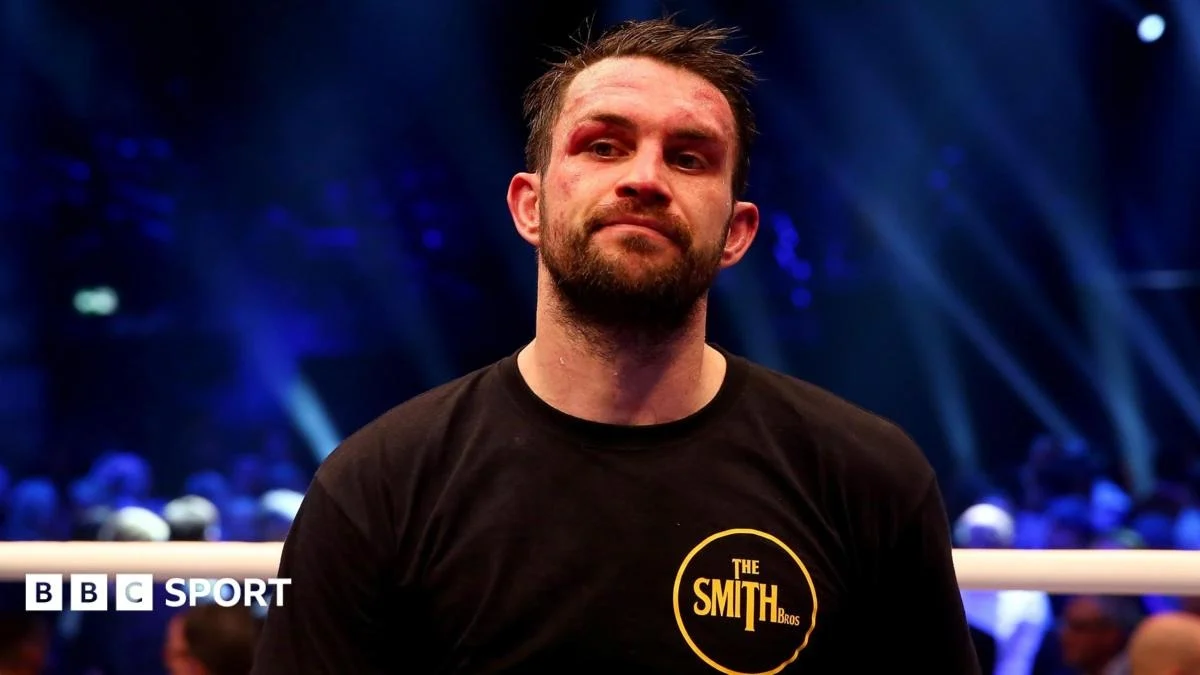
Former world title challenger Paul Smith has launched a scathing critique of the current combat sports landscape, warning that athletes across boxing and mixed martial arts are systematically being "hurt, exploited or forgotten" by an industry lacking fundamental protective infrastructure. Speaking on behalf of the Global Fighters’ Association (GFA), an organization established to safeguard the long-term well-being of fighters, Smith emphasized the urgent necessity of reform in a system he describes as deeply broken and failing those who put their health and livelihoods on the line in the ring and cage.
The GFA has officially set out to launch what it envisions as the largest and most comprehensive independent inquiry into health, safety, and governance ever conducted within combat sports. The group, which was initially formed last year with the primary objective of establishing a union-style model for fighters, is seeking to gather widespread testimony and evidence across all levels of the industry. Ultimately, the GFA aims to use the findings of this landmark inquiry as a catalyst to establish itself as a new, unified umbrella organization capable of providing formal representation, workplace rights, and regulatory safeguards for combat sports athletes worldwide.
Central to the GFA’s campaign is the stark reality faced by fighters who suffer severe, life-altering injuries in the line of competition without adequate financial or medical protection. The organization points to a string of recent public crowdfunding campaigns raised to cover emergency medical treatments and long-term care for injured athletes. Among those highlighted is professional boxer Lee Reeves, whose recent reliance on public fundraisers to meet urgent healthcare costs after sustaining serious injuries serves as a prominent example of the structural gaps currently plaguing the sport.
Smith, who contested three super-middleweight world title fights during a distinguished career that concluded with his retirement in 2017, expressed deep frustration over the industry’s ongoing dependence on charitable donations to treat injured competitors. From Smith’s perspective, forcing fighters and their families to turn to public generosity during their most vulnerable moments represents an unacceptable institutional failure on the part of promoters, sanctioning bodies, and regulatory authorities who oversee the sport.
Expanding on the immediate dangers and systemic neglect within the sport, Smith delivered a stark assessment of the weekly reality facing combat sports participants. He noted that in every corner of the global fighting community, athletes routinely sustain severe injuries or find themselves financially exploited, only to be cast aside once their immediate earning potential declines. Smith stressed that relying on the organic goodwill and shared sympathy of the boxing community to scramble for funds after a tragedy occurs cannot be mistaken for a functioning safety net, labeling it instead as a clear failure of the broader administrative system.
Smith further highlighted the total absence of rigorous, objective research into the industry’s structural flaws. He observed that despite combat sports generating substantial global revenue, no entity has ever dedicated the necessary time, financial capital, or institutional resources to thoroughly investigate the sport’s administrative and medical shortcomings. The GFA’s proposed inquiry intends to fill this void by conducting an exhaustive review, getting beneath the surface of the industry to pinpoint precise areas of systemic breakdown and ultimately publishing actionable, binding recommendations designed to implement mandatory safeguards.
To ensure the investigation maintains complete independence and rigorous legal standards, the GFA has secured the services of respected barrister Jonathan Caplan KC to head the inquiry. Caplan will lead a comprehensive evidence-gathering process designed to evaluate the safety, governance, and overall treatment of participants across every tier of combat sports. The scope of the inquiry will span the entirety of the sport, examining conditions from grassroots amateur gyms to high-stakes, multi-million-dollar professional promotions.
Upon concluding the evidentiary phase of the inquiry, Caplan will be tasked with compiling a detailed formal report. This report will synthesize the extensive testimonies from fighters, medical professionals, trainers, and industry insiders, setting forth a definitive set of published findings alongside concrete recommendations for structural reform. To fund this ambitious project, the GFA—operating as a non-profit organization—has initiated a major crowdfunding campaign with the target of raising £500,000 to cover the legal, research, and operational costs required to conduct an independent investigation of this magnitude.
Supporting the initiative, GFA Chair Designate Simon Bazalgette emphasized the stark disparity between combat sports and virtually every other major professional athletic discipline. Bazalgette pointed out that over the past decade or so, major professional sports—including rugby, football, and horse racing—have made substantial strides in improving participant welfare, establishing comprehensive health protocols, long-term injury tracking, and post-career financial planning. In contrast, combat sports have remained stubbornly resistant to modernizing worker protections.
Bazalgette observed that combat sport stands as one of the very few remaining high-risk workplaces where workers possess virtually no professional representation or collective bargaining power. Consequently, fighters operate without guaranteed minimum health and safety standards, lack access to independent pension schemes, and have no standardized insurance floors to cover catastrophic injury. Furthermore, when disputes arise or administrative failures occur, athletes are left with no singular, recognized governing body or neutral channel to turn to for conflict resolution or structural support.
According to Bazalgette, the GFA was established specifically to bridge this institutional gap. By introducing professional representation and structured oversight, the association aims to build a renewed bond of trust between combat sports participants, governing organizations, promoters, and the viewing public. Bazalgette argued that establishing a secure environment for athletes will not only protect their physical and financial well-being but will also provide a far more stable, ethical foundation for the long-term commercial expansion of combat sports globally.
The growing movement toward fighter advocacy is not limited to boxing. Earlier this month, prominent British mixed martial arts (MMA) fighter Michael ‘Venom’ Page publicly urged his fellow martial artists to form a union to collectively bargain for improved pay structures and baseline workplace rights. Page pointed to existing legislation in the United States, specifically the Muhammad Ali Boxing Reform Act enacted in 2000, as a crucial regulatory model that should be expanded or replicated to cover athletes competing in MMA and other combat disciplines.
Enacted by the U.S. Congress, the Muhammad Ali Act was designed to protect the financial interests and contractual rights of professional boxers, curb abusive promotional practices, and prevent powerful promotional entities from establishing oppressive monopolies over athletes. However, efforts to expand or maintain these statutory protections have met opposition. Recent initiatives spearheaded by UFC President Dana White have focused on amending the federal legislation, a move that has sparked significant concern among fighter advocate groups.
Addressing these developments, GFA Acting General Secretary Paul Maloney cautioned that proposed modifications to the Muhammad Ali Act should serve as a major warning sign for combat sports athletes around the world. Maloney highlighted that the Ali Act represents the only existing piece of legislation anywhere in the world offering fighters a statutory baseline of workplace protection against exploitative promotional practices and non-transparent financial arrangements.
Maloney warned that critics of the proposed legislative rewrites contend the amendments are designed to favor the very promoters and broadcasting networks that already hold an overwhelming concentration of market power and influence. He emphasized that if the lone piece of protective legislation can be dismantled or weakened in the United States, unrepresented combat sports participants in other jurisdictions are left even more exposed. Maloney concluded that this precise vulnerability highlights why an independent, respected, and dedicated representative body like the Global Fighters’ Association is urgently required to protect fighters’ rights globally.