

For nearly as long as the modern combat sports equipment market has thrived, the landscape of boxing glove manufacturing has been sharply divided. On one side sit the legendary heritage brands of Mexico, Japan, and the United States, commanding top-tier prices and commanding the hands of professional champions. On the other side sits a sprawling, often controversial hub of production in Pakistan, historically associated with mass-produced, generic gear that serious practitioners and professional fighters learned to view with deep skepticism.
Yet, within the vast expanse of the internet, a quiet anomaly began to surface on martial arts forums like Sherdog around 2016. A lone manufacturer operating out of Pakistan under the banner of TopBoxer—led by a craftsman named Muhammad Irfan—started generating a cult-like following. Unlike major corporations that rely heavily on aggressive marketing campaigns, financial deals, and sponsored athletes to push products, TopBoxer grew strictly through word-of-mouth recommendations among discerning fighters. What made the brand particularly intriguing was its unique value proposition: highly personalized, custom-made boxing gloves offered at remarkably reasonable prices, backed by a direct line of communication with the actual maker.
After spending a full year testing and abusing two distinct pairs of TopBoxer gloves—a custom 16-ounce training pair and a stock 14-ounce training pair—the reality behind the online hype reveals a fascinating look at modern glove craftsmanship, hand safety, and the shifting dynamics of combat sports gear.
The Background of Muhammad Irfan and the Art of Glove-Making
For many gear enthusiasts, the initial encounter with TopBoxer comes via digital forums where users compare up-and-coming brands to established industry heavyweights. Historically, skepticism toward Pakistan-manufactured boxing equipment was well-earned, as many entries into the market suffered from poor quality control, subpar leather, and inadequate padding. However, when a new manufacturer manages to win over veteran amateurs and professionals without a single vocal critic, curiosity inevitably takes over.
Reaching out to Muhammad Irfan via social media in 2017 provided a rare glimpse into the mind of a true artisan rather than a corporate executive. In the ecosystem of combat sports manufacturing, people generally fall into distinct categories. Marketers spend their time positioning features, benefits, and competitive advantages, often relying on buzzwords and trend-chasing. Business-oriented figures focus strictly on numbers, margins, bulk orders, and wholesale pricing.
The craftsman, by contrast, is entirely consumed by the work itself. When speaking with a true artisan, conversations drift naturally toward the science of glove construction, the specific mechanics of different foam and padding combinations, the choice of materials, and the structural secrets of ergonomic design. For a modest cost that previously hovered around one hundred dollars, buyers gained the unprecedented ability to speak directly with the person cutting the leather and layering the foam. That level of direct access to a maker is virtually unheard of in the modern sporting goods industry, where layers of corporate bureaucracy usually separate the consumer from the factory floor.
Entering into a custom order carries its own subtle anxieties, particularly for a reviewer who intends to publish an honest critique. Criticizing a mass-produced item from a faceless conglomerate is one thing, but evaluating the bespoke work of an independent artist who poured personal labor into a custom piece introduces a heavy sense of responsibility. Nevertheless, the driving motivation remains hand safety and a commitment to exposing exploitation in the industry, ensuring that rigorous standards are applied regardless of the maker’s background.
While Mexican manufacturers pioneered the concept of custom gear decades ago, the experience often presented logistical hurdles. Communication typically required translation, intermediaries, and photographic exchanges with very little back-and-forth dialogue regarding the nuanced science of the build. TopBoxer helped ignite a broader modern trend toward accessible customization, offering a personalized one-man experience that few competitors have been able to replicate successfully.
Putting the Gear to the Test: The 2019 Order
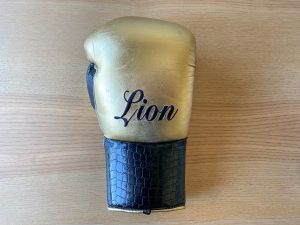
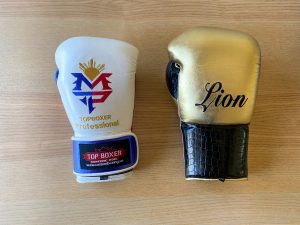
Initial plans to evaluate the brand’s capabilities were temporarily derailed following conversations about exotic materials, specifically genuine crocodile leather. After ethical considerations regarding animal sourcing prompted a change of heart, the project was put on hold. By 2019, the order was finally placed using a modern compromise: croc-print leather, avoiding the use of real animal skin while still leaning into aesthetic personalization.
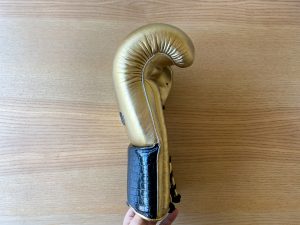
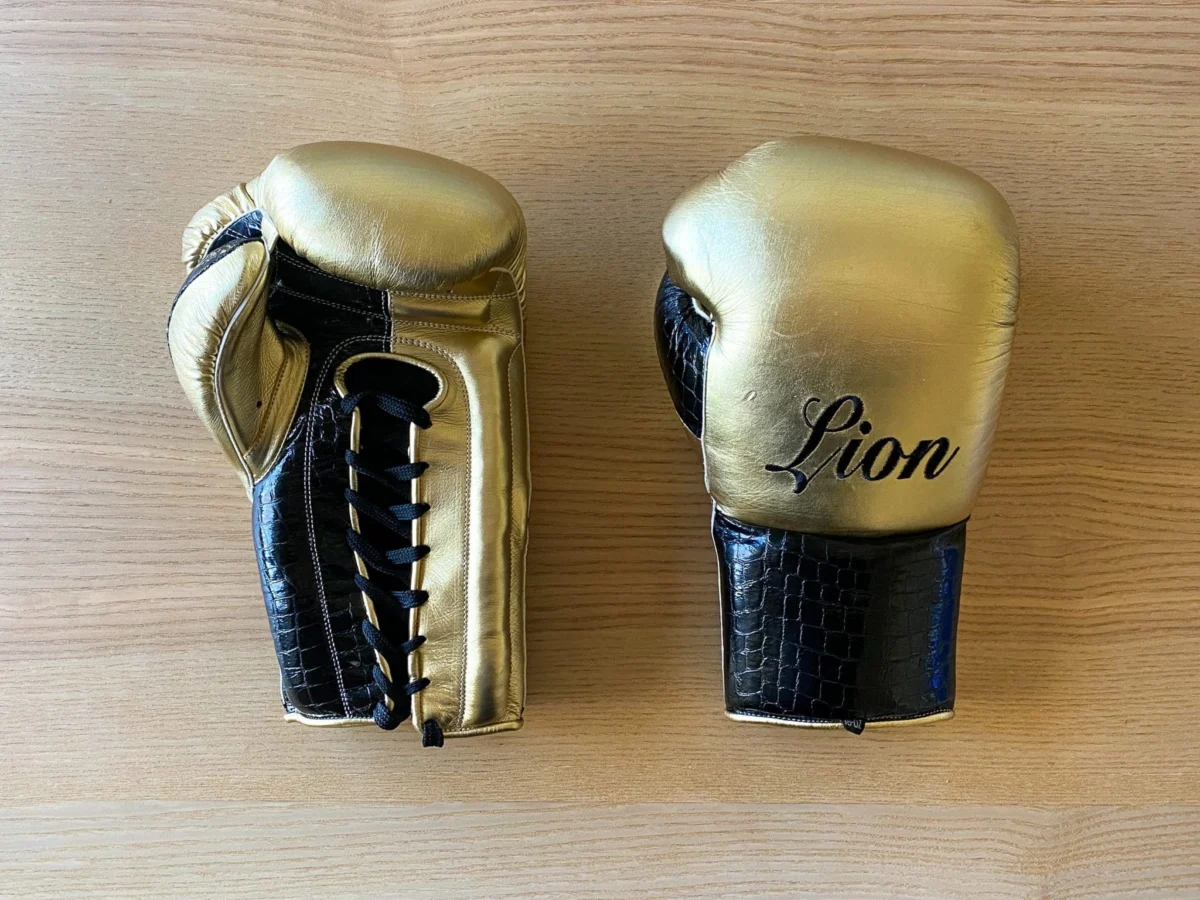
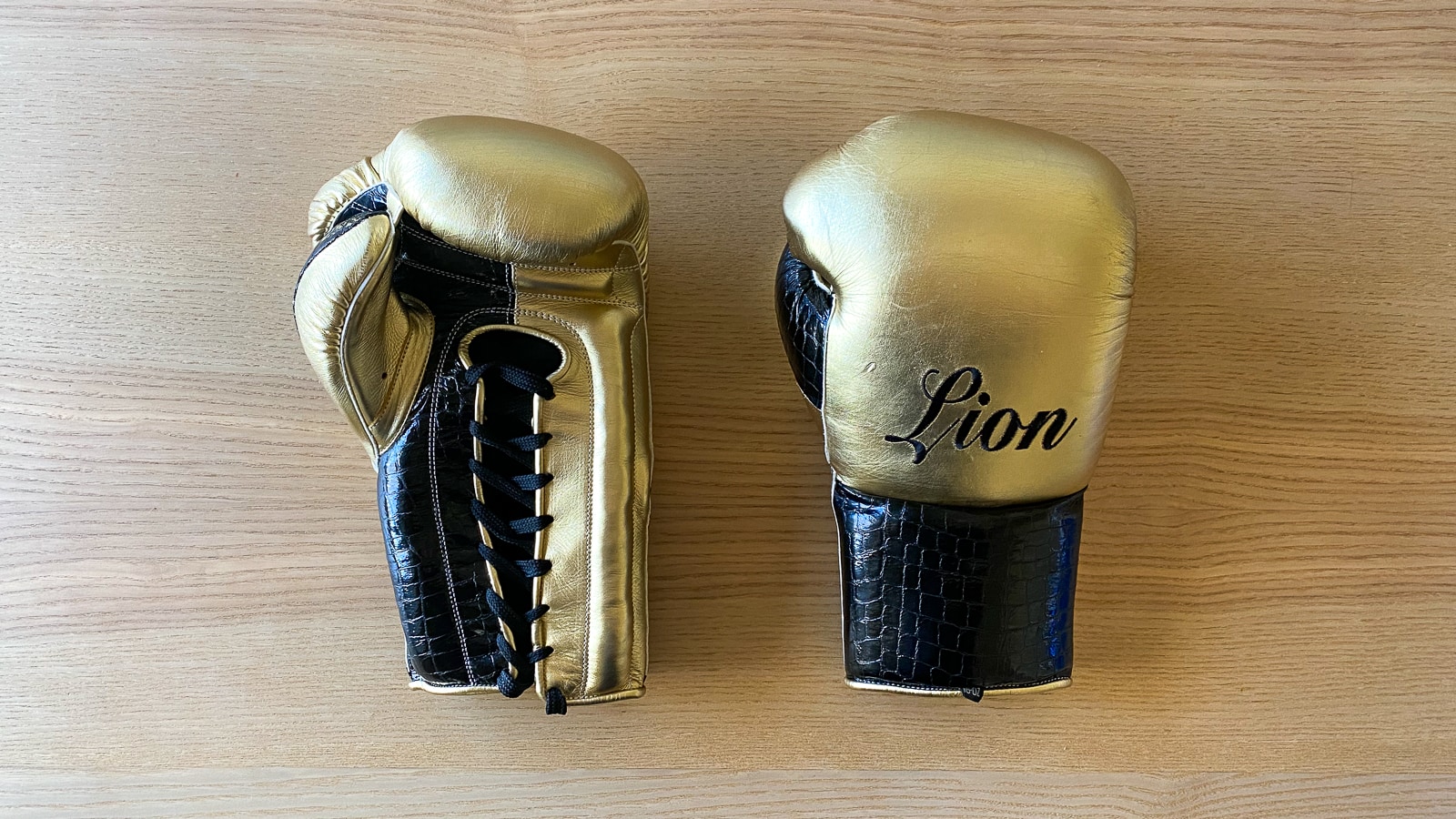
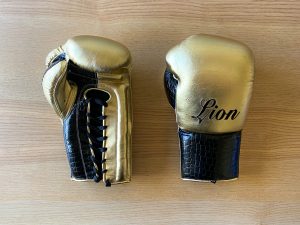
The resulting package arrived from Pakistan containing a pair of custom 16-ounce training gloves alongside a pair of stock 14-ounce training gloves, setting the stage for a rigorous twelve-month testing phase that included hundreds of rounds of bag work and sparring.
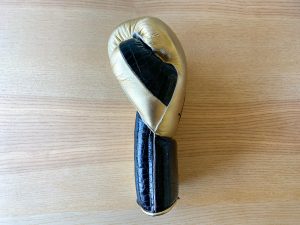
Leather, Stitching, and Construction Quality
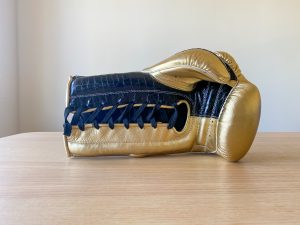
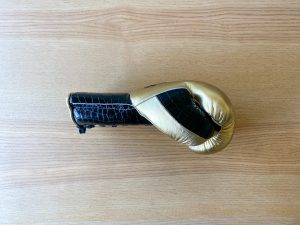
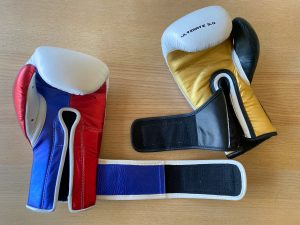
The leather utilized by TopBoxer carries the distinct tactile and olfactory signature of Pakistan-sourced hides. It presents a soft feel with a slightly plastic-like sheen, though this is partially masked on the custom pair by a striking metallic gold finish. The stock gloves, finished in a more traditional palette, offered a clearer canvas to assess the baseline material quality, which proved to be structurally sound and reliable over extended use.
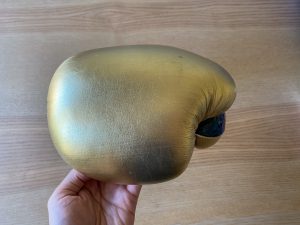
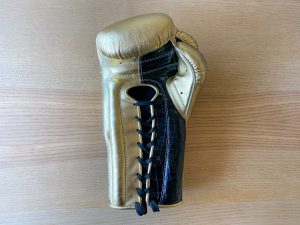
The piping along the edges is cleanly executed, utilizing rolled leather rather than cheap synthetic alternatives, with the stock gloves displaying a particularly refined finish. Stitching across both pairs is remarkably tight and uniform, executed via precise machine double-stitching rather than hand-sewing. After enduring between one hundred and two hundred rigorous rounds on the custom pair, the stitching remained completely intact without any fraying or loose ends.
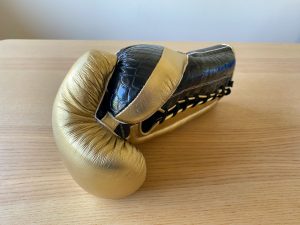
The custom gloves feature additional, highly distinctive exterior stitching running along the outside edge of the forearm down to the pinky knuckle, as well as along the inner forearm and index finger zones. This extra stitching appears intended to provide heightened structural support and durability, showcasing a personalized design philosophy that sets the brand apart from generic manufacturers.
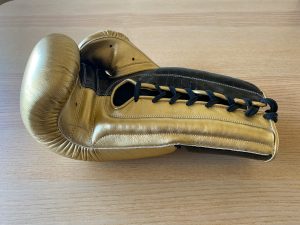
Padding, Ergonomics, and Fit
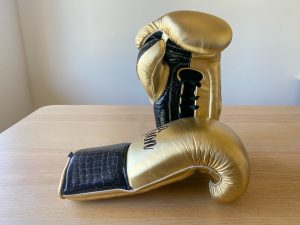
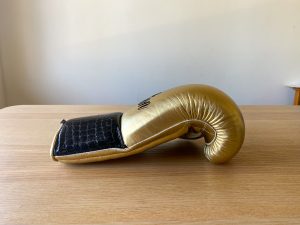
The padding profile on the custom 16-ounce gloves is exceptionally voluminous, resembling oversized, cloud-like cushions that give the wearer the visual impression of wearing massive novelty items. Despite their bulky appearance, the actual weight feels remarkably light—reminiscent of a well-balanced 14-ounce glove. A subtle modification on the palm side features a thin strip of padding designed to provide MMA-style compatibility for blocking kicks, highlighting Muhammad’s willingness to experiment with unconventional structural details.
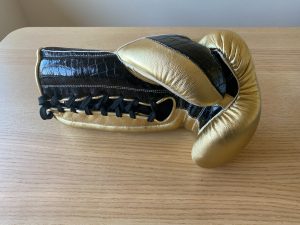
In contrast, the stock 14-ounce gloves feature a more standard, medium-density padding optimized for bag work, accompanied by unique thick support bars along the palm-side wrist area for enhanced structural rigidity.
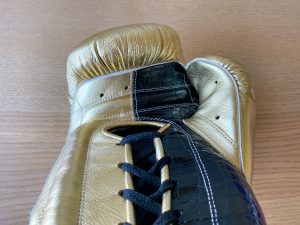
Ergonomically, the stock gloves reveal an impressive ridge running down the back of the index finger to the wrist, a contour typically found only in ultra-luxury custom brands like Di Nardo that command prices ten times higher. Most standard boxing gloves feature a flat, boxy back that mimics a tennis racket, whereas the TopBoxer stock shape contours naturally to the hand.
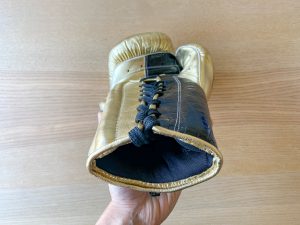
The thumb construction varies between the two models. The stock gloves feature a modern, sharply tapered straight thumb, while the custom pair exhibits a pronounced, hooked "eagle claw" thumb reminiscent of old-school Mexican equipment, such as Necalli gloves. Boxers who prefer a strictly straight thumb design may find the curved variation takes some adjustment, though the internal comfort remains high.
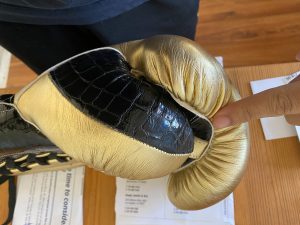
Fit presented the only minor complication during testing. The custom gloves felt notably wide, leaving considerable interior space even after accounting for the buyer’s exact hand measurements. While hand slippage was minimized once the laces were pulled tight, the glove maintained a roomy interior. The stock gloves, however, offered a nearly flawless, snug fit out of the box, suggesting that substantial deviations from standard padding volumes require corresponding adjustments to the overarching glove chassis to maintain a consistent fit.
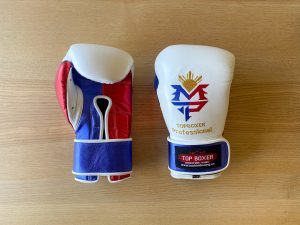
Performance Evaluation in the Ring and on the Bag
When tested under high-intensity training conditions, the performance of the custom gloves proved exceptional in terms of raw protection. The heavy cushioning provided a level of impact absorption that easily rivaled, and in terms of pure knuckle coverage exceeded, industry benchmarks like Winning. Punch impact is heavily muffled, creating a deadened feel comparable to hitting a soft pillow rather than a hard target. For fighters prioritizing absolute hand safety and injury prevention over acoustic feedback, this characteristic is an incredible asset.
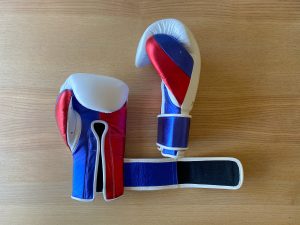
The structural support of the custom gloves remained reliable despite the wide internal fit, with the dense padding absorbing the majority of structural stress. The hand compartment encourages an open-hand posture, allowing fighters to easily parry and block before tightening their grip for a punch, contrasting sharply with pre-curved Mexican-style gloves that lock the hand into a permanent fist position.
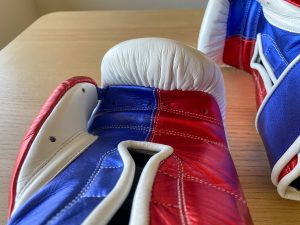
The stock gloves delivered a more traditional, balanced performance suitable for general training and bag work, maintaining a dependable feel without standout extremes. Meanwhile, minor cosmetic imperfections, such as slight surface markings on the custom leather and a minor outward bulge along the palm-side wrist caused by the dense custom foam, pointed to areas where the manufacturing process is still evolving compared to decades-old heritage brands.
Verdict on TopBoxer Gloves
Evaluating TopBoxer as a whole reveals a brand that punches well above its weight class. While established gold standards like Winning maintain superior leather refinement and decades of structural refinement at three times the price, TopBoxer delivers an astonishing level of customization, protective padding, and personalized craftsmanship for roughly $150 USD.
For practitioners dealing with hand injuries or those seeking a truly unique, bespoke piece of equipment built by an accessible artisan, TopBoxer represents an exceptional value in the modern combat sports marketplace.