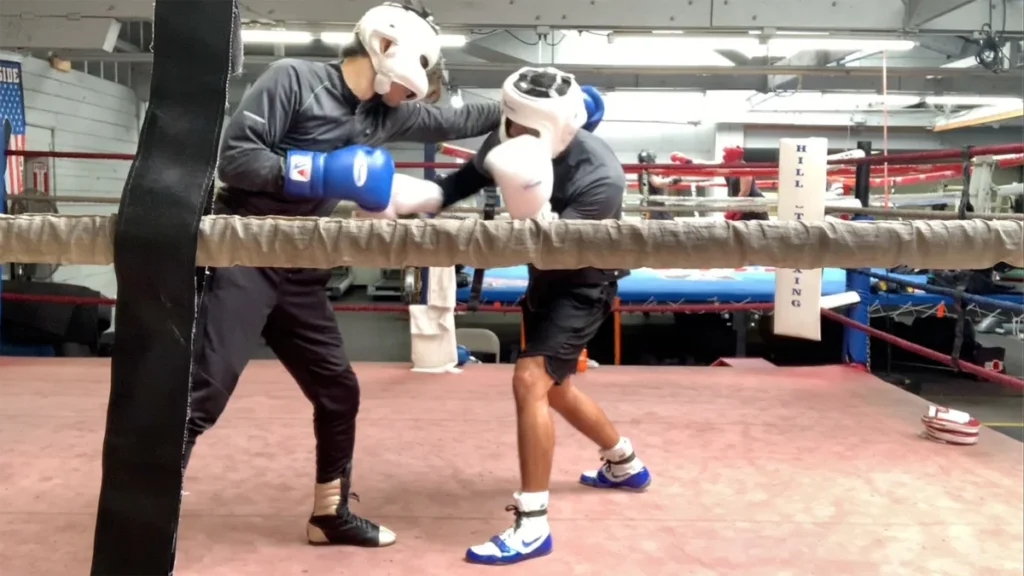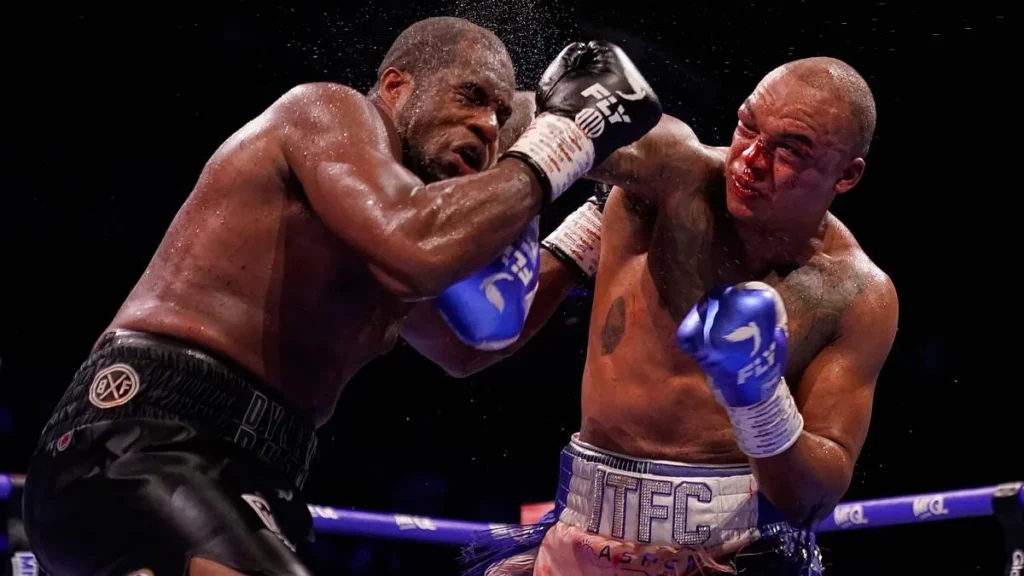

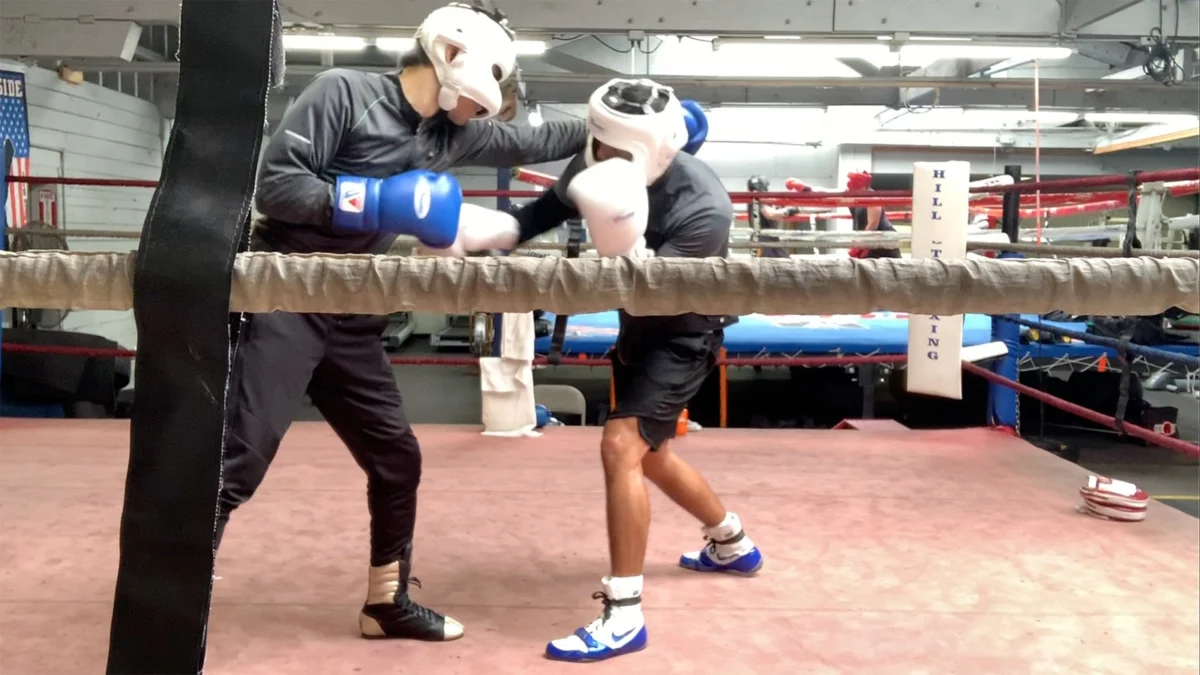
Across social media feeds and gym sparring rings, a distinct tactical pattern has steadily regained prominence in the sport of boxing. Highlight clips of fighters cleanly evading incoming fire with tight, inside head movements—drifting into the chest of an opponent rather than darting away to the perimeter—have become fixtures of contemporary fight culture. Often popularized through the dizzying footwork of Vasyl Lomachenko, the calculated evasions of Cuban technicians like Guillermo Rigondeaux and Erislandy Lara, and even the pocket defense of heavyweight champion Tyson Fury, these maneuvers are routinely celebrated by commentators as revolutionary, avant-garde ringcraft.
Yet within the broader history of the sweet science, moving to the inside of an incoming blow is anything but new. Rather than an invention of the modern era, inside slipping represents the revival of a foundational, time-honored discipline that dominated old-school prize fighting before being largely displaced from conventional training doctrines. For decades, standard gym instruction has heavily favored outside slipping—moving the head to the exterior of an opponent’s punch—elevating it to the status of an almost unquestioned fundamental. As analysts and combat practitioners re-examine the technical and physical mechanics of defensive movement, the inside slip is re-emerging not as an exotic novelty, but as a vital, highly economical defensive tradition that was nearly lost to time.
The Historical Shift: From Long-Distance Attrition to Flash and Speed
To understand how inside slipping transitioned from a standard fundamental into an overlooked specialty, one must examine the institutional and structural transformations that boxing underwent over the late twentieth century. In the classic eras of the sport, boxers routinely operated across extended durations, with professional championship bouts scheduled for 15 rounds or more. The final sanctioned 15-round world championship bout took place in 1987, when Mike Tyson defended his undisputed heavyweight title against Tyrell Biggs. Prior eras saw contests reach even greater lengths, demanding a style of combat that prioritized the preservation of energy above all else.
Inside fighting and inside slipping were natural byproducts of these grueling distances. Slipping inside allowed fighters to remain centered, smother incoming combinations, and engage in phone-booth combat without burning through stamina via explosive, lateral footwork. The mechanics of slipping inside naturally invited infighting, infusing bouts with clinching, dirty boxing, and close-quarters body punching. It was an energy-efficient discipline built for endurance, where survival depended on moving fractions of an inch rather than leaping across the canvas.
As championship limits contracted to 12 rounds and amateur boxing came to dominate grass-roots development, the physical and stylistic demands of the sport changed dramatically. The amateur ranks, contested over three fast-paced rounds, heavily rewarded clean, easily identifiable scoring blows and explosive hit-and-run mobility. Under modern amateur judging systems, exchanges on the inside are notoriously difficult to score and frequently appear unrefined to the untrained eye, often being dismissed as mere clinching or wrestling. Conversely, pulling the head to the outside and detonating a visible counter-punch from distance presents judges with an unmistakable point-scoring sequence.
Consequently, boxing gyms worldwide gradually adapted their foundational curricula. Tall, athletic frames with long reaches became the preferred template for amateur success, prioritizing expansive, outside-oriented defenses. In turn, inside slipping—once an indispensable survival skill in long-distance warfare—began to fade from standard instructional programs, leaving generations of fighters conditioned to believe that moving to the outside was the only proper way to avoid a punch.
The Tyson Ripple Effect and the Mayweather Paradigm
The disappearance of inside slipping was not solely driven by structural rule changes; it was also heavily accelerated by cultural and commercial trends within professional boxing. Few individuals altered the global perception of boxing technique as rapidly or comprehensively as Mike Tyson. Emerging in the mid-1980s, Tyson cut a ferocious swath through the heavyweight division using the signature peek-a-boo style taught by Cus D’Amato and Kevin Rooney.
Tyson stood out precisely because he abandoned the tentative, jabbing, and clinching norms of fading old-school champions. Instead, he slipped aggressively to the outside of incoming straight shots, utilizing ferocious torque to return devastating, highlight-reel knockout punches from exterior angles. The aesthetic impact was electrifying. Tyson’s explosive movement perfectly complemented the emerging pay-per-view television business model, where audiences demanded speed, clean optics, and decisive finishes.
Because coaching trends universally mirror the dominant champions of their era, training academies across the globe began drilling Tyson’s outside-slipping mechanics into young competitors. Standard training progressions flattened into a rigid trajectory: fighters learned to block, occasionally to parry, and then to slip strictly to the outside. Outside slipping became synonymous with fundamental excellence, while the subtle art of stepping inside was increasingly abandoned. Throughout the 1990s and 2000s, pay-per-view headliners largely adopted this flashy, distance-oriented defensive profile, creating an orthodoxy that treated inside evasions as high-risk anomalies.
The technical landscape experienced another seismic realignment with the ascent of Floyd Mayweather Jr. Dominating the sport into the 2010s, Mayweather popularized the Michigan style, specifically the shoulder roll and the Philly shell defense. In earlier decades, dropping the lead hand was widely condemned by trainers as reckless showmanship. However, Mayweather’s defensive mastery demonstrated that deflecting punches off the lead shoulder and riding incoming power was fundamentally sound.
The shoulder roll is, in essence, a direct evolution of inside defense, as it relies on rotating the body into the pocket to deflect and smother blows rather than leaping outside their path. Today, the influence of the Mayweather era remains deeply entrenched across all weight classes. Even heavyweight champion Tyson Fury has integrated shoulder rolls and close-range defensive slips into his repertoire, illustrating how defensive methodologies continually circle back through the sport’s evolutionary timeline.
Mechanical Logic: Energy, Instinct, and Impact Mitigation
Beyond its historical and cultural trajectories, the strategic merit of inside slipping lies in its biomechanical and spatial logic. For fighters operating in live combat, the technique provides distinct physical advantages that challenge the supremacy of the traditional outside slip.
Foremost among these advantages is biomechanical ease and human instinct. Slipping inside a punch is naturally aligned with the body’s defensive reflexes. When an opponent unleashes a straight right hand, an instinctive protective reaction is to turn the torso away from the approaching threat. Slipping inside utilizes that exact rotation: by turning the torso inward and bending slightly at the waist and knees, the fighter moves in harmony with their natural flinch response. By contrast, executing a clean outside slip against that same right hand requires the fighter to turn their upper body directly toward the incoming punch—a counter-intuitive and often intimidating maneuver that demands exceptional vision and athletic conditioning.
Energy conservation serves as another critical factor. Attempting to slip multiple punches to the outside requires significant kinetic output, sustained agility, and substantial ring space. Unless a fighter possesses world-class reflexes, committing exclusively to outside defense often results in getting backed into the ropes. Slipping inside immediately neutralizes this dynamic. Even a modest inside movement positions a fighter’s body close enough to smother the opponent’s arm extension, shutting down their offensive momentum and forcing the action into the pocket. For a competitor under heavy pressure, stepping inside an opponent’s reach provides a physical barrier that stops follow-up combinations, offering far more tactical control than continuously retreating into open space.
Furthermore, inside slipping drastically mitigates the physical damage sustained from mistimed movements. In the event an outside slip fails, the fighter’s head is typically moving across the trajectory of the strike, colliding directly with the punch’s kinetic force—a dynamic that frequently produces catastrophic knockouts. Conversely, a fighter attempting to slip or roll inside is already rotating in the direction of the punch’s travel. Even if the blow lands, much of its concussive impact is dissipated along the shoulders, arms, or back, effectively rolling with the momentum rather than absorbing its full force.
Ring Craft and Spatial Control: Slipping as a Strategic Equalizer
From a tactical perspective, mastery of inside slipping expands an athlete’s ringcraft by introducing varied angles and solving chronic distance disparities. In modern boxing gyms, one of the most persistent tactical dilemmas involves shorter fighters attempting to penetrate the defenses of taller, longer-reaching opponents. Frequently, less-experienced fighters attempt to bridge the gap by slipping outside the opponent’s jab, only to discover that the maneuver displaces them laterally, leaving them stranded on the perimeter and squarely in the firing line of a straight right hand.
Slipping inside the jab provides the exact remedy for this tactical problem. By allowing the opponent’s lead hand to slide harmlessly past the ear, the inside slip pulls the fighter directly into close quarters, establishing an immediate foothold in the pocket where shorter, compact hooks and uppercuts can be deployed. Once inside, the infighter can smother the opponent’s punching mechanics, initiate exchanges, or tie up to dictate the pace of the contest.
Furthermore, inside slipping unlocks advanced spatial pathways, such as passing directly through an aggressive adversary. When an opponent overcommits to heavy power punches, a fighter utilizing an inside slip can execute a cut-step or pivot directly underneath the committed blow. Instead of absorbing the strike or bouncing backward, the defender slides behind the punch’s arc, leaving the attacker off-balance and facing empty canvas. This technique is especially potent when escaping traps along the ropes, allowing trapped fighters to reverse momentum and spin their opponents into the perimeter.
Crucially, incorporating inside slipping does not require exceptional physical speed; rather, it hinges on timing and rhythm management. While outside evasions depend heavily on explosive twitch reflexes, finding an opponent’s inside pocket relies on identifying their striking cadence—recognizing punch counts, intervals, and transitional delays. By coupling outside slips with inside slips, fighters dismantle predictable patterns, creating complex defensive rhythms that leave opponents uncertain of which corridor their counter-attacks will emerge from.
The Lineage of the Inside Slip: From Duran to Lomachenko
While the inside slip may have faded from basic gym doctrine over recent decades, its survival was ensured by a master class of cerebral, durable prizefighters who recognized its irreplaceable value. The historical tape of icons such as Roberto Duran, James Toney, and Bernard Hopkins provides an exhaustive blueprint of the craft. Duran utilized inside slips and micro-adjustments in the pocket to dismantle larger opponents, while Toney and Hopkins transformed inside shoulder deflections and close-range slipping into an impenetrable defensive fortress. Similarly, elite short-statured operators like Pernell Whitaker demonstrated how stepping inside could neutralize explosive punchers by systematically denying them leverage and punching room.
In the modern landscape, this lineage is preserved and re-popularized by international champions who operate with an expansive tactical vocabulary. Fighters emerging from deep amateur traditions—notably Cuban masters like Guillermo Rigondeaux and Erislandy Lara, alongside Ukrainian virtuoso Vasyl Lomachenko—regularly showcase inside slipping as a core component of their spatial dominance. When Lomachenko steps inside a lead shot, cuts through the pocket, and pivots effortlessly to the blind side of his opponent, he is not displaying an improvised circus trick; he is executing an elite iteration of an old-school fundamental that historic infighters utilized for generations.
The re-emergence of inside slipping on contemporary digital platforms reflects a growing realization within the combat community: true defensive mastery cannot exist on an exclusively external axis. As modern coaches and combatants continue to study the tape of previous eras and integrate those lessons with contemporary athletic conditioning, boxing’s technical spectrum continues to expand. Far from being a fleeting social media trend, the rediscovery of the inside slip restores a vital balance to the sweet science, proving that the oldest tools in the sport’s tactical archive often remain the most effective weapons in the modern ring.