


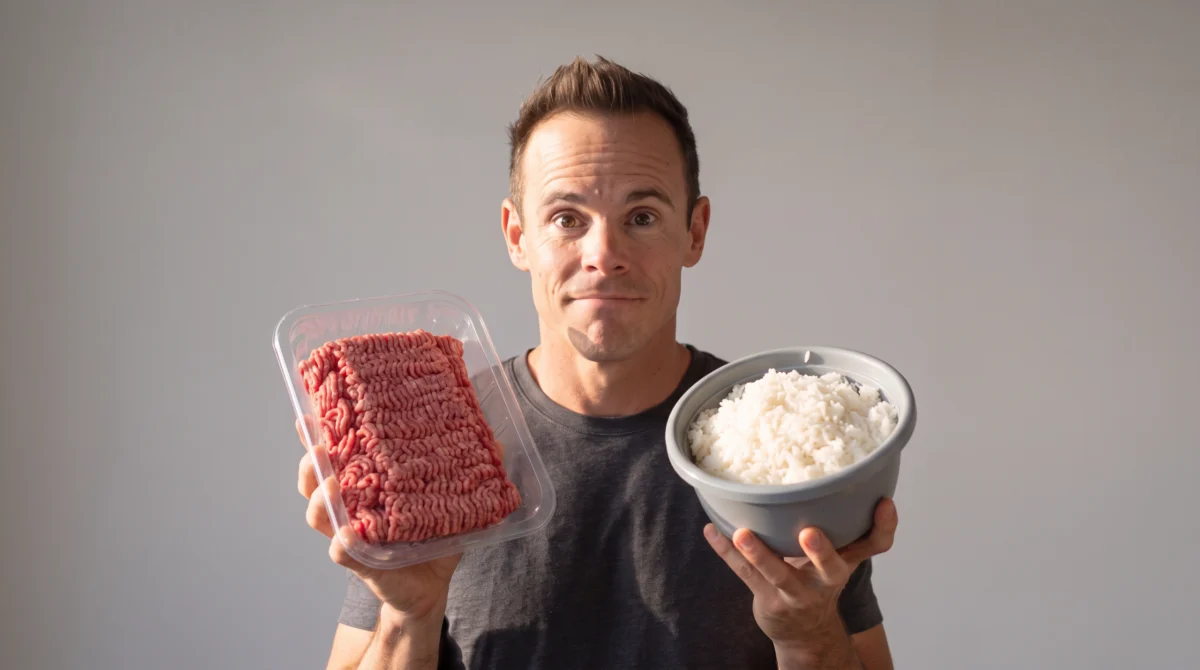
For generations of budget-conscious college students, busy professionals, and fitness enthusiasts, the combination of ground beef and white rice has served as the ultimate utilitarian meal. Packed with macronutrients and inexpensive to prepare, the pairing has nevertheless earned a reputation as the culinary equivalent of beige: reliable, uninspired, and deeply monotonous.
In a widely discussed video, popular home-cooking educator and recipe developer Ethan Chlebowski challenged that reputation, introducing an adaptable three-tiered framework designed to turn the humble staple into a dynamic foundation for more than 1,280 distinct meals.
Rather than prescribing rigid, ingredient-heavy recipes, Chlebowski’s approach focuses on modular culinary mechanics. By categorizing meals into three escalating tiers of effort—ranging from zero-prep emergency pantry meals to restaurant-caliber dinners—the system offers a sustainable roadmap for weeknight cooking that mitigates decision fatigue, slashes grocery bills, and eliminates dinner repetition for months at a time.
Level One: The No-Grocery-Run Bowl
The first tier addresses a universal modern dilemma: arriving home late after an exhausting workday with zero meal planning, low energy, and a refrigerator that appears virtually bare. Chlebowski’s solution is the "No-Grocery-Run Bowl," a system engineered entirely around non-perishable pantry items and long-lasting freezer staples.
The baseline framework relies on four primary components that require no immediate trip to the supermarket: pre-portioned frozen ground beef, dry pantry rice such as jasmine or basmati, store-bought shelf-stable condiments, and acid-heavy pickled vegetables.
"The idea here is simple: set this up once and you’re always going to be ready to make a satisfying meal without needing another trip to the store using these four components," Chlebowski explained.
The Freezer Hack That Streamlines Preparation
A central bottleneck in weeknight cooking is the thawing process. Traditional home cooks frequently freeze ground beef in dense, one-pound bricks or butcher packs, which require hours of refrigeration to thaw safely or risk uneven cooking when microwaved.
To circumvent this, Chlebowski highlighted a preparation method that redefines freezer storage. When unpacking fresh ground beef, cooks can place the meat inside a heavy-duty gallon freezer bag, press out all excess air, and flatten the beef into an even, thin sheet across the bag. Before freezing, the cook uses the back of a knife, a ruler, or their hands to press deep indentations into the meat, dividing the continuous sheet into individual four-ounce quadrants.
Once frozen flat, these thin quarter-pound portions stack neatly, freeze rapidly, and can be snapped off individually without thawing the entire package. Furthermore, because the meat is thin, it can be dropped straight into a searing pan without prior defrosting.
To demonstrate, Chlebowski cooked a frozen portion in a pan heated to at least 400 degrees Fahrenheit, seasoning it simply with coarse salt and black pepper. By leaving the beef undisturbed against the blistering metal surface, the meat develops a deep, caramelized crust via the Maillard reaction before being broken apart into bite-sized crumbles.
For the inaugural bowl, Chlebowski paired steaming jasmine rice with the crisp, browned beef, finishing the dish with a rapid burger sauce whisked together from Kewpie mayonnaise, yellow mustard, ketchup, and smoked paprika, alongside a generous spoonful of chopped sweet and spicy pickles. The finished dish yielded 688 calories and 50 grams of protein.
By simply rotating between four basic condiments—such as barbecue sauce, buffalo sauce, salsa, or burger sauce—and four pickled vegetables like jalapeños, banana peppers, dill pickles, or pickled onions, this foundational tier alone provides 16 distinct flavor profiles without relying on a single perishable grocery item.
Level Two: The Stir-Fry Bowl
While the first tier emphasizes convenience and survival cooking, the second level expands the system into vibrant, high-heat cooking designed to counter rising red meat prices and flavor fatigue.
As grocery inflation drives up beef costs, Chlebowski pointed out that home cooks can substitute more economical ground meats into the equation without sacrificing texture or satisfaction. Ground chicken and ground pork serve as versatile canvases that absorb bold seasonings quickly, making them ideal candidates for rapid skillet or wok cookery.
"Beef is great, but ground chicken and pork work exceptionally well for this bowl and are definitely cheaper at the grocery store," Chlebowski noted.
Level Two introduces three dynamic variables that elevate the base meat and rice: fresh aromatics, a balanced stir-fry glaze, and textural garnishes.
A Korean-Inspired Weeknight Skillet
To illustrate the mechanics of this tier, Chlebowski showcased a Korean-inspired stir-fry centered on ground chicken. The preparation began with fresh aromatics: thinly sliced shallots and fiery Thai bird’s eye chilies, which were dropped directly into a hot wok alongside the meat to bloom their essential oils.
While the poultry browned and the aromatics softened, Chlebowski integrated a multi-layered sauce combining fermented Korean chili paste (gochujang), light soy sauce for salinity, dark soy sauce for color and richness, and rice wine vinegar to balance the mixture with acidity.
Once poured into the hot wok, the sauce sizzled and reduced within 30 seconds, clinging to the crispy edges of the chicken. Chlebowski ladled the glazed meat over a bowl of leftover rice, topping the dish with a drizzle of Kewpie mayonnaise, thinly sliced scallions, and bright pink pickled sushi ginger.
Chlebowski pointed to the pickled ginger as an especially crucial component, explaining that its sharp acidity and subtle sweetness effectively cut through the heavy fats of the mayonnaise and poultry. The complete meal registered at 760 calories and provided 44 grams of protein.
When analyzing the mathematical permutations of this framework—multiplying three protein choices, four aromatic combinations, five custom stir-fry sauces, and five garnish variations—Level Two unlocks roughly 300 different weeknight variations with negligible prep time.

Level Three: The Better-Than-Takeout Bowl
The third and most advanced tier in the framework represents Chlebowski’s personal weeknight standard. This level transitions the concept from a quick dinner fix to an elevated, cohesive meal intended to rival high-end fast-casual restaurants.
Instead of relying on plain white rice as a neutral backdrop, Level Three transforms the carbohydrate component into seasoned rice, such as Mexican red rice, cilantro-lime rice, Cajun dirty rice, or aromatic yellow rice. The protein is coated in complex dry spice blends, paired with crisp fresh salads or roasted produce, and anchored by a rich, cooling dairy element.
"Essentially, we’re going for a complete dinner here—turning our basic ground meat and rice into something that feels like a cohesive takeout dinner or maybe even a restaurant-quality meal," said Chlebowski.
The Mediterranean Spicy Cumin Lamb Bowl
Chlebowski demonstrated this tier with a Mediterranean-inspired lamb bowl, introducing ground lamb for its distinct, robust savory notes.
The dish started with a batch of aromatic yellow rice prepared directly in a rice cooker, infused with chicken bouillon, ground turmeric, dried oregano, and whole cloves. The result was a fragrant, vibrant base that brought both color and subtle warmth to the plate.
While the rice steamed, Chlebowski assembled a crisp cucumber-tomato salad featuring diced Persian cucumbers, quartered cherry tomatoes, thinly shaved red onion, and fresh flat-leaf parsley. The vegetables were tossed with extra-virgin olive oil, red wine vinegar, salt, and sumac—a deep-red Middle Eastern spice prized for its tart, citrusy flavor profile.
To cook the lamb, Chlebowski pressed the meat flat against a searing cast-iron skillet, seasoning the surface generously with coarse salt, crushed cumin seeds, and Aleppo pepper flakes. Left untouched for four minutes, the meat developed a deeply caramelized crust before being broken into chunks. Excess rendered fat was blotted using a folded paper towel to keep the finished bowl light.
The final assembly layered the golden turmeric rice beneath the spiced lamb, accompanied by the bright sumac salad, a scoop of whole-milk Greek yogurt, and crumbles of salty sheep’s milk feta. The Mediterranean bowl tallied 623 calories alongside 40 grams of protein.
By calculating four seasoned rice varieties, four distinct ground proteins, four dry spice blends, four vegetable variations, and five creamy dairy or spread options, this single framework yields 1,280 potential dinner combinations.
Why the Framework Structure Works
The fundamental appeal of Chlebowski’s philosophy lies in its structural logic. Many novice and experienced home cooks encounter burnout because traditional recipes demand specialized, single-use ingredients that linger in the crisper drawer until they spoil.
By contrast, modular cooking establishes a mental grid. Rather than hunting for an entirely new recipe every evening, the cook simply selects one element from each category based on current cravings, seasonal availability, and budget considerations.
The tiered hierarchy also eliminates emotional resistance to home cooking. On evenings when time is plentiful, an elaborate Level Three bowl satisfies creative culinary impulses; on nights derailed by fatigue or schedule delays, Level One delivers a nourishing, high-protein meal in under fifteen minutes without relying on costly food delivery apps.
Nutritional Value and Household Economics
Beyond its culinary versatility, the three-level system directly addresses household financial strain.
Ground proteins—particularly chicken, turkey, and pork—consistently rank among the most economical sources of complete animal protein available in supermarkets. By leveraging Chlebowski’s quadrant-freezer method, households can purchase value-sized family packs on sale, portion them into airtight sleeves, and prevent food waste entirely.
Furthermore, pantry foundations such as long-grain rice, bulk spices, vinegar, and jarred condiments boast extensive shelf lives, keeping the per-portion cost of these meals remarkably low compared to packaged meal kits or takeout orders.
From a dietary perspective, the framework offers clean macronutrient tracking. Every example bowl highlighted by Chlebowski maintained a caloric range between 620 and 760 calories while delivering between 40 and 50 grams of muscle-building protein.
The framework also encourages micro-nutrient density. Incorporating whole spices such as turmeric, cumin, and sumac introduces potent anti-inflammatory compounds and antioxidants to the diet, while fermented toppings like gochujang, pickled ginger, and Greek yogurt provide digestive and probiotic benefits.
Expanding Culinary Horizons
For home cooks who master the primary guidelines, the framework provides an open-ended canvas for further culinary exploration.
The protein column can readily incorporate wild game like ground bison, lean ground turkey, or plant-based soy crumbles. Rice selections can transition to whole grains such as nutty brown basmati, wild rice blends, or low-carbohydrate riced cauliflower.
Similarly, flavor profiles can span diverse global culinary traditions:
- Japanese-Inspired Bowls: Ground pork seasoned with ginger and garlic, served over short-grain rice with furikake, pickled daikon radish, and spicy Kewpie mayo.
- Tex-Mex Fiesta Bowls: Lean ground beef dusted with chili powder and cumin, served over cilantro-lime rice with roasted corn salsa, pickled jalapeños, and cotija cheese.
- Greek Street Cart Bowls: Spiced ground chicken paired with lemon-dill rice, chopped cucumber salad, and rich garlic tzatziki sauce.
By shifting the focal point of everyday cooking away from step-by-step instructions and toward foundational principles, home cooks gain the autonomy to improvise, save money, and ensure that a humble bowl of ground meat and rice remains anything but boring.