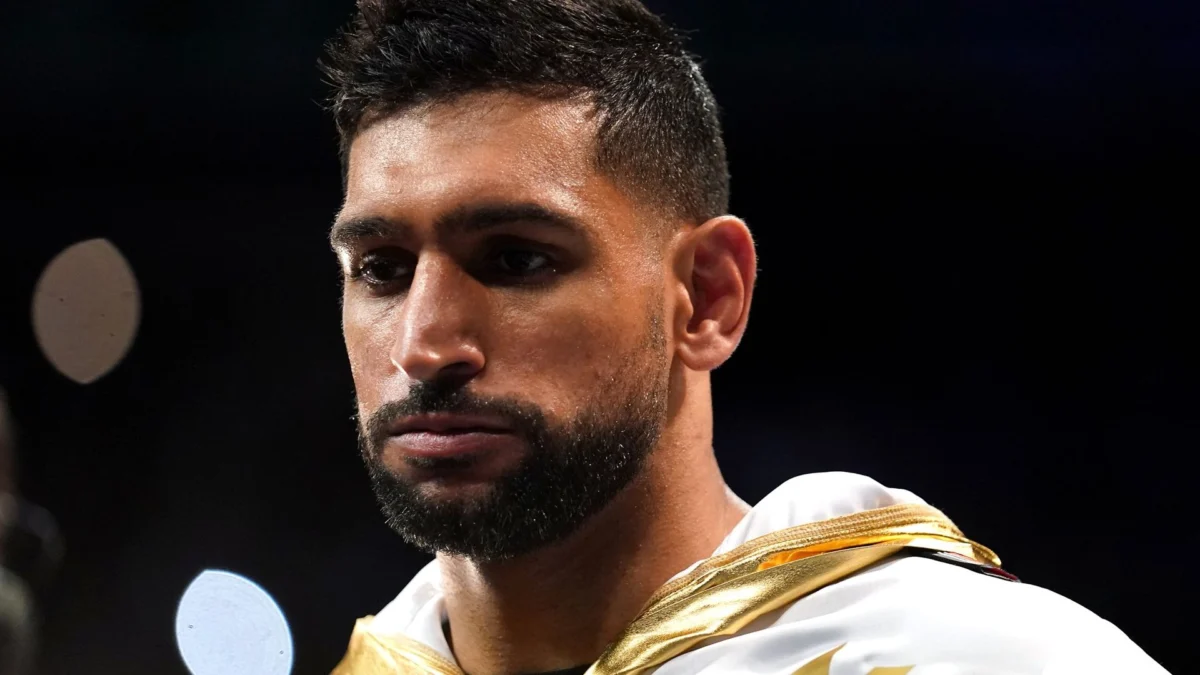
Former world champion Amir Khan has joined a growing movement of high-profile boxing figures backing a major independent inquiry led by a senior King’s Counsel. The landmark initiative is designed to overhaul welfare, health, safety, and governance standards across professional boxing and broader combat sports.
Khan, one of Britain’s most decorated boxers having captured multiple world championship titles across different weight divisions, has formally endorsed the inquiry commissioned by the Global Fighters Association (GFA). The association has appointed leading UK barrister Jonathan Caplan KC to conduct a comprehensive, "root-and-branch" review examining how fighters are treated, governed, and protected at every level of combat sports.
The inquiry represents one of the most significant independent examinations into participant welfare in the history of combat sports, seeking to address long-standing structural gaps in medical oversight, financial protection, and regulatory governance.
A "Root-and-Branch" Investigation into Fighter Welfare
The inquiry, led by Jonathan Caplan KC, has been tasked with gathering extensive evidence from across the combat sports landscape. Its primary objective is to evaluate current working conditions and safety protocols, ultimately delivering robust recommendations to elevate welfare and governance standards.
To build a thorough assessment of the industry, Caplan intends to consult a broad cross-section of stakeholders. The inquiry will engage directly with active and retired fighters, trainers, coaches, physiotherapists, ringside doctors, neurological surgeons, referees, and judges. Furthermore, evidence will be sought from promoters, national boards of control, international governing bodies, media commentators, venue managers, sports agents, and the families and friends of combat sport participants.
Speaking about the scale of the task, Caplan emphasized that a comprehensive review of this nature is long overdue for combat sports.
"We will publish I hope far-reaching recommendations explaining our conclusions," Caplan stated. "We’re doing this inquiry late, it should have been done a long time ago."
Caplan noted that while other major sporting disciplines have faced rigorous independent scrutiny in recent years, combat sports have historically lacked a similar level of formal examination. He pointed to major regulatory reviews in other sectors as precedent for what needs to be achieved.
"There have been other significant inquiries into sport," Caplan explained. "An MP-led select committee held an inquiry into concussion in sport around two years ago, while the Whyte Review examined allegations of physical and emotional abuse in British Gymnastics. Combat sports are now crying out for the same level of detailed scrutiny. The welfare of participants across all combat sports must be fundamental to what we’re trying to achieve. This inquiry is long overdue, and it’s something that has never been done before."
The Financial and Physical Reality for Everyday Fighters
The inquiry comes as the Global Fighters Association accelerates its efforts to establish itself as the premier trade union for athletes in boxing and other combat disciplines. Founded in 2022, the GFA aims to provide a unified collective voice for participants across all tiers of the sport—from grassroots amateurs and regional prospects training in local gyms to elite professionals competing on international broadcasts.
A central catalyst for the inquiry is the stark economic and structural disparity within professional boxing. While top-tier superstars such as Anthony Joshua and Tyson Fury command massive multi-million-pound purses and generate a substantial portion of the sport’s global revenue, they represent a tiny fraction of the overall athletic workforce. Beneath the elite level, hundreds of professional boxers struggle to earn a sustainable living while facing the exact same physical risks inside the ring.
Former professional boxer Paul Smith, who enjoyed a prominent career spanning from 2003 to 2017, has been a leading advocate for changing these structural dynamics. During his 14-year professional career, Smith competed at middleweight and super-middleweight, winning both English and British titles while challenging for world honors on three separate occasions.

Now working as a professional trainer and serving as a co-founder of the GFA, Smith highlighted the stark financial realities experienced by the vast majority of professional fighters.
"The average fighter going to work every day is just trying to make a living from professional boxing," Smith said. "There is enough money in the sport for them to earn a living, but at the moment, it’s simply not reaching those fighters."
Smith emphasized that the inherent physical hazards of combat sports make the lack of formal safety nets and financial security particularly critical.
"There isn’t a system in place that adequately protects fighters when it comes to health and safety," Smith noted. "We’ve seen so many people injured in the ring and, unfortunately, boxing isn’t a sport where you simply lose a race. You can suffer serious injuries, be hit and even be killed. As sad as it is, it happens."
The urgent need for systemic reform has been underscored by recent tragic events within the sport. According to the GFA, several fighters have suffered life-altering or severe injuries in and around the ring in recent months. In multiple instances, injured athletes and their families were left without adequate institutional financial coverage, forcing them to rely on public crowdfunding campaigns, online fundraising pages, and private donations from fellow fighters and promoters to cover emergency medical treatments and long-term rehabilitation costs. The association maintains that these recurring situations demonstrate an urgent need for mandatory, industry-wide insurance structures and formalized support systems.
How Combat Sports Lag Behind Other Professional Athletics
The push for independent oversight is also supported by experienced executives from outside the traditional boxing establishment. Simon Bazalgette, former chief executive of the Jockey Club and an independent non-executive director of the English Football League (EFL), serves as the chair-designate of the GFA.
Bazalgette pointed out that mainstream sports have spent the last decade modernizing their governance structures to prioritize participant safety, recognizing that long-term commercial growth is directly linked to robust welfare policies.
"Over the last decade or so, professional sports such as rugby, football and horse racing have raised their game when it comes to the welfare of the participants," Bazalgette observed. "They recognize that the brand of the sport increasingly depends on demonstrating that best-in-class welfare underpins any aspiration to grow the audience and the commercial value of the sport."
In contrast, Bazalgette highlighted that combat sports remain largely unorganized in terms of labor protections, leaving athletes uniquely vulnerable compared to participants in other professional sports.
"It is striking that combat sport is one of the last workplaces with no professional representation for its workers," Bazalgette said. "Meaning little protection, no minimum health and safety standard, no independent pension scheme, no insurance floor, and no single body a fighter can turn to when something goes wrong."
Amir Khan strongly echoed these sentiments, emphasizing that athletes require an independent body that operates outside the commercial interests of promoters and sanctioning bodies.
"There has to be an organization that sits above everything, somewhere we can all turn to when something goes wrong, whether it’s in training, at a weigh-in, with a contract or even in retirement," Khan said. "The GFA is that organization."

Direct Support in Disagreements and Disciplinary Hearings
Beyond broad policy recommendations, the GFA intends to offer practical, day-to-day legal and administrative assistance to fighters navigating disputes within the sport. Under current conditions, boxers frequently face disciplinary boards, contract arbitrations, or managerial disagreements without independent advocacy.
Paul Smith explained that the GFA seeks to bridge this gap by ensuring athletes have formal representation during contentious proceedings or administrative hearings.
"We want to establish a union where fighters feel safe and know they have someone on their side," Smith explained. "If something goes wrong, they should be able to pick up the phone and speak to someone who can support them straight away."
Smith outlined specific scenarios where union representation could prevent fighters from being exploited or navigating legal complexities alone.
"There are so many situations where rules may have been breached and a fighter is required to attend a hearing or answer questions," Smith added. "We want a GFA representative to be there alongside them, ensuring they have support and someone looking after their interests. The same applies if they have a disagreement with their manager or become involved in a dispute."
Evidence-Led Investigation Set for 2027 Publication
The independent inquiry led by Jonathan Caplan KC will unfold over the coming months, with a structured plan to address various facets of combat sports governance. Caplan confirmed that he will conduct several distinct phases of investigation, with the initial inquiry focusing specifically on urgent health and safety protocols across boxing and related combat disciplines.
The findings and recommendations of this first phase are expected to be published in a comprehensive report by spring 2027.
Caplan stated that his investigative methodology will involve analyzing established regulatory models from other high-risk sports, evaluating how past parliamentary and independent inquiries resolved similar challenges.
"I’m certainly very interested in looking at comparative sports, the conclusions they’ve reached and the regulatory overviews that have been carried out," Caplan said. "For example, a DCMS select committee inquiry into concussion in sport is going to be of great interest to me. I’ll be looking at what’s already been done elsewhere and, where it’s relevant, we want to learn from it and apply those lessons."
The barrister emphasized that the final report will be grounded entirely in empirical evidence and direct testimonies provided by participants, medical professionals, and affected families. By establishing an extensive evidentiary record, Caplan expects the inquiry’s final recommendations to carry significant weight, placing responsibility directly on existing governing bodies and regulatory authorities to implement meaningful structural change.
"The whole purpose is to produce a comprehensive and reasoned report," Caplan said. "We’ll be speaking to fighters and their families to gather case studies. Those who choose not to follow the proposals we put forward will have to explain why, particularly if the evidence supports them."
Caplan concluded with a clear warning to stakeholders across the combat sports industry regarding the necessity of reform: "I suspect the evidence is going to point to quite a lot of innovations that are necessary and long overdue. I don’t think anybody wants to see those recommendations ignored, and I don’t think anyone wants to be the person who fails to act on sensible recommendations."