


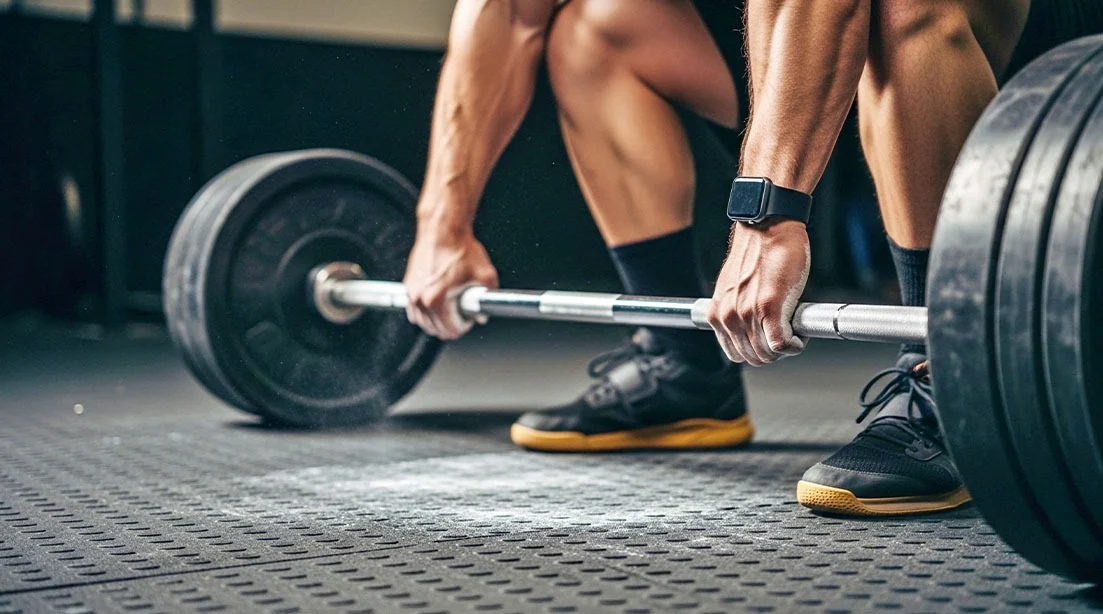
When lifters evaluate their performance in the gym, attention is routinely directed toward major muscle groups, programming, and load management. However, sports science and coaching consensus increasingly point to a foundational element that is frequently overlooked until failure occurs: the grip.
Far from being a mere mechanism for holding onto a weight, grip sets the table for what comes next in virtually every compound movement. Where an athlete places their hands directly affects wrist position, elbow path, shoulder comfort, structural stability, and, ultimately, overall lifting form.
While the significance of grip is universally acknowledged for pulling movements such as rows, deadlifts, and various curl variations, it is frequently neglected during presses and squats. Yet, paying special attention to hand placement across these primary barbell exercises can yield significant performance dividends. The overarching objective for any lifter is to find a grip that makes the lift feel comfortable, strong, and explicitly minimizes joint discomfort.
To understand how minor adjustments can alter biomechanics, experts break down the best hand positions for the barbell bench press, overhead press, back squat, and front squat, examining the various grip options available and how individuals can determine which configuration suits their unique anatomical structure.
Mastering the Best Grip for Presses and Squats
Lifting veterans often note that grip is only consciously considered when it fails mid-set, but taking the necessary time to intentionally establish hand placement prior to un-racking can make the definitive difference between a productive working set and a failed repetition.
Barbell Bench Press
The bench press serves as a primary example of how hand placement dictates mechanics. A lifter’s bench press grip directly influences wrist position, elbow path, overall range of motion, shoulder stress, and which specific musculature is forced to work the hardest.
Regarding where the bar should sit, experts recommend starting by placing the bar toward the heels of the palms rather than higher up in the fingers. This technical adjustment keeps the bar stacked directly over the forearm, effectively helping to prevent unwanted wrist hyperextension. Athletes should visualize their hand, wrist, and forearm as a single, cohesive unit; the better the forearm and wrist stack, the more efficient and powerful the bench press will be.
Grip width offers several pathways depending on the individual. A common and reliable starting point for most lifters is placing the pinky finger wrapped around the barbell ring. When utilizing this standard width at the bottom of a repetition, the forearms should appear nearly vertical.
Altering this width changes the physiological demands of the movement. A wider grip inherently shortens the range of motion and places a greater emphasis on the pectorals, but it simultaneously moves the shoulder joint into a state of greater abduction. While this wide configuration can feel robust and mechanically advantageous for some athletes, it can provoke irritation in others. Conversely, a narrower grip increases the overall range of motion and places significantly more demand on the triceps, as the elbows remain tucked closer to the torso and experience a deeper muscular stretch. Neither choice is inherently superior; the correct selection depends entirely on individual comfort and specific training goals.
Lifters must also choose between a full grip and a false grip. A full grip, which involves wrapping the thumb securely around the barbell, provides the highest degree of bar security and should serve as the default standard for safety. On the other hand, a false grip—performed without the thumb wrapped—may offer heightened comfort for certain lifters by altering wrist angles, but the trade-off is a measurable reduction in bar security. Ultimately, the ideal bench press setup requires utilizing the grip and width that best balance shoulder comfort, wrist alignment, and overall stability.
Barbell Overhead Press
Similar principles apply when transitioning to the vertical plane. Bar placement and grip width remain vital components of the barbell overhead press. Maintaining a strict vertical stack of the wrist, forearm, and elbow allows an athlete to press with maximum power without punishing upper-body joints.
The bar should once again sit toward the heel of the palm rather than resting near the fingers. This positioning places the external load directly over the forearm to prevent excessive wrist hyperextension, though a moderate amount of wrist extension in the overhead press is considered normal. The goal is not to force an unnatural, completely straight wrist, but rather to avoid letting the bar roll so far back that it induces joint strain.
For most lifters, selecting a grip width just outside shoulder width provides a stable foundation. If the grip is set too wide, the range of motion is unnecessarily shortened, and leverage can be compromised. If the grip is too narrow, the elbows and shoulders can feel crowded at the bottom of the press. Viewed from the front, the lifter’s forearms should remain close to vertical, with the elbows positioned slightly in front of the bar.
Just as with the bench press, a full grip remains the safest default for the overhead press due to enhanced bar security. While a false grip can sometimes alleviate wrist bending and feel more natural for specific lifters, it sacrifices security. The most effective approach is selecting the grip that permits a solid initial wrist position, maintains vertical forearms, and allows for a smooth press free of shoulder or elbow irritation.
Barbell Back Squat
While grip is technically secondary during a back squat compared to upper-body pressing movements, the hands play a critical role in securing the bar and establishing necessary upper-back tension while the spinal erectors and lower body support the load.
Many experienced coaches advocate for a false or thumbless grip during the back squat, where the thumb rests on the same side of the bar as the fingers. This specific hand placement makes it significantly easier to keep the wrist in line with the forearm, discouraging the wrist from bending backward beneath the heavy load. Crucially, this prevents the hands from inadvertently attempting to absorb weight that should instead be supported entirely by the upper back and traps.
Grip width during a back squat also dictates posture. A narrower grip can successfully increase upper-back tension by forcefully pulling the shoulder blades together and locking the barbell securely into the musculature of the upper back. However, narrower is not universally better. If a lifter lacks the requisite shoulder mobility to comfortably reach a narrow hand position, forcing the hands close together can irritate the wrists, elbows, or shoulders. Moving the hands slightly wider often provides the necessary clearance to maintain neutral wrist alignment while keeping the upper back adequately tight.
Athletes should experiment to find the narrowest grip they can comfortably maintain while preserving proper joint alignment. If a lifter consistently experiences wrist or inner-elbow soreness prior to initiating a heavy squat set, widening the hand placement is generally the most effective corrective solution.
Front Squat
The front squat provides an even wider array of grip options because hand placement is primarily intended to stabilize the load rather than support it directly. In this movement, the primary objective is ensuring the bar rests securely across the front deltoids and clavicles while the hands simply assist in maintaining that position. Coaches typically utilize several practical variations to achieve this setup, depending on wrist and shoulder mobility.
Regardless of whether an athlete opts for a traditional clean grip, a crossed-arm bodybuilding style, or strap-assisted front squats, the underlying principles remain consistent. The best front-squat setup keeps the bar secure, the elbows high, and the torso upright without causing unnecessary discomfort. Lifters do not need to force themselves into a single, dogmatic grip style when viable alternatives exist.
Evaluating Barbell Grip Efficacy
When assessing whether a current grip setup is optimal, lifters should evaluate several key physical indicators across both squats and presses.
The primary consideration is joint alignment. Wrists, elbows, and shoulders should feel natural and uncompromised rather than forced into awkward positions. Furthermore, the grip should noticeably reduce pain or localized joint irritation. A hand placement that persistently bothers the wrists, elbows, or shoulders warrants immediate modification. Athletes can adjust their grip width, transition between full and false grips, or alter their front-squat configuration to resolve these issues.
Performance metrics also matter. A superior grip often translates to measurable strength improvements, granting better control over the load and allowing the lifter to execute repetitions without sacrificing technical execution. Additionally, the chosen grip must allow the lifter to maintain the intended range of motion without forcing the body into compromised lifting positions.
Making incremental adjustments and judging them by overall comfort and performance remains the most effective strategy. A proper grip should enhance stability and facilitate the expression of strength rather than introducing an additional obstacle to overcome. Ultimately, paying close attention to joint alignment and discomfort before lifting places athletes in the best position for long-term success, proving that minor adjustments in hand placement can yield profound improvements in comfort, stability, and strength.