
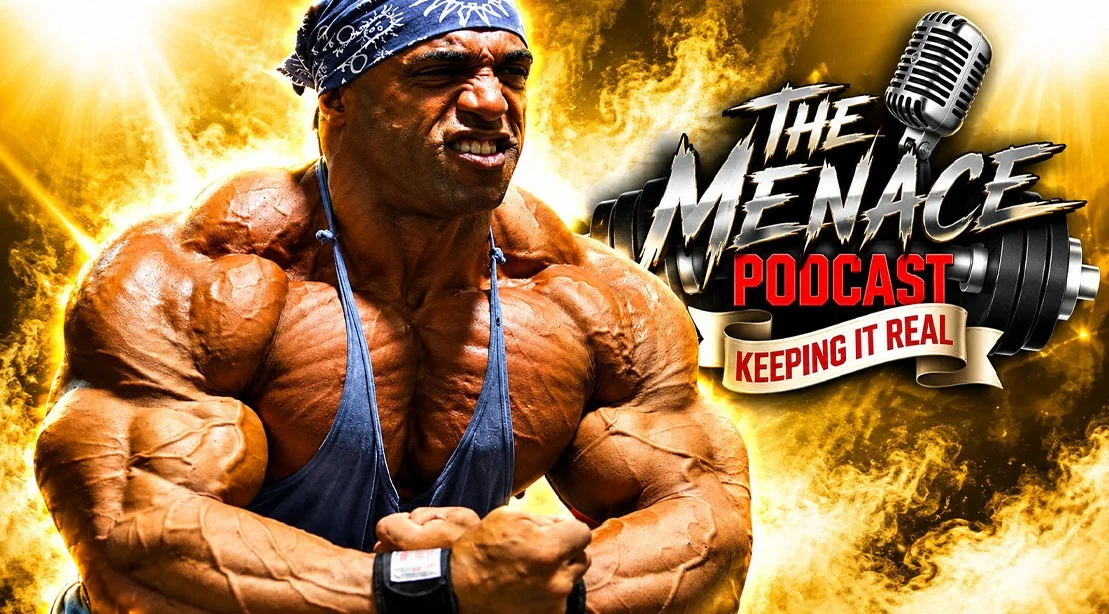
The debate over which generation of bodybuilding holds the ultimate standard of excellence continues to captivate fitness enthusiasts, athletes, and industry veterans alike. On a recent episode of The Menace Podcast, host Dennis James welcomed prominent figures Milos Sarcev and Jose Raymond to dissect the evolution of the sport. The central topic of discussion focused on a provocative comparison between the current era of competitive bodybuilding and the iconic 1990s—a decade widely celebrated as the absolute zenith of sheer size, density, and unmatched physical conditioning.
During Episode 307, the panel tackled a fundamental question regarding how today’s crop of professional muscle men would stack up against the legendary "Mass Monsters" of the past. The 1990s stage belonged to larger-than-life icons such as Dorian Yates, Lee Haney, and Ronnie Coleman, individuals who permanently redefined human muscularity and set a seemingly unattainable benchmark for the sport. As the conversation unfolded, the panel explored whether the modern landscape of competitive bodybuilding maintains that same level of uncompromising quality, or if the standards for reaching the professional ranks have shifted over the decades.
Jose Raymond offered a critical perspective on the current state of the industry, pointing out that there appears to be a noticeable drop in overall physique quality and maturity in the 2020s. According to Raymond, who transitioned from a celebrated professional bodybuilder to an elite coach, a significant part of the issue stems from how accessible IFBB Pro Cards have become in the modern era. He argued that the process of earning elite status has been streamlined to the point where athletes may not be adequately seasoned by the time they step onto a professional stage.
Reflecting on the rigorous path required in earlier decades, Raymond explained that athletes used to endure a grueling journey of delayed gratification. In the past, competitors often had to fight relentlessly for seven to ten years before finally securing a pro card. By the time they achieved that milestone, their physiques were fully matured, developed, and ready to withstand the immense scrutiny of professional judging panels. Raymond emphasized that this lengthy cultivation process allowed a competitor’s muscle maturity to truly "marinate," resulting in dense, hardened physiques that commanded immediate respect.
Raymond further contended that the trend of younger, less seasoned competitors winning pro cards has diluted the overall talent pool in contemporary bodybuilding. In his estimation, the physical development seen in many of today’s rising stars simply would not have measured up during the competitive golden eras of the late 1980s and early 1990s. The sheer density and structural completeness demanded during those years acted as a formidable barrier to entry, ensuring that only the most structurally complete and deeply conditioned athletes reached the highest level.
Dennis James Says 90% of Today’s Bodybuilders Would Not Win a Pro Card in the 1990s
Echoing Raymond’s sentiments with blunt honesty, host Dennis James escalated the critique, stating that an overwhelming majority of today’s competitors would fail to secure a pro card if they were forced to compete under the standards of the 1990s. James suggested that perhaps ninety percent, or potentially even more, of the current professional roster would fall short against the historical depth of talent from that era.
Adding to the critique of current qualification standards, Raymond pointed out an alarming modern trend where athletes can occasionally secure a coveted pro card simply by placing second in a qualifying event. Expressing his disbelief at the changing landscape, Raymond noted that the dilution of winning requirements undermines the historical prestige associated with holding an IFBB Pro Card. In previous generations, earning professional status required absolute dominance at the amateur level, leaving no room for debate regarding an athlete’s readiness.
To further illustrate the staggering depth of historical competition and the brutal nature of past standards, Milos Sarcev brought up legendary athletes from previous decades who never managed to secure professional status despite possessing physiques that rivaled or exceeded those of modern champions. Sarcev highlighted revered figures like Edgar Fletcher and Matt Mendenhall, athletes whose names still evoke immense respect among hardcore bodybuilding historians despite their lack of a pro card.
The mention of these retro athletes sparked immediate agreement among the podcast panel. Raymond asserted with absolute confidence that Edgar Fletcher possessed a physique capable of winning professional shows in the current era. Sarcev immediately backed the statement, agreeing one hundred percent that Fletcher’s classical lines, conditioning, and muscular development would easily dominate modern stages. This stark comparison served to underline the panel’s central thesis: that historical standards were so exceptionally high that athletes of extraordinary caliber could be completely shut out of professional status.
Shifting the focus to current administrative challenges within the sport, Dennis James detailed the sheer volume of qualified athletes in contemporary competition. He pointed out that recent cycles have seen more than seventy athletes successfully qualifying for various Olympia categories drawn from an active talent pool of around five hundred competitors. While this high participation rate demonstrates the global growth and popularity of bodybuilding, it also highlights ongoing concerns regarding over-saturation and the dilution of exclusivity at the sport’s premier event.
To address these concerns, James noted that industry leadership and organization officials are actively working to tighten qualification requirements across many divisions. By implementing stricter criteria—such as the recent push requiring athletes to win multiple shows to secure an Olympia invite—the sport’s governing bodies are attempting to course-correct. The overarching goal of these regulatory adjustments is to restore a healthy balance between quantity and quality, ensuring that the Olympia stage features strictly the absolute best physiques the world has to offer.
As the discussion drew to a close, the panel emphasized that while the modern era boasts incredible advancements in nutrition, science, and training methodologies, recapturing the rugged authenticity and uncompromising standards of the past remains a vital talking point. For fans and practitioners interested in diving deeper into the nuances of professional bodybuilding, the complete conversation, along with ongoing coverage of current contest results and industry news, remains accessible through the official Muscle & Fitness digital channels.