
The UEFA Europa League has long established itself as a premier battleground where ambitious smaller clubs can test their mettle against stronger, more historically established heavyweights from across the continent. However, in recent seasons, the competitive landscape has evolved dramatically. It has become abundantly clear that historical pedigree and vast financial experience do not automatically shield a structured, well-managed club from an early exit. As the tournament continues to adapt, immense pressure is placed on clubs long before the knockout rounds even commence, fundamentally changing how teams approach the European calendar.
How the League Phase Raises the Stakes
The modern league phase format has injected an unprecedented level of tension into the early stages of the competition, ramping up the pressure on participating clubs well ahead of the traditional knockout rounds. A total of 36 clubs participate in the main competition for the 2026/27 season, creating a massive, interconnected league table where every single goal and point carries immense weight. Under this expansive format, each participating club is scheduled to play four home fixtures and four away fixtures against eight different opponents.
This structural overhaul marks a sharp departure from the previous group stage system. Instead of playing home and away fixtures against the same three opponents, each club now faces two different teams from each of the seeding pots. Consequently, a difficult initial draw can create severe strategic and competitive hurdles for a club before they even kick a ball in their opening fixture.
The stakes are further heightened by the intricacies of the league table standings. If two or more clubs finish the league phase level on points, goal difference immediately comes into play to determine final placement. This means that a catastrophic, heavy defeat early in the campaign might not entirely eliminate a club’s chances of progression, but it can trigger detrimental tie-breaking effects that haunt them down the stretch. Every goal conceded and every match played requires absolute focus, as the margins for error have grown remarkably thin.
Why Club Reputation Can Be Misleading
One of the defining characteristics of the modern Europa League is that a famous club name or a massive financial budget does not guarantee survival against a less-moneyed opponent. Over the years, numerous domestic champions from smaller European leagues have arrived on the continental stage armed with deep tactical discipline and extensive experience in European qualification rounds. These clubs frequently deploy distinct, highly specialized playing styles that are not commonly utilized by the dominant powerhouses competing in Europe’s largest domestic leagues.
Analyzing football outcomes differs fundamentally from calculating probabilities in a casino game or spinning a random slot machine. While a casino game relies entirely on randomized multipliers and algorithmic outcomes—such as digital slot titles played on a 7-by-7 grid—football performance is deeply rooted in human factors, rigorous tactical preparation, optimal player fitness, and meticulous coaching.
A historic instance that perfectly highlights this unpredictability occurred in April 2025, when Norwegian outfit Bodø/Glimt pulled off a stunning European triumph by overcoming Italian giants Lazio in the quarter-finals of the Europa League. After finishing deadlocked in a tense 3-3 aggregate draw across two legs, Bodø/Glimt held their nerve to secure a dramatic 3-2 victory in the ensuing penalty shootout.
That momentous victory propelled Bodø/Glimt into the semi-finals, etching their name in history as the first-ever Norwegian club to reach the semi-final stage of a major UEFA men’s club competition. Their remarkable run defied the conventional odds dictated by the relative strength and financial standing of their domestic league, proving once again that pitch-level execution and tactical cohesion will always outweigh historical prestige.
The Demands of the 2026/27 Calendar
The competitive roster for the current league phase features a fascinating mix of European royalty and rising contenders, welcoming traditional giants such as Juventus, Milan, Benfica, and Celtic alongside clubs representing considerably smaller football markets. UEFA officially conducted the league phase draw on August 28, 2026, with the opening fixtures kicking off across the continent in September.
Navigating this demanding calendar requires extraordinary squad depth and managerial dexterity. European matches are frequently sandwiched between punishing domestic league fixtures, creating a grueling schedule of short turnarounds that can severely disrupt team selection. This physical and logistical toll is especially pronounced following long-haul away trips across different time zones and climates.
Managers are continually forced to weigh competing priorities. A club locked in a fierce battle for its domestic league title might choose to rest several regular starters ahead of an important weekend domestic fixture, trusting their squad depth. Conversely, another club might deploy its absolute strongest available starting lineup because a deep European run represents its primary remaining objective and realistic path to continental glory. Such calculated gamble decisions can make all the difference when two evenly matched sides lock horns on a Thursday night.
Knockout Matches Reward Tactical Flexibility
For the teams that finish the league phase occupying positions 9th through 24th, the path to the latter stages runs through the high-stakes knockout play-offs. These two-legged affairs demand immense tactical flexibility from coaching staffs, as alterations made on the fly can dictate the entire tie. However, tactical missteps in either leg can prove disastrous and irreparable.
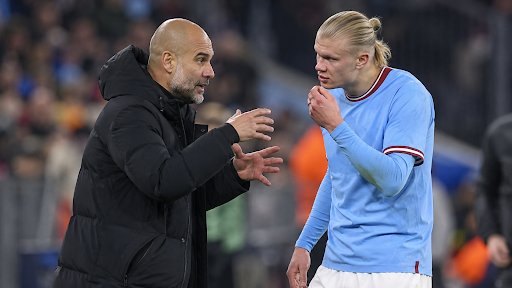
The dynamic nature of two-legged ties is best illustrated by late-game tactical shifts. For instance, if a team enters the second leg trailing by a single goal, the coaching staff may decide to push their full-backs high up the pitch to increase offensive pressure. While this strategic gamble enables more expansive and threatening attacking play, it simultaneously exposes the defense and creates vast open spaces for the opposition to exploit through quick counterattacks.
What the Tournament Means for Smaller Nations
Beyond the immediate prestige and financial rewards, the Europa League holds immense significance for clubs from developing football nations, offering both historic milestones and a vital stepping stone toward the pinnacle of European club football.
A prime example of this dynamic can be seen in the journey of Estonian football. In August 2021, Estonian champions Flora faced Omonia in the qualifying rounds of the UEFA Europa League. Flora fought hard to secure a 2-1 victory in the first leg, though they ultimately suffered heartbreak by losing a tense 5-4 penalty shootout following a 2-2 aggregate stalemate. Despite that narrow defeat, Flora were not eliminated from European competition; instead, they were transferred to the UEFA Conference League play-off rounds. They capitalized on that second chance by defeating Shamrock Rovers 5-2 on aggregate, successfully earning a historic place in the group stage.
Furthermore, the modern Europa League serves as an invaluable alternative pathway into the upper echelons of European football. Beyond the immediate glory of lifting the trophy, winning the competition guarantees a coveted spot in the league phase of the subsequent season’s UEFA Champions League, provided the club has not already qualified through its domestic league placement.
This lucrative and prestigious reward ensures that clubs outside the traditional elite view the Europa League not as a secondary consolation, but as a premier objective. Consequently, the competition maintains a fierce, unrelenting level of intensity from the opening league phase fixtures all the way through to the dramatic conclusion of the knockout rounds.