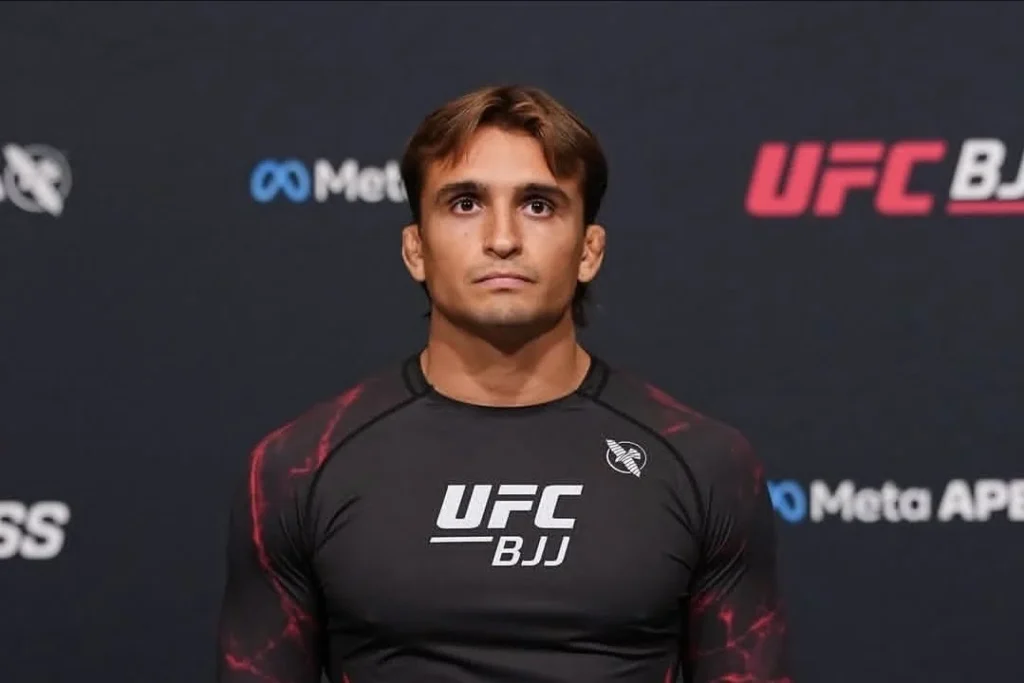
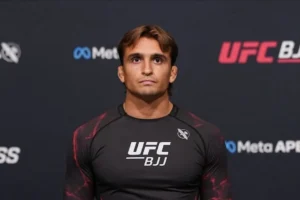
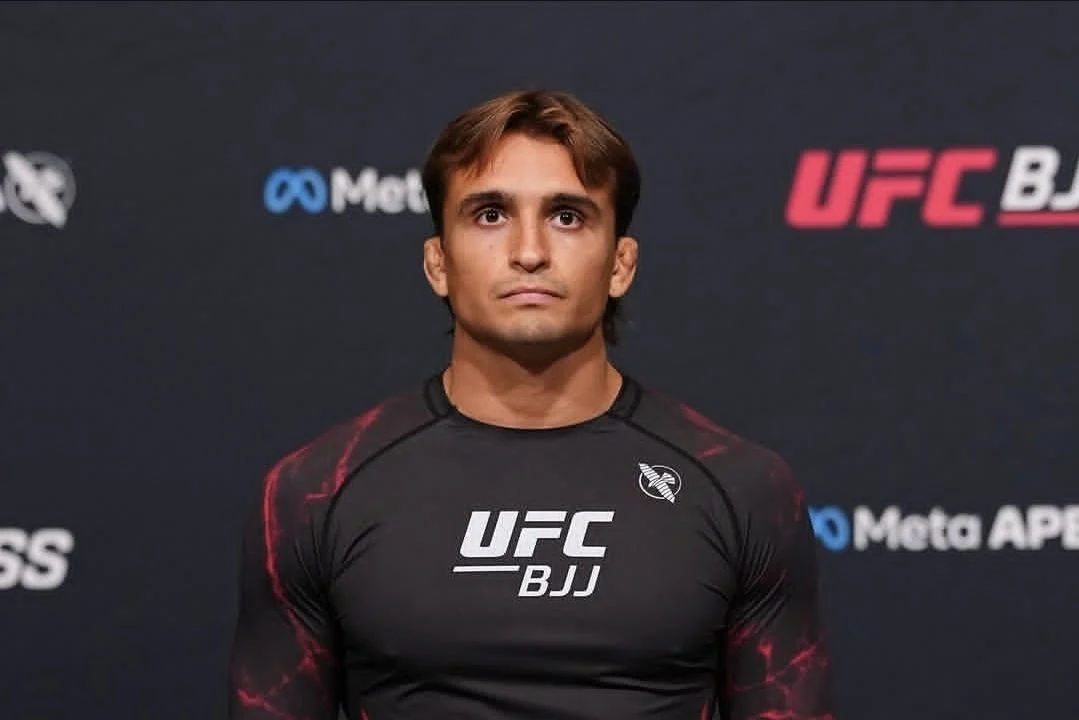
Jay Rodriguez is figuring things out entirely as he goes, a philosophy that applies just as comfortably to his time away from the training mats as it does to his high-stakes professional grappling career.
When he is not putting himself through grueling training sessions, that mindset manifests in practical projects around his garage. He recently built a sturdy workbench from scratch, started experimenting with carving basswood, and decided that his handmade benches could certainly use some custom drawers. There is no grand, overarching life plan behind his sudden foray into woodworking; rather, he simply enjoys the organic process of learning how to make raw materials work under his hands.
On the grappling mats, that exact same curiosity and intrinsic interest in finding new possibilities has helped transform a dedicated childhood wrestler into one of the most dangerous professional submission grapplers in the sport today. Rodriguez thoroughly appreciates the suffocating pressure he can physically inflict upon an opponent, but he equally values having a vast array of technical options at his disposal.
"You just have a lot more options with jiu-jitsu, so it’s been more fun for me," Rodriguez told Dan Kuhl of Combat Press, reflecting on his transition from traditional canvas wrestling to the boundless landscape of submission grappling.
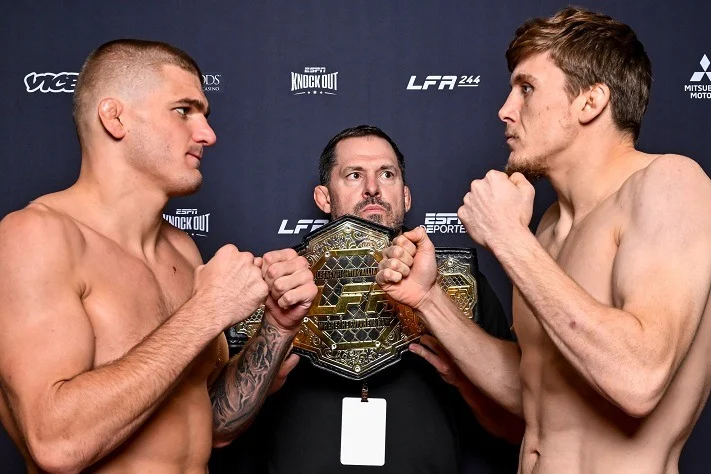
On Thursday, October 29, those options will be put to the ultimate test against a very familiar and formidable opponent. Rodriguez is scheduled to face William Tackett at UFC BJJ 13, taking place at the Meta Apex in Las Vegas, in what promises to be a pivotal matchup for both competitors.
Both men share a unique familial thread in the sport, each having a brother who competes at the absolute highest levels of elite submission grappling. Jay is five years younger than his brother Nick Rodriguez, while William is the older brother of fellow elite grappler Andrew Tackett. Yet, long before their respective family names became synonymous with modern grappling excellence, Jay Rodriguez and William Tackett already established a competitive history of their own.
They have faced each other twice in official competition, and Tackett walked away the victor in both of those prior encounters. Rodriguez is well aware of the current score, but he firmly believes that the grappler returning to the cage for this third meeting has significantly more to offer than the version of himself who fought Tackett years ago.
From Wrestling Pressure to Jiu-Jitsu Creativity
Rodriguez’s combat sports journey began on the wrestling mats, where he started competing just a year or two after his older brother picked up the sport. What initially drew him to wrestling was the sheer purity of the struggle—specifically, the psychological and physical opportunity to push an opponent well beyond the threshold where they wanted to keep working.
"I enjoyed how everyone struggled in wrestling," Rodriguez said, recalling his formative years on the mat. "I like seeing me do better than them, like watching them break."
Transitioning into jiu-jitsu ultimately gave him a natural home to channel that relentless wrestling mentality while simultaneously expanding the limits of what he could achieve with it. The canvas opened up a vastly greater number of positions to explore, angles to develop, and intricate ways to secure finishes against resisting opponents.
His athletic development did not follow every single step of his brother’s well-documented career path. Rodriguez never trained inside the legendary Blue Basement under John Danaher. While he briefly joined his brother in Puerto Rico to help him move, his primary training headquarters during his rise in New Jersey was Studio 84. Later, when the core team that eventually evolved into the B-Team made the permanent relocation to Austin, Texas, following the high-profile split of the Danaher Death Squad, Rodriguez packed his bags, moved in with his brother, and immersed himself in training at their new facility.
Along the way, he collected key competitive milestones that still stand out vividly in his memory. One defining moment was winning a regional wrestling tournament in New Jersey following a deeply disappointing district tournament performance that left him hungry for redemption. Another massive milestone was earning a prestigious silver medal at the ADCC World Championships on the global stage.
The regional wrestling title gave him an unexpected, emotional high early in his athletic life, while the ADCC podium finish helped firmly cement his elite standing in the professional grappling landscape.
Building Size and Finding New Submissions
Away from the technical minutiae of guard passing and leg locks, Rodriguez has also spent considerable time trying to alter what he physically brings to the competition scale.
During a noticeable stretch away from his regular jiu-jitsu training regimen, he heavily concentrated on power lifting and aggressive caloric consumption, estimating that he successfully packed on roughly 25 pounds of mass. However, maintaining that added size proved to be an uphill battle once he returned to the rigorous demands of full-time mat training.
"I immediately lost almost all that weight," Rodriguez admitted, reflecting on his brief foray into heavier weight classes. "It was really hard to stick on and to keep that mass."
Today, he walks around at approximately 195 pounds, sitting about 10 pounds heavier than he did before that intentional bulking effort. At his absolute heaviest during that lifting phase, he scaled in at approximately 205 pounds, but his body has since settled into a more sustainable operational weight.
Meanwhile, his technical interests and submission preferences have continued to evolve in tandem with his physical conditioning.
The rear-naked choke remains a deeply reliable, go-to option simply because his aggressive style frequently lands him securely on an opponent’s back. However, his current personal favorite is the inverted D’Arce choke, a tricky submission he successfully deployed to devastating effect in his most recent match.
"I’ve been playing around with that a lot," Rodriguez said with a grin. "It’s a lot of fun."
That ongoing willingness to experiment creatively carries directly over into a unique competition surface that he has quickly grown to appreciate.
Making the UFC BJJ Bowl Work for Him
Rodriguez made his promotional debut under the UFC BJJ banner at UFC BJJ 11. Although the turnaround time leading into his next appearance has been remarkably swift, he enthusiastically welcomes another opportunity to step back into the distinctive circular confines of the Bowl.
"I love it," he said of the venue. "It’s a lot of fun."
For a grappler of Rodriguez’s style, the curved boundary wall provides an unexpected tactical tool when passing an opponent’s guard. When an adversary is pressed directly against the curved perimeter wall, they inherently possess significantly less lateral room to maneuver or create space—particularly when Rodriguez locks down an angle that effectively strips away their ability to shrimp or create framing defenses.
"It kind of adds, like, a different kind of pressure to the guard player," he explained.
He thoroughly enjoyed utilizing those novel boundary positions during his promotional debut. Against a seasoned veteran like Tackett, however, he fully expects a much more demanding and comprehensive test of those mechanics.
Rodriguez is under no illusions about the caliber of his upcoming opponent, describing Tackett as a vastly superior, far more well-rounded grappler than the version he stood across from during his earliest days in the sport.
A Third Meeting With William Tackett
Rodriguez speaks warmly of his personal interactions with William Tackett outside of competition, noting that they get along well away from the venue. Competitively, however, their relationship has been far less comfortable for the younger athlete.
"We’ve competed twice before, and I’m 0-2 against him," Rodriguez noted bluntly. "But both of these matches were over two years ago."
That passage of time matters immensely to him. Rodriguez firmly believes that both competitors have undergone profound transformations since their last meeting, pointing specifically to the vast improvements in his overall game, his maturity on the mat, and his modernized approach to high-level competition.
"I’ve definitely progressed a lot," he said. "I’ve become a lot more well-rounded."
Tackett’s innate creativity and mat awareness represent some of the primary challenges Rodriguez expects to navigate over the course of the match. He sees an opponent who stays intensely present during scrambles and instantly recognizes shifting opportunities the moment they begin to materialize.
The other major concern is sheer athletic intensity from the opening whistle.
"He’s really good at starting strong," Rodriguez said of his opponent’s tendencies. "In a lot of his matches, he can start the round really, really quickly, at a high intensity."
Rather than offering an elaborate, carefully scripted prediction for how he plans to neutralize that early onslaught, Rodriguez prefers to let the action inside the Meta Apex do the talking.
"My performance should speak for itself," he concluded. "I know I will try as hard as I possibly can, no matter what."
There will undoubtedly be longer-term responsibilities and adult milestones for him to figure out eventually—smart financial investments and the various administrative details of adulthood will certainly have their proper turn in due time. But for now, the primary reason he continues lacing up his tape and stepping back onto the mats remains remarkably straightforward.
"I enjoy competing. I enjoy jiu-jitsu," Rodriguez said. "But for now, I just want to choke people."