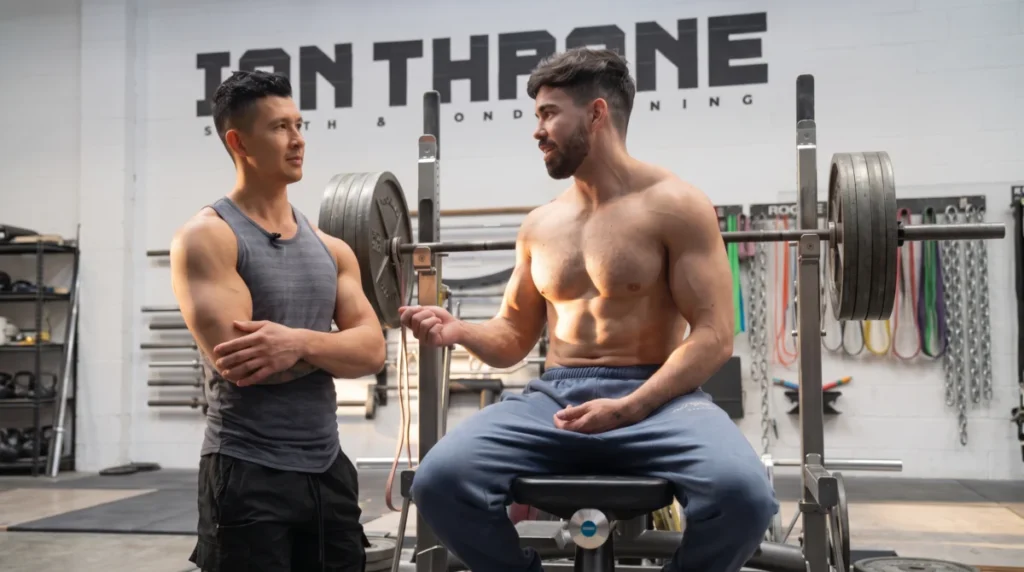


For the vast majority of gym-goers, benching 225 pounds remains a milestone of distinction, sitting comfortably at the top of most fitness bucket lists. Yet, comprehensive training data suggests that fewer than two percent of newcomers to weightlifting ever manage to press those two iconic plates. Even among dedicated, long-term lifters who spend years refining their craft, only about one in five will ever successfully lock out 225 pounds.
Breaking past these barriers requires far more than casual effort or a generic workout routine. Ryan, a drug-tested bodybuilding professional, managed to cross the 225-pound threshold in just one year of serious training—and he refused to stop there. Today, he benches over 400 pounds entirely naturally. That achievement is so statistically rare that it rivals the odds of accumulating a personal fortune, prompting fitness analysts and strength coaches alike to examine the precise system that made it possible. Rather than relying on genetic anomalies, Ryan attributes his extraordinary numbers to deliberate modifications in biomechanics, targeted leverage adjustments, and a meticulous approach to recovery.
The Grip Adjustment That Adds Weight Instantly
One of the most common pitfalls for intermediate lifters is failing to revisit the foundational variables of their lift, particularly hand placement on the bar. Most athletes find a grip style early in their training careers and stick to it rigidly for years, ignoring how slight anatomical adjustments can drastically alter force production.
Widening grip width by even an inch or two can fundamentally change the mechanics of the movement, often making the loaded barbell feel lighter immediately. Biomechanical research demonstrates that a moderately wider grip successfully reduces the overall range of motion while simultaneously increasing pectoral muscle activation. For many lifters, this single adjustment can boost pressing strength by five to ten percent without requiring any additional muscle mass or supplementary training.
Grip width essentially dictates which muscle groups bear the primary load during a press. Narrower hand placements place heavy emphasis on the triceps, making them ideal for lifters whose upper arm strength is their primary asset. Conversely, wider grips shift the mechanical tension away from the arms and directly onto the chest. Experimenting with different widths and paying close attention to tension feedback is essential, as there is no universal measurement that fits every body type.
Building Your Base Before Touching the Bar
Elite strength athletes understand that a successful press is never just about pushing the weight upward; it begins long before the hands ever make contact with the knurling. The process starts with building an unshakeable foundation, beginning with foot position and lower body tension.
Ryan employs a relatively narrow stance with his toes pointing forward, utilizing deliberate leg drive to push his body backward into the bench. This generates immense force through the upper back, creating a stable platform from which to press. Before even considering unracking the weight, he aggressively retracts his shoulder blades and engages his lats. That preliminary lat tension serves a dual purpose: it stabilizes the heavy bar during its descent toward the chest and acts like a spring, fueling the explosive rebound power needed to drive the weight back to lockout.
While this setup eventually becomes an automatic, second-nature habit, beginners are encouraged to follow a strict mental checklist during early training sessions. Verifying foot tension, shoulder blade retraction, and lat engagement prior to every unrack transforms an uncoordinated push into a synchronized, powerful movement.
Why Arching Isn’t Cheating—It’s Biomechanics
When observers see advanced powerlifters utilizing a pronounced spinal arch during the bench press, the technique is often dismissed as a gimmick or a form of cheating designed to shorten the lift artificially. However, practitioners like Ryan view the arch as a vital application of applied biomechanics.
By creating a deliberate bridge with the spine, the lifter effectively shortens the vertical distance the barbell must travel from the chest to the lockout position. Reducing that range of motion results in superior mechanical leverage and a significantly greater force output. While this specific posture may not be optimal for isolated muscle hypertrophy, it remains a proven, highly effective technique for moving maximal absolute weight.
For athletes whose primary objective is raw strength development, arching is simply a matter of intelligent leverage utilization. Conversely, individuals prioritizing muscle growth often pair this powerlifting style with accessory movements that ensure the pectoral muscles are stretched and contracted through a full, uninhibited range of motion.
Why Perfect Form Isn’t Enough to Break Plateaus
Even flawless technique and meticulous setup will eventually hit a wall. When progress stalls, elite lifters look beyond basic execution and analyze the specific mechanics of where the lift fails. Training can be divided into distinct components based on sticking points, and addressing those specific weaknesses is often the key to unlocking new personal records.
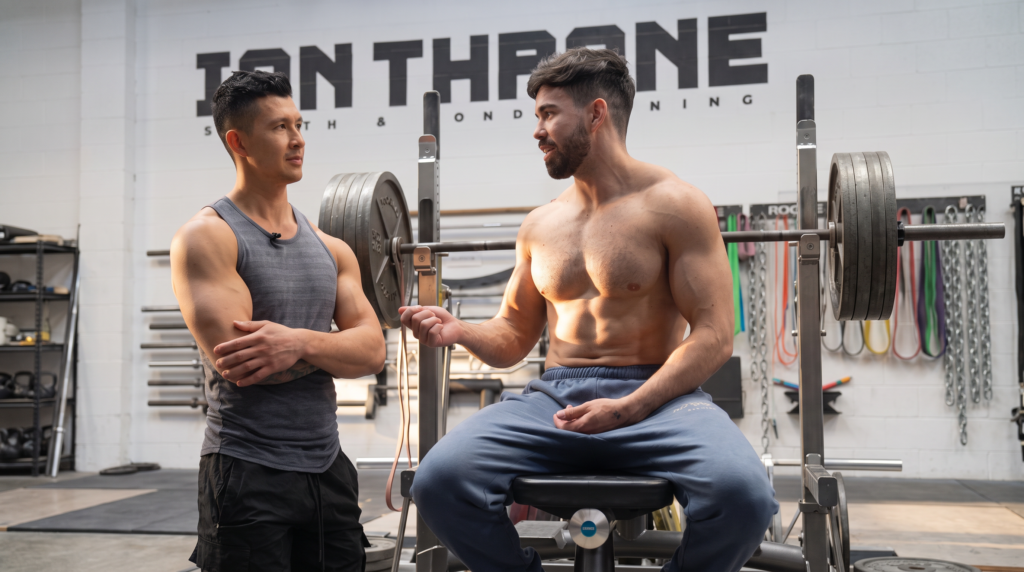
If a lift consistently fails immediately off the chest, the bottleneck is typically power generation from the pectoral muscles. Incorporating pec-dominant movements like weighted dips or speed benches helps build the necessary starting explosiveness. Stalling halfway through the press usually points to lagging anterior deltoids, which can be remedied with overhead pressing and paused bench variations. Finally, missing the lockout near the top of the movement almost always indicates insufficient triceps strength, requiring targeted overload work such as close-grip benching or partial-range presses.
Muscle Size Still Predicts Strength
While maximal strength is largely a skill developed through heavy loads and refined neural pathways, long-term strength potential remains closely tied to overall muscle size, or hypertrophy. Interestingly, research indicates that expanding muscle tissue does not exclusively require lifting near-maximal loads. Studies consistently show that training with lighter weights—representing roughly thirty to fifty percent of a lifter’s one-rep maximum—can produce comparable muscle growth to heavier loads, provided the sets are taken close to muscular failure.
Ryan capitalizes on this physiological principle by incorporating high-repetition, moderate-weight exercises into his routine, utilizing dumbbell presses, cable flies, and dips to stimulate chest growth far beyond what the barbell bench press alone can achieve. He then uses low-repetition bench practice to teach his nervous system how to efficiently express that newly minted muscle mass as raw strength.
Track PRs Everywhere, Not Just on the Bench
At the elite tier of strength sports, progress inevitably slows to a crawl. Advanced lifters often celebrate adding a single pound to their bench press over the course of a month. Despite this grueling pace, tracking personal records remains an obsessive daily habit.
When progress on the primary bench press inevitably stalls for weeks at a time, successful athletes shift their focus to chasing personal records in supporting accessory movements, such as dips, lateral raises, and various fly variations. This multifaceted approach to logging progress sustains psychological motivation and ensures that positive adaptation remains measurable across the entire upper body musculature, separating casual gym-goers from dedicated professionals.
Shoulder Health: The Silent Limiter
Many lifters find their progress halted not by weak pectoral or triceps muscles, but by compromised shoulder joint mobility and integrity. Traditional rehabilitation protocols, such as basic resistance band rotations, often fall short of resolving the deep-seated structural stress caused by heavy pressing.
Protecting the shoulder girdle requires targeted rotator cuff conditioning and careful attention to scapular positioning during heavy training blocks. Ensuring the joints remain healthy and pain-free allows lifters to maintain consistent training frequency without accumulating the micro-traumas that eventually lead to chronic setbacks.
Why Benching Less Can Build More Strength
It is a common assumption among developing lifters that increasing training frequency—benching more days per week—will inherently yield faster strength gains. While that principle holds true for novices, whose bodies rapidly adapt to novel stimuli, the equation changes drastically as strength levels rise.
For a beginner, moving from pressing once a week to twice or three times weekly can dramatically accelerate progress. However, once an athlete is handling loads approaching 300 or 400 pounds, the central nervous system, joints, and connective tissues require significantly more recovery time. Elite lifters often find that heavy benching needs to be restricted to just once weekly, and as loads approach the 400-pound mark, recovery windows between intensely challenging sessions may stretch to two full weeks.
Ultimately, high-level strength is not governed by sheer training volume, but by the quality of recovery. Inadequate rest destroys motivation, degrades joint health, and stifles progress. Athletes navigating their own strength journeys are encouraged to experiment with different training frequencies over multi-week blocks to determine what their individual physiology requires.
Progress Is Personal, but the Process Is Universal
Building a formidable bench press is not the result of luck or unearned talent; it is the culmination of deliberate setup, smart grip adjustments, strategic frequency management, and the persistent elimination of physical weak links through targeted accessories.
By applying these rigorous biomechanical principles and addressing underlying sticking points, everyday lifters can narrow the gap between their current capabilities and their ultimate goals. Whether the target is hitting a standard 225 pounds or chasing the rare air of a 400-pound press, the underlying mechanics remain consistent: respect the foundation, prioritize recovery, and let smart execution dictate the path forward.