The landscape of mixed martial arts is bracing for a fresh yet nostalgically rooted shake-up. Veteran executive Rich Chou, stepping into his role as the executive vice president of Ki MMA, is leaning heavily on the blueprint that has defined his illustrious behind-the-scenes career in combat sports. Teaming up once again with familiar industry heavyweights like promotional mastermind Scott Coker and CJ Tuttle, Chou is on a mission to ensure Ki MMA captures what genuinely resonates with today’s audience while simultaneously laying a solid groundwork for the future of the sport.
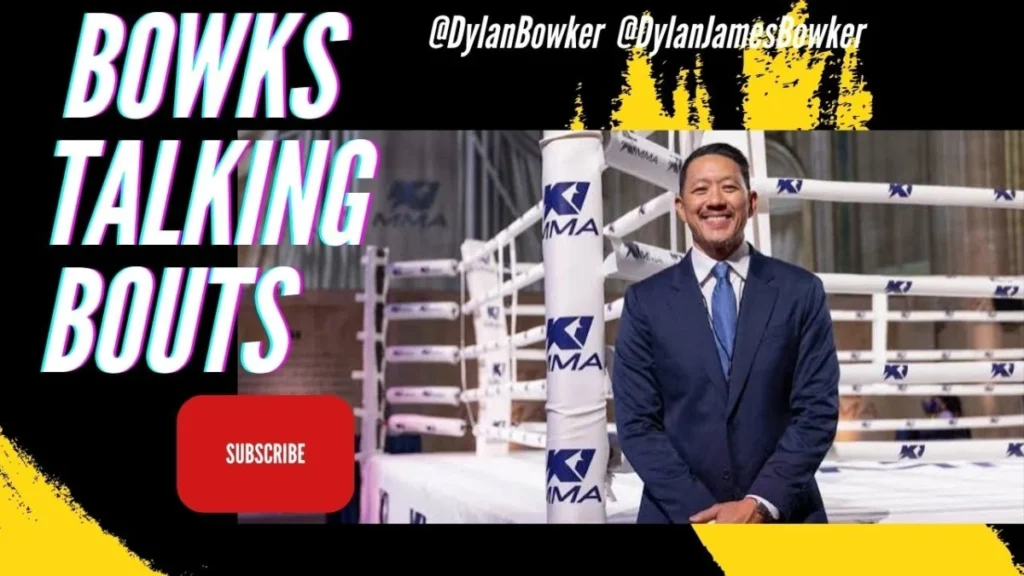
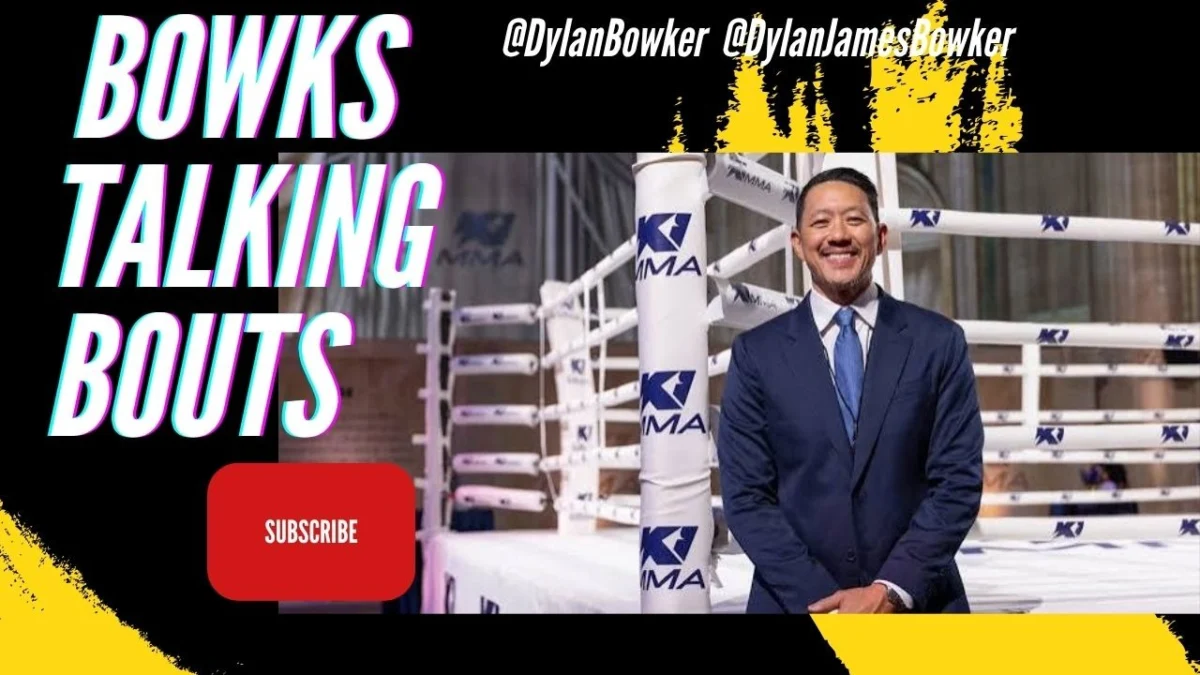
Reflecting on the collaborative chemistry within the newly formed executive team during an interview with Bowks Talking Bouts, Chou highlighted the comfort and efficacy of working alongside trusted veterans.
"Yeah. Look, a good mix, as you mentioned, kind of some of the band members coming back," Chou shared. "A good mix of people that have worked together before. We’ve been in the trenches before, especially Scott and I. This is our third [promotion]. We’ve been together for some time now, collaborating and working together. This will be our third go-around. You mentioned CJ [Tuttle], who’s just, he’s an all-star, he’s the man. Then we have several new people in the mix."
While acknowledging the immense value of leaning on trusted confidants who have navigated the tumultuous waters of combat sports promotions alongside him, Chou emphasized that the modern fight business demands adaptability. The landscape has shifted dramatically over the years, requiring executives to look beyond traditional operational methods.
"So, it’s just really interesting and I feel like after all these years you’re in the business, some things remain the same, but man, there are so many things that are absolutely different," Chou continued. "So you have to be on your toes, you have to evolve, and you just have to really be aware and conscious of where we’re at today on many levels. Not only in the fight game, but in terms of social media, in terms of entertainment and broadcasting. So, great to have familiar faces and old friends in the building. But we definitely need that new fresh perspective as well."
Amplifying the Message and Securing the Broadcast Future
Bringing fresh perspectives to Ki MMA goes beyond simply modernizing social media presence. When discussing the multifaceted approach required to break through the crowded modern sports and entertainment market, Chou stressed that having an exceptional product inside the ring is only half the battle. Securing the right distribution partners to amplify the promotion’s core message is equally critical to long-term survival and growth.
"I think as we look at what it’s going to take to really get our message out there, right? What I mean by that is I feel good about our format," Chou said. "I feel like we’ve done a great job of differentiating ourselves and establishing ourselves. The concept and the format and the fights basically, right? I feel like what’s going to happen in the ring for us is going to be special and spectacular, but we need to find the right way to amplify that message. To share that message with the world, to grow our brand and showcase what we’re doing."
This strategic focus places immense importance on the inaugural broadcast deals that Ki MMA is currently finalizing. In an era where content consumption dictates brand relevance, ensuring that fans have seamless access to live streams and televised events is a top priority for the executive team.
"So that being said, I think we’re now working with several people that specialize in that. That are excellent at that and we’re trusting them to guide us," Chou explained. "That’s really around, this next or this initial, this inaugural broadcast deal and where we end up being streamed or televised and all that. That’s to me equally as important because if you have an amazing product, so to speak, in the ring, you’re putting on great fights and you’ve got compelling storylines and you’re building stars and having these fantastic fights, but no one can watch or see you, then that’s a tough one."
Authentically Different: Embracing Roots and Tournament Formats
To carve out a distinct identity in a saturated industry, Ki MMA is turning back the clock while maintaining a modern execution. Central to their differentiation strategy is the utilization of a traditional ring rather than a cage, alongside a grueling 32-fighter tournament format that evokes the storied heritage of early mixed martial arts history.
Chou acknowledges that while seasoned purists will instantly recognize and appreciate the tribute to the sport’s origins, younger or newer fans may initially find the concept unconventional.
"Yes. Look, I think some fans will see what we’re doing and it’s a new thing for them," Chou noted. "I’ve had some people reach out and comment, ‘multiple fights in one night. You must be crazy.’ Just not knowing how that’s in the history of our sport. That’s our roots, but they’re likely a new fan and that concept is foreign to them. Even though again, it’s how we got started, right, as a sport. So I think some people will look at what we’re doing, our format, our presentation as new and innovative."
Rather than shying away from these contrasting reactions, Chou embraces the idea that "old is new" in the context of combat sports promotion. By breathing fresh life into historical tournament structures, Ki MMA aims to captivate audiences on both ends of the fandom spectrum.
"Others will see it as old is new, bringing it back, roots, heritage and yeah to me that’s very interesting," Chou said. "To me that is what we wanted something new and fresh, right? If it’s brand new to somebody that’s a newer fan, fantastic. If it’s a great time to refresh and bring back some really great things that have helped shape the sport, old can be new. We’re going to put our twist on it. We still have some things that we’re working on that we’re going to share soon. Some more surprises in store, some more tricks up our sleeve."
Crucially, Chou emphasized that every operational and creative decision made by the organization stems from an intentional desire to remain authentic rather than merely acting as an industry contrarian.
"But it was very important for us to be not just different but authentically different and different with intent," Chou explained. "It wasn’t like we looked at what everyone’s doing in the industry and just said, ‘Let’s just do the exact opposite without really thinking about it and and without making sure that it lined up with our values and our core philosophy and mission statement.’ So, those two things were extremely important and that’s what’s been guiding us and will continue to guide us. Being authentically different and just really staying true to ourselves."
Teasing Schedules, Roster Building, and Rule Set Innovations
As discussions surrounding media rights, live event schedules, and global expansion continue to ramp up behind closed doors, Chou offered a few tantalizing hints about what fans can expect in the near future. While major announcements regarding launch dates, host cities, and broadcasting partners are imminent, the competitive side of the business holds even more hidden surprises.
"Well, look, there are a lot I think that are obvious, right? Some really big obvious ones are our schedule, right? When are we launching, where are we launching? Not only for the live event experience, like what cities are you going to be in, but also, yeah, where can we watch you? But I think really for what falls into my wheelhouse, I think from a competition and fight standpoint, it’s just more surprises there," Chou teased.
Among the most compelling developments being discussed within the Ki MMA war room are potential rule adjustments designed to enhance the spectacle for viewers while expanding strategic options for fighters. Drawing inspiration from legendary promotions of the past, Chou noted that the organization is actively exploring rule sets reminiscent of Pride and Rizin, tailored to fit modern global markets.
"In terms of, perhaps rules. We are having some very interesting conversations. I hate to be so cryptic and tease you and your listeners, Dylan. But yeah, we are really looking at rules and really great things we can do there to make competition more interesting and exciting for fans and for the fighters as well, of course. I think we’re also looking into other things we can do in the ring," Chou said. "We’ve done kickboxing before and we love that sport. Just there’s a lot going on in the competition and fight department. So, we hope to have that all dialed in and ironed out soon. But, it’s exciting. I think fans are ready for something new and fresh. It’s our goal to deliver that."

Elaborating further on the feasibility of implementing more expansive rules akin to Pride FC, Chou pointed out that international expansion will afford the promotion unique creative freedoms that are often restricted under the varied athletic commission regulations found across the United States.
"That is in the discussion. We’ve said Pride quite a bit. Yeah, who didn’t love Pride, right? Some of my favorite fights, some of the greatest fights in the history of the sport," Chou reflected. "There really was no greater spectacle for MMA and for us, it was the same kind of adoration and love for K1 on the kickboxing side. Just really; yeah, pulling but going back to your point on the rules, yeah, looking at what Pride did, looking at what’s going on out there, how can we in our quest to innovate and really again just level up martial arts competition. We’re looking at all those options and then some. Some that I think some people are not thinking about."
Chou emphasized that these potential rule modifications are being evaluated through a collaborative lens, taking input from both purists and active athletes to ensure safety and excitement go hand in hand.
"So we’re in the war room having all these conversations. It’s a lot of fun and we’re fans as well, Dylan. We’re fans first. So, we’re always keeping that in mind. It’s not just what we think from a purist perspective would be great and add to competition. But it’s really, what the fans want and obviously talking to the fighters about; they’re the ones in there, what do you think of these rules or how would you like to have these new weapons or how would you like this format? How would you like to be able to utilize that? Does this help your game, you know?"
With plans to host events spanning four distinct continents, Chou noted that geographic diversity will play a key role in bringing these ambitious formatting ideas to life.
"Again, to me, that’s very exciting to be able to be creative like this. We are quite limited here in the States as we know. I know you alluded to Colorado and we have 50 states. All 50 of them seem to have different nuances and their rules and regs in the sport. So I know we call it the unified rules but it’s not always the case but we are traveling to other parts of the world as you know. [This] would be spread out over four continents and there’ll be certain situations where I think we’ll be able to utilize and just tap into some creativity around rule set."
A Two-Pronged Roster Strategy and Honoring Combat Sports Royalty
When it comes to assembling the talent pool for Ki MMA, the promotional strategy relies on a balanced combination of grassroots development and targeted free-agent acquisitions. By leveraging Coker’s extensive history of building elite prospects from the ground up alongside a financial war chest capable of making waves in the open market, Chou believes the organization possesses a unique versatility.
"Yeah. I think you just laid out our strategy pretty well there. It’s doing what I feel like we do best. Develop young talent, recruit, develop, and set them on a path towards stardom. I think we have a good track record of that, but we’ve also been pretty disruptive in free agency," Chou explained. "So, those are kind of the two; I guess a two-prong strategy, so to speak. We’re going to focus on youth. It’s a youth movement with the Grand Prix. But if somebody becomes available that we’re interested in, we feel like is a good fit, that can move the needle for us and put on exciting fights, we’re going to go out and talk to them. We’re going to tap into that war chest that you alluded to."
This dynamic approach allows Ki MMA to operate with financial agility, drawing comparisons to prominent strategies seen in mainstream professional sports leagues.
"So it’s I guess I liken it to us being pretty versatile in terms of I guess from a; perhaps a mainstream sports perspective. We can play moneyball and we can also be the Yankees and Dodgers every now and then, too. So, I think that’s what makes us very interesting and just separates us from a lot of other groups out there. The ability to do those two things and not just be a one-trick pony, so to speak, or just have one goal or one endgame in mind."
The strong foundational ethos of respect and fighter-first management was recently underscored during Ki MMA’s kickoff event, which saw an extraordinary gathering of combat sports royalty, including Nate Diaz, Mark Coleman, Fedor Emelianenko, Cris Cyborg, and jiu-jitsu pioneer Royce Gracie. For Chou, having legends of that caliber turn out to support the brand’s launch was a profoundly surreal moment that validated years of dedication to the sport.
"To have all those legends there. A lot of those guys inspired me personally. I came up, I got into jiu-jitsu and ultimately that led me into the business because of Royce [Gracie] to have him there, sitting there, listening to us present Ki MMA, it was very surreal, Dylan. It was very surreal," Chou shared. "I think our love and appreciation for the sport, for all these guys just I’m glad you see that and that’s what it’s all rooted in. Like Ki MMA is fighting spirit. It’s fighting force and those guys had it and then some."
Reflecting on how Scott Coker was able to unite such an elite group of fighters under one roof, Chou pointed to the deep-seated mutual respect built over decades of ethical business practices within a notoriously difficult industry.
"It was a really special moment because Dylan, believe it or not, man, sometimes when you get done doing business with people, they don’t always stick around or stay in touch [laughs]. So, for them to be there for us and really in particular for Scott in this special moment for our company, yeah, it was all the feels, Dylan. It was all these amazing things, all these crazy emotions and thoughts running through my head of that moment. But, it was great. We’ve got the photos and the video to commemorate it, but man, it’s time to get going."
Navigating the Industry with the "Zen Master" Mentality
Throughout his career, Chou has closely observed the leadership style of Scott Coker, whom he affectionately refers to as the "Zen master" of combat sports promotion. Eschewing the loud, bombastic promoter tropes popularized by other prominent figures in the industry, Coker’s quiet, purposeful approach to leadership has profoundly shaped Chou’s own executive philosophy.
"As I think about my time with Scott and I’ve learned so much from him and just the way he does business, how he handles himself, how he treats fighters, and I’ve also been surrounded by several other great people during my time in the business that have mentored me and kind of shown me the way," Chou said. "I’ve always gravitated towards, I guess, more of the; I call Scott the Zen master, right? He’s quiet, low-key behind the scenes, but obviously when he moves, he moves with intent and he’s very powerful."
While acknowledging that promoting mixed martial arts is inherently difficult and that friction between management and athletes is bound to occur in such a high-stakes environment, Chou maintains that prioritizing integrity and mutual respect ultimately leaves lasting positive impressions.
"So, it’s a tough business, but I feel like whenever you respect fighters, try to operate with integrity, and respect, even when it’s not the outcome that you want, you can usually walk away at least having that intact," Chou noted. "That respect in place. I think that’s something I’ve learned from Scott and we still implement that to this day. I think if you ask around, we feel pretty good about our standing in the fight community with managers, fighters, and coaches."
Ultimately, Ki MMA’s leadership team has no interest in forcing an artificial persona onto the public. By staying true to their core identity and avoiding the temptation to emulate the larger-than-life promotional styles of industry peers, Chou and Coker are charting a steady, authentic course for the promotion’s future.
"I think we just; going back to that word authenticity that means a lot to us. Like let’s just be true to ourselves. Let’s not try to be people we’re not," Chou concluded. "We’re not some of those larger than life loud figures out there that have been very successful in the game. That’s who they are. That’s who; that’s their style and they’re a good fit there. You know, Dana’s Dana, right? We just know who we are and we just try to be true to ourselves."