

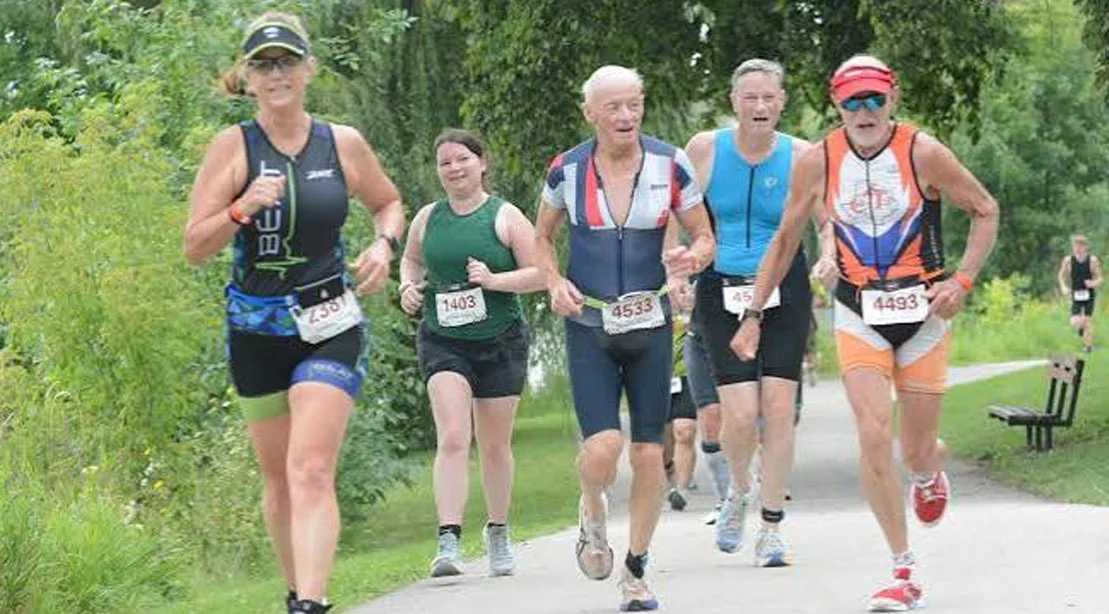
Bob Plant had never spent a single moment of his athletic career worrying about an Ironman cutoff. Over more than four decades of competing in elite endurance events, he had learned how to read the signals of his own body and gauge what an 83-year-old framework could realistically endure. His journey had taken him to the grueling course in Kona, Hawaii, plenty of times before. This year marked his milestone 10th start at the Ironman World Championship, a testament to a lifetime of dedication to the triathlon discipline.
Yet, as the elements and the clock would ultimately prove on race day, the wind-swept lava fields of Kona are entirely indifferent to history. Experience, as Plant quickly discovered, does not grant immunity to a truly bad day.
The trouble began during the arduous bike portion of the course. Plant started experiencing severe, debilitating cramps slicing through his quads and hamstrings. In retrospect, he believes an insufficient intake of sodium was the primary culprit behind the muscular rebellion. Compounding the physical distress were frustrating mechanical complications; his chain repeatedly came loose, forcing him to dislodge, troubleshoot, and fix the issue on the roadside.
Each unexpected stop bled precious minutes away from his overall race strategy. However, caught up in the immediate battle to keep moving forward, he did not realize just how much ground—and time—he had lost until he finally crossed into the second transition area. There, race officials delivered news he had never once heard during any of his previous Ironman appearances.
He had missed the bike cutoff by a heartbreaking three minutes. His race was officially over, ending in a Did Not Finish (DNF).
For a celebrated triathlon Hall of Famer who boasts seven Kona age-group podium finishes and an astonishing 20 USA Triathlon national titles, such an abrupt exit could easily provide fertile ground for second-guessing. A DNF might prompt an athlete to question their training protocols, their pacing strategy, or even whether it is finally time to hang up the racing kit. But that is simply not how Plant is wired.
"I just turn the page," Plant told Muscle & Fitness. "I’ve learned something, and I’m ready to get going again."
There was a striking absence of self-pity in his reflections regarding the final outcome. Plant remains entirely confident that he prepared for this year’s championship with the exact same rigor and methodology he applied to his prior successful trips to Hawaii. This time, however, the clock simply won.
"Stuff happens like that," he noted with pragmatic acceptance. "You have to accept it and learn from the experience."
That unshakeable mindset helps explain as much about Plant’s remarkable athletic longevity as any structured training program ever could. While he still harbors a deep desire to improve and remains fiercely competitive enough to care profoundly about his performance, decades of accumulated knowledge have taught him a vital truth. Surviving in the demanding world of endurance sports requires knowing precisely when to push the envelope, when to step back and recover, and when yesterday’s disappointments simply need to remain in the past.
Longevity Teaches You When Enough Is Enough
Despite lining up for one of the most punishing endurance events on the planet, Plant considers himself a "minimalist trainer"—a label that sounds almost contradictory to the uninitiated.
Plant notes that even his closest friends and fellow competitors are often genuinely surprised by how much he can accomplish on a weekly training volume that falls well short of the punishing hours typically expected in endurance sports. The underlying motivation, however, shifted away from proving how much physical punishment he could absorb a long time ago.
"I’m in it for longevity," he explained.
A typical week in Plant’s regimen now consists of just two workouts for each of the three triathlon disciplines: swimming, cycling, and running. Arguably the most critical component of this routine, however, is the day he sets aside to do absolutely nothing. That day is entirely non-negotiable.
"I take one day completely off, whether I need it or not," Plant said. "Because if I don’t take that day off, two days later, I wish I did."
For Plant, the inevitable process of aging does not mean he has forgotten how to work hard or push through discomfort. Rather, it is about developing a keen awareness of the physical "bill" that inevitably arrives after a strenuous effort.
"The biggest difference is you need more recovery time," he said. "You might be able to do similar physical things that you did 10 years ago, but you’re going to need more than one day to recover. You’re probably going to need two or three days to recover."
That biological reality has fundamentally reshaped how he approaches his training architecture. Plant no longer incorporates high-intensity speed work into his schedule, concluding that the elevated injury risk and compounded physical stress are simply not worth any marginal performance gains. Instead, the vast majority of his training prioritizes steady endurance while staying strictly within the boundaries established by a lifetime of trial and error.
True discipline, in Plant’s view, lies in respecting those biological limits without using age as a convenient excuse to avoid challenging work altogether. His philosophy centers on listening so closely to his body that it never has to resort to screaming for his attention. Far from being viewed as lost training time, structured recovery is where the true value of a workout is realized.
"That’s when you get strong—is when you rest," he said. "You have to repair your body and give it a chance to benefit from your hard workouts."
The unforeseen setback in Kona reinforced the reality that outdoor endurance racing always involves unpredictable variables beyond an athlete’s control. Having never missed a cutoff previously, Plant had completed enough races on the island to feel certain he understood its unique demands. Yet, rather than viewing the missed cutoff as an absolute sign that his racing days should come to an end, he treats it as valuable new data—another piece of information for an athlete who resolutely views himself as a lifelong work in progress.
Strength Still Matters More Than Ever
For all the wisdom Plant has accumulated regarding aerobic endurance and pacing, there remains one specific aspect of his physical fitness that continues to weigh on his mind: the loss of muscle mass.
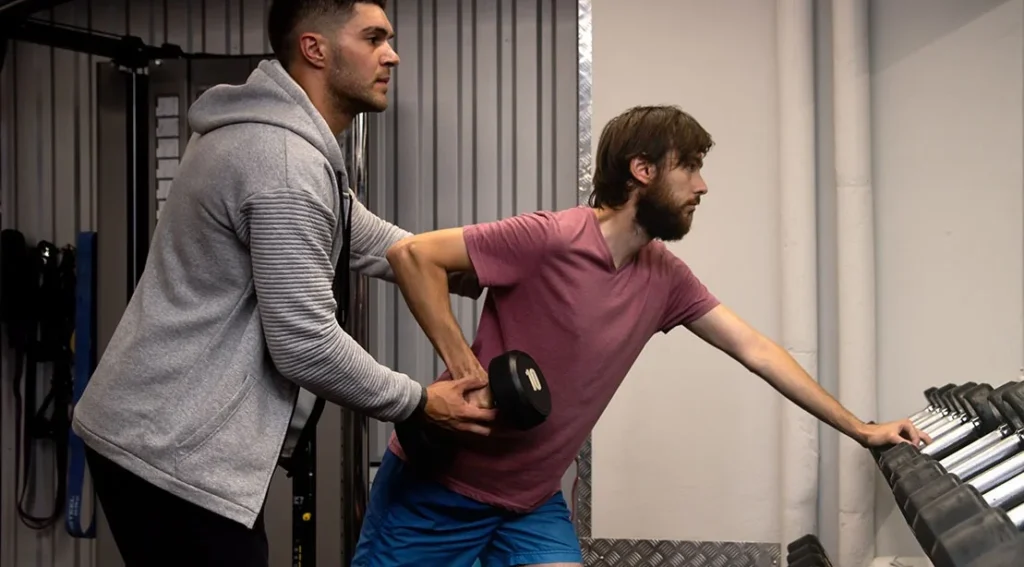
Prior to the disruptions of the COVID-19 pandemic, strength training was a steadfast fixture in Plant’s weekly routine. He would visit the gym up to three times a week, often squeezing in a lifting session immediately following a run. When those routines were abruptly upended by pandemic-era closures, the habit never fully recovered its prior momentum.
Plant can readily see and feel the physical toll of that absence.
"I think I’ve lost about—maybe just age as well—but a good seven pounds of muscle mass because I’ve not been in the gym much," he said.
The exact number on the scale matters far less to him than the functional power that departed alongside that muscle tissue. Plant notices a tangible reduction in leg power compared to where he stood five years ago. While he faithfully maintains his core work, stretching regimens, and home-based exercises, those routines cannot consistently replicate the comprehensive stimulus once provided by dedicated resistance training. He acknowledges a firm intention to return to the weight room during the winter months.
Returning to strength work is no longer about hitting personal records or testing his maximum limits. Instead, it is purely about preserving the fundamental physical capacity that allows him to keep participating in the active lifestyle he loves.
Movement Is the Point
Plant’s dedication to physical activity does not mean his days are spent resting and recovering between leisurely workouts. In fact, he maintains a demanding full-time career as a practicing dentist—a profession he has pursued for an astounding 55 years.
A typical week frequently involves arriving at his dental office by 7:00 a.m. and remaining there well past 5:00 p.m. On many of those long evenings, he transitions directly from the clinic to his training sessions. From his perspective, his career and his fitness exist in a mutually beneficial ecosystem.
While a demanding profession naturally caps the hours he can dedicate to training, Plant believes this constraint acts as a built-in safeguard against overtraining. In return, his robust physical fitness provides him with the physical resilience and mental stamina required to navigate long days where his patients demand his absolute, undivided attention, regardless of how fatigued he might feel.
"You just can’t say, ‘Oh, I’m going to do an average job today,’" Plant joked.
Juggling a full workday alongside evening workouts presents a universal challenge. Like anyone else, Plant is intimately familiar with the temptation of returning home, sinking into a favorite chair, and negotiating with oneself to postpone a workout to another day.
He is equally familiar with the consequences of letting go of vital training habits, having witnessed firsthand how drifting away from the weight room diminished his muscular strength. It serves as a constant, personal reminder that physical capability is not a permanent gift preserved automatically by the body.
"You stop doing something that you’ve been doing for a while, and you can tell the difference," Plant said. "No doubt about it."
Plant harbors no illusions that everyone inspired by his journey needs to immediately register for an Ironman triathlon. On the contrary, he actively encourages people to start wherever they can—whether that means going for daily walks, running a local 5K, or picking up a pair of dumbbells. The key is simply finding a physical outlet that brings enough enjoyment to sustain over the long term.
"Whether you’re walking or you’re doing some activity, just get out there and get your body moving," he said.
Over the years, he has watched people in his personal and professional orbit take variations of that core message and adapt it to their own lives, proudly recounting their modest milestones and completed races back to him. Those grassroots moments clearly hold more weight for him than any personal podium finish, validating that his example can open doors for others without demanding that they follow him across 140.6 miles of swimming, biking, and running.
"If I can do it at my age, surely you can do something," Plant said. "I just encourage them to somehow look at the possibilities."
While the physiological benefits are undeniable, Plant believes that consistent movement offers an equally valuable psychological dividends. Years of navigating grueling training blocks have taught him that he possesses the internal fortitude to tolerate discomfort, navigate complex problems, and press forward when plans unravel unexpectedly.
That mental resilience extends far beyond the confines of race day timing chips.
"It gives you confidence," Plant said. "You can handle an Ironman or whatever, you can handle other things in your life that may have seemed big before, but now they’re not."
Without question, Plant would have deeply appreciated crossing the finish line in Kona. He remains convinced that his body had the capacity to finish the race if he had been permitted past the transition barrier, but the unyielding math of the race cutoff cared little for what might have been. A margin of three minutes brought his competitive day to a definitive halt.
True to form, Plant accepted the outcome. He absorbed the lessons hidden within his muscular cramps, his frustrating mechanical delays, and a cutoff time he had never previously been forced to confront.
Then, he did what more than four decades in the crucible of endurance sports had trained him to do.
He turned the page.
"I’ll continue as long as I can," he said. "As long as it’s fun."