
Netflix has secured the broadcast rights to every single match from the 2030 FIFA World Cup live in Spain and Andorra, marking the streaming giant’s most significant sports broadcasting move in Europe to date.
Under the landmark agreement, Netflix subscribers in Spain will have access to all 104 matches of the tournament. The streaming service has committed to making at least one game per matchday available completely free of charge. In addition to live match coverage, the platform’s comprehensive offering will feature pre-game, half-time, and post-game programming, alongside dedicated roundup shows and related entertainment content designed to capture the cultural phenomenon of the tournament.
The historic agreement places Netflix at the center of a marquee event in a key European media market. Spain is uniquely positioned for the 2030 tournament, serving as one of the three main co-hosts alongside neighboring Portugal and Morocco. This milestone event marks the centennial anniversary of the World Cup, adding profound emotional and cultural weight to the broadcasting arrangements within the host nation.
To ensure widespread accessibility in compliance with local expectations and regulatory oversight, selected matches—including all of Spain’s fixtures, both semi-finals, and the final itself—will also be broadcast on free-to-air (FTA) television. This will be facilitated through a sublicensing agreement arranged by Netflix, rather than a direct broadcasting contract with FIFA. Detailed packages regarding the free-to-air broadcasts and scheduling will be revealed closer to the tournament’s kickoff.
Bela Bajaria, Netflix’s chief content officer, emphasized the cultural significance of the deal and the platform’s growing ambitions in live sports entertainment.
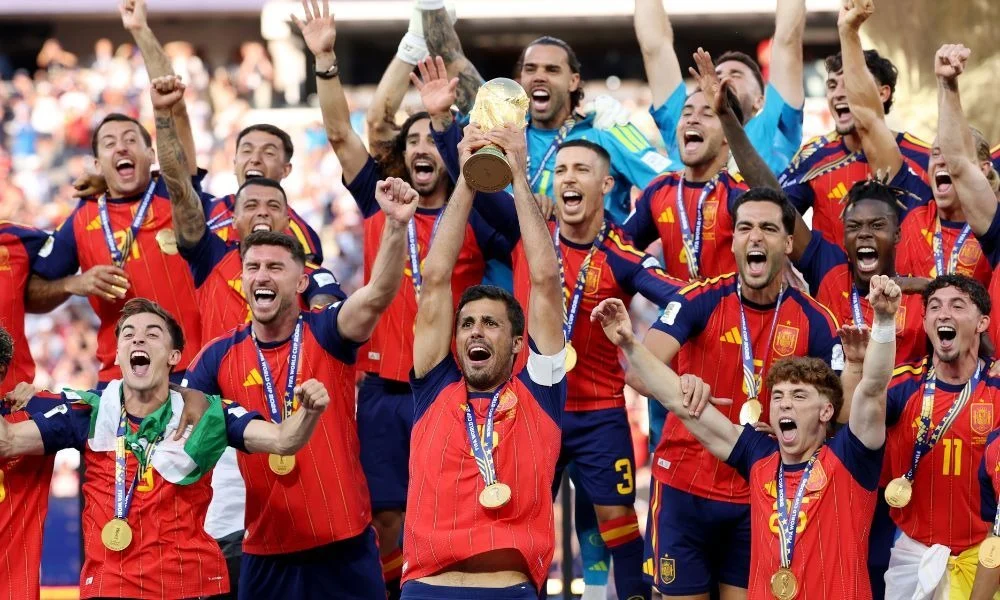
"Few events unite people like the World Cup," said Bajaria. "I was in the stands this year as Spain lifted the trophy and witnessed the passion, the pride, the stories—they all become part of a nation’s culture and are remembered for generations. With Spain set to host in 2030, we’re thrilled to bring every match to fans across Spain and Andorra on Netflix. For Spanish football fans, welcoming the world as reigning champions on Netflix will make this a moment unlike any other."
The broader tournament format sees matches distributed across multiple continents. Alongside the primary co-hosting duties shared by Spain, Portugal, and Morocco, Argentina, Paraguay, and Uruguay will each stage a single opening match. This geographical spread is designed to commemorate South America’s role in hosting the inaugural World Cup in 1930, while simultaneously accelerating FIFA’s continental rotation policy to clear the path for Saudi Arabia—a member of the Asian Football Confederation—to host the 2034 tournament.
Why This is a Big Deal for Netflix
The agreement represents a dramatic evolution in Netflix’s corporate strategy regarding live sports. The company famously argued for years that it did not need to invest in live sport because it lacked a legacy broadcast business to defend, famously joking that it wasn’t "anti-sport, just pro-profit." For a long time, the platform viewed premium sports rights as prohibitively expensive, overly localized, and lacking the long-term shelf life and perpetual ownership associated with its core original scripted content and entertainment catalog.
However, that skeptical stance has radically transformed. In recent years, Netflix has demonstrated a growing appetite for marquee live events capable of driving massive subscription growth and straddling the boundary between traditional sport and entertainment. Notable early moves included a high-profile multi-billion-dollar deal with WWE, various influencer and professional boxing bouts, and, most prominently, live National Football League (NFL) matches broadcast globally on Christmas Day.
More recently, the company has shown an increasing willingness to acquire rights in specific local markets—a strategy that subtly shifts away from its traditional insistence on immediate global scale. Prior to the Spain World Cup announcement, Netflix acquired the rights to the 2027 and 2031 FIFA Women’s World Cups in North America, the Concacaf Gold Cup and Nations League Finals in Mexico, and Major League Baseball’s (MLB) season opener in the United States. Furthermore, the platform served as the lead broadcaster for the World Baseball Classic in Japan.

Within the company’s modern commercial framework, sport is increasingly viewed as a powerful tool for customer acquisition and retention. It also serves as a vital driver of advertising income, helping Netflix diversify its revenue streams and expand its reach through a tiered subscription pricing model.
Even within this aggressive new strategy, becoming the senior broadcast partner for the world’s most-watched sporting event inside a primary host nation and major European media market is a massive statement of intent. It strongly suggests that further high-profile sports acquisitions will follow. While sports rights holders frequently use rumors of Netflix’s interest to stimulate broader market competition for their media rights, speculation regarding future national or continental acquisitions now carries substantial credibility.
Industry analysts note that a future move for Premier League rights in the UK, once considered entirely fanciful, is now within the realm of plausible discussion. However, industry observers suggest that if Netflix were to pursue domestic league properties, it would likely target high-impact tentpole events—such as traditional Boxing Day fixtures, strategic midweek rounds, or high-stakes final-day drama—rather than a full, grueling season-long campaign of fixtures.
Why FIFA Will Be Happy
For FIFA, the World Cup remains the undisputed primary source of financial revenue, prompting the governing body to constantly explore innovative avenues to maximize commercial returns. Through optimized commercial partnerships, hospitality sales, and modernized ticketing structures, world soccer’s governing body generated an extraordinary US$15 billion from the 2026 tournament in North America. However, whether those specific revenue milestones can be replicated across different global territories remains a subject of ongoing industry analysis.
Consequently, media rights revenues are assuming an even greater importance in FIFA’s financial strategy. Attracting major new digital entrants like Netflix helps stimulate competitive tension within the media rights market. Furthermore, FIFA’s recent expansion of the tournament format from 32 to 64 teams has significantly increased available match inventory, allowing the organization to commercialize more games across diverse broadcast portfolios.
The arrival of Netflix as a primary World Cup broadcaster in a host nation represents a major win for FIFA. The governing body will naturally hope that the streamer has no intention of limiting its ambitions to a single market, with the lucrative United States media landscape frequently cited as a logical future target. The ultimate long-term ambition for rights holders often points toward a comprehensive global deal, placing the World Cup front and center on a platform boasting massive multi-demographic popularity.
At the same structural level, FIFA must carefully balance commercial expansion with accessibility to ensure the tournament retains its universal appeal and cultural relevance. Restricting tournament access entirely within a host nation can trigger significant public and political controversy, given that passionate domestic support is essential to the atmosphere and success of the event.
The recent precedent set during the 2026 tournament provides a useful roadmap. Spanish fans were able to watch selected matches—including games involving the national team—for free via public service broadcaster RTVE, while full access to all 104 fixtures required a subscription to Mediapro’s pay-TV World Cup channel, which was distributed exclusively by DAZN.
Against this backdrop, the Netflix partnership may prove more palatable to local regulators and fans, particularly given the inclusion of free-to-air sublicensing and free match provisions directly on its own interface. Netflix is also arguably more accessible to the general public than traditional pay-TV sports operators, such as beIN Sports in France or Magenta TV in Germany, which have previously placed major tournament matches behind strict paywalls.
Ultimately, however, broader technological and regulatory hurdles must still be navigated for any future global streaming ambitions. Reliable high-speed internet connectivity is not universally guaranteed across all regions of the world, and many nations—including the United Kingdom—maintain strict "crown jewels" legislation mandating that the World Cup and other major national sporting events must remain freely available on terrestrial free-to-air television.