

When it comes to lower-body development in the gym, the quadriceps almost always steal the spotlight. This imbalance is prominent not only in day-to-day training routines but also within the broader landscape of sports science research. Walk into any commercial gym, and you will see lifters regularly hammering their quads with heavy squats, leg presses, and lunges. These multi-joint compound movements inevitably tax the quadriceps to a massive degree, regardless of whether the lifter is intentionally targeting them.
The hamstrings, on the other hand, rarely receive that same automatic volume. Unless a trainee makes a deliberate, concerted effort to program exercises like leg curls and hip hinges, the posterior thigh muscles often end up as an afterthought.
In the realm of scientific research, the quads have historically been far easier to study. Most individuals naturally store less subcutaneous fat on top of their quadriceps compared to the back of their legs. Furthermore, the individual heads of the quadriceps are consistently closer to the skin, making them much easier to image and measure accurately using ultrasound technology than the deeply embedded hamstring muscle group.
However, a wealth of research on hamstring training exists—much of it driven by strength and conditioning professionals rather than traditional academic bodybuilding researchers. Because hamstring strains are notoriously prevalent and debilitating in sports, targeted hamstring training, particularly the Nordic curl, has received increased attention as a vital clinical and performance intervention to mitigate the risk of injury.
To understand how to train these muscles effectively for hypertrophy, it helps to start with a quick anatomy lesson. The hamstrings are not a single uniform muscle; rather, they consist of four distinct heads: the biceps femoris long head, the biceps femoris short head, the semitendinosus, and the semimembranosus. All four heads share the primary function of flexing the knee joint, an action mirrored by standard leg curl machines. With the sole exception of the short head of the biceps femoris, the remaining heads of the hamstrings also cross the hip joint, meaning they actively assist in hip extension.
As one might intuitively deduce from their dual functionality, optimizing hamstring exercise selection requires a balanced approach incorporating two primary movement categories: leg curls and hip hinges. Crucially, however, standard compound movements like traditional back squats and heavy leg presses are likely not effective choices for building significant hamstring mass.

This counterintuitive reality was clearly illustrated in a couple of recent scientific studies. The first investigation directly compared the popular hip thrust exercise to the traditional barbell squat; neither movement proved effective at eliciting substantial growth in the hamstrings. A second study compared a moderate squat depth to 90 degrees of knee flexion against a deep squat descending to 140 degrees of knee flexion. Once again, neither squat variation produced notable hypertrophy in the hamstring muscle group.
The underlying reason for this phenomenon likely relates to the biarticular nature of the hamstrings. In any compound exercise that requires an athlete to extend the knees and the hips simultaneously—such as a heavy squat—the hamstrings act as a double-edged sword. While they can assist the glutes and adductors in extending the hip, they simultaneously generate mechanical torque to flex the knee, which actively resists the extension demands placed on the quads.
To circumvent this mechanical conflict and maximize efficiency, the human nervous system typically recruits alternative muscles that do not present this dual-action complication, specifically the gluteus maximus and the adductor magnus. Consequently, compound movements requiring a high degree of simultaneous knee and hip extension torque are generally poor choices for dedicated hamstring hypertrophy.
Instead, if strength coaches and athletes want to make hip hinges genuinely effective for hamstring development, the mechanics must change. The knee joint needs to remain relatively fixed throughout the movement, and the active demands for knee extension must be kept to a minimum. Interestingly, even within dedicated hinge and curl movements, hypertrophy patterns can differ substantially across the individual heads of the muscle group.
For example, a study led by Kawama and colleagues investigated the effects of varying training frequencies using an eccentric-only, lengthened partial stiff-legged deadlift exercise. The results showed that the long head of the biceps femoris, the semimembranosus, and the semitendinosus grew quite well from the movement, whereas the short head of the biceps femoris experienced markedly less growth.
Other researchers have directly compared traditional hip hinge variants against leg curl variants to observe localized muscle adaptations. A notable study by Bourne and researchers compared the 45-degree back extension exercise directly to the Nordic hamstring curl. Interestingly, the long head of the biceps femoris and the semimembranosus achieved superior growth using the 45-degree back extension, whereas the short head of the biceps femoris and the semitendinosus experienced greater hypertrophy from the grueling Nordic hamstring curl.

Similarly, a recent study by Morin and colleagues compared the Nordic hamstring curl to the stiff-legged deadlift. The findings revealed that the Nordic curl resulted in greater growth of the semitendinosus compared to the stiff-legged deadlift, whereas the stiff-legged deadlift elicited greater growth of the semimembranosus. Both movements produced similar degrees of growth in the long head of the biceps femoris, though unfortunately, the researchers did not measure changes in the short head.
When taken together, these three distinct studies suggest that hip hinges tend to be slightly more advantageous for developing the long head of the biceps femoris and the semimembranosus. Conversely, leg curls appear to be slightly more effective for targeting the short head and the semitendinosus. Beyond functional anatomy, this divergence provides a compelling, evidence-based rationale for including both movement categories in a comprehensive training program.
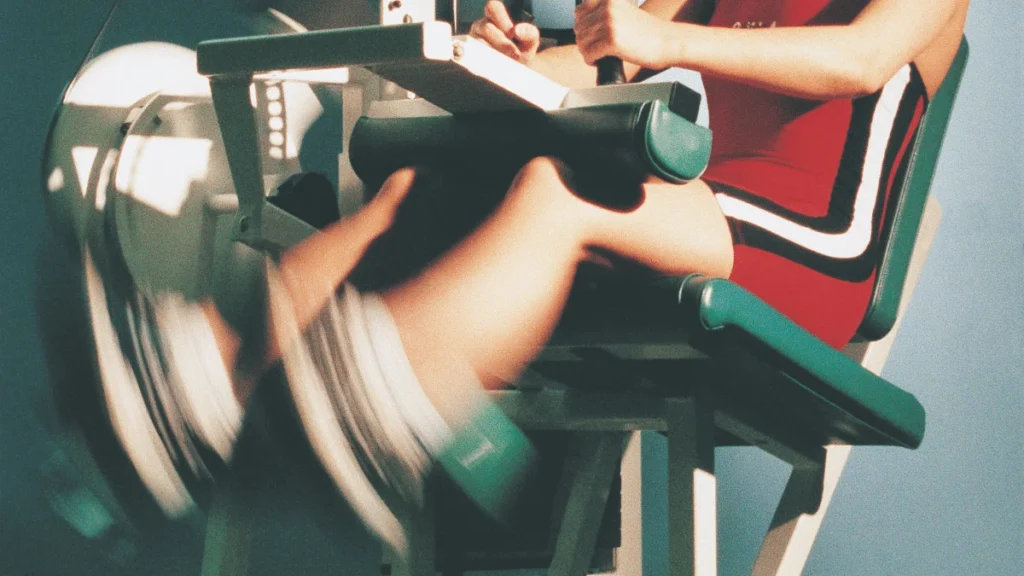
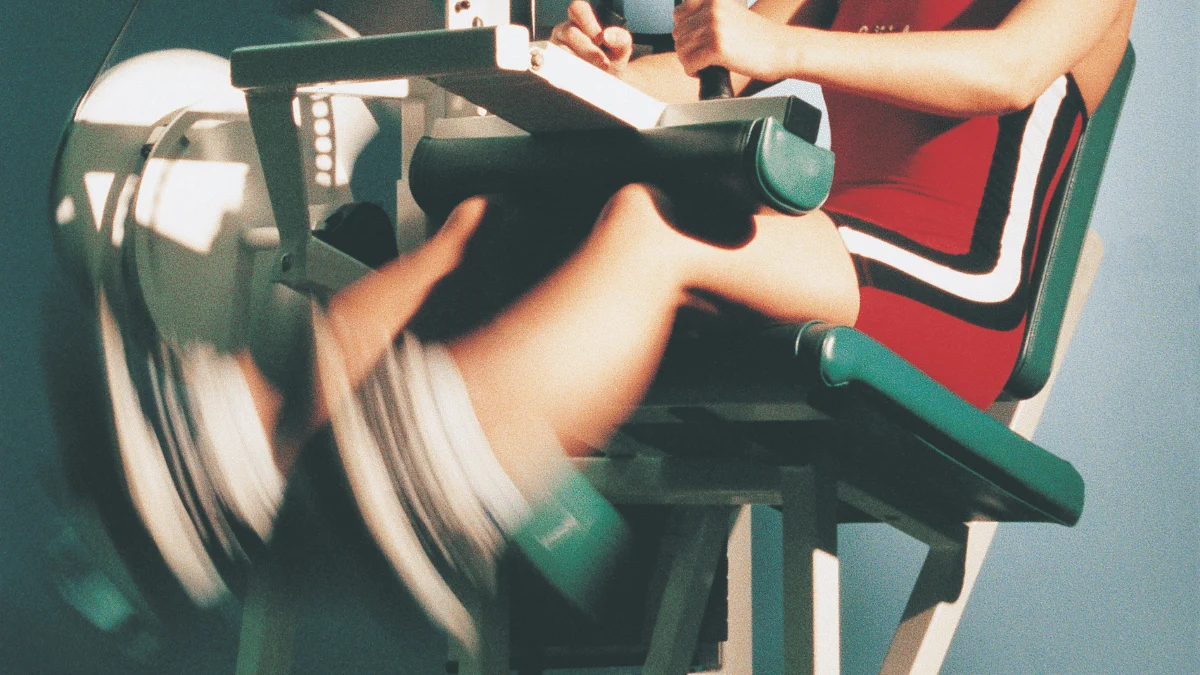
To refine exercise selection even further regarding leg curls, researchers have turned to work led by Maeo and colleagues. Their first study compared the seated leg curl directly against the lying leg curl. A seated leg curl inherently flexes the hips, placing a significantly greater stretch on the biarticular hamstrings compared to a standard lying leg curl. Conversely, the sartorius—a superficial muscle that flexes the knee and also assists in flexing the hip—is placed in a more stretched position during the lying leg curl compared to the seated variation.
The results demonstrated that the seated leg curl led to greater overall growth of the biarticular hamstrings, whereas the lying leg curl preferentially grew the sartorius.
A second study by the same research group compared the seated leg curl, modified with a forward torso lean to maximize the stretch on the muscle, against the Nordic hamstring curl. Where the seated leg curl emphasizes a lengthened position for the biarticular hamstrings, the Nordic curl emphasizes peak resistance in the stretched position, growing progressively more difficult as the body lowers toward the floor.
The data showed that the Nordic curl produced greater growth in the short head of the biceps femoris and the sartorius. Meanwhile, the seated leg curl resulted in superior growth for the long head of the biceps femoris and the semimembranosus. Growth of the semitendinosus, gracilis, and popliteus remained similar between the two experimental groups.

Taken as a whole, these two investigations suggest that the seated leg curl is likely the single best option for overall hamstring mass. However, the traditional lying leg curl retains distinct utility for targeting the sartorius, and the Nordic curl remains uniquely beneficial for the short head of the hamstrings. It is also worth noting that these trials simply compared various leg curl styles in isolation; within the context of a well-rounded routine that also incorporates heavy hip hinges, these localized outcomes may shift.
Beyond direct exercise comparisons, a couple of additional studies offer interesting insights into hamstring training methodology, even if they do not focus strictly on movement selection.
One conference abstract by Maeo and colleagues compared performing partial repetitions in the stretched position versus completing a full range of motion on a multi-hip machine. The researchers observed that hypertrophy of both the hamstrings and the glutes was generally greater when utilizing the lengthened partial technique. Experimenting with this specialized technique for hamstring development may offer additional benefits for dedicated lifters.
Another study, conducted by Cadeo and researchers, examined the effects of performing lying leg curls with the ankle fully plantarflexed versus fully dorsiflexed to observe any impact on the long head of the biceps femoris. This manipulation was designed to alter the operational length of the gastrocnemius—a calf muscle that also crosses the knee joint to assist in knee flexion—thereby shifting mechanical stress toward or away from the hamstrings. The results indicated that ankle position had no measurable impact on the resulting muscle growth. Consequently, ankle positioning during leg curls appears to be largely a matter of personal comfort and preference.
Ultimately, achieving optimal hamstring growth requires a thoughtful combination of both hip hinges and leg curls. Hinges tend to bias the long head of the biceps femoris and the semimembranosus, while leg curls more effectively target the semitendinosus and the short head. Among the various curl options available, the seated leg curl appears most effective for general development, while lying curls and Nordic variations provide valuable complementary benefits. Together, these scientific findings underscore the importance of building a balanced lower-body routine that integrates multiple movement patterns and carefully selected exercise variations.