


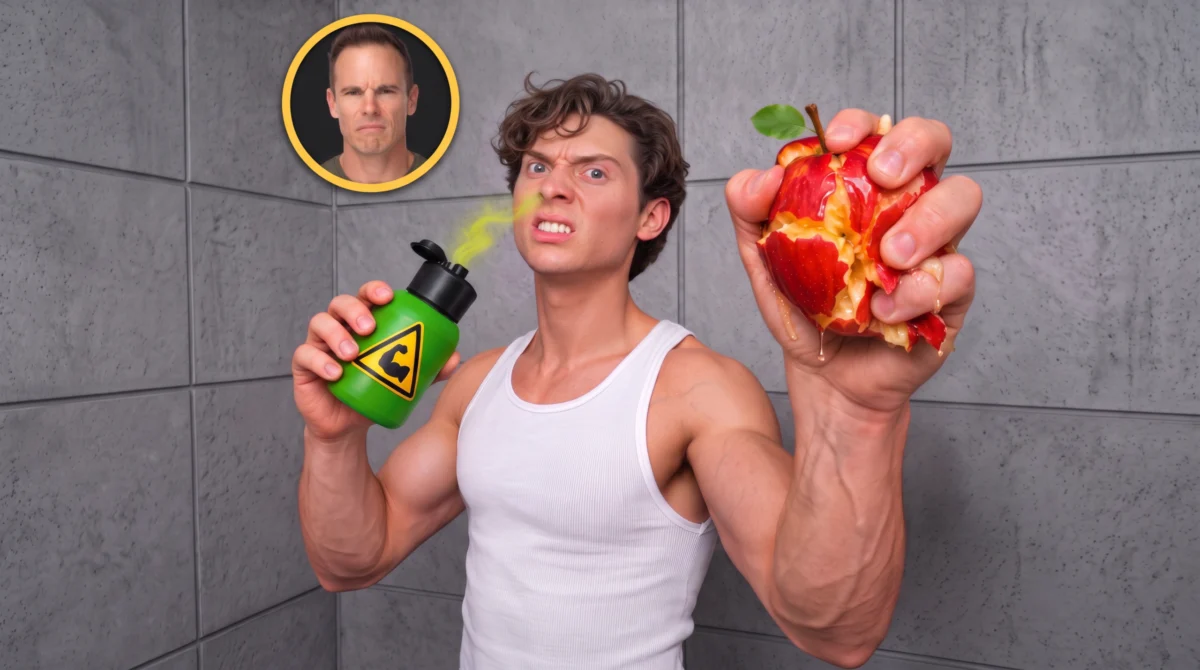
Social media feeds across the globe are saturated with viral athletic performance products promising immediate, almost miraculous results. From specialized brain-stimulation helmets and advanced cooling systems to high-tech mouthguards that claim to instantly boost vertical leaps, the market for quick-fix fitness gear is booming. Yet, behind the slick marketing videos and glowing testimonials, a fundamental question remains for everyday athletes and fitness enthusiasts alike: do any of these high-tech gadgets actually deliver on their bold promises, or are they merely expensive, high-tech placebos capitalizing on fitness trends?
To find out, a dedicated group of fitness enthusiasts recently set out to separate marketing hype from scientific reality. Documenting their journey in a series of controlled, hands-on experiments, the testers put six of the internet’s most talked-about performance-enhancing products through rigorous trials. What they discovered during their investigations proved genuinely surprising. While some viral gadgets fell flat or offered barely noticeable changes, others produced immediate, measurable improvements that left even the most skeptical participants questioning their initial assumptions.
The informal study examined a diverse array of items designed to provide an edge, ranging from rapid body-cooling apparatuses and performance-enhancing mouthguards to neural-stimulating infrared helmets and stroboscopic training eyewear. As athletes increasingly turn to alternative methods to squeeze out marginal gains in their training regimens, this hands-on evaluation offers a timely look at what happens when viral fitness trends meet real-world testing.
The Cool Mitt: Rapid Body Cooling for More Reps
The first product subjected to testing was the Cool Mitt, a specialized device filled with ice and water engineered to facilitate rapid body cooling between intense workout sets. The underlying physiological concept is relatively straightforward: upon reaching muscular failure during a demanding lift, a user places their hands onto the chilled surfaces of the device. This action is designed to rapidly pull excess heat from the core through a dense network of specialized blood vessels located in the palms, known as arteriovenous anastomoses. By dropping internal thermal load, the body can theoretically stave off fatigue and perform additional repetitions in subsequent sets.
To evaluate its efficacy, the testers designed a rigorous five-set protocol focusing on upper-body movements. Participants performed pull-ups and bench presses to complete muscular failure, maintaining strict three-minute rest intervals between sets. Crucially, they utilized the Cool Mitt exclusively prior to their fifth and final set, a juncture when their bodies were experiencing peak fatigue and thermal strain.
The resulting performance shift was dramatic. On the pull-up station, one tester surged from completing 10 repetitions on his fourth set to executing an impressive 16 repetitions on his fifth set immediately following the palm-cooling intervention—representing a striking 60 percent performance increase while in a state of exhaustion. His training partner observed a similarly positive outcome during the bench press, successfully pushing his tally from 16 reps up to 18 reps.
Though initially skeptical about whether hand placement could genuinely alter lifting capacity, one participant conceded the physical impact after completing the set. The science governing palm cooling carries substantial academic backing, with researchers at institutions like Stanford University publishing multiple studies demonstrating that targeted palm cooling can significantly enhance overall exercise capacity and mitigate heat-induced fatigue.
Performance Mouthguards: Jaw Alignment and Athletic Power
Next on the evaluation roster was a specialized athletic mouthguard marketed with the bold claim of instantly increasing vertical jump height. The theoretical framework behind the device suggests that the act of biting down firmly on the customized mouthguard stimulates heightened neural activity within the brain, thereby facilitating greater muscle fiber recruitment during explosive athletic movements.
Before inserting the device, the tester established a reliable baseline by measuring their vertical jump, which registered at 28.8 inches—situating it neatly at the lower end of professional basketball averages. Following the insertion of the specialized mouthguard, the participant executed a subsequent jump under identical conditions.
The trial yielded a measurable, positive change, with the recorded vertical jump climbing to an even 30 inches. This represented a net gain of 1.2 inches, or approximately a four percent improvement in explosive power output.
Despite the tangible numbers recorded during the trial, the broader scientific literature surrounding performance mouthguards remains considerably more divided than these isolated results might imply. While certain independent studies have documented modest enhancements in muscular strength and overall power generation, a comprehensive 2016 systematic review published in the British Journal of Sports Medicine concluded that existing evidence supporting the direct performance-enhancing capabilities of such mouthguards is both inconsistent and limited. Many sports scientists suggest that any observed gains may stem from stabilizing jaw tension or operating as a sophisticated placebo effect rather than inducing profound neural activation.
Smelling Salts: An Adrenaline Rush Before Heavy Lifts
Smelling salts have occupied a staple position in strength sports and combat disciplines for decades, but the testers opted to evaluate what was marketed as one of the world’s strongest commercially available varieties. These potent formulations rely on concentrated ammonia compounds engineered to trigger an involuntary inhalation reflex, stimulate the nervous system, and deliver an immediate surge of adrenaline.
The physical reaction to the container was instantaneous and forceful. One participant reported feeling the caustic fumes impact his eyes and nose from a distance of several feet before the cap had even been fully removed.
Subsequent grip strength testing, measured via dynamometer, revealed a modest numerical improvement, shifting from a baseline of 171 up to 173 following inhalation. While the literal strength gains were minimal, the psychological impact was unmistakable. The user reported feeling markedly more alert, hyper-focused, and primed for exertion.
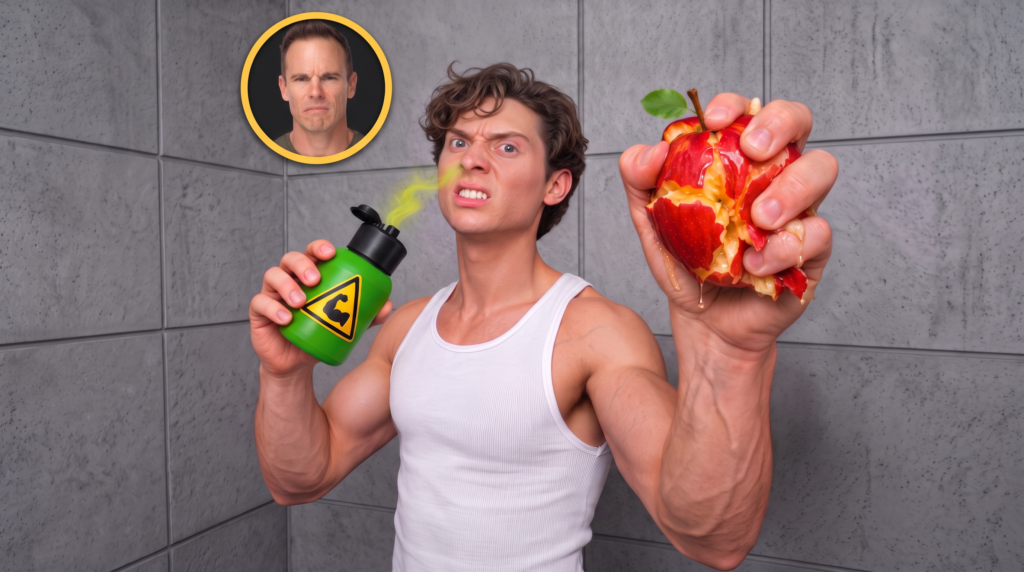
Mechanically, smelling salts operate by aggressively irritating the mucous membranes within the nasal passages, which in turn provokes a sharp, defensive inhalation reflex designed to elevate oxygen intake and accelerate heart rate. Although their presence in locker rooms and lifting platforms remains ubiquitous, medical professionals frequently caution that repeated, indiscriminate use can lead to localized nasal irritation or short-term respiratory distress, noting that the performance advantages are overwhelmingly transient and psychological in nature.
Dog Paw Medicine: Enhanced Grip Through Chemistry
Perhaps the most unconventional item evaluated during the series of experiments was a topical substance colloquially known as "dog paw medicine." Containing an exotic ingredient listed commercially as "dragon’s blood," the product is designed to be applied directly to the hands, where it purportedly dries into a tacky, rubber-like coating that dramatically enhances gripping friction.
Upon application, the substance immediately manifested physical properties consistent with its marketing, producing a distinct squeaking sound when the user’s palms were rubbed together, reminiscent of high-traction athletic footwear or latex gloves. The impact on friction was instantly observable when the tester approached a smooth, polished metal pole.
Suspending himself from the fixture, the participant noted an effortless ability to maintain a hold, suggesting that the chemical treatment provided an extraordinary level of grip security that would typically require excessive forearm exertion. Dragon’s blood is indeed a genuine botanical extract—specifically, a deep red resin harvested from various species of tropical trees—historically recognized for its adhesive and protective qualities when dried. Similar proprietary resin formulations are frequently utilized by specialized rock climbers, weightlifters, and gymnasts seeking to maximize friction on smooth surfaces, though practical effectiveness can vary widely depending on the chemical composition and environmental humidity.
Infrared Brain Helmet: Light Therapy for Cognitive Performance
Venturing into the realm of futuristic wellness technology, the evaluation also featured a specialized helmet designed to deliver low-level infrared light directly through the nasal cavity and into the prefrontal cortex of the brain. Manufacturers assert that this specific application of photobiomodulation can enhance cognitive parameters such as hand-eye coordination, mental reaction time, and sustained focus within a brief 20-minute session.
To quantify any potential cognitive benefits, the testers established a standardized baseline using a fast-paced reaction speed challenge that required participants to strike an array of numbered buttons in a randomized sequence as rapidly as possible. Baseline metrics were recorded prior to initiating the 20-minute photobiomodulation protocol.
The post-session trials revealed notable performance gains. One participant witnessed their average completion time drop from 4.56 seconds down to 3.79 seconds, marking a 17 percent improvement in processing and physical response speed. The second tester registered a similarly encouraging shift, moving from a baseline average of 5.15 seconds down to 4.17 seconds, representing a 19 percent performance enhancement.
Photobiomodulation, often referred to broadly as low-level light therapy, has been investigated across a variety of neurological and athletic applications. Academic literature suggests that specific near-infrared light wavelengths may encourage cellular energy production and mitochondrial efficiency within cerebral tissue. While a notable 2019 study involving contact-sport athletes documented measurable improvements in cognitive processing and reaction metrics following transcranial light sessions, the broader scientific community continues to debate the magnitude and consistency of these effects within competitive sports science.
Strobe Goggles: Training Visual Processing Speed
The final training apparatus put to the test was a pair of electronic strobe goggles. These specialized glasses feature lenses that intermittently transition between transparent and opaque states, creating a rapid flickering effect that forces the brain and visual cortex to process incoming spatial information under artificially restricted conditions. Proponents claim that removing the eyewear leaves athletes with a transient perception of objects moving in slow motion due to heightened visual processing efficiency.
To assess the practical application of the device, testers engaged in a dynamic hand-eye coordination drill that involved catching a weighted handle dropped along a vertical track. Without the interference of the strobe glasses, a baseline trial yielded a 50 percent success rate, with the participant successfully securing 5 out of 10 attempts. Following a dedicated training block utilizing the flickering lenses, performance jumped to 9 out of 10 successful catches, representing an 80 percent success rate under identical physical conditions.
Stroboscopic visual training has earned a recognized place within sports vision research, with various published studies indicating improvements in anticipation timing, dynamic visual acuity, and eye-hand coordination. Researchers theorize that temporarily depriving the visual system of continuous data forces athletes to optimize their utilization of remaining visual cues and anticipate motion with greater precision.
Which Products Actually Deliver?
When synthesizing the empirical data gathered across the comprehensive series of trials, it becomes evident that the landscape of viral athletic products is sharply divided. While certain gadgets produced clear, quantifiable enhancements in physical and cognitive capacity, others offered negligible utility or relied primarily on subjective sensations.
Palm cooling technology emerged as one of the most reliable and practically beneficial interventions, boasting both dramatic real-world improvements in muscular endurance and a robust foundation of independent scientific literature. Similarly, stroboscopic training eyewear demonstrated a legitimate capacity to sharpen visual processing and reaction-based metrics, making them a compelling tool for skill-specific athletic development. Meanwhile, interventions like infrared brain helmets and performance mouthguards showed measurable, moderate impacts during testing, though their underlying mechanisms continue to invite debate within the scientific community. Conversely, traditional stimulants like smelling salts provided primarily psychological arousal and temporary alertness rather than structural physiological advantages.
Ultimately, the findings underscore the importance of maintaining an analytical perspective when navigating the modern market of fitness technology. While no specialized gadget can ever serve as a substitute for foundational pillars such as consistent training, proper sports nutrition, and adequate physical recovery, targeted tools with empirical backing can provide valuable marginal gains for dedicated athletes seeking to optimize their performance.