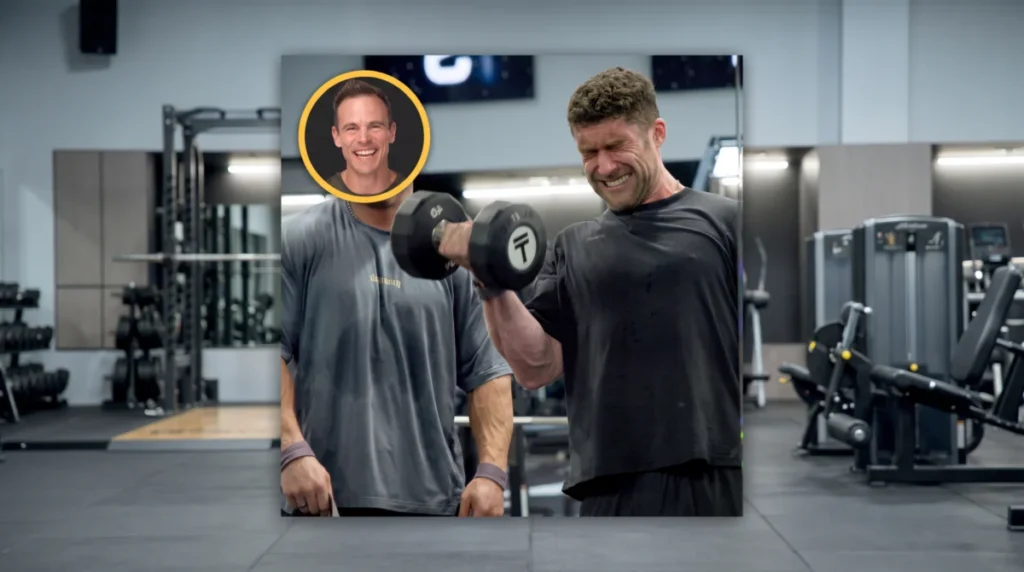

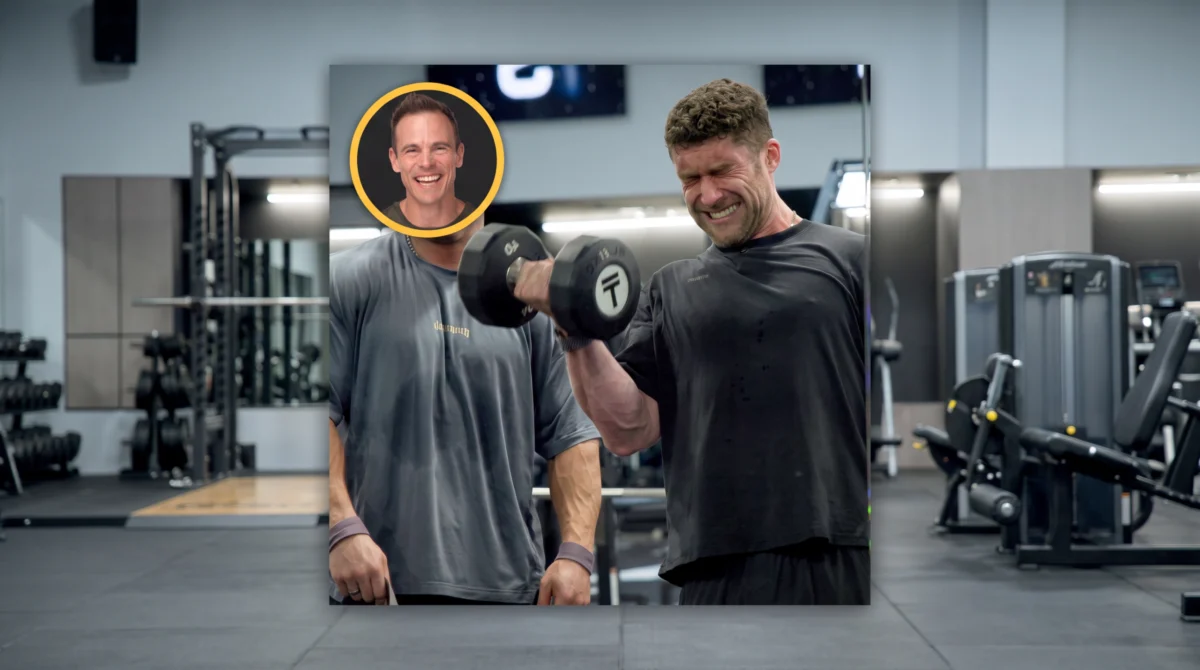
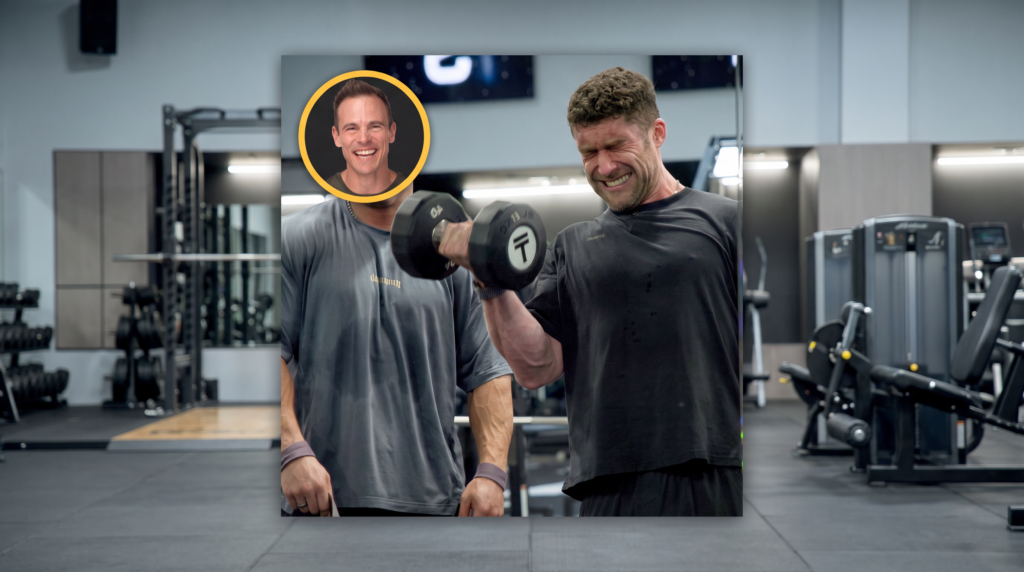
Fitness influencer Sam Sulek recently teamed up with podcaster Chris Williamson for an intensive arm-training session that offered a rare window into a training philosophy prioritizing raw intensity, mental toughness, and a deliberate challenge to conventional fitness norms. Beyond the physical exertion of building bigger biceps and triceps, the collaboration turned into a wide-ranging discussion on the psychology of modern bodybuilding, mechanical tension, exercise selection, and the often-overlooked mental boundaries that separate average results from elite development.
The conversation touched upon the nuanced debate surrounding strict form versus absolute intensity, the aesthetic consequences of physique imbalances, and unexpected conditioning strategies. Through it all, Sulek and Williamson unpacked the mental frameworks that govern serious resistance training, shedding light on why the smallest technical adjustments can yield profound differences in muscular engagement.
First Set Sets the Tone
At the core of Sulek’s training ethos is a strict psychological principle: the opening set of an exercise dictates the trajectory of everything that follows. Comparing a lackadaisical start to a poorly planned calendar year, Sulek stressed that entering a working set with anything less than total commitment creates a dangerous precedent of self-sabotage. He recounted instances where he has abruptly racked a weight after recognizing a half-hearted effort, questioning his own focus and refusing to let a mediocre opening dictate the rest of the workout.
This mental checkpoint serves as a bulwark against the domino effect of coasting through training blocks. Williamson noted that this philosophy mirrors broader goal-setting psychology, where establishing strong momentum early in a physical or professional endeavor carries through to long-term success. By demanding absolute focus from the very first rep, lifters eliminate the psychological permission to slack off in subsequent sets.
The Form Versus Intensity Debate
The dialogue naturally drifted toward recent criticisms voiced by bodybuilding legend Dorian Yates regarding reps-in-reserve training. Sulek suggested that holding oneself to an overly rigid standard of textbook form can inadvertently inflate a lifter’s reps in reserve, leaving valuable muscular growth on the table. While acknowledging that safety dictates strict precision on heavy compound movements like barbell incline presses—where failing without a spotter can lead to disaster—he argued that single-joint isolation exercises often benefit from controlled technical deviation when the primary goal is maximizing mechanical tension.
Both participants agreed that prioritizing the aesthetic appearance of flawless form while intentionally holding back physical effort defeats the fundamental purpose of hypertrophy training. The distinction lies in understanding movement mechanics: compound lifts require strict technical integrity to protect joints, whereas isolation movements can tolerate a degree of controlled grit to chase absolute failure.
Small Shoulders, Big Arms: A Physique Killer
Shifting to physique proportions, Sulek offered a blunt assessment of a common structural imbalance that many lifters inadvertently cultivate. He asserted that developing oversized arms while neglecting shoulder development creates an optical illusion that makes a lifter appear heavy or unconditioned rather than muscular, whereas the inverse—small arms paired with massive shoulders—gives an athletic, football-player appearance.
Reflecting this aesthetic philosophy, Sulek revealed that he has intentionally bypassed dedicated shoulder pressing for several years, allowing his naturally developed deltoids to rest while he brings his arm size up in proportion. Williamson observed the opposite extreme, noting that disproportionately massive shoulders with underdeveloped arms create an unusual look akin to wearing hidden padding. Sulek’s strategic pivot highlights an advanced level of body awareness, where training volume is shifted to correct specific weaknesses rather than blindly following generic programming templates.
Grip Adjustments for Maximum Contraction
During a sequence of rope pushdowns, Sulek demonstrated a practical grip modification designed to enhance tricep engagement. By pressing the rope handles together rather than allowing them to separate, he created a stability advantage that mirrors the muscular recruitment shift seen when moving from standard dumbbell curls to hammer curls.
He also highlighted how hand placement on dumbbells during curling movements can subtly alter the resistance profile. Lifters who grip near the top of the handle often shorten their effective range of motion or leverage the weight differently than those who anchor their hands lower down. Gripping near the bottom forces the target muscle to work through a slightly longer arc, increasing time under tension without necessitating an increase in the actual load. These micro-adjustments underline Sulek’s obsessive focus on mechanical advantage, extracting maximum muscular stimulus from every single repetition.
The Mental Bandwidth Theory
Sulek’s rationale for utilizing lifting straps on bicep-focused movements goes beyond traditional grip fatigue mitigation, pointing instead to a concept of neural drive allocation. He proposed that human consciousness possesses a finite amount of mental bandwidth that can be directed toward muscular contraction. If a significant percentage of that neurological focus is diverted toward maintaining a secure grip on a heavy implement, the signal sent to the target muscle may be compromised.
Whether viewed through a physiological or psychological lens, this strategy aligns with his broader goal of eliminating variables that interfere with maximum target-muscle intensity. By removing grip security as a limiting factor, he ensures that the biceps reach mechanical failure before the forearms or hands give out.
Why Weighted Side Bends May Thickn Your Waist
The discussion also turned away from muscle-building movements to critique a common core exercise that Sulek believes works directly against traditional bodybuilding aesthetics. When addressing weighted side bends, he questioned the logic of loading heavy resistance onto lateral oblique movements if the desired outcome is a classic V-taper.
While heavy oblique training serves a functional purpose for athletes requiring immense rotational stability and lateral core strength, physique-focused lifters risk widening their waist circumference by aggressively building these lateral muscles. Sulek recommended prioritizing movements like weighted crunches that target the rectus abdominis directly, allowing lifters to build the front abdominal wall without expanding their overall waist measurements. This distinction emphasizes that generic core training advice must be filtered through specific individual goals.
Training in Heat Without Water
One of the more polarizing elements of the session involved Sulek’s approach to environmental conditioning and hydration. Training in elevated indoor temperatures while wearing long pants, and frequently forgoing mid-workout water consumption when adequately pre-hydrated, represents a uniquely demanding style of conditioning.
Williamson expressed visible astonishment at the combination of thermal stress and fluid restriction. While pre-workout hyperhydration can sustain performance for moderate durations, experts generally caution that heavy sweating combined with a lack of fluid intake accelerates dehydration and increases cardiovascular strain. Sulek noted that his current leaner conditioning phase during a dietary cut makes working out in warmer environments more manageable compared to his heavier bulking phases, though he acknowledged that such extremes are not universally applicable or safe for unaccustomed lifters.
The Squat-Induced Pass-Out Facility
Delving deeper into the psychological depths of high-intensity training, Sulek described his ultimate benchmark for effort: imagining a set of squats executed with such absolute brutality that, upon racking the weight safely, the sheer exertion causes him to momentarily pass out.
While Williamson joked about whether this mindset borders on masochism, Sulek clarified that the motivation stems entirely from a desire for undeniable validation of absolute effort. This sentiment echoes the legendary intensity of historical bodybuilding icons like Tom Platz. The goal is not performative suffering for an audience, but rather the internal peace of knowing that literally nothing was left in reserve.
Rest-Pause and Myo-Reps for Volume
When discussing strategies for maximizing muscular development under time constraints, both Sulek and Williamson praised rest-pause techniques and Myo-reps. By taking a set to technical failure and then executing a series of brief, intra-set pauses before performing additional repetitions, lifters can accumulate high-quality volume without spending excessive time in the gym.
Williamson noted that this approach is particularly useful during periods of travel or reduced training frequency, allowing a single session to match the stimulus of multiple traditional sets. This methodology is supported by emerging exercise science indicating that total hard working sets per week drive hypertrophy effectively, provided the mechanical tension remains high.
Assisted Reps Beyond Failure
On the leg press, Sulek demonstrated the application of partner-assisted forced reps, continuing a set past the point of technical failure with external assistance to complete both concentric and eccentric portions of the movement. Williamson acknowledged the effectiveness of the technique for amplifying metabolic stress and recruiting remaining motor units, but cautioned against overuse due to the heavy recovery toll it places on the central nervous system. Strategic application of assisted reps on final isolation sets allows lifters to squeeze out extra growth without compromising the recovery capacity needed for subsequent workouts.
Internal Versus External Motivation
Reflecting on his trajectory in competitive bodybuilding, Sulek discussed the balance between internal drive and external validation. Winning early shows provided concrete proof that his training methods were yielding results, but he emphasized that his fundamental identity and passion for the process exist independently of stage trophies or social media metrics.
This internal locus of control dictates his competitive schedule. Rather than chasing external validation or adhering to forced timelines, he chooses to compete only when his personal preparation aligns with his internal standards. This mature self-awareness anchors his approach to the sport, treating external accolades as pleasant byproducts rather than the primary reason for training.
Gym Environment Philosophy
The conversation wrapped up with a discussion on gym environments, ranging from gritty basement dungeons to polished commercial fitness centers. Both creators agreed that while distinct atmospheres can certainly influence a workout, the physical setting ultimately takes a backseat to mindset and consistency. Whether a facility features high ceilings, bright windows, or heavy iron tucked away in a former bank vault, the determining factor for success remains the dedication of the individual lifting the weight.
Maintaining Muscle on Minimal Volume
Concluding their exploration of training theory, Sulek and Williamson pondered the lower limits of muscle preservation. Discussing how little training is genuinely required to maintain existing size when active growth is not the primary objective, Williamson suggested that brief, intense full-body sessions could suffice.
This observation aligns with exercise science demonstrating that maintaining established strength and muscle mass requires significantly less volume and frequency than building it, provided training intensity remains high. The insight underscores a reassuring reality for long-term fitness enthusiasts: once earned, hard-fought muscle can be successfully retained through strategic, time-efficient maintenance phases.