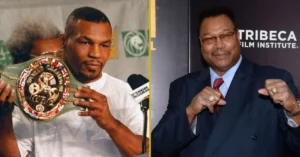
The 1912 Olympic marathon in Stockholm was contested under the merciless glare of an uncharacteristic Scandinavian heatwave, an ordeal that swiftly broke the resolve of dozens of the world’s most accomplished endurance athletes. Among those suffering acutely was Shizo Kanakuri, a pioneering long-distance runner from Japan whose grueling, multi-week voyage across continents had left him physically drained, malnourished, and deprived of restorative sleep. By the time Kanakuri reached the sixteen-mile mark, his body finally rebelled. Utterly spent, sun-blinded, and disoriented, he veered off the official course and wandered aimlessly into the private grounds of a nearby villa. There, he happened upon an aristocratic Swedish family hosting a garden party. Far from sounding an immediate alarm, the bemused hosts offered the parched Olympian refreshment, and Kanakuri gratefully sat down in the shade to sip orange juice and recuperate for an hour while the rest of the race trudged past.
Overcome with a profound sense of humiliation at having failed his country on the global stage, Kanakuri quietly slipped away the following morning, boarding a ship back to Japan without notifying the Swedish Olympic officials. In Stockholm, his abrupt and total disappearance assumed the quality of folklore. How could an international athlete simply evaporate into thin air midway through the premier event of the Games? For more than half a century, Kanakuri remained an unsolved mystery in Swedish sporting annals, his name lingering on the nation’s official missing persons register.
It was not until the 1960s that an enterprising Swedish journalist finally tracked him down to Kumamoto in southern Japan, where the supposed runaway was living a quiet, dignified life as an elderly geography teacher. Sensing an irresistible public relations coup, Swedish television arranged, at considerable expense, to fly Kanakuri back to the scene of his quiet capitulation. In March 1967, flanked by television cameras and an affectionate crowd, the 75-year-old was placed at the precise geographic spot where he had abandoned his quest five decades earlier. He trotted across the remaining miles and broke the tape at Stockholm’s Olympic Stadium, formally concluding his 1912 marathon in an official time of 54 years, eight months, six days, five hours, 32 minutes, and 20.3 seconds.
The entire exercise was, from a competitive standpoint, entirely devoid of sporting significance. Kanakuri was not competing against anyone, no world ranking was adjusted, and no medal was contested. Yet it was an undeniably captivating human-interest yarn. The newspapers were gifted an abundance of whimsical copy to fill their columns, television networks secured valuable programming hours to populate their schedules, and the sporting public was treated to a comforting spectacle of resolution. In the end, the entertainment value was deemed more than sufficient to justify the passage of half a century.
All of which provides a fitting, if similarly tortuous, parallel to the impending spectacle of Tyson Fury versus Anthony Joshua. For years, critics and disillusioned fight fans have lamented this all-British heavyweight encounter as an enterprise arriving far too late—a confrontation delayed past its natural expiry date, staged long after the 38-year-old Fury and the 36-year-old Joshua have passed their physical zenith. Pundits point out that it has been years since either man recorded a convincing victory over an elite, world-class contender in the division, arguing that the protracted negotiations and perpetual false dawns make the six-year delay of Floyd Mayweather Jr against Manny Pacquiao look like a model of prompt efficiency.

Yet to claim that Fury against Joshua is happening too late is to fundamentally misunderstand the rapacious logic of 21st-century prizefighting. In truth, this bout is taking place at the exact moment the architects of the modern fight industry intended: at that precise commercial sweet spot where market value peaks just as authentic athletic jeopardy reaches an absolute minimum.
Consider the alternative timelines. Had this fight been consummated in the summer of 2021, when both men held world championship belts and the undisputed heavyweight crown hung in the balance, the sporting stakes would have been catastrophically high. A definitive defeat would have stripped the loser of his titles, demolished his marketability, and permanently tarnished his claim to generational supremacy. Conversely, if the fight were allowed to languish until 2031, when both combatants are pushing into middle age, not even the combined promotional wizardry and bottomless wealth of Frank Warren, Eddie Hearn, Dana White, and Turki al-Sheikh could convince a cynical public that the bout was anything more dignified than an embarrassing fairground novelty.
Instead, the match is delivered now, hovering at the exact threshold where public fascination remains high enough to command staggering financial returns, but where the outcome no longer threatens any active championship reign. Like an experienced street vendor extracting top dollar for a piece of fruit that is perched on the very precipice of overripeness, boxing’s power brokers have engineered a masterpiece of commercial extraction. As Joshua himself presciently remarked back in April 2016, following a routine title defense against Éric Molina: "We will get it on at the right time." At that stage, a domestic showdown with Fury would have yielded merely a fraction of the astronomical £150 million purse the contest generates today. In the distorted economy of boxing, absence does not merely make the heart grow fonder; it makes the bank balance swell exponentially.
That such cynical posturing is widely accepted as standard operating procedure—treated as a minor commercial eccentricity rather than a fatal structural defect—explains much of boxing’s gradual marginalization from the cultural mainstream. Virtually every other established sporting discipline on the planet is organized around the foundational premise that the best must regularly compete against the best. Leagues, federations, and governing bodies establish rigorous seasonal calendars, qualification standards, and mandatory tournament brackets precisely to compel competitive friction.
Boxing stands virtually alone as an ecosystem where the participants and their handlers possess the power to actively avoid their most dangerous peers for years on end, all while retaining their status and commanding stratospheric paydays. It is an arrangement that legitimately raises the question of whether contemporary heavyweight prizefighting can still be classified as a true sport in the codified, meritocratic sense, or whether it has evolved entirely into an unregulated branch of show business.
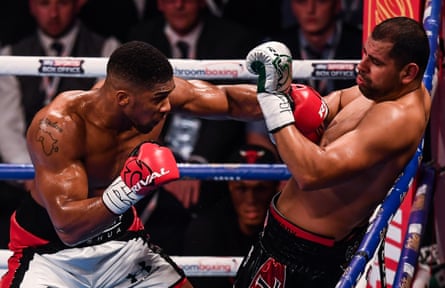
Naturally, in the build-up to the official announcement, Fury has spent weeks tirelessly attempting to rewrite history, portraying Joshua as the sole obstacle that prevented the fight from materializing during their athletic primes. According to Fury’s personal folklore, he has stood ready and waiting by the phone for the better part of a decade.
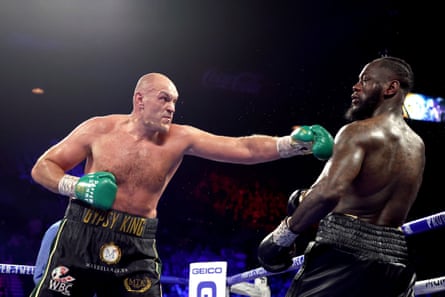
This selective narrative, of course, conveniently omits the two-and-a-half-year hiatus Fury took from the ring while embroiled in UK Anti-Doping investigations, severe substance abuse issues, and profound personal mental health crises. It also glosses over the subsequent two and a half years he spent locked in an obsessive, grueling rivalry with Deontay Wilder. While that three-fight saga produced moments of genuine ring drama, it was accompanied by protracted legal arbitration in American courts that actively blocked an undisputed clash with Joshua when the public demanded it most. Even as the Wilder trilogy thrilled audiences, there was a lingering sense that the division was being held hostage, and that the single most consequential domestic rivalry in British sporting history was being squandered in real time.
Then came Fury’s perpetual series of theatrical retirements—at least five separate declarations of finality, depending on how meticulously one tracks his public pronouncements. It requires only a modest stroll down memory lane to recall Fury’s initial declaration in 2013, when he vowed that he was "1000000%" finished with boxing and would never lace up gloves again. Similar vows of total disinterest followed in 2016, again in the summer of 2017 under the social media banner of "THE END," and once more in 2022, when he swore to the public that "the truth, the gospel truth, nothing but the truth" was that no amount of material wealth or championship belts could ever coax him back through the ropes. Most recently, another sabbatical spanned across 2025 and 2026. While elite contract negotiation is undoubtedly a complex craft, walking away from the negotiating table every eighteen months to announce one’s permanent departure from the trade is hardly the behavior of a reliable business partner.
To accuse men who willingly climb through the ropes of cowardice is unfair; stepping into the line of fire and putting one’s physical well-being on the line for public entertainment demands an uncommon brand of courage. Yet it remains an undeniable tragedy that a rivalry that ought to have defined an entire golden era of British boxing is being realized only after all meaningful sporting tension has evaporated. Despite the relentless promotional machinery and biblical hyperbole that will engulf the sporting press over the coming months, what does this contest actually prove? What historical question does it answer?
Indeed, the very structure of the event discourages any definitive resolution. A definitive, career-ending conclusion would only jeopardize the prospect of an even more lucrative rematch clause being triggered for late 2027.
Historically, prizefighting has derived its unique cultural resonance from its rare ability to balance two competing impulses. On one hand, it offers an unvarnished display of athletic ultimacy: the primal spectacle of two supreme physical specimens testing the limits of human endurance, skill, and sheer will. On the other hand, it has always embraced the theatricality of the carnival—the grand posturing, the promotional pantomime, and the deliberate manufacturing of soap-opera tension designed to sell tickets to the masses.
When boxing is at its historic best, these two elements exist in symbiotic harmony. The gaudy exterior serves to amplify the genuine danger and sporting integrity at the center of the ring, like the festive wrapping of a Christmas cracker surrounding the internal spark that produces the explosive bang. Strip away the theatrical packaging, and the event lacks wider cultural magnetism; strip away the genuine sporting jeopardy, and the whole concept collapses into cheap, empty pantomime.
For several years, those two distinct traditions have been pulling violently apart, fracturing boxing into two irreconcilable halves. On one side sits a shrinking realm of genuine athletic meritocracy, operating almost in secret. In this sphere, prodigies like Moses Itauma remain known only to dedicated purists, while domestic world-title collisions—such as the fierce, high-stakes battle between Daniel Dubois and Fabio Wardley—are hailed by connoisseurs as modern classics while failing to register on the wider cultural radar.
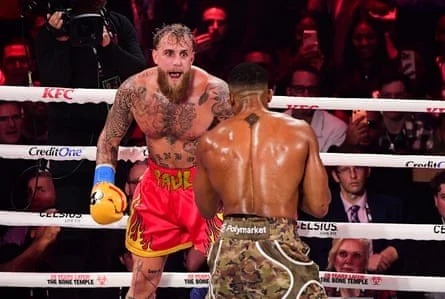
On the other side sits the hyper-commercialized domain of algorithmic celebrity entertainment. Here, social-media agitator Jake Paul stands as one of the most lucrative attractions in the sport. The finest heavyweight master of this generation, Oleksandr Usyk, finds himself matched against an elite kickboxer, while rumors swirl around exhibition matches involving a long-retired Floyd Mayweather Jr facing off against Mike Tyson, and veterans Conor Benn and Chris Eubank Jr are repeatedly scheduled for perpetual rematches designed to stretch well into the next decade.
It is toward this latter world that the impending clash between Fury and Joshua irrevocably tilts. We are being asked to cheer the final, ceremonial lap of a marathon that lost its competitive purpose years ago. One wants to indulge the nostalgic fantasy that Fury can summon the dazzling, elusive ring-craft of his prime rather than relying on the tired theatrics of a well-rehearsed provocateur. One longs to see the Joshua of the mid-2010s—the unblemished, athletic dynamo fighting with fluid confidence and unscarred optimism. One desperately wants to believe that what we are about to witness is the ultimate culmination of elite sport. Yet beneath the relentless torrent of promotional noise, the reality is obvious to all: the race was decided long ago, and all that remains is the collection of the gate receipts.