
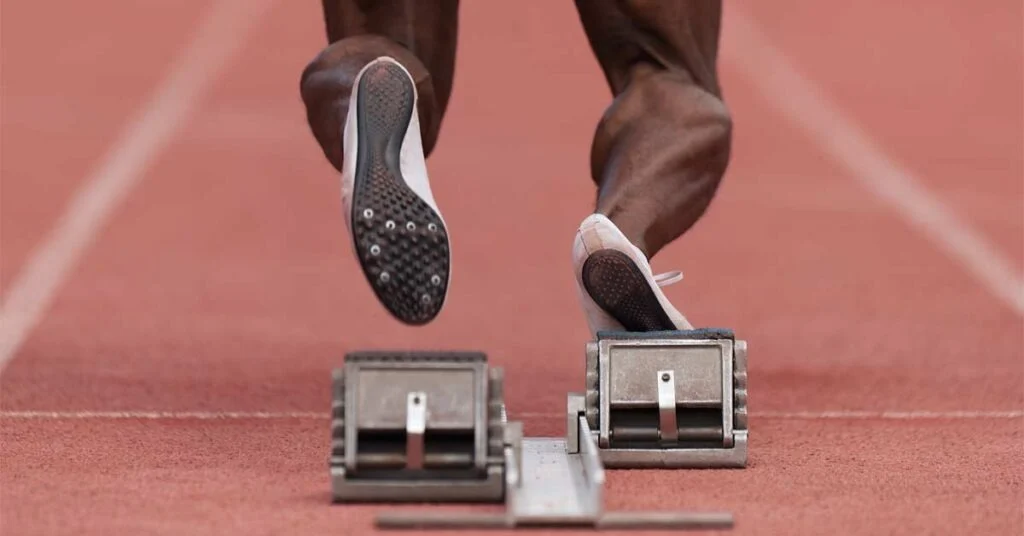
October 7, 2026 — In modern athletic performance training, a common consensus has long dictated that the lower leg receives more than enough stimulus through high-velocity sprints, explosive jump landings, and demanding plyometric drills. Coaches frequently assume that these ballistic movements load the calf complex with forces reaching three to five times an athlete’s body weight, rendering supplementary gym work redundant. When additional calf exercises are prescribed, they almost universally take the form of standard standing calf raises.
While these traditional methods remain valuable staples of athletic conditioning, sports scientist and strength coach Brandon Pigg argues that they share a glaring blind spot: they entirely fail to engage the soleus muscle adequately. Despite its critical role in lower limb mechanics, the soleus is consistently neglected in standard athletic regimens, leaving a significant gap in injury prevention and comprehensive lower-body development.
To understand why traditional training modalities miss the soleus, coaches must look closely at lower leg anatomy and neuromuscular activation patterns. Both the gastrocnemius—commonly known as the gastroc—and the soleus act as mechanical synergists sharing responsibilities in plantar flexion. However, they are fundamentally distinct from an anatomical perspective. The gastrocnemius crosses both the knee and ankle joints, whereas the soleus crosses only the ankle. This structural difference dictates an intricate and alternating relationship between the two muscles during movement.
Research demonstrates that neural drive to the gastrocnemius diminishes progressively as the knee joint moves into deeper angles of flexion. In a 1995 study by Cresswell and colleagues, researchers observed how gastrocnemius activation drops during knee bending, whereas soleus innervation remains remarkably constant regardless of the knee joint angle. Subsequent findings by Lauber et al. in 2014 revealed that between zero and 60 degrees of knee flexion, the fascicle lengths of the soleus remain relatively stable. In contrast, gastrocnemius fascicles shorten progressively up to roughly 21 degrees before plateauing, with individual motor units beginning to deactivate entirely around a 21-degree angle of passive knee flexion.
Additional research published by Baumbach and colleagues in 2014 corroborated these physiological shifts, showing that knee flexion up to 20 degrees removes any inhibitory effect the gastrocnemius has on ankle dorsiflexion. Interestingly, motor units deactivated during passive flexion are reactivated near a 35-degree knee angle during passive extension. These findings indicate that activation levels between the gastrocnemius and soleus alternate continuously depending on joint angles and fascicle lengths. When the knee angle places the gastrocnemius fascicles at an optimal length for force production, it acts as the primary calf muscle; conversely, when the knee is bent past a certain threshold, the burden of eccentric plantar flexion shifts decisively onto the soleus.
Consequently, pogo jumps, drop jumps, and standard standing calf raises do little to train the soleus. While these exercises excel at conditioning the Achilles tendon and the gastrocnemius, the knee angles involved simply are not deep enough to transition the primary mechanical load away from the gastroc and onto the soleus.
This physiological reality prompts a critical question for high-performance coaches: Does targeted soleus training truly matter for athletic development and injury mitigation? According to Pigg, the answer is a definitive yes, particularly when examining the mechanics of knee joint stability and the prevention of catastrophic injuries.
Biomechanical investigations conducted by Elias and colleagues in 2003, alongside subsequent work by Mokhtarzadeh et al. in 2013, uncovered a profound functional divergence between the two calf muscles. Their research established that the gastrocnemius acts as an antagonist to the anterior cruciate ligament, whereas the soleus functions as an agonist. Specifically, when the soleus contracts in isolation, it displaces the tibia posteriorly relative to the knee joint. Conversely, activation of the gastrocnemius—or simultaneous activation of both muscles—pulls the tibia anteriorly. In the context of lower-body biomechanics, excessive anterior translation of the tibia relative to the femur places undue stress on vulnerable knee structures.
By strengthening the soleus, athletes can theoretically minimize excessive anterior tibial translation during high-impact landings. This improvement offers a two-fold mechanism for reducing injury risk, particularly regarding patellar tendinopathy and ACL strain. First, enhancing the capacity of an additional major muscle group to absorb landing forces alleviates acute stress on the quadriceps and patellar tendons. Second, mitigating anterior tibial translation reduces the direct mechanical stretch placed upon the patellar tendon during deceleration.
Addressing this training gap requires moving beyond conventional gym layouts, which rarely feature dedicated seated calf raise machines due to budgetary and spatial constraints. To bridge this gap, coaches can utilize creative alternatives using common weightroom equipment, such as safety squat bars or improvised kettlebell suspension setups using climbing straps and dip belts. Furthermore, isometric training variations—such as maintaining sustained holds at 90-degree knee angles or deep dorsiflexion ranges—allow athletes to target the soleus in positions of maximum contraction or stretch without exacerbating Achilles tendon irritation through excessive dynamic range-of-motion loading.
Incorporating targeted soleus and lower-leg variations into an established strength and conditioning program may not serve as a singular magical solution for absolute athletic dominance. However, as Pigg emphasizes, integrating these movements provides another vital building block toward developing robust, resilient, and fully injury-resistant athletes capable of withstanding the rigorous demands of competitive sports.