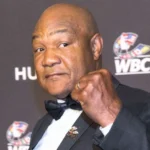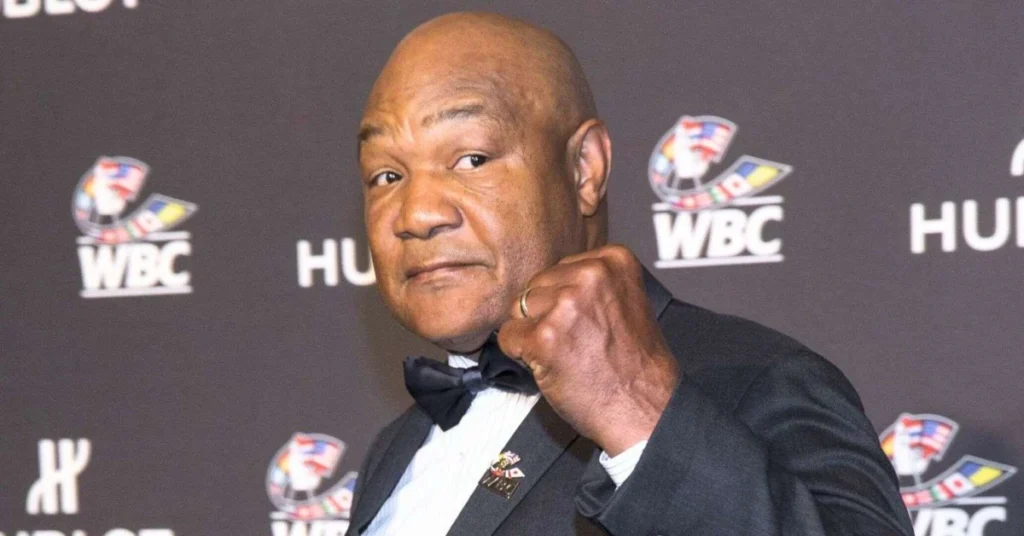
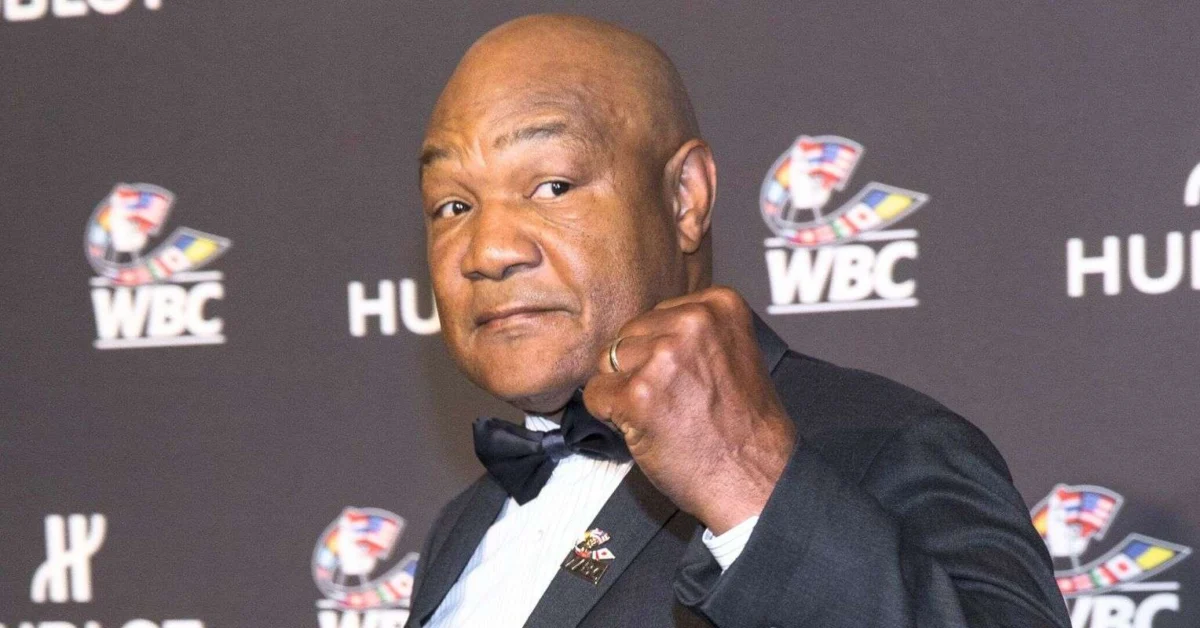
George Foreman remains the only man in the storied history of professional boxing to capture the heavyweight championship on two distinct occasions nearly two decades apart.
During his first legendary reign, the late, great Foreman was widely recognized as an intimidating force of nature—a devastating puncher whose terrifying power cleared out the division in the early 1970s. In his second chapter, however, he transformed into the ultimate underdog: a middle-aged man competing in a brutal, high-stakes sport traditionally dominated by youth, speed, and relentless athleticism. Yet, in November 1994, he achieved the absolute unthinkable inside the squared circle.
At 45 years of age, an era when most athletes have been retired for well over a decade, Foreman stepped into the ring to challenge the undefeated WBA and IBF heavyweight champion, Michael Moorer.
Moorer presented a formidable, nearly insurmountable obstacle for the aging veteran. Standing as the world’s first-ever southpaw heavyweight champion, Moorer was just 26 years old—nearly half Foreman’s age. He was remarkably fast, aggressively minded, and entered the bout fresh off a hard-fought victory over Evander Holyfield. Foreman, by contrast, was significantly heavier and noticeably slower than he had been during his prime years. Consequently, boxing critics and pundits widely dismissed his chances, with many openly writing off the pay-per-view spectacle as a dangerous mismatch that favored the young champion in every technical category.
And for the vast majority of the championship fight, the critics appeared entirely correct. Moorer completely controlled the tempo of the early rounds, utilizing his superior hand speed, fluid lateral movement, and crisp, stinging combinations to pepper Foreman from the outside while staying safely out of range. Meanwhile, Foreman plodded forward with heavy, deliberate footsteps, absorbing clean punches to the head and body while maintaining an eerie, unbreakable composure. His corner frantically urged him between rounds to throw more punches and match the champion’s work rate, but Foreman stubbornly bided his time, waiting for an opening that may or may not ever arrive.
Then, deep into the championship distance in Round 10, the historic moment finally arrived.
Foreman finally managed to back Moorer toward the canvas ropes, cutting off the champion’s escape route, and unloaded a textbook, perfectly timed one-two combination. The right hand caught Moorer clean on the chin, and the younger champion dropped instantly to the canvas, unable to beat the referee’s count as he struggled to recover his senses. With that single, definitive punch, George Foreman shattered records to become the oldest heavyweight champion in boxing history, completely silencing every lingering doubter across the sports world.
The monumental victory was far more than a mere display of raw punching power and immense psychological patience—it cemented itself as one of the greatest and most inspirational comeback stories in the history of modern athletics. George had famously lost his title seventeen years earlier in the iconic "Rumble in the Jungle" against Muhammad Ali in Zaire, subsequently walking away from the sport to spend years serving as an ordained Christian minister before making an improbable return to the ring. On that fateful night in Las Vegas, Nevada, he successfully completed a generational circle. Reflecting on the defining moment of his legendary career years later, Foreman offered a simple explanation for his calculated strategy: "Nobody had any idea I was setting it up all night. I dreamed that I knocked out Michael Moorer before the fight."