


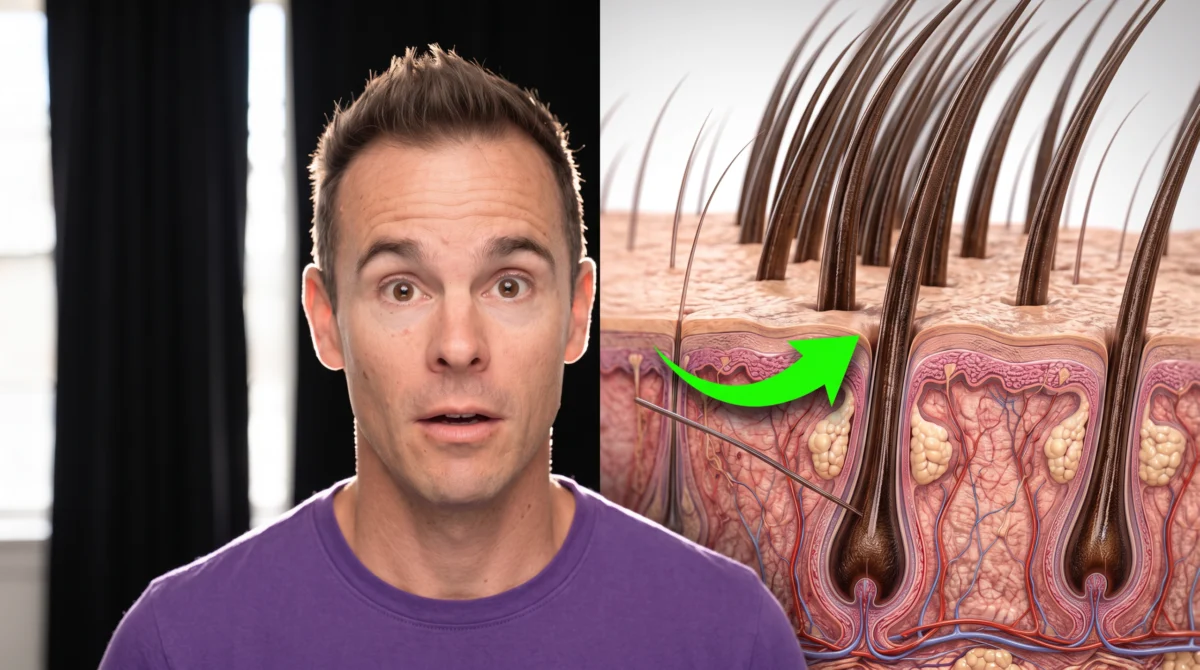
For generations, the conversation surrounding thinning locks and silver strands has begun and ended with three familiar culprits: stress, family genetics, and the inevitable passage of time. Society has long taught men and women to simply accept these aesthetic markers of aging as biological certainties over which they have little to no control. However, a growing body of scientific evidence suggests that the microscopic biology driving hair loss and graying is far more precise, complex, and crucially, actionable than conventional wisdom implies.
Recent investigations into cellular health, hormonal receptors, and oxidative pathways indicate that specific enzymes and biological mechanisms dictate the fate of individual hair follicles. In many instances, these processes can be influenced, mitigated, or supported without immediately resorting to heavy pharmaceutical interventions. Even more remarkably, emerging dermatological research challenges a long-held dogma of human biology, suggesting that under the right physiological conditions, graying hair may actually possess the capacity to reverse itself.
Hair Loss Starts With DHT—But Not All Blockers Work the Same Way
When it comes to androgenetic alopecia, commonly known as male pattern hair loss, the process is far from random. It is driven primarily by dihydrotestosterone, an androgenic hormone synthesized from testosterone through the catalytic action of an enzyme called 5-alpha reductase. Once circulating dihydrotestosterone enters the scalp environment, it binds to specific androgen receptors located on the surface of hair follicles.
This binding initiates a degenerative physiological process known as miniaturization. Over the course of successive hair growth cycles, affected follicles progressively shrink, producing increasingly finer, weaker strands until they eventually cease visible hair production altogether.
Conventional pharmaceutical approaches rely heavily on synthetic drugs such as finasteride, which systematically suppress circulating levels of dihydrotestosterone by roughly 60 to 65 percent. For many patients, this substantial reduction is clinically sufficient to halt or significantly slow the rate of follicle deterioration. Nevertheless, natural biochemical compounds are increasingly being evaluated to determine if they can offer alternative or complementary therapeutic pathways with different mechanisms of action.
Pumpkin Seeds: A Natural DHT Modulator With Dual Action
Among these natural alternatives, dietary components such as pumpkin seeds have garnered serious scientific attention due to their unique phytochemical profile. Pumpkin seeds are rich in delta-7 sterols, specialized plant compounds capable of inhibiting 5-alpha reductase activity, thereby reducing overall dihydrotestosterone production by approximately 40 percent. While this suppression rate falls below the pharmaceutical threshold established by synthetic medications, it remains clinically meaningful, particularly for individuals navigating early-stage thinning rather than advanced, total baldness.
What makes pumpkin seed oil uniquely fascinating to researchers, however, is its secondary mechanism of action. A notable 2018 study published in the publication Pharmacology and Pharmacy evaluated the efficacy of delta-7 sterols and targeted pumpkin seed extracts against dihydrotestosterone binding directly at the androgen receptor level. The experimental results demonstrated that these botanical compounds competed directly with the hormone for receptor binding sites in a dose-dependent manner.
In practical terms, this indicates that the active compounds found in pumpkin seeds do more than simply lower systemic or local hormone production; they physically occupy the receptor sites that the hormone would otherwise target. Consequently, even a moderate reduction in total hormone levels can translate into a surprisingly robust protective effect at the microscopic follicle level. This pharmacological profile differs fundamentally from synthetic medications like finasteride, raising the intriguing possibility that natural interventions do not necessarily need to achieve identical suppression percentages to yield noticeable clinical outcomes.
Clinical Evidence: Hair Count Increased by 40% in One Trial
To test these hypotheses in a human population, a randomized, double-blind, placebo-controlled trial published in Evidence-Based Complementary and Alternative Medicine recruited 76 male participants suffering from mild to moderate androgenetic alopecia. Over a rigorous 24-week period, participants in the active treatment group consumed a daily dose of 400 milligrams of pumpkin seed oil.
By the conclusion of the study, the mean hair count among participants taking the supplement had increased by an impressive 40 percent, compared to a modest 10 percent increase observed in the placebo cohort. Such a statistical divergence represents a significant clinical signal, particularly for an intervention derived from a common food source.
Researchers noted a methodological caveat: the experimental capsules utilized in the trial also contained minor complementary proprietary compounds, meaning it was not a strictly isolated single-ingredient test. Even so, pumpkin seed oil constituted the overwhelming majority of the active formulation, and the resulting data underscores genuine therapeutic potential for individuals seeking non-pharmaceutical modalities to manage early hair thinning.
While this approach does not match the heavy suppression metrics of prescription drugs, it provides a viable, data-supported option for prevention and early intervention, sparing patients from the complex side-effect profiles often associated with synthetic 5-alpha reductase inhibitors.
Hair Graying Is a Different Problem And It Might Be Reversible
While hair thinning is primarily governed by hormonal signals and localized receptor dynamics, the phenomenon of hair graying is rooted in an entirely different set of biological stressors, namely oxidative damage and the premature exhaustion of stem cell reserves.
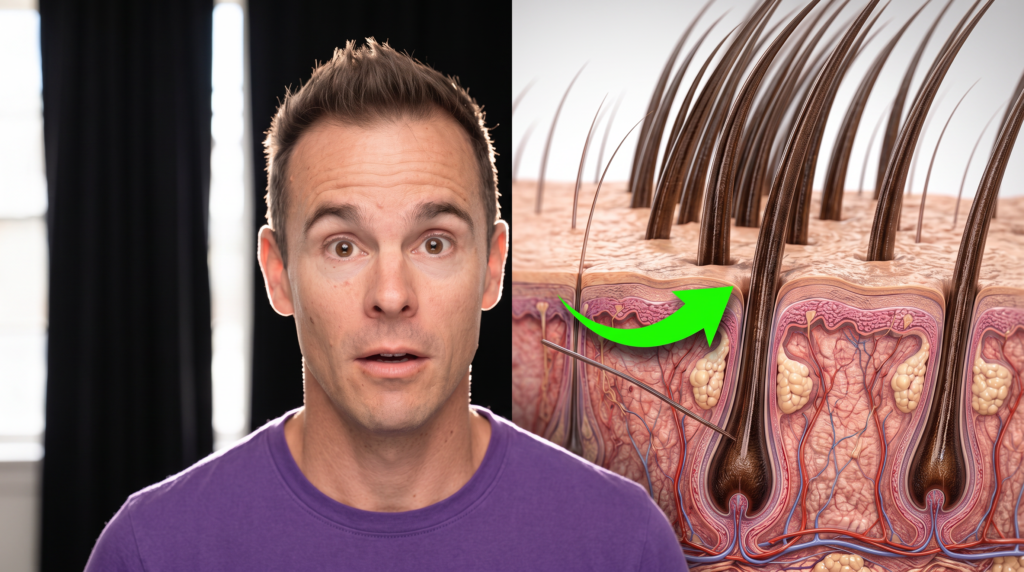
The natural coloration of human hair is determined by melanocytes, highly specialized pigment-producing cells that synthesize melanin and deposit the pigment directly into each growing hair shaft. These functional melanocytes are continuously replenished during each growth cycle by a dedicated pool of melanocyte stem cells residing within a specialized microenvironment known as the follicle bulge.
As long as this underlying stem cell reservoir remains healthy and intact, hair continues to grow with its native pigmentation. However, when these stem cells suffer chronic cellular damage, become depleted, or are forced to differentiate prematurely, the hair follicle loses its pigment supply, ultimately producing unpigmented gray or white hair shafts.
Oxidative Stress Kills Pigment Production
Investigations published in the International Journal of Trichology have revealed that hair follicles transitioning into a gray state exhibit markedly elevated concentrations of hydrogen peroxide and other reactive oxygen species. These destructive oxidative byproducts systematically attack and degrade tyrosinase, the foundational enzyme strictly required for the successful synthesis of melanin.
In essence, graying hair follicles display an internal biochemical imbalance characterized by soaring oxidative stress and severely depleted endogenous antioxidant defenses, a combination that directly suppresses the cellular machinery responsible for hair color. Furthermore, research featured in the journal Applied Sciences demonstrated that high levels of oxidative and inflammatory stress provoke melanocyte stem cells to differentiate too rapidly, or worse, to abandon their designated follicle niche entirely. Once these stem cells depart or perish, subsequent hair growth cycles lose their biological source of pigmentation permanently.
Mitochondrial Health Plays a Central Role
Beneath both the accumulation of oxidative stress and the progressive depletion of stem cells lies a deeper cellular root: mitochondrial dysfunction. Research published in Cell Regeneration indicates that impaired mitochondrial performance within follicle tissue directly triggers an overproduction of reactive oxygen species while simultaneously suppressing vital stem cell activity.
Suboptimal metabolic health, frequently driven by diets heavy in refined carbohydrates, processed sugars, and systemic inflammation, exerts a direct toll on mitochondrial efficiency throughout the body. That metabolic stress inevitably leaks into the delicate microenvironment of the hair follicle, damaging local melanocytes and accelerating the physical timeline of hair graying. Consequently, preserving or enhancing mitochondrial metabolic efficiency emerges as a primary strategic lever for protecting long-term hair pigmentation.
Gray Hair Can Regain Pigment Mid-Shaft
For decades, the conventional medical consensus dictated that once a human hair turned gray, the biological damage was absolute and irreversible. However, a landmark 2021 study published in the journal eLife fundamentally challenged that assumption by demonstrating that human hair can, under specific circumstances, spontaneously regain its color mid-shaft.
Researchers carefully analyzed hundreds of individual hair strands, digitally mapping pigment density across their exact physical length and correlating these microscopic timelines with detailed self-reported psychological stress histories provided by the participants. The findings proved striking: numerous graying hairs exhibited distinct dark segments where pigment had successfully returned in the middle of the shaft, even after the graying process had visibly begun. Crucially, these episodes of pigment recovery aligned closely with documented periods of reduced psychological stress, whereas acute phases of stress correlated directly with newly formed gray segments.
This discovery suggests that the cellular machinery responsible for hair coloration is not necessarily permanently destroyed the moment a gray hair appears. Rather, the pigment-producing system can switch off temporarily under the influence of severe biological or psychological stress, and under favorable conditions, switch back on during recovery phases. Additional clinical work testing specialized polyphenol blends on stressed cellular follicle cultures has similarly observed statistically significant reductions in the proportion of gray hairs over multi-month periods, offering early but encouraging evidence that the graying process may be partially plastic.
Red Light Therapy: Biohacking or Evidence-Based Tool?
In parallel with nutritional and biochemical interventions, light-based modalities have transitioned from fringe alternative circles into clinical environments. Low-level light therapy operates primarily by stimulating cytochrome c oxidase, a critical enzyme located within complex IV of the mitochondrial electron transport chain, thereby enhancing overall cellular adenosine triphosphate production.
Because hair follicles represent metabolically demanding tissues requiring significant energy reserves to sustain rapid cellular division and protein synthesis, improving mitochondrial output directly benefits follicle resilience. Enhanced mitochondrial efficiency supports cellular regeneration and helps buffer against oxidative stress within the scalp microenvironment. While hardware options range from professional clinical panels to consumer wearable caps, the core biological mechanism remains centered on bolstering mitochondrial energy production to optimize tissue health.
Expectations Should Be Realistic—But the Mechanisms Are Real
None of these targeted nutritional, botanical, or physical interventions claim to match the aggressive potency of pharmaceutical-grade treatments, nor do they duplicate the sweeping hormonal suppression achieved by prescription medications. However, they successfully engage legitimate biological mechanisms—including receptor competition, antioxidant defense, mitochondrial restoration, and stem cell preservation—that conventional drugs frequently overlook.
More importantly, these evidence-based approaches offer viable alternatives for individuals seeking to avoid the documented physiological side effects associated with synthetic compounds. For patients confronting early-stage thinning, emerging graying, or those simply invested in proactive prevention, these science-backed strategies provide a rational framework for addressing the root biology of hair aging rather than merely masking its outward symptoms. Ultimately, hair vitality reflects broader metabolic stability, hormonal equilibrium, and cellular resilience, reinforcing the premise that supporting foundational health can influence outcomes once thought entirely predetermined.