

For track and field coaches, the beginning of a new competitive season brings a familiar mix of high anticipation and logistical overwhelm. Stepping onto the track with a roster of dozens of athletes—each with unique strengths, developmental needs, and athletic backgrounds—means starting from square one. Coaches are frequently tasked with managing multi-event athletes across sprints, hurdles, and horizontal jumps without overloading them physically or diluting the quality of instruction.
While athletes naturally gravitate toward specialized disciplines, experienced coaches understand that speed is the ultimate baseline indicator of future success across nearly all track and field events. However, translating pure sprinting speed into technical mastery in the hurdles or the long and triple jumps is rarely straightforward. Without proper mechanics, fast athletes often decelerate, hesitate, or misjudge their approach when transitioning from open running to technical execution. To bridge this gap efficiently—particularly when working with large teams and limited coaching resources—track coaches are increasingly turning to general, foundational warm-up drills that teach core mechanics, build neuromuscular coordination, and double as talent identification tools.
The Foundation of Speed in Hurdling and Jump Events
In competitive track and field, drills often suffer from a reputation as mere time-fillers or routine warm-ups. For developing programs, however, these movements are vital instructional tools. Coaches who manage high-volume rosters must remain creative, ensuring that athletes are neither unprepared nor overtrained. Communication and microcycle planning between track and field event coaches are essential to safeguard athlete health while keeping training volumes manageable.
Because horizontal jumpers and hurdlers are, at their core, sprinters first, their training schedules typically demand a delicate balancing act. Sprinters who transition into hurdles usually complete a major portion of standard speed workouts before peeling away to work independently on hurdle starts or reduced-spacing repetitions. Talent identification in these specialized areas remains critical. Young hurdlers who lack baseline speed or adequate height will struggle immensely to execute a standard three-step technique. Elite male hurdlers consistently record times well under 12.0 seconds in the 100-meter dash, underscoring speed as the premier predictor of future performance.
Yet, traditional hurdle mobility exercises often present limitations. Static lead-leg drills performed by beginners frequently look loose and sloppy, failing to translate into dynamic hurdle clearance during a race. When coaches must divide their attention between starting blocks on the straightaway and hurdle drills across the track, unsupervised athletes often resort to lazy, mechanical movements that reinforce poor motor patterns. Furthermore, many conventional drills fail to provide athletes with immediate feedback or opportunities for self-organization.
Introducing Dynamic Warm-Up Drills for Hurdle Success
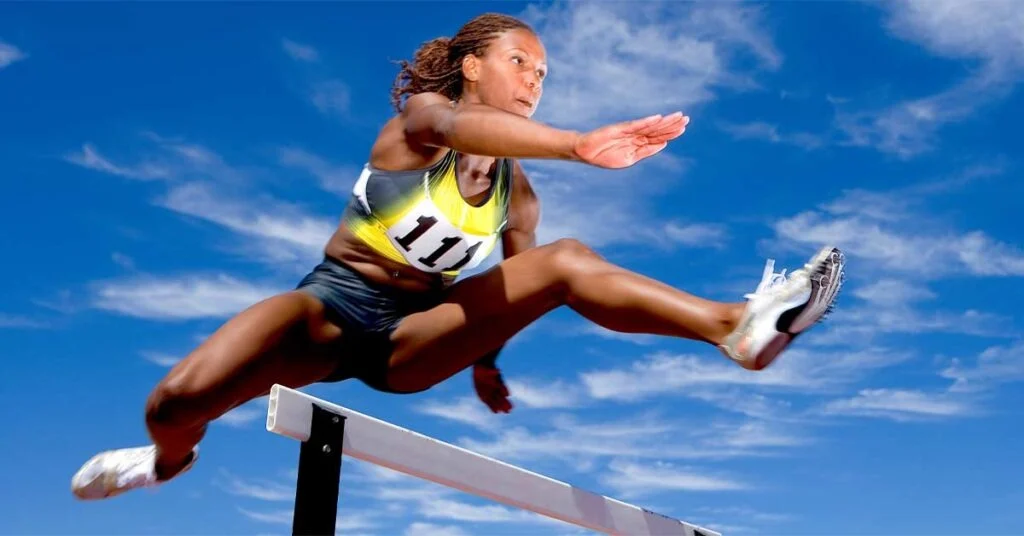
To address these coaching hurdles, veteran track programs have integrated dynamic movements into daily warm-ups to teach the basics of clearance and engage large groups simultaneously. One primary example is the "rain dance" exercise utilized for hurdlers. Unlike static wall drills, this movement allows athletes to work on hurdle clearance mechanics in a more dynamic, flowing environment.
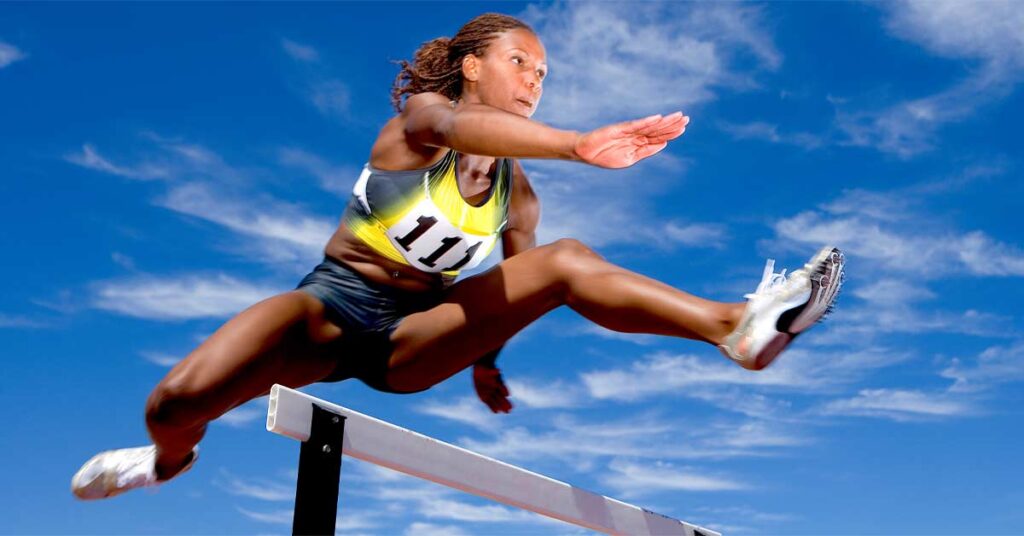
The primary objective of the rain dance drill is to teach correct lead-leg technique and upper-body arm placement without requiring the full approach velocity or complex spacing of a competitive race. While it does not explicitly teach proper takeoff distance or trail-leg mechanics, it excels at teaching athletes how to maintain balance and approach a barrier with confidence. Takeoff errors often cascade into faults later in the hurdle clearance cycle or upon landing. By pairing this dynamic movement with acceleration work, coaches can help hurdlers tackle the crucial first hurdle with greater assurance.
Crucially, this exercise can be executed effectively with large squads. For coaches working in smaller school settings with limited staff, large-group drills serve as an invaluable screening tool. By observing rhythm, natural fluidity, and reflexes during these warm-up sequences, coaches can identify athletes who possess a natural aptitude for hurdling early in the season, streamlining the developmental pathway.
Developing Neuromuscular Coordination Through Galloping Drills
Beyond the hurdles, transitioning sprinters into successful long jumpers presents a similar challenge. Simple physics dictates that speed is just as critical in the long jump as it is in sprinting, yet many fast athletes struggle to replicate their speed success in the sand pit. Frequent issues include deceleration, reaching or hesitating near the takeoff board, and mistiming the final steps. Without an efficient takeoff, horizontal velocity cannot be effectively converted into vertical lift.
To build the necessary neuromuscular qualities for a proper takeoff, coaches frequently utilize galloping variations that simulate the penultimate step of the long jump. This allows athletes to repeatedly experience correct takeoff mechanics without the intense pressure or anxiety of hitting a precise takeoff board during a full-speed approach. Sending a novice jumper down a runway without these foundational movement skills often invites failure.
Galloping variations range from low, repetitive movements focused on quick force application and flat-footed landings to higher, more explosive progressions that challenge coordination and posture. These drills train athletes to manage their center of mass, execute a forceful arm block, and maintain proper torso alignment at the point of takeoff. Integrated into speed days as a dynamic warm-up or utilized ahead of short-approach jumping sessions, these exercises provide a reliable method for evaluating movement quality across both legs while preparing athletes for higher-intensity plyometric work.
Utilizing Standing Triple Jumps as a Teaching Tool
The triple jump is notoriously demanding of patience and precision. Much like the hurdles, rushing full-approach attempts too early in an athlete’s development can cement poor movement habits that take months to correct. To circumvent this, coaches often rely on standing triple jumps as an introductory instructional tool once basic two-foot jumping mechanics have been established.
Standing triple jumps provide a controlled environment to reinforce the distinct phases of the discipline at lower intensities. By starting from a stationary, two-footed position on turf or grass, athletes utilize vertical arm drive to generate impulse, pushing downward into the dominant jumping leg before executing the sequence. The focus remains strictly on maintaining an upright torso, balanced posture, and controlled foot contacts rather than maximizing distance.
Coaches often employ simple verbal cues to establish a consistent rhythm until the movement pattern becomes automatic. As athletes gain proficiency, the exercise can be progressed by encouraging greater projection while preserving the uniformity of the phases. This progression teaches athletes how to self-organize and absorb ground forces safely, making it an excellent developmental tool for both novice competitors and experienced jumpers managing heavy competition schedules.
Integrating General and Specific Training Elements
For programs operating with limited coaching staffs, overlapping general movement preparation with specific technical training is an absolute necessity. Because jumpers and hurdlers are fundamentally sprinters, improvements in acceleration and top-speed development naturally cascade into these technical events.
Bridging the gap between sprinting and field events does not require overly complicated training frameworks. The opening weeks of a competitive season represent a critical window where establishing simple, high-quality foundational habits dictates long-term success. By embedding dynamic drills like the rain dance, galloping variations, and standing triple jumps into regular warm-up routines, coaches can efficiently teach fundamental mechanics, screen for raw talent, and prepare athletes for higher-intensity training without risking excessive physical wear and tear. When viewed as active teaching instruments rather than mere routine fillers, these general drills serve as powerful catalysts for comprehensive athletic development.