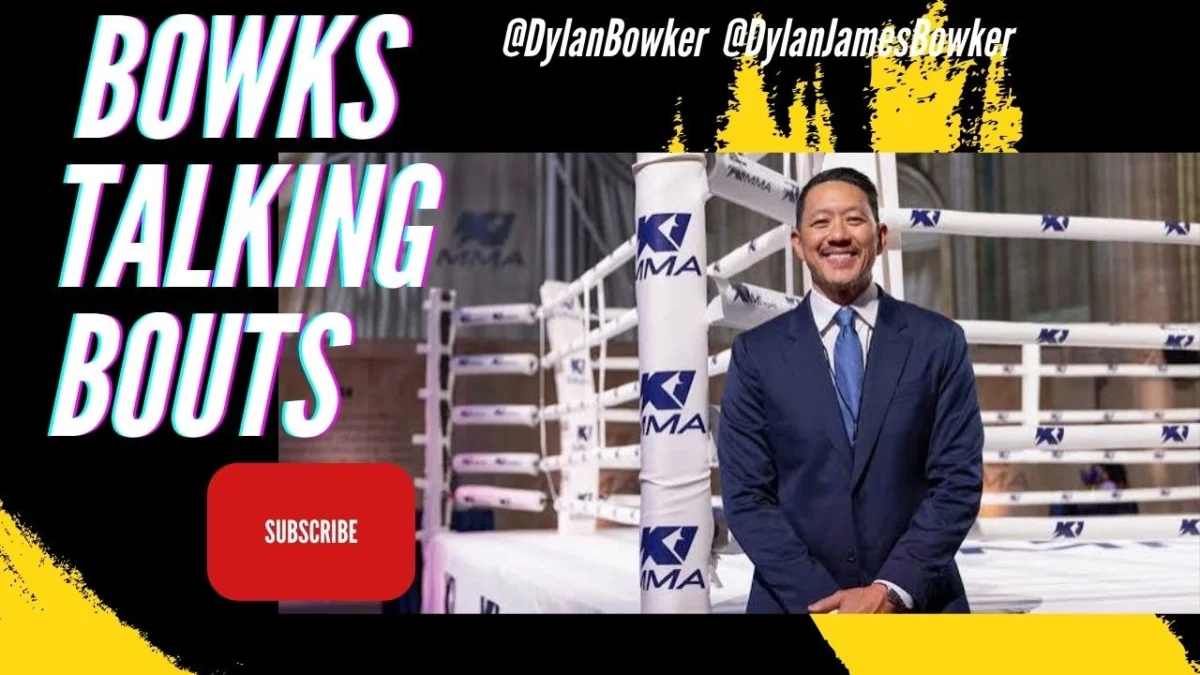
The landscape of mixed martial arts is constantly shifting, driven by changing media landscapes, evolving broadcast platforms, and the eternal search for fresh yet authentic ways to present combat sports. Behind the scenes, veteran executive Rich Chou has spent decades helping shape major promotions. Now, as the executive vice president for the newly launched Ki MMA, Chou is applying his extensive industry experience to map out a vision that connects the sport’s historic roots with modern broadcast strategies for the future.
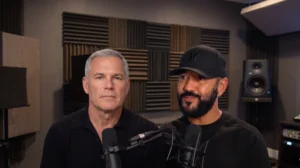
Speaking recently via Bowks Talking Bouts, Chou opened up about the collaborative makeup of the team behind Ki MMA, highlighting familiar industry figures who have reunited to build the promotion from the ground up. Alongside long-time collaborator Scott Coker and key personnel like CJ Tuttle, Chou emphasized the strength of a team that has weathered the storms of the fight business together before.
"Yeah. Look, a good mix, as you mentioned, kind of some of the band members coming back. A good mix of people that have worked together before," Chou said. "We’ve been in the trenches before, especially Scott and I. This is our third promotion. We’ve been together for some time now, collaborating and working together. This will be our third go-around. You mentioned CJ Tuttle, who’s just, he’s an all-star, he’s the man. Then we have several new people in the mix."
As Chou points out, longevity in the fight business requires adaptability. While familiarity provides a solid foundation, the modern combat sports ecosystem demands a keen awareness of digital media, entertainment trends, and global broadcasting.
"So, it’s just really interesting and I feel like after all these years you’re in the business, some things remain the same, but man, there are so many things that are absolutely different," Chou explained. "So you have to be on your toes, you have to evolve, and you just have to really be aware and conscious of where we’re at today on many levels. Not only in the fight game, but in terms of social media, in terms of entertainment and broadcasting. So, great to have familiar faces and old friends in the building. But we definitely need that new fresh perspective as well."
Amplify the Message: The Crucial Role of Inaugural Broadcast Deals
Building an exciting in-ring product is only half the battle for a new mixed martial arts organization. According to Chou, an equally vital component is finding the right channels to amplify the promotion’s message, establish its brand identity, and secure a prominent broadcast home. Ki MMA has brought in specialized professionals to guide the executive team through the complexities of media rights and distribution.
"I think as we look at what it’s going to take to really get our message out there, right? What I mean by that is I feel good about our format. I feel like we’ve done a great job of differentiating ourselves and establishing ourselves. The concept and the format and the fights basically, right? I feel like what’s going to happen in the ring for us is going to be special and spectacular, but we need to find the right way to amplify that message," Chou said. "To share that message with the world, to grow our brand and showcase what we’re doing."
Securing a reliable, high-reach television or streaming home is paramount for any rising organization. Chou emphasized that a stellar event means little if the audience cannot easily access it.
"So that being said, I think we’re now working with several people that specialize in that. That are excellent at that and we’re trusting them to guide us. That’s really around, this next or this initial, this inaugural broadcast deal and where we end up being streamed or televised and all that," he continued. "That’s to me equally as important because if you have an amazing product, so to speak, in the ring, you’re putting on great fights and you’ve got compelling storylines and you’re building stars and having these fantastic fights, but no one can watch or see you, then that’s a tough one."
A Modern Twist on Historic Roots: 32-Fighter Tournaments and Authenticity
To stand out in a crowded combat sports marketplace, Ki MMA is leaning into a concept that merges vintage tournament structures with contemporary production. The promotion is implementing a 32-fighter tournament format, embracing the philosophy that "what’s old is new." While combat sports traditionalists will instantly recognize the historic significance of multiple-fight tournament nights, newer fans may find the concept entirely novel.
"Yes. Look, I think some fans will see what we’re doing and it’s a new thing for them. I’ve had some people reach out and comment, ‘Multiple fights in one night. You must be crazy.’ Just not knowing how that’s in the history of our sport. That’s our roots, but they’re likely a new fan and that concept is foreign to them. Even though again, it’s how we got started, right, as a sport," Chou noted. "So I think some people will look at what we’re doing, our format, our presentation as new and innovative."
Rather than blindly following industry trends, Chou stresses that Ki MMA’s differentiation strategy is rooted in intentionality and core company values. The goal is not to be different merely for the sake of contradiction, but to remain authentically committed to their vision of martial arts competition.
"Others will see it as old is new, bringing it back, roots, heritage and yeah to me that’s very interesting. To me that is what we wanted something new and fresh, right? If it’s brand new to somebody that’s a newer fan, fantastic. If it’s a great time to refresh and bring back some really great things that have helped shape the sport, old can be new. We’re going to put our twist on it. We still have some things that we’re working on that we’re going to share soon. Some more surprises in store, some more tricks up our sleeve," Chou said. "But it was very important for us to be not just different but authentically different and different with intent. It wasn’t like we looked at what everyone’s doing in the industry and just said, ‘Let’s just do the exact opposite without really thinking about it and and without making sure that it lined up with our values and our core philosophy and mission statement.’ So, those two things were extremely important and that’s what’s been guiding us and will continue to guide us. Being authentically different and just really staying true to ourselves."
Anticipated Announcements: Schedules, Rules, and Competition Innovations
As the combat sports community awaits concrete details regarding Ki MMA’s launch, Chou teased several major announcements on the horizon. While event scheduling, venue cities, and broadcast destinations remain among the most anticipated reveals, Chou hinted that fans can also expect unique developments concerning competition rules and in-ring elements.

"Well, look, there are a lot I think that are obvious, right? Some really big obvious ones are our schedule, right? When are we launching, where are we launching? Not only for the live event experience, like what cities are you going to be in, but also, yeah, where can we watch you? But I think really for what falls into my wheelhouse, I think from a competition and fight standpoint, it’s just more surprises there," Chou stated. "In terms of, perhaps rules. We are having some very interesting conversations. I hate to be so cryptic and tease you and your listeners, Dylan. But yeah, we are really looking at rules and really great things we can do there to make competition more interesting and exciting for fans and for the fighters as well, of course. I think we’re also looking into other things we can do in the ring."
Balancing Youth Development with Free Agency "Moneyball"
Ki MMA’s organizational strategy relies on a two-pronged approach. Drawing on a proven track record of scouting and nurturing elite raw talent, the promotion plans to center its Grand Prix around a youth movement. At the same time, the leadership team is prepared to enter the free-agent market to secure established names that can immediately move the needle.
"Yeah. I think you just laid out our strategy pretty well there. It’s doing what I feel like we do best. Develop young talent, recruit, develop, and set them on a path towards stardom. I think we have a good track record of that, but we’ve also been pretty disruptive in free agency. So, those are kind of the two; I guess a two-prong strategy, so to speak. We’re going to focus on youth. It’s a youth movement with the Grand Prix," Chou explained. "But if somebody becomes available that we’re interested in, we feel like is a good fit, that can move the needle for us and put on exciting fights, we’re going to go out and talk to them. We’re going to tap into that war chest that you alluded to. So, it’s I guess I liken it to us being pretty versatile in terms of I guess from a; perhaps a mainstream sports perspective."
Chou likened this dual roster-building philosophy to the versatility seen in major mainstream sports franchises, balancing cost-effective talent cultivation with high-impact acquisitions.
"We can play moneyball and we can also be the Yankees and Dodgers every now and then, too. So, I think that’s what makes us very interesting and just separates us from a lot of other groups out there. The ability to do those two things and not just be a one-trick pony, so to speak, or just have one goal or one endgame in mind."
Ki MMA is Exploring Pride/ Rizin Rules and Why Scott Coker is the Zen Master, Per Rich Chou
When asked about potential rule innovations—specifically whether Ki MMA might look toward the beloved, open-weight and soccer-kick-friendly rulesets utilized by iconic organizations like Pride and Rizin—Chou confirmed that those discussions are actively taking place inside the promotion’s war room.
"That is in the discussion. We’ve said Pride quite a bit. Yeah, who didn’t love Pride, right? Some of my favorite fights, some of the greatest fights in the history of the sport. There really was no greater spectacle for MMA and for us, it was the same kind of adoration and love for K1 on the kickboxing side. Just really; yeah, pulling but going back to your point on the rules, yeah, looking at what Pride did, looking at what’s going on out there, how can we in our quest to innovate and really again just level up martial arts competition," Chou said. "We’re looking at all those options and then some. Some that I think some people are not thinking about. So we’re in the war room having all these conversations. It’s a lot of fun and we’re fans as well, Dylan. We’re fans first. Scott and I and CJ and the whole crew, we’re fans first. So, we’re always keeping that in mind. It’s not just what we think from a purist perspective would be great and add to competition."
Chou emphasized that rule adjustments are evaluated collaboratively, taking input from both purist perspectives and the athletes who actually step inside the ring. While state-by-state regulatory nuances within the United States present unique hurdles, Ki MMA’s international footprint across four continents provides operational flexibility.
"But it’s really, what the fans want and obviously talking to the fighters about; they’re the ones in there, what do you think of these rules or how would you like to have these new weapons or how would you like this format? How would you like to be able to utilize that? Does this help your game, you know? So, there’s a lot of these types of discussions going on, Dylan. It’s not just a one-sided thing. We are looking at it as a whole," Chou stated. "Again, to me, that’s very interesting to be able to be creative like this. We are quite limited here in the States as we know. I know you alluded to Colorado and we have 50 states. All 50 of them seem to have different nuances and their rules and regs in the sport. So I know we call it the unified rules but it’s not always the case but we are traveling to other parts of the world as you know. [This] would be spread out over four continents and there’ll be certain situations where I think we’ll be able to utilize and just tap into some creativity around rule set."
Reflecting on the overwhelming support at the Ki MMA kickoff event—which drew legendary figures like Nate Diaz, Mark Coleman, Fedor Emelianenko, Cris Cyborg, and Royce Gracie—Chou admitted the moment was deeply surreal. For an executive whose personal entry into jiu-jitsu and the industry was inspired by pioneers like the Gracie family, seeing combat sports royalty gather to support the new venture was a career highlight.
"To have all those legends there. A lot of those guys inspired me personally. I came up, I got into jiu-jitsu and ultimately that led me into the business because of Royce to have him there, sitting there, listening to us present Ki MMA, it was very surreal, Dylan. It was very surreal. I think our love and appreciation for the sport, for all these guys just I’m glad you see that and that’s what it’s all rooted in. Like Ki MMA is fighting spirit. It’s fighting force and those guys had it and then some," Chou said. "Those guys were the highest form of it. So, it was a nice moment to pay tribute to them and how they’ve inspired us. For them to be there to support us was just like this; it’s certainly been one of the highlights of my career and my time in the sport. It was really, really special and I think to get those guys, that group together in a room like that, I think Scott’s the only guy that could pull that off. I think it says a lot about him and how these guys appreciate him, respect him."
The gathering of such iconic names underscored the enduring relationships built by Scott Coker throughout his career in fight promotion. Chou credits Coker’s steady, respectful approach to business—drawing a comparison to a quiet martial arts master—as the bedrock of these lasting bonds.
"As I think about my time with Scott and I’ve learned so much from him and just the way he does business, how he handles himself, how he treats fighters, and I’ve also been surrounded by several other great people during my time in the business that have mentored me and kind of shown me the way. I’ve always gravitated towards, I guess, more of the; I call Scott the Zen master, right? He’s quiet, low-key behind the scenes, but obviously when he moves, he moves with intent and he’s very powerful," Chou said. "That’s just something that I gravitated towards and hopefully I’m picking up some of it. But as I mentioned earlier to have all those legends in there that we’ve worked with in the past to still be around to support, it says a lot about I think the way we treat fighters, how we view fighters."
While acknowledging that the fight business is inherently difficult and fraught with tough negotiations and occasional misunderstandings, Chou maintains that operating with long-term integrity and respect preserves relationships even when outcomes aren’t always ideal.
"Look, I’m not going to sit here and say we’re batting a thousand, that every single guy we’ve ever worked with. [Not] every single fighter, male or female, that we’ve ever worked with has been completely thrilled with us or we didn’t have tough moments to get through. It’s a very difficult business, Dylan, as I’m sure you know. So, you’re going to have to navigate through a lot of tough times and misunderstandings and difficulties and you name it. So, it’s a tough business, but I feel like whenever you respect fighters, try to operate with integrity, and respect, even when it’s not the outcome that you want, you can usually walk away at least having that intact," Chou reflected. "That respect in place. I think that’s something I’ve learned from Scott and we still implement that to this day. I think if you ask around, we feel pretty good about our standing in the fight community with managers, fighters, and coaches."