
Netflix has finalized a landmark agreement to air every single match from the 2030 FIFA World Cup live across Spain and Andorra, marking the streaming giant’s most significant and ambitious foray into live sports broadcasting in Europe to date.
The blockbuster tournament holds special historical significance, serving as the centenary celebration of the competition first held in 1930. Under the current format approved by FIFA, Spain will act as one of the three primary co-hosts alongside its neighbors Portugal and Morocco. Additionally, Argentina, Paraguay, and Uruguay will each host a single opening match to commemorate South America’s role in the inaugural tournament, a strategic move that simultaneously cleared the path for Saudi Arabia to position itself as the sole host for the 2034 men’s tournament under FIFA’s continental rotation policies.
For subscribers in Spain and Andorra, Netflix will provide live coverage of all 104 matches of the expanded tournament. The platform has committed to making at least one match per matchday available to watch free of charge, ensuring baseline accessibility for casual viewers. Beyond the matches themselves, the streaming service’s comprehensive broadcast plans will feature extensive pre-game, half-time, and post-game analysis programming, alongside dedicated daily roundup shows and supplemental behind-the-scenes content tailored to the historic tournament.
To balance digital accessibility with traditional viewing habits, selected matches—crucially including every fixture played by the Spanish national team, both high-profile semi-final encounters, and the tournament final itself—will also be broadcast on free-to-air (FTA) television. This will be achieved through a strategic sublicensing agreement orchestrated directly with Netflix rather than a direct media rights negotiation with FIFA. Specific details regarding the exact package of matches and partner broadcasters will be unveiled closer to the tournament kickoff.
Reflecting on the magnitude of the agreement, Bela Bajaria, chief content officer at Netflix, emphasized the cultural resonance of the event.
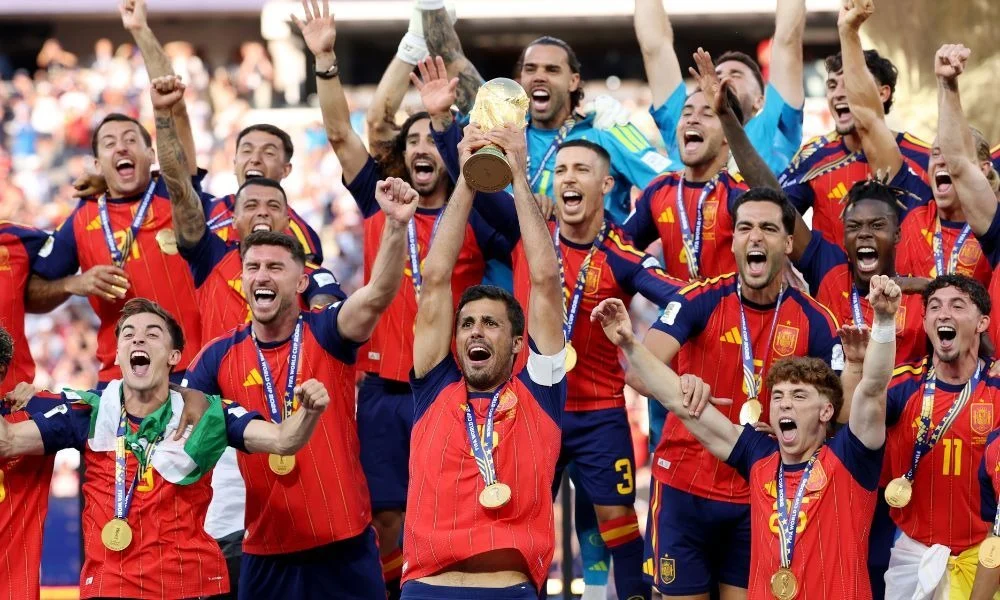
"Few events unite people like the World Cup," said Bajaria. "I was in the stands this year as Spain lifted the trophy and witnessed the passion, the pride, the stories—they all become part of a nation’s culture and are remembered for generations. With Spain set to host in 2030, we’re thrilled to bring every match to fans across Spain and Andorra on Netflix. For Spanish football fans, welcoming the world as reigning champions on Netflix will make this a moment unlike any other."
Why this is a big deal for Netflix
The acquisition represents a dramatic evolution in Netflix’s corporate strategy toward live sports. For years, company leadership maintained that investing in live sports broadcasting was unnecessary because the streaming platform operated without a legacy broadcast business to defend. Executives famously joked that Netflix was not "anti-sport, just pro-profit," frequently characterizing premium sports rights as too expensive, excessively localized, and too short-term in value compared to evergreen entertainment or original intellectual property owned in perpetuity.
However, that cautious stance has undergone a radical transformation over recent years. Netflix has increasingly embraced high-profile live events capable of driving massive subscription surges or blurring the lines between sport and entertainment. Notable milestones in this strategy include a massive five-year, multi-billion-dollar partnership with WWE, high-profile influencer and professional boxing bouts, and, most notably, the acquisition of live National Football League (NFL) fixtures for Christmas Day broadcasts.
A parallel shift has seen the company abandon its historical aversion to localized rights in favor of targeted regional acquisitions. Netflix has steadily built a diverse sports portfolio, securing the rights to the 2027 and 2031 FIFA Women’s World Cups in North America, the Concacaf Gold Cup and Nations League Finals in Mexico, and Major League Baseball’s season opener in the United States. The platform also served as the lead broadcast partner for the World Baseball Classic in Japan.

Industry analysts note that Netflix increasingly views sport as an essential engine for subscription acquisition and retention, as well as a powerful catalyst for advertising income. Live sports help the company diversify its revenue streams and expand its market penetration through its increasingly popular tiered pricing models.
Yet, stepping into the role of primary broadcaster for the world’s most-watched sporting event within a major European host nation represents a monumental escalation. It strongly signals that further aggressive sports rights acquisitions could follow. While media rights holders frequently invoke Netflix’s name to inflate market interest for their own properties, speculation regarding potential future bids for major domestic leagues now carries genuine weight.
While a full-season acquisition of the English Premier League still appears unlikely, industry observers suggest that Netflix could strategically target high-value tentpole packages, such as Boxing Day slates, marquee midweek rounds, or final-day championship dramas, rather than a grueling, full-campaign inventory.
Why FIFA will be happy
For FIFA, the World Cup remains the absolute bedrock of its financial ecosystem, driving the vast majority of the organization’s revenues. Driven by enhanced commercial partnerships, lucrative hospitality sales, and updated ticketing structures, world soccer’s governing body generated an unprecedented US$15 billion from the 2026 tournament cycle in North America. Whether those financial heights can be systematically replicated across every future global market remains an open question, placing mounting pressure on media rights monetization.
Attracting deep-pocketed digital entrants like Netflix successfully stimulates the competitive marketplace for broadcasting inventory. Furthermore, FIFA’s controversial expansion of the tournament format from 32 to 64 teams has significantly increased the total volume of available match inventory, giving the governing body unprecedented flexibility to package and sell games across multiple broadcast models.
Securing a partnership with the world’s most influential streaming platform in a primary host nation is viewed as a major victory at FIFA headquarters. The organization will undoubtedly monitor whether Netflix intends to replicate this regional success in other critical territories, with the United States frequently touted as a logical future target.
The ultimate long-term ambition for rights holders is often a consolidated global agreement, centralizing the World Cup onto a single platform with massive worldwide reach. However, FIFA must carefully balance commercial ambitions with broad public accessibility to preserve the tournament’s immense cultural relevance. Restricting tournament access too severely within host nations historically risks severe political and public backlash, particularly given that passionate domestic support is vital to the tournament’s atmosphere and success.
For the 2026 World Cup, Spanish fans were able to watch one match per day for free via public service broadcaster RTVE, including all matches featuring the Spanish national team. However, viewing the complete tournament inventory of 104 matches required a specialized subscription to Mediapro’s pay-TV World Cup channel, which was distributed exclusively through DAZN.
That local precedent may make the Netflix partnership more palatable to Spanish audiences, particularly given the inclusion of free-to-air sublicensed matches and complimentary games available directly on the Netflix platform. Furthermore, Netflix is often perceived as more widely accessible than traditional pay-TV operators like BeIN Sports in France or Magenta TV in Germany, both of which have previously placed major tournament matches behind restrictive paywalls.
Realizing ambitions for fully globalized digital broadcasting will ultimately require overcoming significant technological and regulatory hurdles. Streaming services require reliable broadband internet infrastructure—a commodity that remains inconsistent in various parts of the world—while numerous nations maintain strict "crown jewels" legislation requiring the World Cup and other major sporting events to be broadcast on free-to-air television.