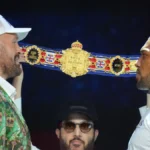
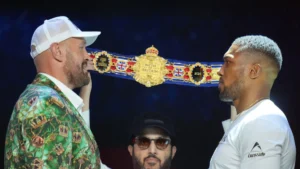
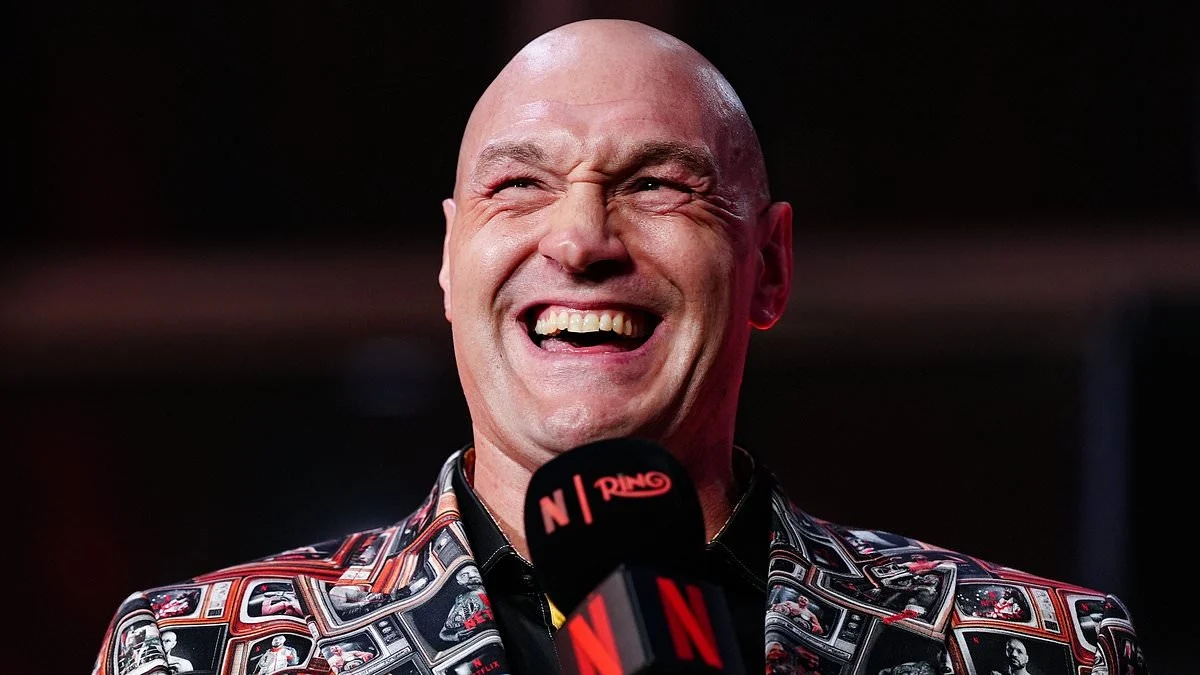
Tyson Fury has formally completed his enrolment in the Voluntary Anti-Doping Association (VADA) testing programme, moving swiftly to eliminate a contentious dispute that threatened to derail the highly anticipated promotional launch for his blockbuster heavyweight showdown with Anthony Joshua.
The confirmation from Fury’s camp arrived barely twenty-four hours after Joshua issued a stark ultimatum, warning that he was prepared to boycott Wednesday’s opening press conference in London unless Fury produced concrete verification that he had entered the independent testing pool. With Joshua already fully registered and the long-delayed public unveiling hanging in the balance, Fury’s representatives acted to remove the obstacle, submitting the required documentation and supplying his whereabouts details to the testing authority.
The disagreement over anti-doping procedures had briefly threatened to overshadow the official commencement of fight week promotions for an encounter more than a decade in the making. Joshua’s side had raised pressing concerns after discovering a discrepancy between the timelines outlined in the fighters’ respective contracts. While Joshua had promptly completed his registration, Fury’s team maintained that their own contractual terms afforded them a broader window in which to finalize the paperwork.
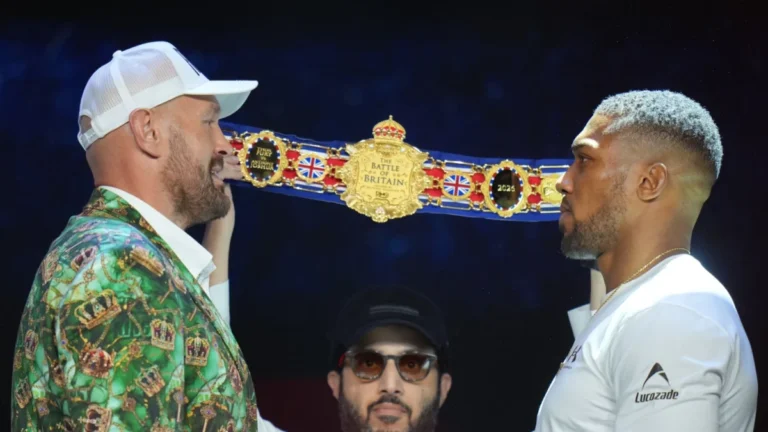
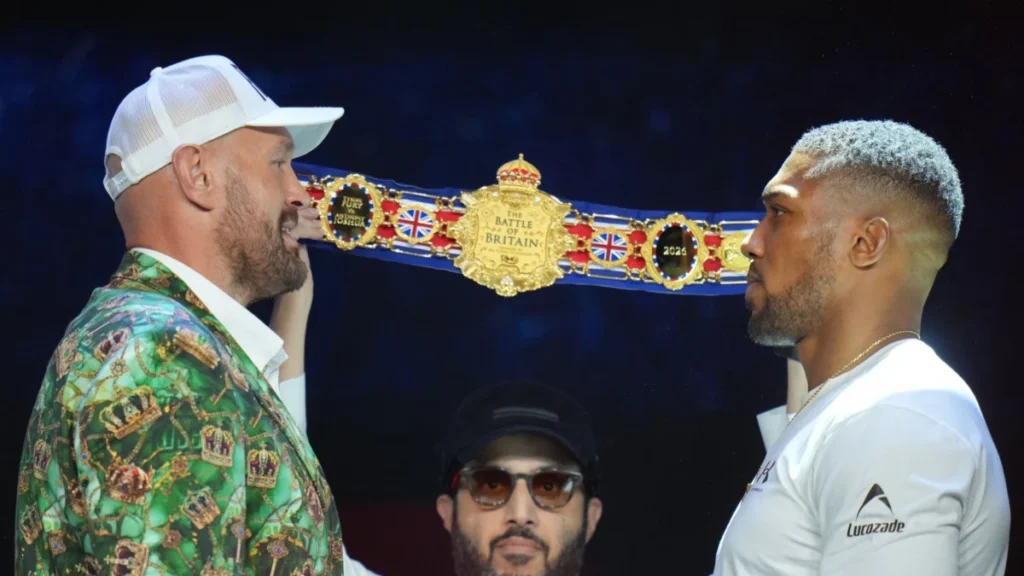
Promoter Eddie Hearn had publicly made it clear that Joshua expected his domestic rival to enter the testing pool immediately, creating an impasse that seemed poised to disrupt their introductory face-to-face meeting in the capital. However, with the media gathering scheduled for Wednesday, Fury’s camp moved to neutralize the friction by ensuring the administrative process was brought to a swift conclusion.
Fury’s manager, Spencer Brown, confirmed the breakthrough in an interview with Playbook Boxing, making plain that the former heavyweight champion was now actively registered with the testing organization.
"We are enrolled in VADA. We are enrolled in VADA. Just to confirm that," Brown stated, putting an end to speculation that the procedural delay could trigger a damaging boycott of the introductory media duties.
Addressing the question of why the paperwork was completed only after Joshua’s camp threatened to withdraw from the London event, Brown dismissed the idea that Fury had intentionally dragged his feet, explaining that the fighter had initially complied well ahead of the official fight announcement.
"He did it a bit earlier than when the fight was announced," Brown said. "In our contract, we had more time, but you know, it doesn’t matter. We’ve done it. We’ve done everything we’ve been asked to do. Everything."
The resolution allows the two former champions to proceed with their first joint media appearance since the long-negotiated domestic blockbuster was officially finalized, heading off an embarrassing early collapse in the promotional tour. Yet the public exchange also laid bare the microscopic scrutiny and lingering mistrust that continue to surround every facet of the rivalry.
Brown was also careful to clarify the inner workings of the anti-doping process, explaining that formal enrolment and the collection of physical biological samples represent two distinct phases within the VADA framework. When asked whether Fury had already provided samples for analysis, Brown emphasized that registration must inevitably precede the deployment of collection officers.
"No, you have to enrol first, don’t you?" Brown said. "That part of it’s all been done, then the testing comes second."
Elaborating on the intrusive nature of comprehensive anti-doping protocols, Brown noted that the fundamental purpose of the VADA programme is to carry out rigorous, unannounced testing without offering athletes any advanced notice or predictable schedule. By submitting accurate whereabouts information, fighters agree to subject themselves to testing at any location and at any hour of the day or night.
"You could be tested in a week, you could be sitting there on your toilet and they knock on the door," Brown explained. "That’s the way they work. They don’t tell you a time. They don’t say we’re coming round tomorrow. That’s the way. That’s why it works."
With the testing controversy settled ahead of the London launch, the dispute has highlighted the intense administrative demands that accompany a fight of this magnitude. For months, boxing observers had feared that contractual minutiae could once again derail the contest, just as competing broadcast, financial, and organizational interests had thwarted previous attempts to bring the two British heavyweights together over the past ten years.
Having both secured victories in their respective comeback outings earlier this year, the path had finally been cleared for the defining showdown of modern British boxing. Yet as soon as the anti-doping impasse subsided, another major logistical conflict emerged regarding the staging of the bout itself.
The fight is scheduled to take place on Friday, December 11, under the roof of Cardiff’s Principality Stadium, with global broadcasting rights secured by Netflix. To maximize commercial appeal for the streaming platform’s vital North American audience, organizers have constructed plans targeting the lucrative United States primetime television market. As a result of those broadcast considerations, the main event has been provisionally scheduled for the early hours of Saturday morning in the United Kingdom, with ring walks projected to take place as late as 2am.
The prospect of a 2am ring walk has sparked widespread apprehension among British supporters and industry figures alike, with Brown openly voicing his displeasure at the prospect of forcing domestic viewers and attending spectators to endure an antisocial schedule.
Brown revealed that discussions surrounding the definitive schedule remain very much active, and he made no secret of his personal opposition to staging the centerpiece bout in the dead of night.
"I think 2am is far too late," Brown said, urging decision-makers to prioritize the domestic fanbase that has followed both fighters’ careers for the better part of two decades.
"I think that the general public in England will want to watch it in the pubs, the clubs, you know, round each other’s houses. There’ll be a party atmosphere, and I just think it needs to be earlier. Simple as that."
Brown went on to emphasize that negotiations over the exact timing remain ongoing, expressing incredulity that spectators would be expected to remain in place through the small hours.
"It’s all in negotiation at the moment, but it shouldn’t be at 2 o’clock in the morning. I certainly wouldn’t like to sit there at 2 o’clock in the morning, would you?"
Beyond the television audience watching across the UK, Brown highlighted the grueling demands an early-hours finish would place on the tens of thousands of spectators traveling to South Wales to fill the Principality Stadium. The winter date adds an extra layer of discomfort, with overnight temperatures in December presenting a grim prospect for fans enduring a protracted card.
"I think 99 per cent of the people will probably tell you that if you’re in the stadium, you don’t want to be sitting in the stadium till 2 o’clock in the morning, freezing your nuts off," Brown remarked.
The decision to stage the event in Cardiff was itself a direct consequence of the proposed broadcast timetable. Organizers initially explored prospective venues in London, but capital venues were unable to secure the necessary permissions or accommodate the exceptionally late conclusion demanded by Netflix’s international scheduling. The Principality Stadium in Cardiff was subsequently chosen because the multi-purpose arena possesses the operational capacity to stage events running deep into the night.
Nevertheless, finalizing the schedule in Cardiff has not been entirely straightforward. The local licensing framework requires detailed negotiations with municipal authorities and emergency services to safely manage an event that will deposit tens of thousands of attendees onto city streets in the early morning hours of a weekend. Public transport limitations, crowd management, and regional policing plans are all inextricably linked to the eventual confirmation of the main event start time.
As organizers continue to balance the conflicting commercial demands of an American streaming audience against the welfare and viewing traditions of British supporters, the immediate focus shifts back to the ring itself. With Fury’s anti-doping registration validated and Joshua’s boycott threat lifted, the long-awaited face-to-face promotional tour can finally begin, marking the opening chapter of a generational rivalry that will conclude beneath the Cardiff roof this December.