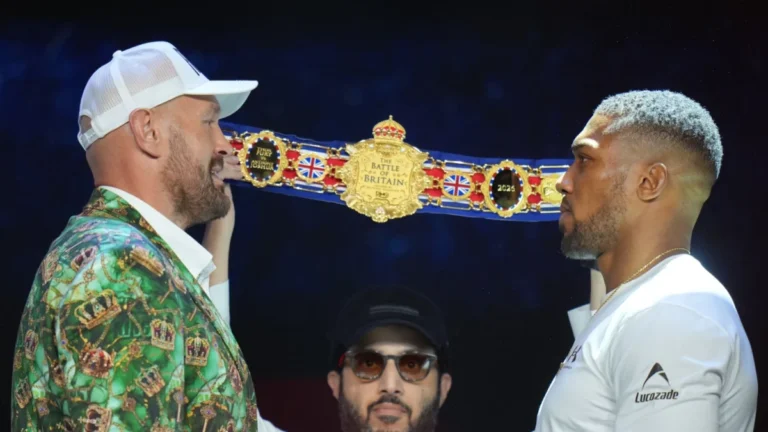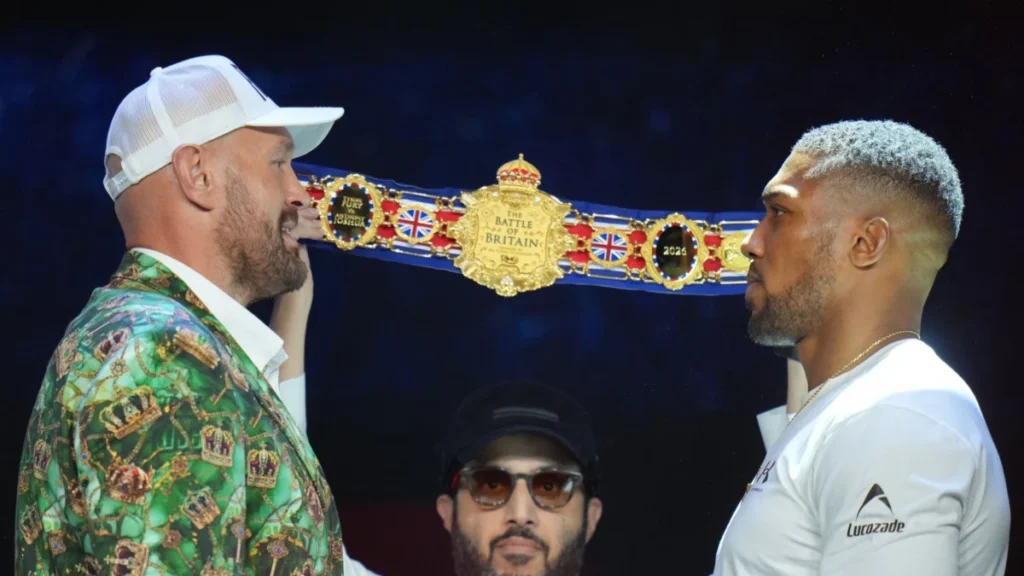


With less than two months remaining before Tyson Fury and Anthony Joshua finally share a boxing ring at the Principality Stadium in Cardiff, the long-awaited all-British showdown continues to dominate discussions across the sporting landscape. The impending collision between the two former unified champions represents the culmination of a rivalry that has captivated and frustrated fans in equal measure for the best part of a decade. However, as the clock winds down toward the opening bell in the Welsh capital, perspective on how the contest will actually unfold inside the ropes has shifted dramatically among insiders, fighters, and analysts alike.
Among those offering a blunt appraisal of the clash is popular British heavyweight Dave Allen, who has publicly revealed why his long-standing forecast for the superfight has undergone a complete transformation. Speaking to talkSPORT Boxing, Allen reflected on how the changing attributes of both combatants, the natural passage of time, and recent ring evidence have forced him to abandon his belief that the encounter would be settled across a full twelve rounds of tactical action. Instead, the seasoned Doncaster heavyweight now envisions a brief, explosive, and potentially chaotic firefight that is unlikely to survive the opening nine minutes of battle.
For years, a showdown between Fury and Joshua stood as the most lucrative, culturally significant, and intensely debated domestic matchup in modern British boxing history. Both men scaled the absolute pinnacle of the glamour division, capturing world titles on multiple occasions and building massive commercial followings that propelled the sport into mainstream stadium territory. Yet, despite repeated rounds of public posturing, intense negotiations, and shifting promotional alliances, the two-time heavyweight rulers routinely failed to finalize terms when both were perceived to be operating at the peak of their athletic powers. Each collapse in talks brought widespread disappointment to the British public, leaving many to wonder whether the definitive battle for national supremacy would ever materialize before both men hung up their gloves.
Now, with both men firmly entrenched in the twilight stages of their respective professional journeys, an agreement has at last been struck. The timing, however, brings an unmistakable air of poignancy and debate. When they walk to the ring in Cardiff, Fury will do so at 38 years of age, while Joshua enters at 36. Compounding the intrigue—and dividing opinion throughout the boxing community—is the sanctioning of the contest for the vacant WBA (Super) heavyweight world championship. While the presence of a recognized world title adds formal hardware to the promotional marquee, the decision to stage a vacant championship clash between two veterans nearing the conclusion of their careers has proved controversial, highlighting the peculiar mechanics of modern boxing’s governing bodies.
Reflecting on how the dynamic of the fight has transformed over the years, Allen admitted that his assessment of a hypothetical Fury-Joshua clash had long been framed by the stylistic strengths both men exhibited in their physical prime. During the mid-2010s, when the matchup was first discussed as a realistic proposition, conventional boxing logic leaned heavily toward a protracted tactical encounter that would ultimately require the verdict of the ringside judges.
"I think that there is potential fight for this to be a more exciting fight than it could have ever been," Allen told talkSPORT Boxing during his analytical breakdown of the contest. "I think that, 10 years ago, Fury would have boxed and moved and been elusive and tried to get a points victory."
In that earlier era, Fury established himself as one of the most unorthodox and elusive big men in the sport’s history, relying on nimble footwork, upper-body feints, lateral movement, and an exceptional understanding of distance to neutralize dangerous punchers. Against a rigid, powerful, and technically structured combination puncher like Joshua, the widespread expectation was that Fury would deploy an educated jab, control the geography of the ring from the outside, and look to frustrate his domestic rival over the course of thirty-six minutes. It was a strategy built on discipline, ring craft, and endurance, leaving little room for unnecessary risk.
Yet, as Allen assessed the physical realities confronting both men in 2026 as the sport moves toward 2027, he made it clear that those stylistic assumptions belong entirely to the past. The physical wear and tear of long, grueling careers at the elite level, combined with noticeable shifts in durability and defensive reflexes, has altered the strategic landscape. In Allen’s view, neither man enters the Principality Stadium equipped to wage a measured, high-speed boxing clinic, creating conditions that invite an immediate and violent exchange of punches.
"In 2026, nearing 2027, this should be exciting," Allen remarked, framing the upcoming spectacle within its contemporary context. Rather than expecting a patient chess match between seasoned masters, Allen pointed directly to Joshua’s recent vulnerability under heavy fire as the primary catalyst for his radical change in prediction. In particular, he focused on the alarming decline in Joshua’s defensive resilience, which has become an unavoidable talking point following back-to-back testing encounters.
"Joshua’s punch resistance looks to be gone from the [Kristian] Prenga contest and the [Daniel] Dubois fight—he got knocked down six times in those seven rounds alone," Allen observed candidly. "So, there is a lot of question marks over his punch resistance."
The stark statistic highlighted by Allen—six trips to the canvas across just seven combined rounds of competitive action—has cast a heavy shadow over Joshua’s prospects of surviving extended exchanges against heavy opposition. Where Joshua was once able to absorb clean power punches, regroup, and work his way back into dominance behind a firm jab, his recent outings against Dubois and Prenga exposed a compromised capacity to weather heavy incoming fire. In the heavyweight division, where single-punch fight-ending power is standard currency, any perceived erosion in durability inevitably reshapes how opponents, oddsmakers, and analysts view potential matchups.
Despite those glaring concerns surrounding Joshua’s chin, Allen was careful not to dismiss the Watford man’s offensive threat. Throughout his career, Joshua has maintained exceptional hand speed, destructive short hooks, and a dangerous straight right hand that remains lethal against any heavyweight who leaves an opening. Fury himself has visited the canvas on multiple occasions throughout his career, proving that even his towering frame and ring awareness do not render him immune to clean, explosive power punches.
"Joshua has always had the power to hurt Fury," Allen emphasized, balancing his appraisal of Joshua’s frailties with acknowledgment of his enduring offensive firepower. "For me, 10 years ago I thought this has 12 rounds written all over it, but now I can’t see it going past three."
It is precisely this volatile equation—diminishing punch resistance coupled with fight-ending power on both sides—that underpins Allen’s belief that the contest will combust almost immediately. When two heavyweights enter a ring with heightened vulnerabilities and fading engine capacity, the tactical imperative shifts away from drawn-out attrition toward early, decisive aggression. If either man senses weakness or instability in the other, the natural instinct will be to press for an immediate stoppage rather than allow the opponent time to find a rhythm or settle into the fight.
Allen noted that this transformation creates an intriguing paradox for the viewing public. While hardcore purists may lament that the bout is taking place long after both fighters operated at the absolute height of their physical and technical powers, the natural deterioration of their boxing tools may ironically yield a spectacle far more dramatic and volatile than the bout they could have produced a decade earlier.
"So, I would say it will be more exciting but in terms of actual quality it will be nowhere near the contest that it once was," Allen concluded, encapsulating the bittersweet nature of the occasion for British boxing enthusiasts. The fight now promised raw, unpredictable theater, driven by vulnerability and urgency, rather than an exhibition of peak technical heavyweight mastery.
The stage for this high-stakes encounter is set for Friday, December 11, under the closed roof of Cardiff’s Principality Stadium. The venue has historically played host to some of Joshua’s most lucrative stadium defenses, providing a familiar backdrop for what many expect could be his final high-profile appearance inside a British ring. Adding further star power and intrigue to the event are persistent reports linking legendary eight-division world champion Manny Pacquiao to an appearance on the undercard, signaling an ambitious promotional effort to turn the Cardiff date into an unforgettable global spectacle.
With the date fast approaching, the narrative surrounding Fury and Joshua has evolved from a debate over pound-for-pound dominance to a test of survival, nerve, and remaining durability. As Dave Allen’s stark assessment makes clear, the years of delay have stripped away the likelihood of a cautious, measured tactical contest, leaving behind a combustible heavyweight collision where the margins for error are thinner than ever.