



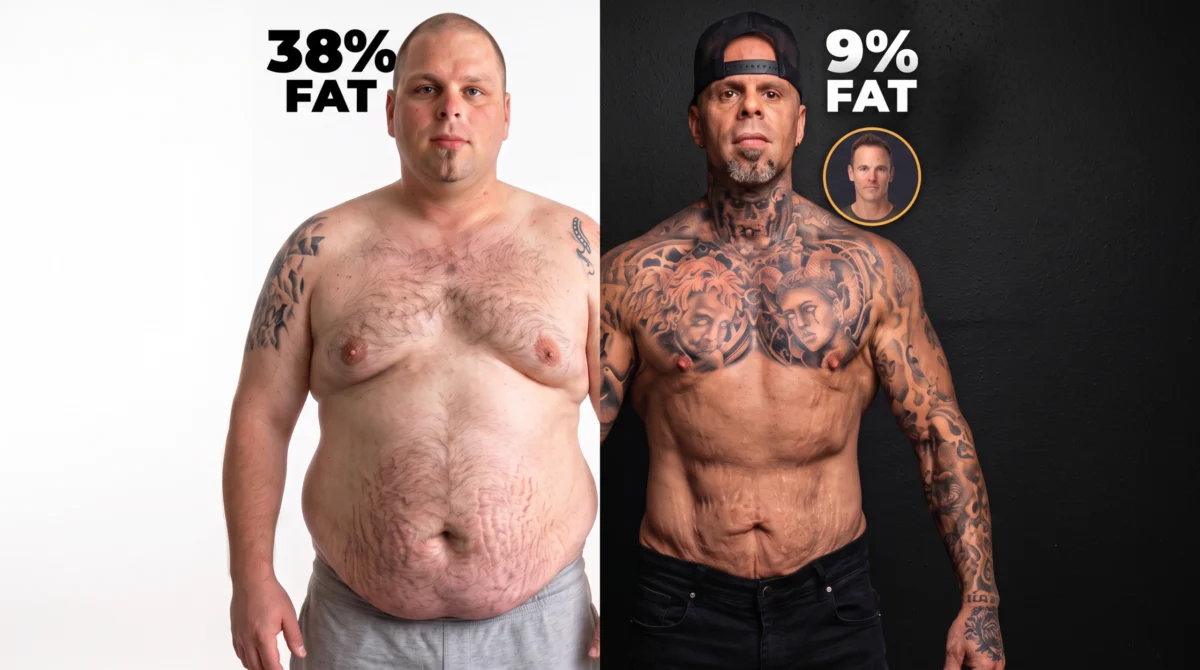
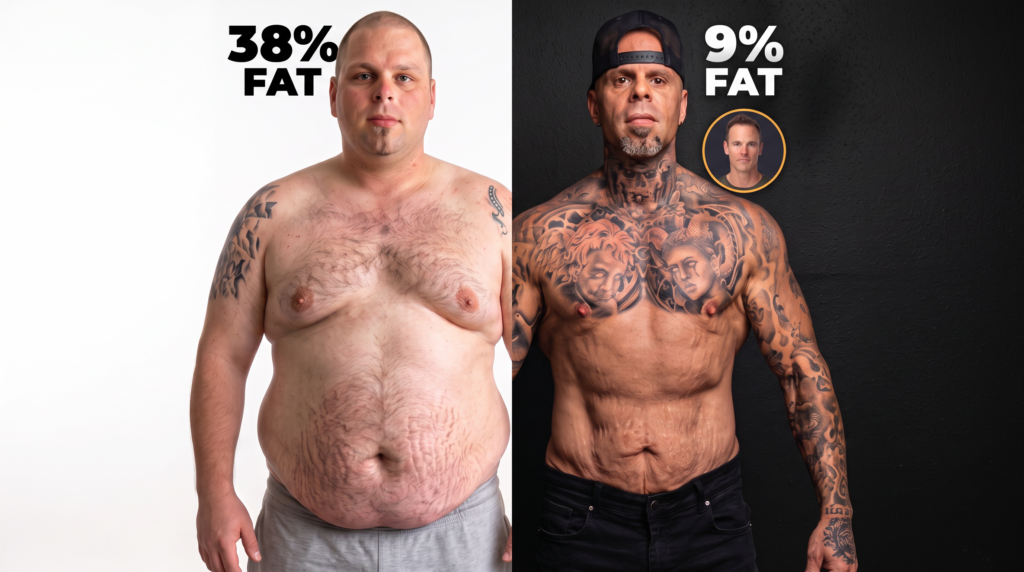
Standing in front of a mirror at 300 pounds, a fitness coach and entrepreneur faced a stark, life-or-death reality: he had to completely change his lifestyle, or face fatal consequences. That sobering moment a decade ago sparked a profound personal transformation that stripped away 100 pounds and unlocked lessons most people spend a lifetime learning—or never discover at all.
In a candid video detailing his remarkable journey, he recently laid out 21 foundational principles that guided him from life-threatening obesity to peak physical condition. Rather than abstract textbook theories or fleeting wellness trends, these insights represent battle-tested strategies forged through years of trial, error, and ultimate success.
Master the Art of Eating Out
Sustainable weight loss does not happen in isolation, and learning to navigate restaurants successfully became essential to his long-term progress. Real life naturally includes dinners with friends, family celebrations, and spontaneous meals out. Avoiding social gatherings entirely is rarely a viable strategy for lifelong health.
By consistently tracking macros at home and weighing his food over a long period, he developed an intuitive sense of portion control that translated seamlessly to dining establishments. His straightforward restaurant strategy is built on a simple premise: double the protein and halve the carbohydrates. Ordering two steaks or two chicken breasts while consuming only half of the accompanying rice or potatoes keeps meals satisfying while dramatically reducing calorie density. This approach proves effective whether dining at a high-end steakhouse or a casual diner.
Reward Progress With Clothes, Not Cheat Meals
The traditional celebration of a weekly "cheat meal" often acts as self-sabotage in disguise. After weeks of strict discipline, rewarding hard work by immediately undoing progress makes little logical sense. Instead, he chose to reward his changing body by purchasing new clothes, which reinforced positive behavior and built psychological momentum.
Becoming obsessed with fashion became a natural byproduct of weight loss, as a vast array of stylish clothing became available to him for the first time. The psychological impact proved remarkably powerful, as seeing himself well-fitted in modern attire strengthened his new identity and naturally inspired him to maintain his hard-earned progress. Even small purchases, such as fresh athletic shoes, created genuine excitement around maintaining healthy habits.
Swap Cravings, Don’t Fight Them
Cravings are rarely about specific food items; instead, they are driven by a desire for specific textures, flavors, and sensations such as salty, crunchy, creamy, or sweet. These sensory qualities trigger intense desire, rather than the heavy calorie load typically attached to them. When experiencing a strong urge for potato chips, he identified that what he truly wanted was something salty and crunchy. Substituting standard chips with roasted chickpeas seasoned with salt delivered the exact same level of satisfaction at a fraction of the caloric cost.
For his favorite Reese’s Peanut Butter Cups, he formulated a massive bowl of Greek yogurt mixed with chocolate protein powder, almond butter, and a pinch of salt. By focusing on replacing sensory attributes rather than engaging in total deprivation, he successfully eliminated the exhausting mental warfare that so often culminates in destructive binge eating episodes.
Identify Emotional Eating Triggers
Opening the refrigerator door out of sheer boredom, reaching for snacks during moments of intense stress, and utilizing food as a primary coping mechanism to manage difficult emotions are patterns that kept him trapped at 300 pounds for years. The ultimate breakthrough came through radical self-awareness—specifically, pausing to ask whether physical hunger was truly present or if food was merely being used to escape uncomfortable feelings.
Recognizing his specific triggers, particularly work-related stress, allowed him to implement effective preventive measures. These included increasing water intake, consuming more protein earlier in the day, and strategically budgeting calories for predictable emotional moments. Working harmoniously with natural habits instead of constantly fighting them proved to be a far more sustainable path forward.
Sleep: The Most Underrated Fat Burner
No amount of rigorous exercise or strict dietary restriction could ever fully compensate for chronically poor sleep. He noticed a striking physiological pattern: following a poor night of rest, consumed food seemed to target his most stubborn problem areas, such as love handles and belly fat. Conversely, after achieving quality sleep, the exact same nutrition effectively fueled his muscle recovery.
Scientific research strongly supports this observation, demonstrating that inadequate sleep decreases leptin, the fullness hormone, while increasing ghrelin, the hunger hormone. This creates a hormonal environment that actively promotes fat storage and overeating. Studies consistently link short sleep duration to a heightened risk of obesity and disrupted appetite regulation. Consequently, his focus shifted from arbitrary eight-hour targets to prioritizing deep, restorative sleep through environmental adjustments like keeping phones away from the bed, ensuring a completely dark room, and maintaining a cool ambient temperature.
Never Eat Naked Carbs
Consuming carbohydrates in isolation causes a dramatic spike in blood sugar levels. Adding a source of protein and fat acts essentially like nutritional glue, slowing down digestion, moderating the glycemic response, and significantly reducing the likelihood of immediate fat storage. The practical difference is substantial; eating pasta alone might easily lead to consuming 600 to 800 calories before registering fullness, whereas pairing carbohydrates with protein and fat creates true satiety much earlier.
His solution remained elegantly simple: incorporate a small portion of protein into every single meal. This approach aligns closely with established nutritional science regarding protein’s superior satiety effects and its vital role in blood sugar management.
Lose Weight in Your Mind First
Physical transformation consistently lagged behind his mental evolution. While many people successfully lose weight temporarily, maintaining that loss requires a fundamental identity shift from viewing oneself as a "fat person on a diet" to embodying the identity of a "fit person living normally."
Self-sabotage ceased only when he began seeing himself differently, transforming healthy habits into natural expressions of his identity rather than temporary restrictions. Building this new mindset required fulfilling small daily promises, such as eating protein at every meal, refusing to skip consecutive gym sessions, and permanently eliminating diet-talk from his vocabulary.
Ditch the Word “Diet”
Fit individuals do not go on diets; they simply eat. Shifting his language proved profound, as viewing food strictly as physiological fuel rather than an emotional reward or punishment completely transformed his relationship with eating.
Questions replaced rigid rules: Is this fueling my body? Am I actually hungry, or am I using food as a reward? This reframing successfully eradicated the temporary, finite mindset inherent in "going on a diet," which carries the unspoken assumption that one will eventually return to old habits.
Decode Your Cravings
Cravings should not be viewed as random occurrences, but rather as internal warning signals. When intense urges arise, the body is rarely demanding specific junk foods; rather, it is communicating that an imbalance occurred earlier in the day. While individual experiences heavily shape specific craving connections, the foundational principle holds true that nutritional imbalances, inadequate protein intake, and improper meal timing severely disrupt subsequent appetite and drive powerful cravings.
It’s Not Your Fault, But It Is Your Responsibility
Modern processed foods are deliberately engineered to be hyperpalatable. Teams of food scientists utilize precise combinations of colors, branding, and flavor profiles to hijack paleolithic brains that originally evolved to seek out calorie-dense foods for survival during times of scarcity. Today, food delivery applications can bring 3000 calories to a doorstep within minutes, directly conflicting with ancient human wiring.
While understanding this corporate landscape helps contextualize the challenge of modern nutrition, it does not absolve the individual of personal responsibility. Acknowledging external pressures while taking complete control of personal choices remains the only viable path to lasting change.
Healthy Doesn’t Always Mean Weight Loss
Nutrient density does not automatically equate to low calorie content. Wholesome foods like eggs, nuts, avocados, and olive oil are exceptionally nutritious, but they are also profoundly calorie-dense. Consuming unlimited quantities of inherently "healthy" foods will inevitably prevent fat loss.
During one phase of his journey, a strict focus on whole foods actually resulted in weight gain simply because items like cashews and almonds pack massive amounts of energy into small volumes. For individuals struggling with excess weight, selecting foods that maximize stomach volume while minimizing calories—such as cucumbers and leafy green vegetables—remains crucial.
Lift Weights, Not Just Cardio
Early in his transformation, he mistakenly assumed that cardiovascular exercise held the exclusive answer to fat loss. While cardio effectively burns calories, it does not dictate the source of weight loss, and losing muscle alongside fat ultimately lowers the metabolic rate, making long-term maintenance significantly more difficult.
Incorporating resistance training preserves and actively builds lean muscle tissue. Increased muscle mass raises the resting metabolic rate, providing the physiological flexibility to consume more food while remaining lean. His methodology centered on progressive overload, systematically increasing demands on the body week by week, supported by diligent tracking of performance data.
All Diets Are Just Macros in Disguise
Having experimented with nearly every popular dietary protocol—including keto, carnivore, vegan, and intermittent fasting—he ultimately realized that none were truly sustainable until he understood that all diets are merely different frameworks for managing calories and macronutrients.
Proteins, fats, and carbohydrates dictate overall body composition. Consuming 2000 calories of potato chips versus 2000 calories of lean steak will produce radically different physiques despite resulting in the same scale weight. Learning to track macros provided the ultimate freedom to select sustainable food sources rather than adhering to arbitrary, restrictive rules.
Get a Food Scale
Relying on guesswork is insufficient for achieving elite or lasting physical results. Eyeballing a single tablespoon of peanut butter versus accurately weighing it can easily introduce a 300-calorie discrepancy. Over the course of a week, such hidden margins easily turn steady progress into frustrating plateaus.
While he initially lost weight without weighing food, stubborn body fat only finally receded when precision was introduced. Investing a few moments each day to weigh meals and log ingredients into tracking software provided the exact caloric accuracy necessary to maintain steady performance and consistent fat loss.
Prioritize Protein at Every Meal
Protein offers a triple advantage: it promotes profound satiety, preserves metabolically active muscle tissue, and possesses a high thermic effect, meaning the body expends significant energy simply processing it. Unlike carbohydrates and fats, which readily convert to stored body fat when consumed in excess, protein resists this conversion and is preferentially utilized for tissue repair and maintenance. Implementing this strategy required nothing more complicated than slightly increasing protein portions across existing meal structures.
Don’t Beat Yourself Up Over Bad Days
Experiencing setbacks is an inevitable part of any long-term physical transformation, but spiraling into self-hatred is entirely optional. Early in his journey, a single off-plan meal frequently triggered brutal self-criticism that cascaded into extended binge episodes.
Over time, he recognized that straying from the plan is simply a minor component of a much larger journey. Removing emotion from setbacks, quickly identifying the root cause, and immediately returning to established habits prevented brief lapses from derailing months of dedicated work.
The Scale Lies
Daily body weight naturally fluctuates by one to two pounds based on variables like water retention, sodium intake, carbohydrate consumption, and sleep quality. Obsessing over these minor daily fluctuations consumes valuable mental energy without providing meaningful insights.
Having experienced being at the exact same scale weight while possessing vastly different physiques, he emphasizes that visual appearance and clothing fit are far more reliable indicators of progress than a digital readout.
Momentum Beats Motivation
Relying on transient motivation to maintain a rigorous exercise and nutrition routine is a recipe for failure. Instead, establishing reliable systems and generating consistent momentum is paramount.
Building momentum involves stacking small, manageable daily wins, such as waking up early, making the bed, and consuming a high-protein breakfast. By tracking gym attendance and building consecutive streaks over time, he transformed fleeting enthusiasm into an unstoppable daily habit.
The Last 10 Pounds Are Brutal
Initial weight loss is relatively straightforward, as basic adjustments like eliminating sugary beverages and increasing daily steps yield dramatic early results. However, stripping away stubborn final layers of body fat demands a level of precision that early phases do not require.
A common pitfall is implementing every possible optimization simultaneously—severe calorie restriction, intense cardio, and numerous supplements—leaving no operational room to maneuver when progress inevitably stalls. His strategic approach relies on holding tools in reserve, introducing incremental changes and additional cardio only when necessary to break through final plateaus.
Stop Wasting Money on Supplements
During his identity-building phase, he spent hundreds of dollars on an array of fitness supplements, including BCAAs, fat burners, testosterone boosters, and specialized electrolyte formulas. In reality, most commercial supplements produce minimal measurable impact on fat loss, with financial resources far better directed toward quality whole foods, meal preparation, or personal education. Universal recommendations remain limited to essential foundations like vitamin D and creatine, with most other products proving largely situational.
Perfection Is Procrastination
Waiting for the perfect plan, the perfect diet, or the ideal starting conditions serves as little more than a psychological excuse to delay taking action. Comparing the process to turning on a light switch without needing to understand the complex electrical wiring behind the wall, he emphasizes that practical execution always triumphs over endless analysis. Ten years after staring at his reflection at 300 pounds, he continues to live the life he once only envisioned, entirely because he chose to start moving forward and simply refused to stop.